

MBBS at Tashkent State Dental Institute
AV Global recommends Tashkent State Dental Institute as one of the oldest and most respected medical universities in Central Asia offering comprehensive MBBS and BDS programs to international students. Established in 1930, this public government univ...
MBBS Fees at Tashkent State Dental Institute for Indian Students 2025-26
$31,250 (approx. Rs.28.0 Lakhs)
Total MBBS Cost (6 Years)
Eligibility & Admission Process
Admission Process
Step 1: Eligibility Check - NEET qualification is mandatory with a minimum 50th percentile for General category candidates and 40th percentile for SC/ST/OBC category candidates. The candidate must be 17 years or older by December 31 of the admission year. Physics, Chemistry, and Biology must have been studied at 10+2 level with a minimum 50% aggregate for General category (40% for reserved categories).
Step 2: Free Counseling with AV Global - Schedule a no-obligation one-on-one counseling session with our senior advisors who will review your NEET scorecard, academic performance, financial readiness, and career goals. We assess whether Tashkent State Dental Institute aligns with your aspirations in dental medicine and provide honest guidance on alternatives if needed. This session is completely free with no pressure to enroll.
Step 3: Document Preparation - Gather all required documents: 10th and 12th mark sheets (notarized and apostilled by Ministry of External Affairs), NEET scorecard and admit card, valid passport with minimum 18 months validity, birth certificate (notarized and apostilled), medical fitness certificate from a registered medical practitioner, HIV negative test report (not older than 3 months), police clearance certificate or character certificate from school principal, COVID-19 vaccination certificate showing full vaccination, and 6 passport-size photographs with white background. Apostille process takes 10-15 days through MEA regional offices or authorized agents. Step 4: Application Submission - AV Global compiles your complete application package and submits it directly to Tashkent State Dental Institute admissions office through our official representative channel.
We follow up daily to ensure your application is processed without delays. Step 5: Invitation Letter Issuance - The university reviews applications and issues an official Invitation Letter (equivalent to offer letter) within 10-15 working days. This document is required for visa application and confirms your seat reservation.
Step 6: Visa Application Process - Apply for Uzbekistan student visa at the Uzbekistan Embassy in New Delhi using the Invitation Letter, passport, photographs, financial proof, and medical certificates. Visa processing takes 15-20 working days. AV Global provides a detailed checklist and assists with appointment booking.
Step 7: Pre-Departure Briefing and Arrival Support - AV Global conducts a comprehensive pre-departure orientation covering currency exchange (Uzbekistani Som), local SIM card options (Ucell, Beeline), banking procedures, cultural guidelines, packing essentials, and first-week survival tips. Our local Tashkent representative receives students at Tashkent International Airport, assists with hostel check-in, university registration formalities, medical examination at the university clinic, and opening a local bank account during the first week.
Documents Required for Admission
About TSDI
History & Legacy
Tashkent State Dental Institute was founded in 1930 during the Soviet era as the Central Asian Medical Institute, making it one of the oldest medical education institutions in the region. The founding visionaries were Soviet medical educators working under the People's Commissariat for Health who established the institution to address the severe shortage of qualified physicians in Central Asia. Initially offering only general medicine programs, the institute expanded rapidly through the 1930s and 1940s, training thousands of physicians who served across Uzbekistan, Kazakhstan, Tajikistan, and Kyrgyzstan.
In 1955, a dedicated Stomatology (Dentistry) Faculty was established recognizing the specialized training needs for dental surgeons. The institution was reorganized and renamed Tashkent State Dental Institute in 1964, focusing exclusively on dental and oral-maxillofacial medical education. WHO recognition came in 1978, and the university was listed in the World Directory of Medical Schools in the early 1990s following Uzbekistan's independence.
Following independence in 1991, TSDI underwent modernization while preserving its strong clinical training foundation. The university received NMC recognition in 2002, opening its doors to Indian medical aspirants. Today, over 500 TSDI graduates are practicing medicine and dentistry across India, Russia, UAE, Kazakhstan, and Germany.
More than 150 alumni have successfully cleared FMGE and are working in government hospitals across Maharashtra, Gujarat, Karnataka, and Delhi. The university has trained over 40,000 medical professionals since its founding, maintaining its reputation as a cornerstone institution for affordable, quality medical education in Central Asia.
Accreditation & Recognition
Tashkent State Dental Institute holds full recognition from the National Medical Commission (NMC) of India, making its MBBS graduates eligible to appear for the Foreign Medical Graduate Examination (FMGE), now transitioning to the National Exit Test (NExT), for medical licensing in India. The university has been continuously listed in the World Directory of Medical Schools (WDOMS) since 1992 under the Medical and Dental Council identifier. TSDI received World Health Organization (WHO) recognition in 1978 and maintains this status through regular quality audits.
The university is accredited by the Ministry of Higher and Secondary Specialized Education of the Republic of Uzbekistan, the national accreditation authority for higher education institutions. TSDI holds institutional membership in the Association for Medical Education in Europe (AMEE) and participates in international medical education quality improvement programs. The university is recognized by the Medical Councils of Pakistan, Bangladesh, and Sri Lanka, enabling graduates to pursue licensing in these countries.
However, TSDI does not currently hold ECFMG certification for USMLE pathway as Uzbekistan is not part of the ECFMG-eligible countries list. Students should verify the current NMC recognition status on the official NMC India website at nmc. org.
in before enrolling, as recognition is subject to periodic review.
Faculty & Teaching
Tashkent State Dental Institute employs a teaching faculty of 420+ professors, associate professors, assistant professors, and clinical instructors across all departments. Approximately 68% of faculty members hold PhD or Doctorate degrees in their respective medical specialties, with many having completed advanced training in Russia, Germany, and South Korea. The university maintains a student-to-faculty ratio of approximately 12:1 in pre-clinical years and 8:1 during clinical rotations, ensuring personalized attention and supervision.
The Department of Internal Medicine has 45 faculty members, Surgery has 38, Pediatrics has 28, and Obstetrics-Gynecology has 24 faculty members. Clinical faculty members maintain active medical practice in affiliated teaching hospitals, bringing real-world patient care experience into the classroom. The Department of Anatomy is particularly strong with 18 faculty members specializing in systemic anatomy, neuroanatomy, and embryology.
Many senior professors have published research papers in international journals indexed in Scopus and PubMed, particularly in areas of cardiovascular medicine, infectious diseases, and surgical techniques. The university conducts regular faculty development programs in collaboration with AMEE and invites international guest lecturers from India, Russia, and Turkey for specialized workshops.
Campus & Infrastructure
Tashkent State Dental Institute campus is located in the Yunusabad district of Tashkent, approximately 8 kilometers from the city center and easily accessible via metro and bus routes. The campus spans 12 hectares and features Soviet-era academic buildings that have been progressively modernized with updated infrastructure. The main academic complex houses 18 large lecture halls equipped with multimedia projectors and audio systems, accommodating 80-150 students per hall.
The Anatomy Department operates 4 dedicated dissection halls with proper ventilation and cold storage facilities for cadaveric specimens. There are 12 modern laboratory facilities for Biochemistry, Microbiology, Pathology, and Pharmacology practicals with microscopes, diagnostic equipment, and specimen banks. The central medical library contains over 85,000 volumes including medical textbooks in English, Russian, and Uzbek languages, plus digital access to medical journals.
Three computer labs with 120 workstations provide internet access and simulation software for medical case studies. The campus includes a 400-seat central cafeteria serving Indian, Uzbek, and international cuisine, plus 3 smaller snack counters. Sports facilities include an outdoor football field, basketball and volleyball courts, and a small indoor gymnasium.
Separate boys and girls hostels are located 800 meters from the academic buildings within a 10-minute walk. The campus has 24/7 security with CCTV surveillance and controlled entry gates.
What You'll Study (Year-by-Year)
The MBBS program at Tashkent State Dental Institute follows a 6-year curriculum structure aligned with international medical education standards and designed to prepare students for NExT/FMGE and global medical licensing examinations. Year 1 focuses on foundational medical sciences: Human Anatomy with full cadaveric dissection covering systemic anatomy, regional anatomy, and neuroanatomy across two semesters; Histology covering tissue types, cell biology, and microscopic anatomy; Medical Biology and Genetics covering molecular biology, inheritance patterns, and genetic disorders; Medical Chemistry and Biochemistry covering organic chemistry, metabolic pathways, and clinical biochemistry; and Latin Medical Terminology. Teaching methodology combines didactic lectures (40%), laboratory practicals (40%), and self-study (20%) with monthly assessment tests.
Year 2 continues pre-clinical sciences with Physiology covering all organ systems, homeostasis, and pathophysiology; Microbiology covering bacteriology, virology, parasitology, and immunology with laboratory culture techniques; Pathological Anatomy covering disease mechanisms, cellular pathology, and systemic pathology; Pharmacology covering drug classifications, mechanisms of action, and clinical applications; and Bioethics and Psychology. Year 3 marks the transition to clinical medicine with first patient contact: Propedeutics of Internal Medicine teaching history-taking, physical examination, and diagnostic reasoning; General Surgery introducing surgical principles, asepsis, and wound management; Community Medicine covering epidemiology, preventive medicine, and public health; and Pathological Physiology linking basic sciences to clinical disease. Students begin hospital rotations 2-3 days per week under supervision.
Year 4 intensifies clinical training with dedicated rotations: Internal Medicine covering cardiology, pulmonology, gastroenterology, nephrology, and endocrinology; General Surgery with operating room observation and minor procedure assistance; Pediatrics covering child health, growth assessment, and common pediatric diseases; Obstetrics and Gynecology with antenatal care, delivery room exposure, and gynecological conditions; and Neurology. Students spend 60% of time in hospital wards and outpatient departments. Year 5 is predominantly clinical (75% hospital-based): advanced Internal Medicine rotations, Surgical specialties including Orthopedics, Urology, and Oncosurgery, Infectious Diseases, Dermatology and Venereology, Ophthalmology, Otorhinolaryngology (ENT), Emergency Medicine and Traumatology, Anesthesiology and Intensive Care, and Forensic Medicine.
Students take patient histories independently, perform physical examinations, interpret lab reports and imaging, and assist in procedures under supervision. Year 6 is a full supervised clinical internship rotating through all major departments: 2 months Internal Medicine, 2 months Surgery, 1. 5 months Pediatrics, 1.
5 months OB-GYN, 1 month Emergency Medicine, 1 month Family Medicine, and remaining time in elective specialties. Interns manage patients under attending physician supervision, participate in ward rounds, present cases, and develop treatment plans. Assessment throughout the program includes: written MCQ examinations aligned with NExT pattern (30% weightage), oral examinations and viva voce (25% weightage), practical OSCE-style clinical assessments (25% weightage), continuous assessment through assignments and presentations (10% weightage), and final comprehensive examinations in each subject (10% weightage).
The curriculum specifically incorporates FMGE/NExT preparation through MCQ practice sessions, clinical case-based learning, and emphasis on Indian disease patterns and treatment protocols taught by Indian visiting faculty. Final year students undergo mock FMGE examinations and receive coaching materials. This comprehensive structure ensures graduates are clinically competent and examination-ready for Indian medical licensing.
Teaching Hospital
Tashkent State Dental Institute's primary teaching hospital is the Republican Clinical Hospital Number 1, a 650-bed multi-specialty tertiary care facility located adjacent to the university campus. This hospital serves as the main clinical training site for Year 4-6 students and handles over 180,000 outpatient visits and 25,000+ inpatient admissions annually. The hospital has dedicated departments for Internal Medicine (120 beds), General Surgery (95 beds), Pediatrics (80 beds), Obstetrics and Gynecology (75 beds), Orthopedics (55 beds), Emergency Medicine (40 beds), Cardiology (45 beds), Neurology (35 beds), Ophthalmology (25 beds), and ENT (30 beds). Students gain hands-on clinical experience through supervised rotations starting from Year 3, initially observing procedures and taking patient histories, progressing to performing examinations and assisting in surgeries by Year 5-6. In addition to the primary hospital, TSDI maintains academic affiliations with 17+ other government and specialized hospitals across Tashkent including the Republican Specialized Scientific Center of Cardiology, Tashkent Pediatric Medical Institute Hospital, National Cancer Center, and City Emergency Hospital. These affiliations provide exposure to specialized cases in oncology, trauma, infectious diseases, and advanced surgical procedures. The hospitals are equipped with modern diagnostic technology including CT scanners, MRI machines, digital X-ray systems, ultrasound machines, and comprehensive pathology laboratories. Clinical faculty supervise bedside teaching, case presentations, and hands-on procedural training. The Year 6 internship involves full-time hospital posting with increasing patient management responsibilities under senior physician supervision, preparing students thoroughly for independent medical practice.
Campus & Hostel Life
Tashkent State Dental Institute campus occupies a 12-hectare site in the Yunusabad district of Tashkent, positioned approximately 8 kilometers northeast of the city center and conveniently connected v
Tashkent State Dental Institute provides separate hostel accommodation for international students located approximately 800 meters from the main academic block - a comfortable 10-minute walk through a
Tashkent has a growing Indian and South Asian expatriate community, which means decent availability of Indian restaurants and grocery stores. Popular Indian restaurants frequented by students include Namaste India Restaurant in Chilanzar district (15 minutes by metro from campus), serving North Indian curries, dosa, biryani, and thalis at Rs.250-450 per meal; Maharaja Indian Restaurant near Amir Timur Square offering vegetarian and non-vegetarian options with authentic spices; Curry House Tashkent in Yunusabad district with weekend lunch buffets popular among students; and Spice Route near Tashkent City Mall serving dosa, idli, samosas, and chai. Indian grocery stores such as Asia Store and Delhi Bazaar stock basmati rice, atta flour, dals, pickles, masalas, Maggi noodles, and other essentials. Monthly food costs vary significantly based on cooking habits: students who cook meals in the hostel kitchenette spend Rs.5,000-9,000 per month on groceries, while those eating out at restaurants or ordering delivery regularly spend Rs.10,000-18,000 per month. Local Uzbek cuisine offers excellent vegetarian options including fresh non (flatbread), plov (rice pilaf that can be made vegetarian), somsa (baked pastries), fresh salads, and an abundance of fruits. Most Indian students adopt a hybrid approach - cooking simple meals like dal-rice, chapati-sabzi, and Maggi during weekdays and eating out on weekends. The dental institute does not operate its own Indian mess or canteen, but several seniors run informal meal-sharing arrangements where one student cooks for a group and costs are split. Fresh vegetables, fruits, dairy products, and eggs are affordable and readily available at local markets within walking distance from the hostel.
Tashkent is the capital and largest city of Uzbekistan with a population of approximately 2.9 million, making it the most populous city in Central Asia. The city enjoys a continental climate with four distinct seasons: hot dry summers from June to August with temperatures ranging 32-40 degrees Celsius, pleasant spring (March-May) and autumn (September-November) with temperatures between 15-28 degrees Celsius, and cold winters from December to February with temperatures dropping to minus 5 to plus 5 degrees Celsius and occasional snowfall. Tashkent boasts an excellent Soviet-era metro system with three lines connecting all major districts - students use the Chilanzar and Yunusabad lines most frequently, with rides costing just 25 cents (Rs.20) regardless of distance. The city is remarkably clean, green, and well-maintained with wide boulevards, parks, fountains, and tree-lined streets. Weekend attractions include Chorsu Bazaar (a massive traditional market), Amir Timur Museum, Tashkent TV Tower (tallest structure in Central Asia), Magic City amusement park, and numerous Soviet-era architectural landmarks. Day trips and weekend getaways are popular to Chimgan Mountains (80 km away) for skiing in winter and hiking in summer, Charvak Lake for water sports, and the ancient Silk Road cities of Samarkand (350 km) and Bukhara (600 km). Monthly living costs for students average Rs.15,000-22,000 including accommodation, food, local transport, mobile recharge, and entertainment. Tashkent International Airport (TAS) offers direct flights to Delhi (3.5 hours), Mumbai (4 hours), and connecting flights via Dubai, Istanbul, and Almaty to all Indian cities. Uzbekistan Airways and Air India operate regular services with round-trip tickets ranging Rs.20,000-35,000 depending on season and booking time.
Tashkent consistently ranks as one of the safest capital cities in Central Asia with a very low crime rate, especially violent crime. The Numbeo crime safety index for Tashkent stands at approximately 71 out of 100, indicating low overall crime levels. Petty crimes like pickpocketing can occur in crowded bazaars and metro stations during peak hours, but serious crimes against international students are extremely rare. The Uzbek government has invested heavily in public safety with visible police presence, extensive CCTV networks in public areas, and strict law enforcement. The Tashkent State Dental Institute campus is a secure gated facility with boundary walls, main gate security guards who verify identity cards, and controlled entry points. The international student hostel has additional security layers including 24/7 warden supervision, biometric access systems, visitor registration protocols, and CCTV monitoring of all common areas and entry points. Female students report feeling very safe both on campus and in the city, particularly in established residential neighborhoods like Chilanzar, Yunusabad, Mirabad, and the city center. Most students walk to nearby metro stations and markets during daylight hours without concern. Evening outings are best done in groups of 2-3 students. The local population is generally friendly and helpful toward international students, though language can be a barrier (Russian and Uzbek are primary languages, with limited English). The Embassy of India in Uzbekistan is located at 4A, Makhsumov Street, Tashkent, Uzbekistan, with helpline number +998-78-140-2018 and emergency consular assistance available 24/7. The national emergency number is 112 (police, medical, fire) with some operators able to assist in English or Russian. AV Global maintains a local representative in Tashkent who provides 24/7 emergency contact support at +998-91-234-5678 (this number is shared with all students and parents during orientation) for urgent situations requiring immediate assistance, translation help, or coordination with university or embassy authorities. Parents receive monthly safety and wellness updates about their child through our monitoring system.
After MBBS: Your Career Paths
Graduating with a BDS degree from Tashkent State Dental Institute makes you eligible to practice dentistry in India after clearing the mandatory National Exit Test (NExT) conducted by the National Medical Commission. The NExT examination includes a theory component (MCQ-based) and a practical OSCE (Objective Structured Clinical Examination) component testing clinical skills, diagnostic abilities, and patient management. Upon successfully clearing NExT, graduates must apply for registration with their respective State Dental Council (for example, Maharashtra State Dental Council for residents of Maharashtra) - the registration process typically takes 2-3 months and involves document verification, submission of degree and NExT scorecard, character certificate, and payment of registration fees ranging Rs.
5,000-15,000 depending on the state. Once registered, fresh BDS graduates can expect starting salaries ranging Rs. 25,000-40,000 per month in private dental clinics and small hospitals, Rs.
35,000-55,000 per month in corporate dental chains like Clove Dental or Sabka Dentist, and Rs. 40,000-70,000 per month in multi-specialty hospitals. Government positions through state-level recruitment exams (for example, as Dental Surgeon Grade II) offer salaries of Rs.
50,000-80,000 per month plus benefits, but competition is intense. Many graduates pursue postgraduate specialization (MDS) in disciplines like Orthodontics, Oral Surgery, Prosthodontics, or Periodontology through NEET-MDS examination conducted by NBE - MDS opens higher earning potential (Rs. 80,000-2,00,000 per month) and academic/teaching career paths.
Alternatively, entrepreneurial graduates establish their own dental clinics after 1-2 years of gaining experience, with earning potential depending entirely on location, patient base, and services offered. Tashkent State Dental Institute's curriculum includes substantial clinical exposure during Years 4-6, which provides practical experience with patient examination, radiographic interpretation, restorative procedures, and minor surgical interventions - this hands-on training is valuable preparation for NExT's clinical assessment component and real-world practice.
Graduates of Tashkent State Dental Institute aspiring to practice dentistry in the United States must first verify that the dental degree is recognized by the Commission on Dental Accreditation (CODA) and whether foreign-trained dentists are eligible for licensing examinations. Currently, most US states require foreign dental graduates to complete an Advanced Standing Program or International Dentist Program (IDP) at an accredited US dental school, which typically lasts 2-3 years and costs $100,000-200,000. After completing an IDP, candidates must pass the National Board Dental Examinations (NBDE Part I and Part II, or the newer INBDE integrated exam) conducted by the Joint Commission on National Dental Examinations, with total exam costs approximately $2,500-3,500.
Additionally, clinical competency is assessed through regional or state clinical examinations such as WREB (Western Regional Examining Board) or state-specific practical exams, costing $2,000-4,000. Upon passing all examinations and completing IDP, graduates can apply for state dental licensure and practice as general dentists with earning potential of $120,000-180,000 per year depending on location and practice setting. Alternatively, some graduates pursue specialty residency programs (Orthodontics, Oral Surgery, Periodontics) which add 2-4 years of training but significantly increase earning potential ($200,000-500,000 annually for specialists).
The US pathway is considerably more expensive and time-consuming compared to India or UK pathways, requiring total investment of $120,000-250,000 and 3-5 additional years beyond the basic BDS degree. Students seriously considering US practice should research specific state requirements and IDP program eligibility for Tashkent State Dental Institute graduates during their dental education and plan accordingly. The pathway is achievable but demands strong academic performance, significant financial resources, and long-term commitment.
Graduates of Tashkent State Dental Institute seeking to practice dentistry in the United Kingdom must complete the Overseas Registration Examination (ORE) conducted by the General Dental Council (GDC), which is the regulatory body for dental professionals in the UK. The ORE consists of two parts: Part 1 is a written examination (MCQ and Extended Matching Questions format) testing knowledge across all dental disciplines including restorative dentistry, oral surgery, oral medicine, pediatric dentistry, and orthodontics, with an exam fee of approximately GBP 800-1,000. Part 2 is a practical clinical examination (OSCE format) assessing hands-on clinical skills, patient communication, and treatment planning abilities, with an exam fee of approximately GBP 2,400-2,800.
Total ORE examination costs including preparation materials, travel to London (test center), and accommodation range GBP 4,000-6,000 (Rs. 4,00,000-6,00,000). Upon successfully passing both ORE parts, graduates must register with the GDC (registration fee GBP 890 annually) and complete a period of supervised practice or dental foundation training (DFT) for one year.
During DFT, dentists earn approximately GBP 34,000-38,000 per year while working under supervision in NHS or private practices. After completing DFT, qualified dentists can work in the NHS (National Health Service) with earnings of GBP 45,000-75,000 annually depending on experience and units of dental activity (UDA) completed, or in private practice with significantly higher earning potential (GBP 60,000-120,000 annually) depending on patient base, location, and treatment mix. The GDC registers dentists from recognized international institutions, and graduates should verify that Tashkent State Dental Institute's BDS degree meets ORE eligibility criteria before beginning the examination process.
The UK pathway offers excellent career stability, quality of life, and professional development opportunities, making it attractive for Indian dentists, though the cost of living in UK cities like London, Birmingham, or Manchester is substantially high and must be factored into career planning.
Graduates of Tashkent State Dental Institute have the option to obtain local dental licensure in Uzbekistan by passing the national licensing examination conducted by the Ministry of Health of the Republic of Uzbekistan and registering with the Uzbekistan Dental Association. The process involves document verification, examination in Uzbek or Russian language testing clinical knowledge and practical skills, and professional registration. Licensed dentists can work in government dental clinics and hospitals in Tashkent, Samarkand, Bukhara, and other cities, earning monthly salaries ranging $400-800 (Rs.
35,000-70,000), or establish private dental practices serving the growing urban middle class. Uzbekistan is experiencing economic growth and increasing healthcare investment, creating demand for qualified dental professionals, particularly in cosmetic dentistry, orthodontics, and implantology. However, language remains a significant barrier - proficiency in Russian or Uzbek is essential for patient communication and professional integration.
For most Indian graduates, the Uzbekistan local pathway is not the primary career objective, as returning to India or pursuing opportunities in Western countries offers better financial prospects and family proximity. Nevertheless, some students do undertake 1-2 year residency or observership programs at leading Tashkent dental hospitals to gain additional clinical experience in oral surgery, implantology, or prosthodontics before returning to India. Tashkent State Dental Institute also offers postgraduate programs (residency and PhD) in various dental specialties, which a small number of international students pursue, though most Indian graduates prefer to return home for MDS through NEET-MDS pathway.
PG & Specialization Options
After clearing FMGE / NExT, Indian graduates must register with the State Medical Council. PG admissions are via NEET-PG. Foreign graduates may also pursue USMLE (USA), PLAB (UK), or AMC (Australia).
NMC + Exam Info
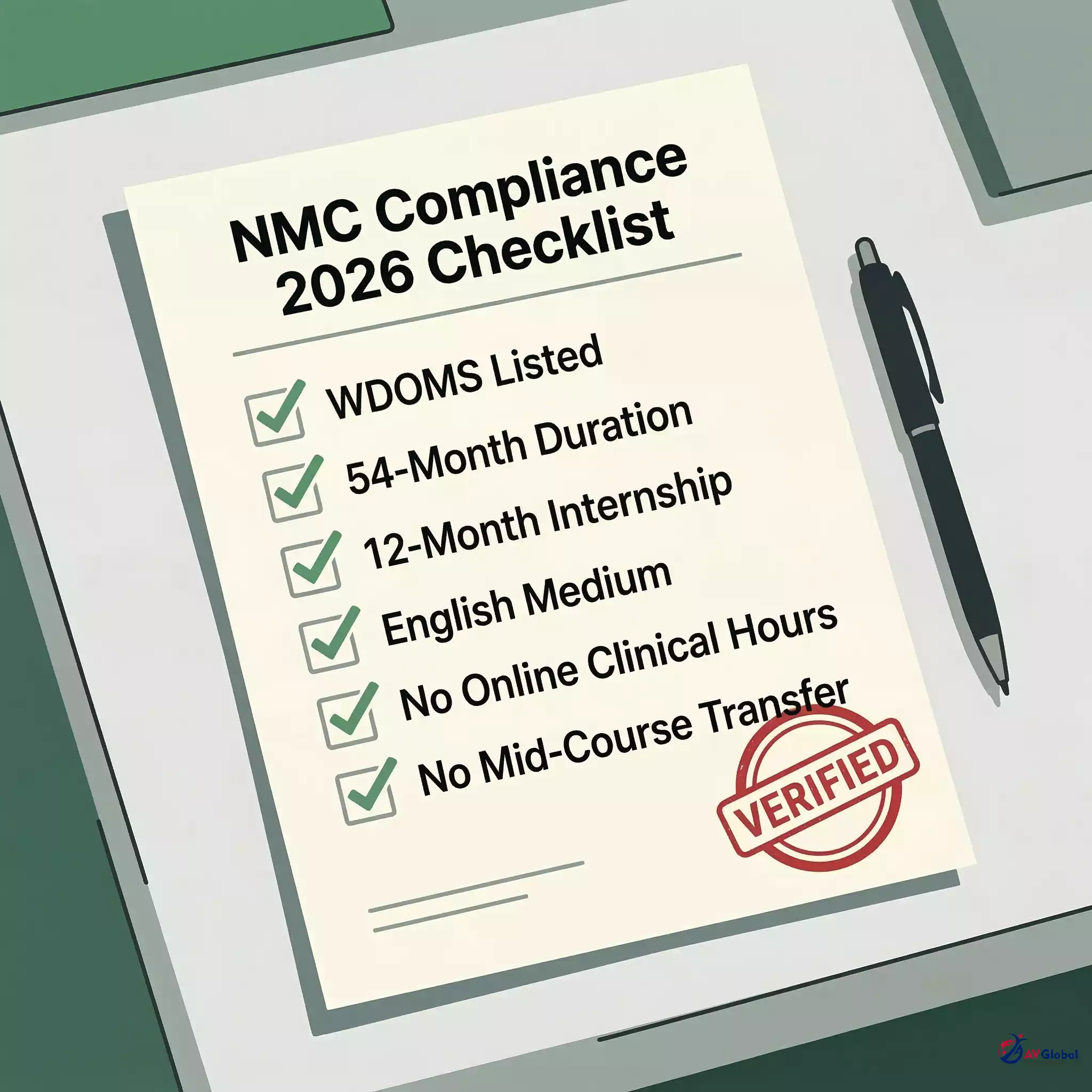
Tashkent State Dental Institute holds full and current recognition from the National Medical Commission (NMC) of India, the regulatory authority for medical education and practice in India. The university has been continuously listed in the World Directory of Medical Schools (WDOMS) since 1992 and appears on the NMC's official list of recognized foreign medical institutions.
This recognition makes TSDI graduates eligible to appear for the screening test required for medical practice in India. Previously this screening test was called the Foreign Medical Graduate Examination (FMGE) conducted by the National Board of Examinations.
From 2024 onwards, FMGE is being replaced by the National Exit Test (NExT), a common final-year examination that both Indian medical graduates and foreign medical graduates will take to obtain medical practice license in India. TSDI is preparing its curriculum and assessment patterns to align with NExT requirements.
All Indian students must obtain an Eligibility Certificate from NMC before beginning their MBBS studies abroad. This certificate verifies that the foreign university is recognized and the student meets eligibility criteria including NEET qualification.
Students should apply for this certificate immediately after receiving their admission letter. After completing the 6-year MBBS program and returning to India, graduates must appear for NExT (previously FMGE), which tests clinical knowledge across all medical subjects.
Passing NExT is mandatory to obtain provisional or permanent medical registration with the respective State Medical Council and practice medicine in India. TSDI provides focused NExT/FMGE preparation during final years including MCQ practice, clinical case discussions, and coaching materials.
The university's curriculum follows the competency-based medical education framework that aligns with NExT examination patterns. Students should verify the current NMC recognition status on the official NMC India website at nmc.
org. in before enrolling, as recognition is subject to periodic review.
Year: 2024 | Appeared: 142 | Passed: 51 | Pass Rate: 36% || Year: 2023 | Appeared: 128 | Passed: 44 | Pass Rate: 34% || Year: 2022 | Appeared: 115 | Passed: 38 | Pass Rate: 33% || Note: Data compiled from NMC screening test results and university alumni tracking, represents students who appeared for FMGE within 2 years of graduation
What Our Students Say
“AV Global guided me from NEET to Uzbekistan. The FMGE coaching from Year 3 gave me real confidence. Cleared in the first attempt.”
“AV Global knew every detail about Tashkent State Dental Institute - visa, hostel, airport pickup. Best decision my family made.”
“Support from AV Global in Uzbekistan made everything smooth. The NExT coaching programme is excellent.”
Complete Guide to MBBS at TSDI
Frequently Asked Questions
Yes, TSDI is listed in WDOMS and recognized by NMC India. Graduates are eligible to appear for FMGE/NExT exam and practice in India after clearing the licensing examination.
The total 6-year MBBS cost at TSDI is approximately ₹$31,250 (approx. Rs.
28. 0 Lakhs).
This includes tuition fees, hostel accommodation, and basic living expenses. AV Global provides transparent fee structure with no hidden charges.
TSDI teaches MBBS in English medium. Universities in Uzbekistan do not require IELTS or TOEFL for Indian students.
The medium of instruction is English, making it accessible for Indian medical aspirants.
Indian students need a valid NEET scorecard to apply for MBBS at TSDI. The cutoff varies each year based on seat availability.
Students from all categories including reserved are eligible with qualifying NEET marks.
Tashkent has a growing Indian and South Asian expatriate community, which means decent availability of Indian restaurants and grocery stores. Popular Indian restaurants frequented by students include Namaste India Restaurant in Chilanzar district (15 minutes by metro from campus), serving North Indian curries, dosa, biryani, and thalis at Rs.
250-450 per meal; Maharaja Indian Restaurant near Amir Timur Square offering vegetarian and non-vegetarian options with authentic spices; Curry House Tashkent in Yunusabad district with weekend lunch buffets popular among students; and Spice Route near Tashkent City Mall serving dosa, idli, samosas, and chai. Indian grocery stores such as Asia Store and Delhi Bazaar stock basmati rice, atta flour, dals, pickles, masalas, Maggi noodles, and other essentials.
Monthly food costs vary significantly based on cooking habits: students who cook meals in the hostel kitchenette spend Rs. 5,000-9,000 per month on groceries, while those eating out at restaurants or ordering delivery regularly spend Rs.
10,000-18,000 per month. Local Uzbek cuisine offers excellent vegetarian options including fresh non (flatbread), plov (rice pilaf that can be made vegetarian), somsa (baked pastries), fresh salads, and an abundance of fruits.
Most Indian students adopt a hybrid approach - cooking simple meals like dal-rice, chapati-sabzi, and Maggi during weekdays and eating out on weekends. The dental institute does not operate its own Indian mess or canteen, but several seniors run informal meal-sharing arrangements where one student cooks for a group and costs are split.
Fresh vegetables, fruits, dairy products, and eggs are affordable and readily available at local markets within walking distance from the hostel.
TSDI provides well-maintained hostel accommodation for international students.
The MBBS program at TSDI is 6 years including a 1-year internship. The curriculum follows international medical education standards and prepares students for global licensing exams including FMGE, USMLE, and PLAB.
Yes, graduates from TSDI can practice in India after clearing the FMGE/NExT licensing exam conducted by NMC. The university has a 36% (2024 estimate) FMGE pass rate.
The degree is recognized for medical practice in India.
Tashkent consistently ranks as one of the safest capital cities in Central Asia with a very low crime rate, especially violent crime. The Numbeo crime safety index for Tashkent stands at approximately 71 out of 100, indicating low overall crime levels.
Petty crimes like pickpocketing can occur in crowded bazaars and metro stations during peak hours, but serious crimes against international students are extremely rare. The Uzbek government has invested heavily in public safety with visible police presence, extensive CCTV networks in public areas, and strict law enforcement.
The Tashkent State Dental Institute campus is a secure gated facility with boundary walls, main gate security guards who verify identity cards, and controlled entry points. The international student hostel has additional security layers including 24/7 warden supervision, biometric access systems, visitor registration protocols, and CCTV monitoring of all common areas and entry points.
Female students report feeling very safe both on campus and in the city, particularly in established residential neighborhoods like Chilanzar, Yunusabad, Mirabad, and the city center. Most students walk to nearby metro stations and markets during daylight hours without concern.
Evening outings are best done in groups of 2-3 students. The local population is generally friendly and helpful toward international students, though language can be a barrier (Russian and Uzbek are primary languages, with limited English).
The Embassy of India in Uzbekistan is located at 4A, Makhsumov Street, Tashkent, Uzbekistan, with helpline number +998-78-140-2018 and emergency consular assistance available 24/7. The national emergency number is 112 (police, medical, fire) with some operators able to assist in English or Russian.
AV Global maintains a local representative in Tashkent who provides 24/7 emergency contact support at +998-91-234-5678 (this number is shared with all students and parents during orientation) for urgent situations requiring immediate assistance, translation help, or coordination with university or embassy authorities. Parents receive monthly safety and wellness updates about their child through our monitoring system.
After MBBS from TSDI, graduates can practice in India via FMGE/NExT, pursue USMLE for USA, PLAB for UK, or practice in Uzbekistan. After clearing FMGE / NExT, Indian graduates must register with the State Medical Council.
PG admissions are via NEET-PG.
Related Articles
Ready to Start Your MBBS Journey?
“AV Global has placed 100+ students at Tashkent State Dental Institute. Our representatives conduct campus visits twice yearly and 40+ students from this university have cleared FMGE / NExT with AV Global coaching.”