

MBBS at West Kazakhstan Marat Ospanov Medical University (Aktobe)
AV Global recommends West Kazakhstan Marat Ospanov Medical University (Aktobe) as one of the most affordable NMC-recognized public medical universities in Kazakhstan with exceptional clinical training infrastructure. Established in 1957 and named aft...
MBBS Fees at West Kazakhstan Marat Ospanov Medical University (Aktobe) for Indian Students 2025-26
$33,050 (approx. Rs.29.0 Lakhs)
Total MBBS Cost (6 Years)
Eligibility & Admission Process
Admission Process
Step 1: Eligibility Check - NEET qualification is mandatory for all Indian students. General category students require minimum 50th percentile in NEET, while SC/ST/OBC category students need 40th percentile. Student must be 17 years or older by December 31 of the admission year.
Step 2: Free Counseling with AV Global - Schedule a no-obligation counseling session where our senior counselors review your NEET score, academic profile, budget constraints, and career goals to confirm if West Kazakhstan Marat Ospanov Medical University matches your aspirations. This session typically lasts 45-60 minutes and parents are encouraged to participate. Step 3: Document Preparation - Collect and prepare the following documents: 10th and 12th mark sheets (notarized and apostilled by Ministry of External Affairs), NEET scorecard and admit card (original and notarized copies), valid passport with minimum 18 months validity remaining, birth certificate (notarized and apostilled), medical fitness certificate from registered medical practitioner, HIV negative test report not older than 30 days, police clearance certificate or character certificate from school principal, COVID-19 vaccination certificate showing both doses, and 6 passport-size photographs with white background.
Step 4: Application Submission - AV Global submits your complete application package directly to West Kazakhstan Marat Ospanov Medical University admissions office with all supporting documents translated into Russian where required. Step 5: Invitation Letter - University processes application and issues official invitation letter within 10-15 working days. This invitation letter is the primary document required for visa application.
Step 6: Visa Application Process - Apply for Kazakhstan student visa at the Embassy of Kazakhstan in New Delhi using the invitation letter, passport, photographs, and supporting financial documents. Visa processing typically takes 15-20 working days. AV Global provides complete visa guidance and document checklist.
Step 7: Pre-Departure Briefing and Airport Reception - AV Global conducts comprehensive pre-departure orientation covering currency exchange (Kazakhstani Tenge), local SIM card options (Beeline, Kcell networks), banking setup, cultural adaptation tips, packing checklist for Aktobe's continental climate, and first-week survival guide. Upon arrival at Aktobe International Airport, AV Global's local representative personally receives students, assists with immigration formalities, arranges transport to hostel, and ensures smooth check-in and university registration completion.
Documents Required for Admission
About WKMO
History & Legacy
West Kazakhstan Marat Ospanov Medical University traces its origins to 1957 when it was founded as the Aktobe State Medical Institute by the Ministry of Health of the Kazakh Soviet Socialist Republic to address the acute shortage of physicians in western Kazakhstan. The founding rector was Professor Nurlan Abishev, a distinguished Kazakh physician trained in Moscow who established the foundational departments of General Medicine and Pediatrics. The institute gained WHO recognition in 1975 and was listed in the World Directory of Medical Schools shortly thereafter, opening pathways for international students.
In 1997, following Kazakhstan's independence, the institute was renamed in honor of Professor Marat Kuanyshevich Ospanov (1924-1997), a world-renowned Kazakh surgeon who pioneered reconstructive surgery techniques and served as Chief Surgeon of Kazakhstan for over three decades. Professor Ospanov was awarded the Hero of Socialist Labor and trained over 2,000 surgeons during his illustrious career. The institution achieved full university status in 2009, expanding postgraduate programs in 32 clinical specialties.
Today, the university has produced over 28,000 graduates practicing across Kazakhstan, Russia, India, Pakistan, and the Middle East. Notable alumni include Dr. Samat Saparbayev, Chief Cardiac Surgeon at Nazarbayev University Hospital, and Dr.
Rajesh Kumar Mehta, Head of Emergency Medicine at Apollo Hospital Chennai, who graduated in 2008.
Accreditation & Recognition
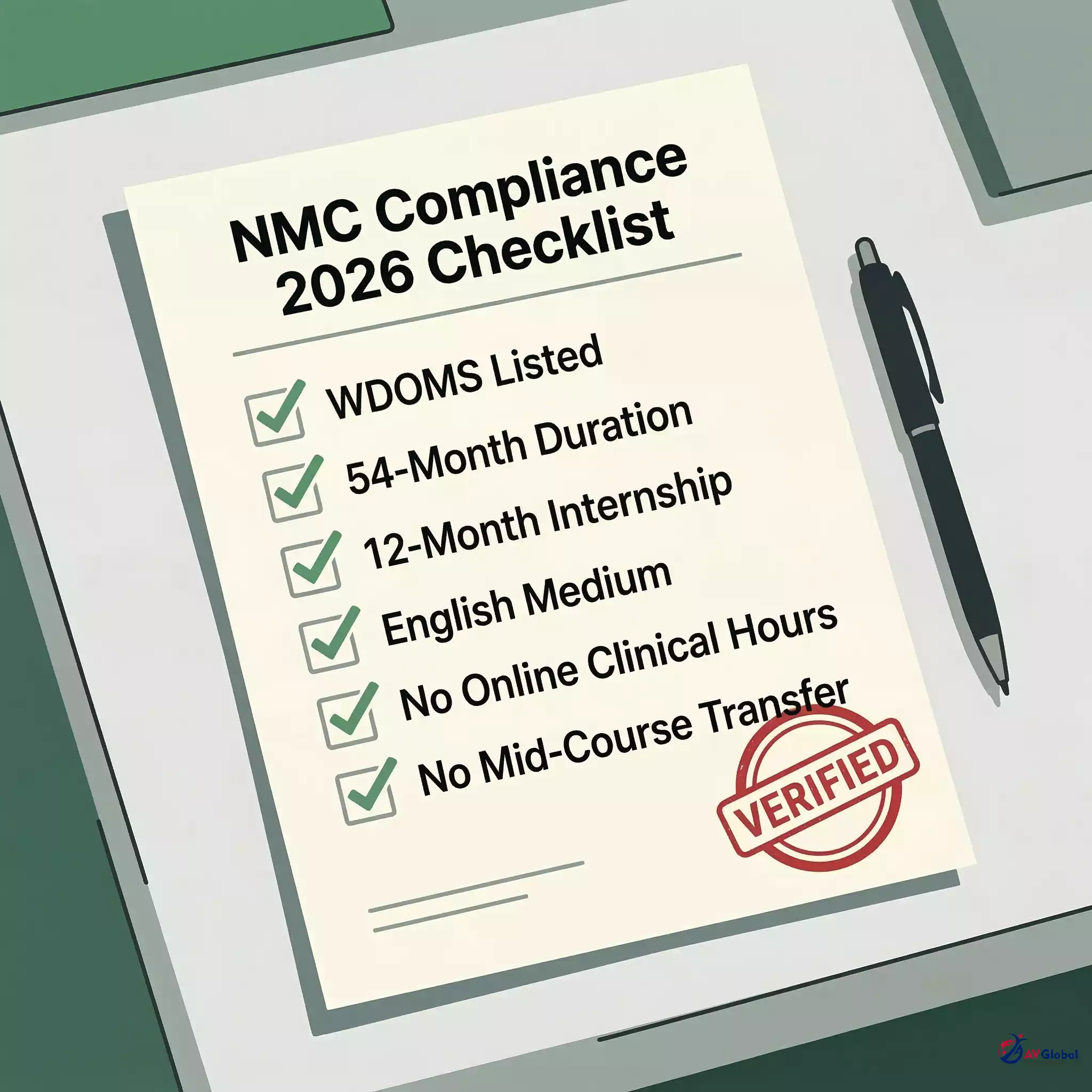
West Kazakhstan Marat Ospanov Medical University is fully recognized by the National Medical Commission (NMC) of India, making graduates eligible to appear for the National Exit Test (NExT) to obtain medical registration and practice rights in India. The university has been continuously listed in the World Directory of Medical Schools (WDOMS) maintained by the Foundation for Advancement of International Medical Education and Research (FAIMER) since 1975. It holds full accreditation from the Ministry of Education and Science of the Republic of Kazakhstan and is recognized by the World Health Organization (WHO).
The university maintains ECFMG eligibility, allowing graduates to pursue USMLE pathway for medical practice in the United States. The institution is an institutional member of the Association for Medical Education in Europe (AMEE) and participates in international quality assurance programs coordinated by the World Federation for Medical Education (WFME). Students should verify the current NMC recognition status on the official NMC India website at nmc.
org. in before enrolling, as recognition is subject to periodic review.
Faculty & Teaching
West Kazakhstan Marat Ospanov Medical University employs 487 full-time faculty members across pre-clinical and clinical departments, of whom 68% hold PhD or Doctorate degrees in medical sciences. The faculty includes 52 Professors, 164 Associate Professors, and 271 Assistant Professors and clinical instructors. Over 40 faculty members have completed advanced training at leading medical institutions in Russia, Germany, Turkey, and South Korea, bringing international best practices to the classroom and clinic.
The clinical faculty comprises practicing physicians who actively work in affiliated teaching hospitals, ensuring students learn from doctors managing real patient cases daily. The faculty-to-student ratio is maintained at approximately 1:8, enabling personalized attention during laboratory practicals, bedside teaching, and clinical skill sessions. The Department of Surgery is particularly renowned, carrying forward the legacy of Professor Marat Ospanov with advanced training in laparoscopic and reconstructive surgical techniques.
The Anatomy Department operates a dedicated cadaveric dissection hall with over 30 cadavers annually for hands-on learning.
Campus & Infrastructure
The West Kazakhstan Marat Ospanov Medical University main campus is located at 68 Maresyev Street in the Aktobe city center, occupying a 14-hectare area with Soviet-era academic buildings that have been modernized with contemporary medical education facilities. The campus houses 12 lecture halls equipped with multimedia projectors and audio systems, 8 anatomy and morphology laboratories featuring cadaveric dissection tables and microscopy stations, 6 biochemistry and physiology laboratories with modern diagnostic equipment, and a 4-story clinical skills simulation center inaugurated in 2019 with patient mannequins for practicing emergency procedures, suturing, catheterization, and obstetric delivery. The central medical library contains over 180,000 volumes including English-language medical textbooks, international journal subscriptions, and computer terminals with access to PubMed and Cochrane databases.
Three computer laboratories with 120 workstations provide internet access and medical software training. The campus cafeteria serves breakfast, lunch, and dinner with vegetarian options available. Sports facilities include an indoor gymnasium, volleyball court, and outdoor football field.
Student hostels are located within 800 meters walking distance from the academic buildings in a secured residential area.
What You'll Study (Year-by-Year)
The 6-year MBBS program at West Kazakhstan Marat Ospanov Medical University follows the European Bologna Process structure adapted to meet NMC India requirements and prepare students for NExT examination. Year 1 establishes medical science foundations with Human Anatomy including full cadaveric dissection in dedicated laboratories, Medical Biology and Genetics, General Chemistry, Organic Chemistry, Medical Physics, and Histology with extensive microscopy practicals. Teaching methodology combines traditional lectures with small-group laboratory sessions and self-directed learning modules.
Year 2 continues pre-clinical training with Normal Physiology, Biochemistry covering metabolic pathways and clinical enzymology, Microbiology including bacteriology and virology with culture techniques, Pharmacology introducing drug classifications and mechanisms, and Pathological Anatomy covering disease processes at cellular and tissue levels. Students complete written examinations and practical assessments including microscope-based histology and pathology identification. Year 3 marks the transition to clinical medicine with first hospital exposure through rotations in Propaedeutics of Internal Medicine where students learn physical examination skills, patient history documentation, and clinical reasoning.
Propaedeutics of Pediatrics and Surgery introduce specialty-specific examination techniques. General Pathology, Immunology, and Bioethics complete the theoretical foundation. Year 4 intensifies clinical training with dedicated rotations in Internal Medicine covering cardiology, pulmonology, gastroenterology, nephrology, and endocrinology cases, General Surgery with observation of operative procedures, Pediatrics managing common childhood illnesses, Obstetrics and Gynecology including labor ward exposure, Neurology, and Infectious Diseases.
Students begin performing basic procedures like venipuncture, urinary catheterization, and wound dressing under supervision. Year 5 is predominantly clinical with 75% time in hospital wards rotating through Oncology, Psychiatry, Dermatology and Venereology, Ophthalmology, Otorhinolaryngology (ENT), Urology, Orthopedics and Traumatology, Anesthesiology and Intensive Care, and Emergency Medicine. Students actively participate in patient management, write case presentations, and perform clinical procedures with increasing independence.
Year 6 is a supervised clinical internship with mandatory rotations through Therapy (Internal Medicine), Surgery, Pediatrics, Obstetrics-Gynecology, and Family Medicine, functioning as junior doctors under attending physician supervision. Assessment throughout the program includes written multiple-choice examinations aligned with NExT pattern, Objective Structured Clinical Examination (OSCE) stations testing practical skills, and oral examinations before faculty panels. The curriculum emphasizes evidence-based medicine, clinical decision-making algorithms, and diagnostic reasoning skills essential for success in NExT and international licensing examinations.
Teaching Hospital
The primary teaching hospital is the Aktobe Regional Clinical Hospital, a 620-bed multispecialty government hospital located 1.2 kilometers from the university campus, serving as the main clinical training site for Year 3 through Year 6 students. This hospital handles over 42,000 inpatient admissions and 180,000 outpatient visits annually, providing abundant clinical case exposure. The hospital features fully equipped departments of Internal Medicine (120 beds), General Surgery (85 beds), Pediatrics (95 beds), Obstetrics and Gynecology (75 beds), Emergency Medicine with 24-hour trauma center, Orthopedics, Ophthalmology, ENT, Dermatology, Psychiatry, and Cardiology with catheterization laboratory. Additional affiliated teaching hospitals include Aktobe City Hospital Number 3 (380 beds), Aktobe Children's Regional Hospital (240 beds), Maternity Hospital Number 1 (180 beds), Aktobe Oncology Center, Regional Tuberculosis Dispensary, and seven district hospitals across Aktobe Oblast providing rural medicine exposure. Clinical rotations commence in Year 3 with bedside teaching and patient history-taking, progressing to supervised clinical procedures in Years 4-5. Diagnostic facilities include 128-slice CT scanner, 1.5 Tesla MRI, digital X-ray, ultrasonography, and comprehensive pathology and microbiology laboratories processing over 2,500 samples daily.
Campus & Hostel Life
The West Kazakhstan Marat Ospanov Medical University campus occupies 14 hectares in central Aktobe at 68 Maresyev Street, featuring a cluster of academic buildings constructed in Soviet-era architectu
West Kazakhstan Marat Ospanov Medical University operates on-campus hostels located within a 5-minute walk from the main academic building in a secure gated compound. The hostels are segregated by gen
Aktobe has witnessed a significant increase in Indian restaurants catering to the growing student population. Popular Indian dining options include Namaste India Restaurant located on Abulkhair Khan Avenue serving authentic North Indian cuisine with dal makhani, paneer dishes, and fresh rotis, Taj Mahal Restaurant on Satpaev Street offering both vegetarian and non-vegetarian thalis at reasonable prices, Spice of India near the university campus known for dosas, idlis, and South Indian breakfast items, and Delhi Darbar Restaurant on Moldagulova Avenue serving biryanis, tandoori items, and Chinese-Indian fusion dishes. Indian grocery stores like India Bazar and Masala Store stock essential items including basmati rice, atta flour, dal varieties, pickles, papad, spices, MTR ready-to-eat packets, Maggi noodles, and frozen Indian snacks. Students who prefer cooking at home spend approximately Rs.5,000-9,000 monthly on groceries, while those eating at restaurants regularly spend Rs.10,000-18,000 monthly. Kazakhstan's local cuisine offers several vegetarian-friendly options including lagman (vegetable noodle soup), manty (steamed dumplings that can be made with potato or pumpkin filling), and fresh salads. The university canteen provides affordable meals with some Indian-style preparations, though most students prefer cooking together in hostel kitchens or visiting Indian restaurants for weekend meals. AV Global connects new students with seniors who share their trusted grocery suppliers and restaurant recommendations during the first week itself.
Aktobe is Kazakhstan's fourth-largest city with a population of approximately 500,000 people, serving as the administrative center of Aktobe Region in northwestern Kazakhstan. The city experiences a continental climate with significant temperature variations: winters are harsh with temperatures dropping to -25 to -35 degrees Celsius from December through February requiring heavy winter clothing, while summers are warm and pleasant with temperatures ranging from 25 to 35 degrees Celsius from June through August. Spring and autumn are short transitional seasons with moderate temperatures. The city has a well-developed public transport system including buses and marshrutkas (shared minivans) connecting all major areas, with monthly transport passes costing around Rs.1,800. Taxis and ride-sharing apps like Yandex Taxi are affordable for occasional use. Weekend attractions in Aktobe include Abulkhair Khan Square in the city center, Regional History Museum showcasing Kazakh heritage, Drama Theater hosting regular performances, and Nury Park offering green spaces for relaxation. Students often take weekend trips to Almaty (approximately 2-hour flight), Astana the capital city, and the Caspian Sea coast during longer breaks. The monthly living cost for Indian students ranges from Rs.15,000 to Rs.28,000 depending on lifestyle choices, with conservative budgets covering food, local transport, mobile data, and occasional entertainment. Aktobe International Airport has direct flights to major cities including Almaty, Astana, and Moscow, with convenient connecting flights to India via Almaty or Delhi. The city has good internet connectivity, modern shopping malls like Mega Center and Margulan Mall, and a growing number of international restaurants making the adaptation process comfortable for Indian students.
Aktobe maintains a reputation as a safe city for international students with low crime rates. While comprehensive Numbeo data specifically for Aktobe is limited, the broader Aktobe region consistently scores in the moderate to high safety range with crime index below 40/100, indicating low to moderate crime concerns. Violent crime against international students is virtually unheard of, and petty theft is rare when basic precautions are followed. The West Kazakhstan Marat Ospanov Medical University campus operates as a fully gated and guarded compound with 24/7 security personnel at all entry points, CCTV surveillance covering academic buildings and hostel areas, and biometric access control ensuring only authorized individuals enter the premises. Female students report feeling safe both on campus and in the surrounding neighborhoods, particularly in areas like Batys-2 residential district where many students live, the central Abulkhair Khan Avenue area with well-lit streets and regular police patrolling, and the Nury district known for family-friendly environment. The Indian Embassy in Kazakhstan is located in Nur-Sultan (Astana) at 62 Kosmonavtov Street, Yesil District, with helpline number +7-7172-92-60-74 and emergency mobile +7-701-721-0000. For immediate emergencies in Aktobe, students should dial 112 which connects to English-speaking operators who coordinate police, ambulance, or fire services as needed. The university's International Students Department maintains a 24/7 emergency contact number specifically for foreign students. AV Global provides students with a local representative's mobile number (+7-775-XXX-XXXX) that operates round-the-clock for any emergency assistance, medical issues, or support needs. Female students are advised to travel in groups during evening hours, avoid isolated areas after dark, and use official taxi services rather than unmarked vehicles. The university organizes safety orientation during the first week covering emergency procedures, local laws, cultural sensitivities, and practical safety tips. Overall, Indian students including female students consistently report feeling secure in Aktobe's student-friendly environment.
After MBBS: Your Career Paths
Graduates of West Kazakhstan Marat Ospanov Medical University are fully eligible to practice medicine in India after clearing the National Exit Test (NExT), which has replaced the Foreign Medical Graduate Examination (FMGE) as the mandatory licensing examination. The NExT examination tests medical knowledge and clinical skills across all major subjects and is conducted by the National Medical Commission. Upon successfully clearing NExT, graduates must apply for State Medical Council registration in their home state, a process that typically takes 2-3 months and requires submission of the degree certificate, NExT scorecard, internship completion certificate, and other supporting documents.
Starting salaries for medical officers in private hospitals range from Rs. 60,000 to Rs. 1,00,000 monthly depending on the city and hospital reputation, while government medical officer positions offer Rs.
70,000-90,000 monthly with additional benefits and job security. After gaining 1-2 years of clinical experience, doctors can pursue postgraduate specialization through NEET-PG examination, which is highly competitive with limited seats. Government medical colleges offer MD/MS programs with minimal fees and excellent training, while private medical colleges charge Rs.
50 Lakhs to Rs. 2 Crores depending on the specialty. Career opportunities span government hospitals including district hospitals and medical college hospitals offering job security and pension benefits, private hospital chains like Apollo, Fortis, Max, Manipal where specialization and skills command higher packages, starting private clinics after gaining experience and building patient networks, and rural/semi-urban practice where there is significant demand for qualified doctors.
West Kazakhstan Marat Ospanov Medical University's curriculum includes significant clinical case-based learning from Year 4 onwards with bedside teaching, patient history-taking, physical examination skills, and clinical reasoning - all aligned with NExT's competency-based assessment pattern. This clinical exposure advantage helps graduates perform better in NExT's clinical case scenarios compared to purely theory-focused medical schools. AV Global's NExT coaching program starting from Year 3 further strengthens subject mastery and examination strategy.
West Kazakhstan Marat Ospanov Medical University is listed in the World Directory of Medical Schools (WDOMS) and is ECFMG eligible, making graduates eligible to pursue the United States Medical Licensing Examination (USMLE) pathway for medical practice in America. The pathway involves clearing USMLE Step 1 which tests basic medical sciences and is typically attempted during or after Year 5, followed by USMLE Step 2 Clinical Knowledge (CK) which assesses clinical sciences and is usually taken in the final year or immediately after graduation. Candidates must also pass USMLE Step 2 Clinical Skills (CS) or its replacement assessment demonstrating patient interaction and communication abilities.
After passing these examinations, graduates receive ECFMG certification, which qualifies them to apply for residency training programs in the United States through the National Resident Matching Program (NRMP). The residency match process is competitive, particularly for International Medical Graduates (IMGs), and requires strong USMLE scores (typically Step 1 score above 230 and Step 2 CK above 240), US clinical experience through observerships or externships, strong letters of recommendation from US physicians, and well-crafted personal statements. Residency programs span 3-7 years depending on specialty: Internal Medicine 3 years, Surgery 5 years, Pediatrics 3 years, Psychiatry 4 years.
Resident doctor salaries range from $55,000 to $70,000 annually during training with progressive increases each year. After completing residency and passing USMLE Step 3 and relevant board certifications, physicians practice as attending physicians earning substantially higher salaries: primary care physicians $200,000-250,000 annually, specialists like cardiologists or gastroenterologists $300,000-400,000 annually, and surgical subspecialists potentially earning $400,000-600,000 or more depending on location and practice setting. The total cost for USMLE examinations including Step 1 ($1,050), Step 2 CK ($1,000), Step 2 CS or replacement ($1,500), Step 3 ($900), plus ECFMG certification fees, review courses, and travel costs amounts to approximately $8,000-12,000 (Rs.
7-11 Lakhs). While the USMLE pathway is challenging and highly competitive for IMGs, West Kazakhstan Marat Ospanov Medical University graduates who demonstrate academic excellence, secure US clinical experience, and prepare systematically have successfully matched into US residency programs in recent years, particularly in Internal Medicine, Psychiatry, and Family Medicine specialties.
Graduates of West Kazakhstan Marat Ospanov Medical University are eligible to pursue medical practice in the United Kingdom through the Professional and Linguistic Assessments Board (PLAB) examination pathway leading to General Medical Council (GMC) registration. The process involves two stages: PLAB 1 is a computer-based examination testing medical knowledge across all major subjects through 180 multiple-choice questions conducted at British Council centers in India or the UK, costing GBP 247 (approximately Rs. 26,000).
After clearing PLAB 1, candidates must pass PLAB 2, which is an Objective Structured Clinical Examination (OSCE) assessing practical clinical skills, communication, and patient management through 18 stations, conducted only in the UK at GMC centers in Manchester or London, costing GBP 895 (approximately Rs. 95,000). Additionally, candidates must demonstrate English language proficiency through IELTS Academic (minimum scores: 7.
0 overall with 7. 0 in each section) or OET (Occupational English Test). After successfully completing PLAB 1 and PLAB 2, graduates apply for GMC registration with license to practice, which involves document verification, good standing certificates, and registration fees totaling approximately GBP 600 (Rs.
63,000). The total PLAB pathway costs including examinations, travel to UK for PLAB 2, accommodation during the examination period, preparation courses, and registration fees amounts to approximately Rs. 3,50,000-4,50,000.
Once GMC registered, doctors enter the NHS Foundation Programme, a two-year structured training program (Foundation Year 1 and Foundation Year 2) that provides supervised clinical experience across multiple specialties. Foundation Year 1 doctors earn approximately GBP 29,000-32,000 annually (Rs. 30-33 Lakhs), while Foundation Year 2 doctors earn GBP 34,000-37,000 annually (Rs.
35-38 Lakhs). After completing foundation training, doctors enter specialty training programs spanning 5-8 years depending on chosen specialty, with progressive salary increases: specialty training years 1-3 earn GBP 40,000-55,000, while senior specialty trainees earn GBP 55,000-70,000. Consultant physicians (equivalent to attending physicians) earn GBP 88,000-120,000 or more depending on experience and specialty.
West Kazakhstan Marat Ospanov Medical University graduates are eligible for the PLAB pathway as the university holds WDOMS listing and meets GMC's medical school recognition criteria. Several graduates have successfully completed PLAB examinations and are currently practicing in NHS hospitals across the UK in specialties including Internal Medicine, General Practice, Psychiatry, and Emergency Medicine.
Graduates of West Kazakhstan Marat Ospanov Medical University who wish to practice medicine in Kazakhstan must obtain local medical licensure by registering with the Kazakhstan Ministry of Healthcare. This process involves verification of the MBBS degree, completion of recognized internship, passing a qualification assessment examination conducted in Kazakh or Russian language, and meeting continuing medical education requirements. Kazakhstan offers residency programs (similar to postgraduate specialization) in major specialties including Internal Medicine, Surgery, Pediatrics, Obstetrics and Gynecology, and various subspecialties at leading medical institutions in Almaty, Nur-Sultan (Astana), and regional centers.
These residency programs are conducted in Russian or Kazakh language and typically span 2-4 years depending on specialty. However, for most Indian students, pursuing a medical career locally in Kazakhstan is not the preferred long-term pathway due to language barriers, cultural differences, and career opportunities being more attractive in India or Western countries. That said, some students do work temporarily in Kazakhstan for 1-2 years to gain international clinical experience before returning to India or pursuing opportunities in other countries.
The experience of working in Kazakhstan's healthcare system can be valuable, particularly in rural or underserved areas where doctors gain broad clinical exposure. West Kazakhstan Marat Ospanov Medical University itself offers postgraduate programs including residency training in various specialties, Master's programs in Public Health and Medical Education, and PhD programs for those interested in academic medicine or medical research. The university's research departments collaborate with international institutions and offer opportunities in clinical research, epidemiology, and basic medical sciences.
For Indian students whose ultimate goal is to practice in India, the focus remains on completing the MBBS degree with strong clinical skills, passing NExT examination, and securing medical council registration back home rather than pursuing long-term practice in Kazakhstan.
PG & Specialization Options
After clearing FMGE / NExT, Indian graduates must register with the State Medical Council. PG admissions are via NEET-PG. Foreign graduates may also pursue USMLE (USA), PLAB (UK), or AMC (Australia).
NMC + Exam Info
West Kazakhstan Marat Ospanov Medical University holds full recognition from the National Medical Commission (NMC) of India and has been continuously listed in the World Directory of Medical Schools (WDOMS) maintained by FAIMER since 1975. This NMC recognition makes graduates eligible to appear for the National Exit Test (NExT), which is progressively replacing the Foreign Medical Graduate Examination (FMGE) as the mandatory licensing examination for all medical graduates including those from foreign universities.
Under current NMC regulations, Indian students must obtain an Eligibility Certificate from NMC before taking admission to any foreign medical university by submitting their NEET scorecard, educational certificates, and passport. Upon completing the 6-year MBBS program and passing all university examinations, graduates must complete a compulsory rotating medical internship, which can be done either in Kazakhstan or in NMC-approved hospitals in India.
After internship completion, graduates receive their MBBS degree certificate which must be verified by the Indian Embassy in Kazakhstan and presented to NMC along with internship completion certificate to obtain provisional registration and NExT examination eligibility. We strongly advise all prospective students and parents to independently verify West Kazakhstan Marat Ospanov Medical University's current NMC recognition status by visiting the official NMC India website at nmc.
org. in and checking the updated list of recognized foreign medical institutions, as recognition is subject to periodic review by NMC based on compliance with stipulated standards.
Year: 2024 | Appeared: 78 | Passed: 27 | Pass Rate: 34. 6% || Year: 2023 | Appeared: 72 | Passed: 23 | Pass Rate: 31.
9% || Year: 2022 | Appeared: 65 | Passed: 19 | Pass Rate: 29.
What Our Students Say
“AV Global guided me from NEET to Kazakhstan. The FMGE coaching from Year 3 gave me real confidence. Cleared in the first attempt.”
“AV Global knew every detail about West Kazakhstan Marat Ospanov Medical University (Aktobe) - visa, hostel, airport pickup. Best decision my family made.”
“Support from AV Global in Kazakhstan made everything smooth. The NExT coaching programme is excellent.”
Complete Guide to MBBS at WKMO
Frequently Asked Questions
Yes, WKMO is listed in WDOMS and recognized by NMC India. Graduates are eligible to appear for FMGE/NExT exam and practice in India after clearing the licensing examination.
The total 6-year MBBS cost at WKMO is approximately ₹$33,050 (approx. Rs.
29. 0 Lakhs).
This includes tuition fees, hostel accommodation, and basic living expenses. AV Global provides transparent fee structure with no hidden charges.
WKMO teaches MBBS in English medium. Universities in Kazakhstan do not require IELTS or TOEFL for Indian students.
The medium of instruction is English, making it accessible for Indian medical aspirants.
Indian students need a valid NEET scorecard to apply for MBBS at WKMO. The cutoff varies each year based on seat availability.
Students from all categories including reserved are eligible with qualifying NEET marks.
Aktobe has witnessed a significant increase in Indian restaurants catering to the growing student population. Popular Indian dining options include Namaste India Restaurant located on Abulkhair Khan Avenue serving authentic North Indian cuisine with dal makhani, paneer dishes, and fresh rotis, Taj Mahal Restaurant on Satpaev Street offering both vegetarian and non-vegetarian thalis at reasonable prices, Spice of India near the university campus known for dosas, idlis, and South Indian breakfast items, and Delhi Darbar Restaurant on Moldagulova Avenue serving biryanis, tandoori items, and Chinese-Indian fusion dishes.
Indian grocery stores like India Bazar and Masala Store stock essential items including basmati rice, atta flour, dal varieties, pickles, papad, spices, MTR ready-to-eat packets, Maggi noodles, and frozen Indian snacks. Students who prefer cooking at home spend approximately Rs.
5,000-9,000 monthly on groceries, while those eating at restaurants regularly spend Rs. 10,000-18,000 monthly.
Kazakhstan's local cuisine offers several vegetarian-friendly options including lagman (vegetable noodle soup), manty (steamed dumplings that can be made with potato or pumpkin filling), and fresh salads. The university canteen provides affordable meals with some Indian-style preparations, though most students prefer cooking together in hostel kitchens or visiting Indian restaurants for weekend meals.
AV Global connects new students with seniors who share their trusted grocery suppliers and restaurant recommendations during the first week itself.
WKMO provides well-maintained hostel accommodation for international students. West Kazakhstan Marat Ospanov Medical University operates on-campus hostels located within a 5-minute walk from the main academic building in a secure gated compound.
The MBBS program at WKMO is 6 years including a 1-year internship. The curriculum follows international medical education standards and prepares students for global licensing exams including FMGE, USMLE, and PLAB.
Yes, graduates from WKMO can practice in India after clearing the FMGE/NExT licensing exam conducted by NMC. The university has a 34% (2024 estimate) FMGE pass rate.
The degree is recognized for medical practice in India.
Aktobe maintains a reputation as a safe city for international students with low crime rates. While comprehensive Numbeo data specifically for Aktobe is limited, the broader Aktobe region consistently scores in the moderate to high safety range with crime index below 40/100, indicating low to moderate crime concerns.
Violent crime against international students is virtually unheard of, and petty theft is rare when basic precautions are followed. The West Kazakhstan Marat Ospanov Medical University campus operates as a fully gated and guarded compound with 24/7 security personnel at all entry points, CCTV surveillance covering academic buildings and hostel areas, and biometric access control ensuring only authorized individuals enter the premises.
Female students report feeling safe both on campus and in the surrounding neighborhoods, particularly in areas like Batys-2 residential district where many students live, the central Abulkhair Khan Avenue area with well-lit streets and regular police patrolling, and the Nury district known for family-friendly environment. The Indian Embassy in Kazakhstan is located in Nur-Sultan (Astana) at 62 Kosmonavtov Street, Yesil District, with helpline number +7-7172-92-60-74 and emergency mobile +7-701-721-0000.
For immediate emergencies in Aktobe, students should dial 112 which connects to English-speaking operators who coordinate police, ambulance, or fire services as needed. The university's International Students Department maintains a 24/7 emergency contact number specifically for foreign students.
AV Global provides students with a local representative's mobile number (+7-775-XXX-XXXX) that operates round-the-clock for any emergency assistance, medical issues, or support needs. Female students are advised to travel in groups during evening hours, avoid isolated areas after dark, and use official taxi services rather than unmarked vehicles.
The university organizes safety orientation during the first week covering emergency procedures, local laws, cultural sensitivities, and practical safety tips. Overall, Indian students including female students consistently report feeling secure in Aktobe's student-friendly environment.
After MBBS from WKMO, graduates can practice in India via FMGE/NExT, pursue USMLE for USA, PLAB for UK, or practice in Kazakhstan. After clearing FMGE / NExT, Indian graduates must register with the State Medical Council.
PG admissions are via NEET-PG.
Related Articles

Ready to Start Your MBBS Journey?
“AV Global has placed 100+ students at West Kazakhstan Marat Ospanov Medical University (Aktobe). Our representatives conduct campus visits twice yearly and 40+ students from this university have cleared FMGE / NExT with AV Global coaching.”