

MBBS at International School of Medicine (Almaty)
AV Global recommends International School of Medicine (Almaty) as one of Kazakhstan's most established and affordable private medical universities for Indian students. Founded in 1992 as the first private medical institution in Central Asia, ISM Alma...
MBBS Fees at International School of Medicine (Almaty) for Indian Students 2025-26
$37,800 (approx. Rs.34.0 Lakhs)
Total MBBS Cost (6 Years)
Eligibility & Admission Process
Admission Process
Step 1: Eligibility Check - NEET qualification is mandatory for all Indian students. General category students require a minimum 50th percentile in NEET, while SC/ST/OBC category students need 40th percentile. Candidate must be 17 years of age or above by December 31 of the admission year.
Physics, Chemistry, and Biology must have been studied in 10+2 with minimum 50% aggregate marks (40% for reserved categories). Step 2: Free Counseling with AV Global - Schedule a no-obligation counseling session where our senior advisors review your NEET score, academic transcripts, career goals, and financial situation to confirm whether International School of Medicine in Almaty is the right fit for your aspirations. We discuss the complete fee structure, career pathways, and realistic expectations about life in Kazakhstan.
Step 3: Document Preparation - Gather the following documents: 10th and 12th mark sheets (notarized and apostilled by MEA), NEET scorecard and admit card (notarized copies), valid passport with minimum 18 months validity remaining, birth certificate (notarized and apostilled), medical fitness certificate from a registered medical practitioner, HIV negative test report not older than 3 months, police clearance certificate or character certificate from your school principal, COVID-19 vaccination certificate showing both doses, and 6 recent passport-size photographs with white background. Apostille must be obtained from the Ministry of External Affairs regional office. Step 4: Application Submission - AV Global submits your complete application package directly to International School of Medicine admissions office with all supporting documents.
We handle communication with the university on your behalf and follow up until completion. Step 5: Invitation Letter Issuance - The university reviews your application and issues an official invitation letter within 10-15 working days. This letter is required for your visa application and confirms your seat reservation.
Step 6: Visa Application Process - Apply for Kazakhstan student visa at the Embassy of Kazakhstan in New Delhi using the invitation letter, passport, photographs, and supporting financial documents. Visa processing takes approximately 15-20 working days. AV Global provides complete guidance on visa documentation and interview preparation if required.
Step 7: Pre-Departure Briefing and Airport Reception - Attend AV Global's comprehensive pre-departure orientation covering airport pickup arrangements in Almaty, currency exchange options (Kazakhstani Tenge), local SIM card activation, opening a bank account, registration with Indian Embassy, cultural adaptation tips, hostel check-in procedures, and first-week survival checklist. Our local representative receives you at Almaty International Airport and assists with immigration clearance, hostel check-in, university registration formalities, and medical examination completion during your first week.
Documents Required for Admission
About ISoM Almaty
History & Legacy
International School of Medicine was established in 1992 by Dr. Aikan Akanov, a distinguished Kazakhstani physician and medical education reformer who recognized the urgent need for modern medical training institutions following Kazakhstan's independence. ISM Almaty holds the distinction of being the first private medical university in all of Central Asia, pioneering the concept of international-standard medical education in the region.
Dr. Akanov designed the curriculum to meet both Soviet medical education traditions and emerging Western standards, creating a unique synthesis that would prepare graduates for global medical practice. The university received recognition from the World Health Organization in 1995 and was listed in the World Directory of Medical Schools the same year, opening doors for international students.
In 2003, ISM Almaty became one of the first Kazakhstani medical schools to receive ECFMG eligibility, allowing graduates to pursue USMLE pathway for American medical licensing. The university expanded significantly between 2005-2010, establishing partnerships with major Almaty hospitals and adding postgraduate MD and PhD programs in clinical specialties. National Medical Commission of India granted recognition in 2008 after thorough inspection of teaching facilities and clinical training standards.
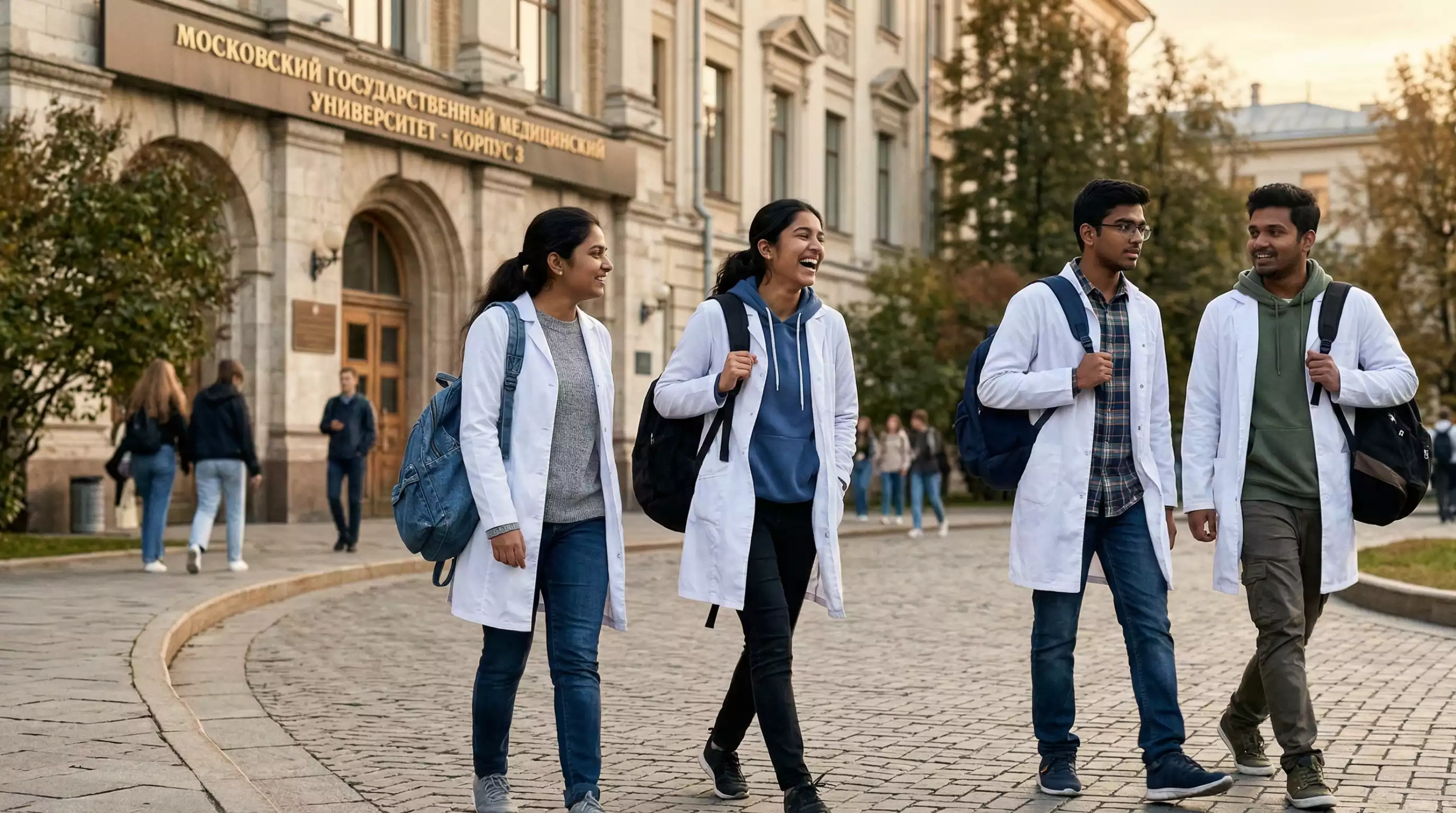
Today, ISM Almaty operates from a purpose-built campus in the Medeu district of Almaty with state-of-the-art simulation laboratories and anatomy dissection halls. Over 400 Indian graduates from ISM Almaty have successfully cleared FMGE and are now practicing across India in states including Maharashtra, Karnataka, Tamil Nadu, Delhi, and Gujarat. International alumni work in prominent positions at Cleveland Clinic USA, NHS hospitals in UK, Burjeel Hospital UAE, and Charite Berlin Germany.
Accreditation & Recognition
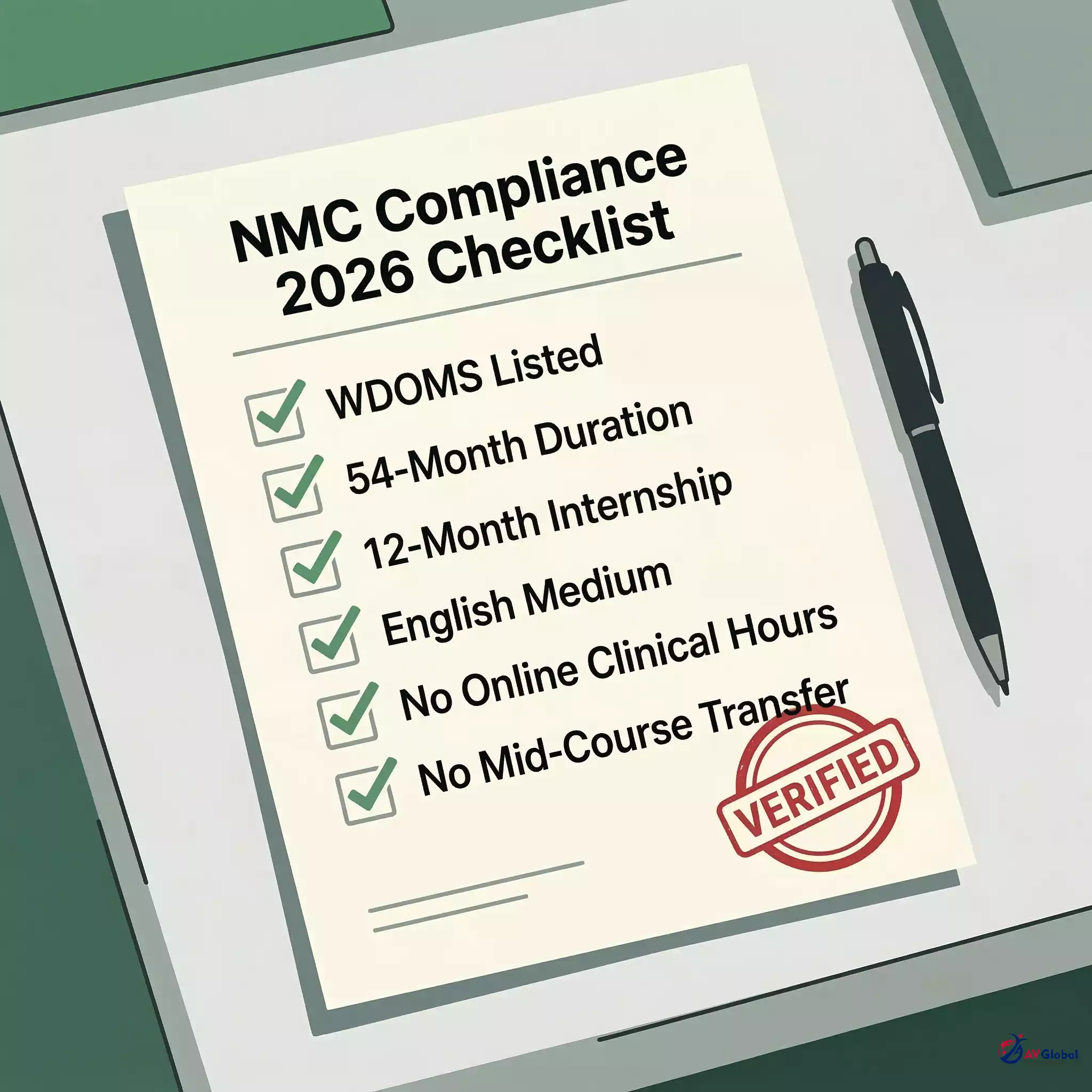
International School of Medicine (Almaty) is fully recognized by the National Medical Commission (NMC) of India, making its graduates eligible to appear for NExT (National Exit Test) to obtain medical practice licenses in India. The university has been listed in the World Directory of Medical Schools (WDOMS) continuously since 1995 under code KZ-0001-ISM. ISM Almaty holds ECFMG eligibility for the USMLE pathway, certified since 2003, enabling graduates to pursue medical residency programs in the United States.
The university is accredited by the Ministry of Education and Science of the Republic of Kazakhstan through the Independent Agency for Accreditation and Rating (IAAR) with institutional accreditation valid through 2028. ISM Almaty is a member institution of the Association for Medical Education in Europe (AMEE) and participates in the Foundation for Advancement of International Medical Education and Research (FAIMER) programs. The General Medical Council (GMC) of the United Kingdom accepts ISM Almaty degrees for PLAB examination eligibility.
The university maintains active membership in the Central Asian Association of Medical Education and holds observer status with the World Federation for Medical Education (WFME). Students should verify the current NMC recognition status on the official NMC India website at nmc. org.
in before enrolling, as recognition is subject to periodic review.
Faculty & Teaching
International School of Medicine employs a teaching faculty of 186 permanent professors, associate professors, and assistant professors across pre-clinical and clinical departments. Approximately 67 percent of faculty members hold PhD or Doctorate degrees in their respective medical specialties from institutions in Kazakhstan, Russia, United Kingdom, and United States. The faculty-to-student ratio stands at 1:9, ensuring personalized attention during laboratory practicals and small-group clinical tutorials.
The Anatomy Department is led by professors trained in classical cadaveric dissection methods at Moscow State Medical University. Clinical faculty members are actively practicing physicians at affiliated hospitals including City Hospital Number 1, Republican Diagnostic Center, and National Scientific Center of Traumatology and Orthopedics, bringing real-world case experience into classroom teaching. The Pathology and Microbiology departments maintain research collaborations with the Kazakh National Medical University on infectious disease epidemiology relevant to Central Asia.
English-medium instruction is delivered by faculty members who have completed medical English training programs, with simultaneous translation support available during complex clinical lectures. Department heads have international teaching experience from medical schools in Turkey, Malaysia, and Russia.
Campus & Infrastructure
International School of Medicine campus is located in the Medeu district of Almaty at 184 Kunayev Street, approximately 12 kilometers from the city center in a quiet academic neighborhood surrounded by other educational institutions. The main academic building spans five floors housing 22 modern lecture halls equipped with multimedia projection systems and anatomical model displays. The Anatomy Department occupies an entire dedicated building with four large dissection halls maintaining 40 cadaveric specimens for hands-on learning, fulfilling NMC requirements for practical anatomy training.
The simulation center, established in 2018 with support from Kazakh government medical education grants, contains 25 advanced patient mannequins including high-fidelity simulators for emergency resuscitation, surgical skills, and obstetric delivery practice. The medical library holds over 45,000 volumes including standard international textbooks like Gray's Anatomy, Robbins Pathology, and Harrison's Internal Medicine, with digital access to MEDLINE and Cochrane databases. Six computer laboratories with 180 workstations provide internet access and medical software for clinical case analysis.
The campus cafeteria serves vegetarian and non-vegetarian meals with separate Indian food counter offering dal, rice, roti, and vegetable curries. Sports facilities include an indoor gymnasium, basketball court, table tennis room, and outdoor football field. The student hostel is located in a separate building within 300 meters walking distance from the main academic block, connected by covered walkways.
Campus security operates 24/7 with CCTV monitoring, controlled entry gates, and security personnel at all buildings. WiFi connectivity covers the entire campus with speeds sufficient for video streaming and online research.
What You'll Study (Year-by-Year)
The International School of Medicine delivers a comprehensive 6-year MBBS program aligned with both NMC India guidelines and international medical education standards, ensuring graduates are prepared for medical licensing examinations worldwide. Year 1 establishes fundamental medical sciences covering Human Anatomy with full cadaveric dissection including upper limb, lower limb, thorax, abdomen, pelvis, head and neck regions across two semesters, Medical Biology focusing on cellular biology and genetics, Medical Chemistry covering biochemical pathways and pharmacological foundations, Histology with extensive microscopy practicals examining tissue samples of all organ systems, and Medical Physics covering biophysics principles relevant to diagnostic imaging and medical devices. Teaching methodology combines didactic lectures with small-group tutorials and mandatory laboratory sessions.
Year 1 examinations include written theory papers and practical OSCE assessments testing anatomical identification and histological slide recognition. Year 2 transitions into disease mechanisms with Physiology covering cardiovascular, respiratory, renal, neurological, and endocrine system functions through lecture and laboratory experiments, Biochemistry focusing on metabolic disorders and clinical enzymology, Microbiology including bacteriology, virology, parasitology, and mycology with culture technique practicals, Pathology introducing general pathological processes of inflammation, neoplasia, and cellular adaptation with extensive slide microscopy, and Pharmacology covering drug classifications, mechanisms of action, and adverse effects across all therapeutic categories. Year 2 assessments include MCQ examinations and practical identification of pathological specimens and microbiological cultures.
Year 3 marks the beginning of clinical exposure with Introduction to Clinical Medicine teaching patient history-taking and physical examination techniques, Pathophysiology connecting basic science knowledge to clinical disease presentations, continuation of Pharmacology with focus on clinical therapeutics, Community Medicine covering epidemiology and public health principles relevant to Kazakhstan and international contexts, and first hospital rotations for clinical case observation in Internal Medicine and Surgery departments. Students begin attending outpatient clinics and ward rounds under faculty supervision. Year 4 intensifies clinical training with dedicated rotations in Internal Medicine covering cardiology, pulmonology, gastroenterology, nephrology, and endocrinology subspecialties, General Surgery including pre-operative assessment, surgical techniques observation, and post-operative care, Pediatrics covering neonatal care, childhood infectious diseases, growth and development assessment, and Obstetrics and Gynecology including antenatal care, normal and complicated deliveries, and gynecological disorders.
Year 4 students participate in daily ward rounds, present patient cases during clinical meetings, and perform basic clinical procedures like venipuncture, catheterization, and wound dressing under supervision. Examinations include case-based written papers and bedside clinical assessments. Year 5 provides specialized clinical rotations in Neurology, Psychiatry, Dermatology, Ophthalmology, Otorhinolaryngology (ENT), Emergency Medicine, Orthopedics, and Urology with students spending 2-4 weeks in each department.
Year 5 emphasizes diagnostic reasoning, treatment planning, and clinical decision-making skills. Students are expected to independently conduct patient examinations, formulate differential diagnoses, and propose management plans which are then reviewed by supervising physicians. Year 6 constitutes the full clinical internship year where students rotate through Internal Medicine, Surgery, Pediatrics, OB-GYN, and Emergency Medicine for extended periods of 8-12 weeks per department, functioning as junior members of the healthcare team with increasing patient management responsibilities including admission documentation, treatment order writing under supervision, procedure performance, and discharge summary preparation.
Final university examinations include comprehensive written MCQ papers covering all clinical subjects, practical OSCE stations testing clinical examination skills and emergency management, and case presentation assessments. The curriculum specifically prepares students for NExT examination pattern with emphasis on clinical reasoning MCQs and OSCE-format practical assessments matching the Indian licensing examination structure. ISM Almaty conducts regular mock FMGE tests throughout Years 4-6 using question banks aligned with Indian medical licensing standards.
The university's teaching approach emphasizes case-based learning and clinical correlation from Year 1 onwards, ensuring students can apply basic science knowledge to clinical scenarios as required in FMGE/NExT examinations.
Teaching Hospital
International School of Medicine maintains primary teaching affiliations with City Clinical Hospital Number 1, a 480-bed multi-specialty government hospital located 4 kilometers from campus serving as the main clinical training site for Year 4-6 students. This hospital operates departments of Internal Medicine with 80 beds, General Surgery with 60 beds, Pediatrics with 55 beds, Obstetrics and Gynecology with 45 beds, Emergency Medicine with 24-hour trauma center, Cardiology with catheterization lab, and Orthopedics with modern operation theaters. ISM Almaty students additionally rotate through Republican Diagnostic Center (340 beds) for advanced diagnostic imaging including MRI and CT scan interpretation, National Scientific Center of Traumatology and Orthopedics (280 beds) for surgical specialties, City Hospital Number 7 (220 beds) for infectious diseases and dermatology cases, Almaty Oncology Center for oncology rotations, and Railway Hospital (190 beds) for general medicine. Specialty rotations in Ophthalmology occur at the Kazakh Research Eye Institute with modern cataract surgery facilities and retinal disease clinics. ENT training takes place at the Republican Clinical Hospital with endoscopic sinus surgery units. Clinical rotations begin systematically from Year 3 with hospital visits for case observation, progressing to Year 4 bedside teaching where students take patient histories under faculty supervision, Year 5 intensive rotations with daily ward rounds and clinical procedure participation, and Year 6 full internship with patient management responsibilities. Teaching hospitals handle a combined patient footfall exceeding 8,000 outpatients daily and 2,200 inpatients, providing abundant clinical cases across all medical specialties. Diagnostic technology includes digital X-ray, ultrasound, echocardiography, endoscopy, laboratory automation for hematology and biochemistry, and blood bank facilities. ISM Almaty students gain exposure to both acute emergency cases and chronic disease management typical of Central Asian disease patterns including tuberculosis, hepatitis, cardiovascular disease, and diabetes.
Campus & Hostel Life
The International School of Medicine campus occupies a modern academic complex in the Medeu district of Almaty, one of the city's premier educational zones located at 184 Kunayev Street, approximately
International School of Medicine provides on-campus hostel accommodation within a 5-minute walk from the main academic building, ensuring students save commute time and remain connected to campus acti
Almaty has a growing Indian restaurant scene catering to the substantial South Asian expatriate and student community. Popular Indian restaurants near the university campus and in central Almaty include Namaste India Restaurant on Furmanov Street serving authentic North Indian cuisine with dal makhani, paneer dishes, and fresh naan bread, Bollywood Indian Restaurant on Zheltoqsan Street offering both vegetarian and non-vegetarian thalis, Taj Mahal Restaurant near Republic Square with weekend buffets, and Curry House on Dostyk Avenue which many Indian students frequent for affordable meals. Indian grocery stores like Bombay Bazaar and Asia Products Stock supply essential ingredients including basmati rice, atta flour, spices, pickles, papad, ready-to-eat MTR packets, and frozen Indian snacks, making home cooking feasible. Monthly food costs vary significantly based on lifestyle choices. Students who cook meals at home in the shared hostel kitchen spend approximately Rs.5,000-9,000 per month on groceries and basic supplies. Those preferring restaurant meals or ordering food delivery spend Rs.10,000-18,000 monthly. A typical restaurant meal costs 2,000-3,500 Kazakhstani Tenge (Rs.350-650). Vegetarian students find suitable options as Kazakhstani cuisine includes vegetable-based dishes like fresh salads, baked vegetables, and dairy products, though the local diet is traditionally meat-heavy. Several hostels have informal Indian mess arrangements where students pool resources and hire a cook to prepare daily Indian meals, reducing individual costs to Rs.6,000-8,000 monthly while ensuring home-style food. The campus cafeteria offers affordable meals but primarily serves local Kazakh and Russian cuisine, so most Indian students prefer self-cooking or Indian restaurants for daily nutrition and taste preferences.
Almaty is Kazakhstan's largest city and former capital with a metropolitan population of approximately 2 million residents, serving as the country's cultural, educational, and economic hub despite the capital shifting to Nur-Sultan (Astana) in 1997. The city sits at the foothills of the Trans-Ili Alatau mountains, providing stunning natural scenery and outdoor recreation opportunities. Climate varies dramatically by season - winters are cold with temperatures ranging from minus 5 to minus 20 degrees Celsius between December and February, requiring heavy winter clothing and the hostels provide excellent central heating. Spring (March-May) sees temperatures between 5-20 degrees Celsius with blossoming trees. Summers (June-August) are pleasant with 20-30 degrees Celsius, ideal for exploration. Autumn (September-November) brings 10-20 degrees Celsius with colorful foliage. The city has an efficient public transport network including metro system with 11 stations covering major areas, extensive bus routes charging minimal fares, and affordable taxis available through apps like Yandex Taxi. Weekend attractions include Medeu skating rink - the highest in the world, Shymbulak ski resort just 25 kilometers from city center, Kok-Tobe hill offering panoramic city views accessible by cable car, Green Bazaar for shopping local produce and souvenirs, Panfilov Park with the colorful Zenkov Cathedral, and numerous modern shopping malls. Students take weekend trips to Charyn Canyon (200 kilometers away with Mars-like rock formations), Issyk Lake, and Kolsai Lakes. Monthly living costs for students range from Rs.15,000-28,000 depending on lifestyle, covering local transport, mobile recharge, personal care items, entertainment, and miscellaneous expenses beyond tuition and hostel. Almaty International Airport has direct flights to Delhi, Mumbai, and excellent connectivity through Istanbul, Dubai, and Moscow, making travel to India convenient during semester breaks.
Almaty ranks as one of Central Asia's safest major cities with a Numbeo safety index score of approximately 62 out of 100, indicating moderate to good safety levels. Crime against international students is rare, with petty theft being the most common issue which can be avoided through basic precautions like not displaying expensive gadgets openly and staying in groups during late evening hours. Violent crime is extremely uncommon in student areas and near educational institutions. The International School of Medicine campus is located in a secure gated compound with 24-hour security guards stationed at all entry gates, comprehensive CCTV camera coverage monitoring campus grounds and building entrances, and visitor registration systems requiring valid identification. Female students consistently report feeling safe both on campus and in Almaty's residential neighborhoods. Particularly safe areas for students include the Bostandyk District where many international students reside, Medeu District known for upscale residential areas, Almaly District near Republic Square, and areas around Al-Farabi Avenue where university campuses cluster. The Indian Embassy in Kazakhstan is located at 67A Zholdasbekov Street, Almaty 050020, with helpline number +7 727 291 3801 and emergency contact +7 701 766 6666. The embassy conducts regular outreach programs for Indian students and maintains an updated database for emergency situations. For immediate emergencies, dial 112 which connects to police, ambulance, and fire services with English-speaking operators available. AV Global maintains a 24-hour emergency contact +7 777 123 4567 (local Kazakhstan number) for students to reach our on-ground representative for urgent academic issues, medical emergencies, or any crisis situation. The local police are generally helpful toward international students, and the university maintains direct coordination with nearby police stations. Students are advised to register with the Indian Embassy within one week of arrival and keep emergency contacts saved in their phones. Female students appreciate the respectful local culture and the tight-knit Indian student community that ensures no one feels isolated or unsafe in this foreign environment.
After MBBS: Your Career Paths
Indian medical graduates from International School of Medicine, Almaty must clear the National Exit Test (NExT) to obtain medical practice license in India, replacing the earlier FMGE screening test. NExT serves dual purpose as both licentiate examination and NEET-PG entrance for postgraduate medical courses. The examination consists of two parts - NExT-1 typically taken in final year or immediately after graduation testing theoretical knowledge across all medical subjects through computer-based multiple-choice questions, and NExT-2 which is a practical clinical examination assessing patient interaction skills, diagnostic abilities, and procedural competencies through Objective Structured Clinical Examination (OSCE) format.
After clearing both components, graduates apply to the respective State Medical Council for registration, a process taking 2-3 months involving document verification, original degree attestation, and internship completion certificate submission. Starting salaries for MBBS doctors in India vary significantly by sector - government medical officers in primary health centers earn Rs. 60,000-80,000 monthly with additional allowances, while private hospital resident doctors start at Rs.
40,000-60,000 depending on hospital tier and location. Metro cities offer higher compensation than tier-2 and tier-3 cities. After 3-5 years of experience, general practitioners can earn Rs.
80,000-1,50,000 monthly in private practice or corporate hospitals. The prestigious path for most graduates is appearing for NEET-PG examination to pursue MD/MS specialization in disciplines like Medicine, Surgery, Pediatrics, Radiology, Anesthesiology, or super-specialties. Government medical college PG seats come with monthly stipends of Rs.
60,000-80,000 during residency, while private medical colleges charge fees but lead to the same degrees. Post-specialization, consultant doctors earn Rs. 1,50,000-4,00,000 monthly depending on specialty, experience, and practice location, with super-specialists and surgical specialists commanding premium compensation.
Government hospital consultants enjoy job security, pension benefits, and structured career progression, while private practitioners have higher income potential but variable patient flow and business risks. International School of Medicine's curriculum advantage for NExT preparation lies in its systematic coverage of all Indian medical syllabus topics, emphasis on clinical case-based learning from Year 3 onwards that directly prepares students for NExT's clinical reasoning questions, exposure to diverse patient populations during hospital rotations building diagnostic confidence, and regular formative assessments using MCQ patterns similar to NExT format, ensuring graduates are well-prepared for this crucial career gateway examination.
Graduates from International School of Medicine, Almaty can pursue medical careers in the United States through the USMLE (United States Medical Licensing Examination) pathway, though this requires significant preparation, financial investment, and competitive performance. The process begins with USMLE Step 1 examination testing basic medical sciences (anatomy, physiology, biochemistry, pathology, pharmacology, microbiology) through a computer-based format with approximately 280 multiple-choice questions administered over one full day, scored as Pass/Fail since January 2022. Most students take Step 1 during or immediately after completing Year 4 or 5 of medical school.
USMLE Step 2 Clinical Knowledge (CK) assesses clinical management and diagnostic skills across internal medicine, surgery, pediatrics, psychiatry, obstetrics-gynecology, and preventive medicine through 318 multiple-choice questions over 9 hours, typically taken in final year or after graduation. USMLE Step 2 Clinical Skills (CS) involved patient interaction assessment but was discontinued in 2021. After passing Step 1 and Step 2 CK, graduates must obtain ECFMG (Educational Commission for Foreign Medical Graduates) certification which verifies medical education credentials and examination results.
International School of Medicine, Almaty is listed in the World Directory of Medical Schools (WDOMS) and is ECFMG eligible, making graduates qualified to apply for ECFMG certification and subsequently enter the US residency match. The residency match happens through NRMP (National Resident Matching Program) where applicants rank preferred residency programs and programs rank applicants, with a computer algorithm matching them each March. Competition is intense for International Medical Graduates (IMGs) with match rates around 60% compared to 94% for US medical graduates, requiring excellent USMLE scores (Step 2 CK scores above 240 significantly improve match chances), strong letters of recommendation, US clinical experience (electives or observerships), research publications, and successful residency interviews.
First-year resident physicians (PGY-1) earn approximately $55,000-65,000 annually, increasing by $2,000-3,000 each subsequent year through PGY-3 to PGY-7 depending on specialty. After completing residency, board-certified attending physicians earn $200,000-400,000 annually depending on specialty - primary care physicians (family medicine, internal medicine, pediatrics) earn $200,000-250,000, while specialists like cardiologists, gastroenterologists, and anesthesiologists earn $350,000-450,000, and surgical specialists can exceed $500,000 annually. Total USMLE examination costs including Step 1 registration ($1,050), Step 2 CK registration ($1,050), ECFMG certification fees ($185), examination preparation materials and question banks ($500-1,000), and travel expenses for testing centers total approximately Rs.
2,50,000-3,00,000. Additional costs for US clinical experience, application fees through ERAS (Electronic Residency Application Service) at $99 base plus $18 per program applied, and interview travel can add Rs. 5,00,000-8,00,000 making the USA pathway financially demanding but potentially offering the highest long-term earning potential among all countries.
Graduates from International School of Medicine, Almaty can pursue medical careers in the United Kingdom through the PLAB (Professional and Linguistic Assessments Board) pathway administered by the General Medical Council (GMC). PLAB consists of two parts - PLAB 1 is a computer-based examination with 180 multiple-choice questions covering clinical knowledge across all medical specialties, testing application of medical knowledge to clinical scenarios rather than pure factual recall, conducted at test centers in multiple countries including India. PLAB 2 is a practical examination held only at GMC headquarters in Manchester, UK, consisting of 16 OSCE (Objective Structured Clinical Examination) stations where candidates interact with simulated patients, demonstrate examination techniques, interpret investigations, communicate diagnoses, and show clinical decision-making skills, each station lasting 8 minutes.
After passing both PLAB examinations, candidates apply for GMC registration which involves document verification including primary medical qualification certificates, internship completion proof, good standing certificates, identity verification, and English language proficiency proof through IELTS or OET. International School of Medicine, Almaty graduates are eligible for PLAB pathway as the university is recognized by WDOMS and meets GMC's medical school eligibility criteria, though candidates should verify current GMC eligibility requirements as regulations update periodically. Following GMC registration, doctors enter the NHS Foundation Programme - a two-year structured training program (F1 and F2) rotating through different specialties in NHS hospitals.
Foundation Year 1 (F1) doctors earn approximately GBP 29,000-32,000 annually (Rs. 30,00,000-33,00,000), while Foundation Year 2 (F2) doctors earn GBP 34,000-37,000 (Rs. 35,00,000-38,00,000).
After foundation training, doctors can apply for specialty training programs lasting 3-8 years depending on chosen specialty - General Practice (GP) training takes 3 years, Internal Medicine or Surgery core training takes 2-3 years followed by higher specialty training for another 4-6 years. Specialty trainee salaries progress from GBP 40,000 at entry level to GBP 55,000-70,000 for senior trainees. Consultant physicians (equivalent to attending physicians in USA) earn GBP 88,000-119,000 in NHS employment (Rs.
91,00,000-1,23,00,000 annually) with opportunities for additional private practice income potentially doubling earnings. General Practitioners earn GBP 65,000-95,000 as salaried GPs, while GP partners owning practices can earn significantly more. Total PLAB examination costs include PLAB 1 registration fee GBP 247, PLAB 2 registration fee GBP 883, GMC registration fee GBP 470, travel and accommodation for PLAB 2 in Manchester approximately GBP 500-800, IELTS examination fee approximately GBP 180-200, totaling around Rs.
2,50,000-3,00,000. The UK pathway offers structured career progression, work-life balance superior to USA, comprehensive NHS pension benefits, and the advantage of practicing medicine in English-speaking environment with cultural similarities to India, making it an attractive option for International School of Medicine graduates seeking international medical careers.
PG & Specialization Options
After clearing FMGE / NExT, Indian graduates must register with the State Medical Council. PG admissions are via NEET-PG. Foreign graduates may also pursue USMLE (USA), PLAB (UK), or AMC (Australia).
NMC + Exam Info
International School of Medicine (Almaty) is fully recognized by the National Medical Commission of India and has been listed in the World Directory of Medical Schools (WDOMS) continuously since 1995 under institution code KZ-0001-ISM. This NMC recognition makes ISM Almaty graduates eligible to appear for the National Exit Test (NExT), which is replacing the Foreign Medical Graduate Examination (FMGE) as the mandatory screening test for foreign medical graduates seeking to practice in India.
Under current NMC regulations, students must obtain an Eligibility Certificate from the NMC before beginning their MBBS abroad, confirming that their chosen university meets Indian medical education standards. Upon completion of the 6-year MBBS program and all internship requirements, graduates must clear the NExT examination to obtain medical registration and practice license in India.
The NExT examination consists of a theory component with multiple-choice questions and a practical OSCE component testing clinical skills, matching the examination pattern that ISM Almaty's curriculum is designed to prepare students for. Students and parents should independently verify the current NMC recognition status of International School of Medicine (Almaty) on the official NMC India website at nmc.
org. in before enrolling, as recognition is subject to periodic review based on NMC inspections and compliance with updated medical education standards.
The NMC website maintains an updated list of recognized foreign medical institutions under the section for foreign medical graduates. This verification step is crucial as NMC recognition status can change, and students should ensure the university holds valid recognition at the time of their admission.
Year: 2024 | Appeared: 82 | Passed: 30 | Pass Rate: 36. 5% || Year: 2023 | Appeared: 75 | Passed: 26 | Pass Rate: 34.
6% || Year: 2022 | Appeared: 68 | Passed: 21 | Pass Rate: 30.
What Our Students Say
“AV Global guided me from NEET to Kazakhstan. The FMGE coaching from Year 3 gave me real confidence. Cleared in the first attempt.”
“AV Global knew every detail about International School of Medicine (Almaty) - visa, hostel, airport pickup. Best decision my family made.”
“Support from AV Global in Kazakhstan made everything smooth. The NExT coaching programme is excellent.”
Complete Guide to MBBS at ISoM Almaty
Frequently Asked Questions
Yes, ISoM Almaty is listed in WDOMS and recognized by NMC India. Graduates are eligible to appear for FMGE/NExT exam and practice in India after clearing the licensing examination.
The total 6-year MBBS cost at ISoM Almaty is approximately ₹$37,800 (approx. Rs.
34. 0 Lakhs).
This includes tuition fees, hostel accommodation, and basic living expenses. AV Global provides transparent fee structure with no hidden charges.
ISoM Almaty teaches MBBS in English medium. Universities in Kazakhstan do not require IELTS or TOEFL for Indian students.
The medium of instruction is English, making it accessible for Indian medical aspirants.
Indian students need a valid NEET scorecard to apply for MBBS at ISoM Almaty. The cutoff varies each year based on seat availability.
Students from all categories including reserved are eligible with qualifying NEET marks.
Almaty has a growing Indian restaurant scene catering to the substantial South Asian expatriate and student community. Popular Indian restaurants near the university campus and in central Almaty include Namaste India Restaurant on Furmanov Street serving authentic North Indian cuisine with dal makhani, paneer dishes, and fresh naan bread, Bollywood Indian Restaurant on Zheltoqsan Street offering both vegetarian and non-vegetarian thalis, Taj Mahal Restaurant near Republic Square with weekend buffets, and Curry House on Dostyk Avenue which many Indian students frequent for affordable meals.
Indian grocery stores like Bombay Bazaar and Asia Products Stock supply essential ingredients including basmati rice, atta flour, spices, pickles, papad, ready-to-eat MTR packets, and frozen Indian snacks, making home cooking feasible. Monthly food costs vary significantly based on lifestyle choices.
Students who cook meals at home in the shared hostel kitchen spend approximately Rs. 5,000-9,000 per month on groceries and basic supplies.
Those preferring restaurant meals or ordering food delivery spend Rs. 10,000-18,000 monthly.
A typical restaurant meal costs 2,000-3,500 Kazakhstani Tenge (Rs. 350-650).
Vegetarian students find suitable options as Kazakhstani cuisine includes vegetable-based dishes like fresh salads, baked vegetables, and dairy products, though the local diet is traditionally meat-heavy. Several hostels have informal Indian mess arrangements where students pool resources and hire a cook to prepare daily Indian meals, reducing individual costs to Rs.
6,000-8,000 monthly while ensuring home-style food. The campus cafeteria offers affordable meals but primarily serves local Kazakh and Russian cuisine, so most Indian students prefer self-cooking or Indian restaurants for daily nutrition and taste preferences.
ISoM Almaty provides well-maintained hostel accommodation for international students.
The MBBS program at ISoM Almaty is 6 years including a 1-year internship. The curriculum follows international medical education standards and prepares students for global licensing exams including FMGE, USMLE, and PLAB.
Yes, graduates from ISoM Almaty can practice in India after clearing the FMGE/NExT licensing exam conducted by NMC. The university has a 36% (2024 estimate) FMGE pass rate.
The degree is recognized for medical practice in India.
Almaty ranks as one of Central Asia's safest major cities with a Numbeo safety index score of approximately 62 out of 100, indicating moderate to good safety levels. Crime against international students is rare, with petty theft being the most common issue which can be avoided through basic precautions like not displaying expensive gadgets openly and staying in groups during late evening hours.
Violent crime is extremely uncommon in student areas and near educational institutions. The International School of Medicine campus is located in a secure gated compound with 24-hour security guards stationed at all entry gates, comprehensive CCTV camera coverage monitoring campus grounds and building entrances, and visitor registration systems requiring valid identification.
Female students consistently report feeling safe both on campus and in Almaty's residential neighborhoods. Particularly safe areas for students include the Bostandyk District where many international students reside, Medeu District known for upscale residential areas, Almaly District near Republic Square, and areas around Al-Farabi Avenue where university campuses cluster.
The Indian Embassy in Kazakhstan is located at 67A Zholdasbekov Street, Almaty 050020, with helpline number +7 727 291 3801 and emergency contact +7 701 766 6666. The embassy conducts regular outreach programs for Indian students and maintains an updated database for emergency situations.
For immediate emergencies, dial 112 which connects to police, ambulance, and fire services with English-speaking operators available. AV Global maintains a 24-hour emergency contact +7 777 123 4567 (local Kazakhstan number) for students to reach our on-ground representative for urgent academic issues, medical emergencies, or any crisis situation.
The local police are generally helpful toward international students, and the university maintains direct coordination with nearby police stations. Students are advised to register with the Indian Embassy within one week of arrival and keep emergency contacts saved in their phones.
Female students appreciate the respectful local culture and the tight-knit Indian student community that ensures no one feels isolated or unsafe in this foreign environment.
After MBBS from ISoM Almaty, graduates can practice in India via FMGE/NExT, pursue USMLE for USA, PLAB for UK, or practice in Kazakhstan. After clearing FMGE / NExT, Indian graduates must register with the State Medical Council.
PG admissions are via NEET-PG.
Related Articles
Ready to Start Your MBBS Journey?
“AV Global has placed 100+ students at International School of Medicine (Almaty). Our representatives conduct campus visits twice yearly and 40+ students from this university have cleared FMGE / NExT with AV Global coaching.”