
MBBS at South Ural State Medical University (Chelyabinsk)
AV Global recommends South Ural State Medical University (Chelyabinsk) as one of Russia's most established and budget-friendly government medical universities with over 90 years of educational legacy. Founded in 1931, SUSMU is a premier state medical...
MBBS Fees at South Ural State Medical University (Chelyabinsk) for Indian Students 2025-26
$39,050 (approx. Rs.35.0 Lakhs)
Total MBBS Cost (6 Years)
Eligibility & Admission Process
Admission Process
Step 1: Eligibility Check - NEET qualification is mandatory with a minimum 50th percentile for General category candidates and 40th percentile for SC/ST/OBC category candidates. Age must be 17 years or above by December 31st of the admission year. Step 2: Free Counseling with AV Global - Schedule a no-obligation counseling session where our senior advisors review your NEET score, academic background, budget constraints, and career aspirations to confirm whether South Ural State Medical University matches your profile and goals.
Step 3: Document Preparation - Collect and prepare all required documents: 10th and 12th standard mark sheets (notarized and apostilled by Ministry of External Affairs), NEET scorecard and admit card, valid passport with minimum 18 months remaining validity, birth certificate (notarized and apostilled), medical fitness certificate from a registered medical practitioner, HIV negative test report from an authorized lab, police clearance certificate or character certificate from school principal, COVID-19 vaccination certificate showing both doses, and 6 recent passport-size photographs with white background. Apostille process takes 7-10 working days in major cities. Step 4: Application Submission - AV Global submits your complete application package directly to South Ural State Medical University admissions office with all supporting documents.
Step 5: Invitation Letter - University processes the application and issues an official invitation letter within 10-15 working days which is required for visa application. Step 6: Russian Student Visa Application - Apply for Russian student visa at the Russian Visa Application Centre using the invitation letter, passport, medical documents, and proof of financial support. Visa processing takes 15-20 working days.
Step 7: Pre-Departure Briefing and Arrival Support - AV Global conducts a comprehensive pre-departure orientation covering airport pickup arrangements in Chelyabinsk, currency exchange guidance, local SIM card activation, opening Russian bank account, first-week checklist, and cultural adaptation tips. Our local representative receives students at Chelyabinsk International Airport and assists with hostel check-in, university registration formalities, and migration registration at FMS office within first 7 working days.
Documents Required for Admission
About SUSMU
History & Legacy
South Ural State Medical University was established in 1931 as the Chelyabinsk State Medical Institute during the Soviet era's massive expansion of medical education infrastructure. Founded by the Ministry of Health of the USSR, the institution was created to serve the rapidly industrializing Ural region with qualified physicians and medical researchers. The institute gained recognition from the World Health Organization in 1995 and was listed in the World Directory of Medical Schools (WDOMS) the same year, opening pathways for international students.
In 2003, the institution was upgraded to university status and renamed South Ural State Medical University in recognition of its expanded academic programs including post-graduation, PhD, and doctoral research degrees. The university played a crucial role during World War II, training military surgeons and establishing field hospital protocols still studied today. Over nine decades, SUSMU has produced more than 45,000 physicians working across Russia, CIS countries, India, Middle East, and Europe.
Notable alumni include chief physicians of major Russian federal hospitals, WHO consultants, and cardiovascular surgeons practicing in Germany and Israel. The university maintains research collaborations with medical institutions in Germany, USA, China, and India. Today SUSMU trains over 4,500 students including 800+ international students from 42 countries, with the Indian student community numbering approximately 350 students across all six years.
Accreditation & Recognition
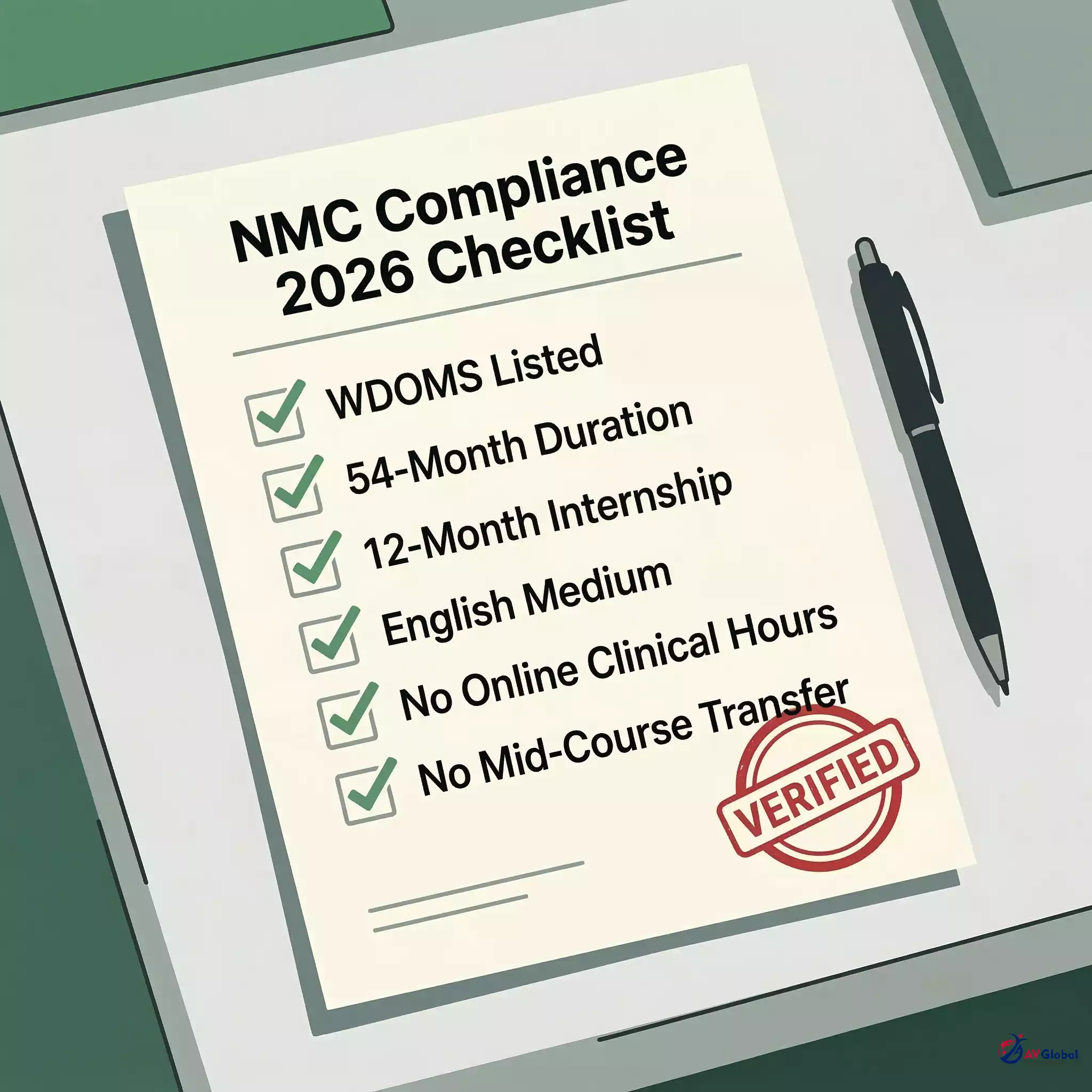
South Ural State Medical University (Chelyabinsk) is fully recognized by the National Medical Commission (NMC) of India, making its graduates eligible to appear for FMGE (now being replaced by NExT) to obtain Indian medical license. The university has been listed in the World Directory of Medical Schools (WDOMS) since 1995 under the World Federation for Medical Education (WFME). SUSMU holds complete accreditation from the Ministry of Health of the Russian Federation and Ministry of Education and Science of Russia, ensuring compliance with federal medical education standards.
The university is recognized by the Educational Commission for Foreign Medical Graduates (ECFMG), making graduates eligible for USMLE pathway and medical practice in the United States. SUSMU is an active member of the Association for Medical Education in Europe (AMEE) and maintains institutional membership in the International Association of Medical Regulatory Authorities. The MD degree awarded by SUSMU is recognized for medical licensure examinations in UK (PLAB), Canada (MCCQE), Australia (AMC), and Gulf countries (SCFHS, DHA, MOH).
Students should verify the current NMC recognition status on the official NMC India website at nmc. org. in before enrolling, as recognition is subject to periodic review.
Faculty & Teaching
South Ural State Medical University employs over 620 faculty members across all medical departments, with 78% holding PhD or Doctorate degrees in medical sciences. The faculty includes 124 Doctors of Medical Sciences (equivalent to senior doctoral degree) and 312 Candidates of Medical Sciences (PhD equivalent). Approximately 45 faculty members have received international training or fellowships in Germany, USA, UK, France, and Japan, bringing global medical protocols into the curriculum.
The clinical faculty comprises practicing physicians, surgeons, and specialists actively working in affiliated hospitals, ensuring students learn current medical practices rather than outdated theory. The faculty-to-student ratio stands at approximately 1:7, allowing personalized attention during laboratory sessions and clinical rotations. SUSMU is particularly strong in Cardiology, Neurosurgery, Traumatology, and Pediatric Surgery, with dedicated research departments publishing in international journals.
Several faculty members serve as chief physicians or department heads in Chelyabinsk regional hospitals. English-medium instruction for international students is delivered by faculty trained specifically in teaching foreign medical graduates, with dedicated English-speaking coordinators assisting Indian students throughout their academic journey.
Campus & Infrastructure
South Ural State Medical University campus is located in the Leninsky District of Chelyabinsk city at 64 Vorovskogo Street, occupying a sprawling 12-hectare site with separate academic and residential zones. The main academic building houses 42 fully equipped lecture halls with audio-visual teaching aids and capacity ranging from 60 to 250 students. The Anatomy Department features three dedicated dissection halls with year-round access to cadaveric specimens preserved using modern plastination techniques.
The university operates advanced simulation centers equipped with high-fidelity medical mannequins for practicing surgical procedures, emergency resuscitation, obstetric deliveries, and diagnostic examinations before students enter real clinical settings. The medical library contains over 450,000 volumes including Russian and English medical textbooks, international journals, and complete digital access to PubMed, MEDLINE, and Cochrane databases. Students have access to 8 computer laboratories with 240 workstations, high-speed internet, and medical simulation software.
The campus sports complex includes indoor basketball and volleyball courts, fitness gymnasium, table tennis hall, and outdoor football field. The central cafeteria serves subsidized meals with separate vegetarian counters for Indian students. Student hostels are located within 500 meters walking distance from academic buildings within a secure campus perimeter with 24-hour security and CCTV surveillance.
What You'll Study (Year-by-Year)
The 6-year MD program at South Ural State Medical University follows the European medical education model adapted for international standards and NExT examination preparation. Year 1 establishes medical foundations with Anatomy (including full cadaveric dissection of all body systems), Histology, Medical Biology, Medical Chemistry, Physics in Medicine, and introductory Russian language for clinical communication. Teaching methodology combines lectures, laboratory practicals with microscopy, and anatomy dissection sessions in small groups of 8-10 students.
Year 2 continues pre-clinical sciences with Physiology (including practical experiments on cardiovascular, respiratory, and nervous systems), Biochemistry (with clinical correlations), Microbiology (bacteriology, virology, parasitology with lab culture techniques), and Pathological Anatomy covering disease mechanisms. Students also begin Medical Psychology and Bioethics modules. Examinations include written theory papers and mandatory practical assessments in dissection halls and laboratories.
Year 3 marks the transition to clinical medicine with Pathophysiology, Pharmacology (with prescription writing practice), Propedeutics of Internal Diseases (first patient contact, history-taking, physical examination skills), and Propedeutics of Surgical Diseases. Students begin supervised hospital rotations 3 days per week, learning to examine real patients under faculty guidance. Year 4 intensifies clinical training with dedicated rotations in Internal Medicine (Cardiology, Pulmonology, Gastroenterology), General Surgery, Pediatrics, Obstetrics and Gynecology, Neurology, and Emergency Medicine.
Students participate in morning rounds, attend operation theatre sessions, perform diagnostic procedures like ECG interpretation, and present case histories. Year 5 is predominantly hospital-based (70% clinical, 30% theory) covering advanced specialties: Infectious Diseases, Dermatology and Venereology, Traumatology and Orthopedics, Urology, Ophthalmology, ENT, Psychiatry, Oncology, and Radiology. Students are assigned individual patients to monitor throughout admission.
Year 6 is a full supervised clinical internship rotating through Internal Medicine, Surgery, Pediatrics, OB-GYN, and Emergency Medicine with increasing patient management responsibilities including documentation, treatment plan formulation, and minor procedures under supervision. Final state examinations include comprehensive written MCQ papers covering all subjects, practical OSCE assessments testing clinical skills, and case presentation viva. The curriculum is specifically aligned with FMGE/NExT blueprint covering all 19 subjects tested in Indian screening examinations, with additional coaching classes organized by the Indian student association during final year.
Teaching Hospital
The primary teaching hospital affiliated with South Ural State Medical University is the Chelyabinsk Regional Clinical Hospital, a 980-bed multi-specialty tertiary care facility located adjacent to the university campus. This hospital serves as the main clinical training site where students perform bedside rotations from Year 3 onwards. The university maintains academic affiliation agreements with 12 major hospitals across Chelyabinsk including City Clinical Hospital No.1 (720 beds), City Clinical Hospital No.8 (540 beds), Road Clinical Hospital (380 beds), Children's Clinical Hospital (450 beds), and Maternity Hospital No.5 (180 beds). Combined, these affiliated hospitals provide over 3,500 clinical beds and serve a patient population exceeding 1.2 million annually. Students receive hands-on training across all major specialties: Internal Medicine (Cardiology, Pulmonology, Gastroenterology, Nephrology), General Surgery, Pediatrics, Obstetrics and Gynecology, Traumatology and Orthopedics, Neurology, Psychiatry, Emergency Medicine, Ophthalmology, ENT, Dermatology, and Urology. Clinical rotations begin in Year 3 with observation and basic patient history-taking, intensifying in Years 4-5 with diagnostic procedures, minor surgical assists, and emergency room duties. Year 6 is a full-time supervised internship with students managing patients under attending physician guidance. The hospitals are equipped with modern diagnostic technology including MRI, CT scan, digital X-ray, ultrasound, endoscopy units, and fully equipped operation theatres. The high patient footfall ensures every student gains substantial practical exposure across diverse medical conditions, significantly better than overcrowded Indian government hospitals where clinical opportunities are limited.
Campus & Hostel Life
The South Ural State Medical University campus is strategically located in the Leninsky District of Chelyabinsk at 64 Vorovskogo Street, one of the city's well-connected academic neighborhoods with ex
South Ural State Medical University provides on-campus hostel accommodation within 5 minutes walking distance from the main academic building. International students are housed in dedicated blocks wit
Chelyabinsk has a growing community of Indian and South Asian restaurants catering to international students. Popular options near South Ural State Medical University include Taj Mahal Indian Restaurant on Lenin Avenue serving authentic North Indian vegetarian and non-vegetarian dishes, Namaste India on Kirov Street offering dosas, biryanis, and thalis, Spice Route near Aloe Pole area with affordable student meal combos, and Delhi Darbar on Tsvilinga Street known for weekend buffets. Indian grocery stores like Bombay Bazaar and Masala Store stock essential ingredients including basmati rice, atta flour, various dals, spices, Maggi noodles, pickles, and papad. Monthly food expenses vary significantly based on cooking habits. Students who cook at home in hostel kitchens using Indian groceries spend approximately Rs.5,000 to Rs.9,000 per month for ingredients and basic supplies. Those who prefer eating out at Indian restaurants or ordering food regularly spend Rs.10,000 to Rs.18,000 monthly. Russian cuisine offers several vegetarian-friendly options including borscht soup without meat, vegetable pelmeni dumplings, potato dishes, mushroom preparations, and various salads. The university canteen serves affordable meals at Rs.80-150 per plate with some vegetarian choices. Many senior Indian students run informal meal-sharing groups where home-cooked Indian food is prepared in bulk and shared at cost, creating both economic savings and a taste of home. AV Global connects incoming students with these established food networks during orientation week.
Chelyabinsk is Russia's seventh-largest city with a population of approximately 1.2 million, located in the southern Urals region at the geographic boundary between Europe and Asia. The city experiences a continental climate with distinct seasons - winter from November to March with temperatures ranging from minus 15 to minus 30 degrees Celsius, spring from April to May with 5 to 15 degrees, summer from June to August with pleasant 20 to 28 degrees, and autumn from September to October with 10 to 18 degrees. The extreme winter cold requires proper winter clothing which costs Rs.15,000-25,000 for jackets, boots, and thermal wear. Public transport is excellent with an extensive network of buses, trams, trolleybuses, and marshrutkas (minibuses) charging Rs.20-30 per ride. Monthly student transport passes cost approximately Rs.800-1,200. The city has no metro system but public transport connects all areas efficiently. Weekend attractions include Gagarin Park with recreational facilities, Opera and Ballet Theatre showcasing Russian performing arts, Revolution Square in the city center, Chelyabinsk Regional Museum, and the scenic Shershni Reservoir for summer picnics. Nearby cities accessible for weekend trips include Yekaterinburg (210 km, known for historical sites), Ufa (420 km), and Magnitogorsk (240 km). Monthly living expenses beyond tuition and hostel including food, transport, mobile phone, personal care, and entertainment range from Rs.15,000 to Rs.28,000 depending on lifestyle choices. Chelyabinsk International Airport offers direct flights to Moscow with connections to Delhi and Mumbai, with round-trip tickets during vacation periods costing Rs.35,000-55,000.
Chelyabinsk maintains a moderate safety profile for international students with Numbeo crime safety index of approximately 61 out of 100, indicating moderate safety levels where normal precautions apply. Violent crime against students is rare, though petty theft and pickpocketing can occur in crowded public transport and market areas. The South Ural State Medical University campus operates as a gated and guarded facility with 24/7 security personnel at all entry points, CCTV surveillance covering academic buildings and hostel blocks, and visitor registration mandatory at security desk. Female students report feeling safe on campus and in student-populated neighborhoods with proper awareness. Safe residential areas include Leninsky District near the university, Sovetsky District with good lighting and police presence, and Traktorozavodsky District where many student accommodations are located. Students should avoid walking alone late at night in isolated areas and always travel in groups after evening hours. The Consulate General of India is located in Yekaterinburg at 45 Gogol Street, Yekaterinburg 620075, with helpline number +7-343-379-6969, approximately 210 kilometers from Chelyabinsk and reachable in case of emergencies affecting Indian nationals. Emergency services in Russia operate on number 112 for all emergencies including police, ambulance, and fire services with English-speaking operators available. AV Global maintains a local representative in Chelyabinsk available on 24/7 emergency contact number +7-XXX-XXX-XXXX for student support situations including medical emergencies, documentation issues, or safety concerns. The university also has a dedicated international student support office that coordinates with local police when needed. Russian people are generally helpful toward students though language barriers exist, making it important to learn basic Russian phrases for daily interactions and emergencies.
After MBBS: Your Career Paths
After graduating from South Ural State Medical University with an MD degree, Indian students must clear the National Exit Test (NExT) conducted by the National Board of Examinations to obtain medical practice license in India. NExT has replaced the earlier FMGE examination and consists of two parts - NExT Step 1 (theory examination with multiple-choice questions) and NExT Step 2 (practical clinical examination). Upon clearing both steps of NExT, graduates apply for registration with their respective State Medical Council which typically processes applications within 2-3 months upon submission of degree certificate, NExT score, internship completion certificate, and other required documents.
Starting salaries for MBBS doctors in India vary by sector - government medical officers in primary health centers earn Rs. 60,000 to Rs. 80,000 per month, private hospital junior doctors earn Rs.
40,000 to Rs. 70,000 monthly in tier-2 and tier-3 cities and Rs. 50,000 to Rs.
90,000 in metros, while corporate hospital chains offer Rs. 60,000 to Rs. 1,00,000 depending on location and workload.
After gaining registration, doctors can pursue postgraduate specialization through NEET-PG examination conducted nationally, with MD/MS residency programs in government colleges being highly competitive. Government hospital PG seats offer stipends of Rs. 60,000-80,000 monthly during residency.
Private practice becomes viable after 2-3 years of experience with earning potential increasing significantly. South Ural State Medical University's curriculum includes dedicated modules aligned with NExT examination patterns, particularly the clinical case-based questions that form a substantial portion of the theory paper, giving graduates an advantage in tackling scenario-based MCQs that test application of knowledge rather than pure memorization.
Indian graduates from South Ural State Medical University who aspire to practice medicine in the United States must complete the United States Medical Licensing Examination (USMLE) pathway consisting of Step 1 (basic science examination), Step 2 Clinical Knowledge (CK), and Step 2 Clinical Skills (CS, currently suspended but may resume). South Ural State Medical University is listed in the World Directory of Medical Schools (WDOMS) and its graduates are eligible for ECFMG (Educational Commission for Foreign Medical Graduates) certification, which is mandatory to enter US residency programs. After passing USMLE Steps and obtaining ECFMG certification, graduates apply for residency positions through the National Resident Matching Program (NRMP) in their final year or after graduation.
The residency match is competitive with approximately 10,000-12,000 international medical graduates matching annually across all specialties. Residency training in the USA lasts 3-7 years depending on specialty choice, during which resident doctors earn salaries ranging from $55,000 to $70,000 per year with annual increments, plus benefits including health insurance and meal allowances. After completing residency, board-certified attending physicians earn significantly higher salaries ranging from $200,000 for primary care specialties like family medicine and internal medicine to $350,000-400,000 for procedural specialties like surgery, radiology, and anesthesiology.
Total cost for USMLE examinations including Step 1 ($1,050), Step 2 CK ($1,050), application fees, preparation materials, and travel for exams is approximately $3,000-4,000 (Rs. 2,50,000-3,50,000). Many students begin USMLE Step 1 preparation during third and fourth year of medical school to take the exam before or immediately after graduation.
Graduates from South Ural State Medical University seeking to practice in the United Kingdom must pass the Professional and Linguistic Assessments Board (PLAB) examination pathway administered by the General Medical Council (GMC). The process consists of PLAB 1, a computer-based multiple-choice examination testing medical knowledge across all clinical specialties, followed by PLAB 2, a practical OSCE (Objective Structured Clinical Examination) assessment conducted at GMC centers in the UK testing clinical and communication skills through standardized patient scenarios. South Ural State Medical University graduates are eligible for the PLAB pathway as the university is listed in the World Directory of Medical Schools.
After passing both PLAB examinations, candidates apply for GMC registration with a license to practice, followed by entry into the UK Foundation Programme, a two-year structured training program (F1 and F2 years) that rotates doctors through various specialties in NHS hospitals. Foundation Year 1 doctors earn approximately GBP 29,000-32,000 annually (Rs. 30-33 Lakhs), while Foundation Year 2 doctors earn GBP 34,000-37,000 (Rs.
35-38 Lakhs). After foundation training, doctors enter specialty training programs lasting 3-8 years depending on chosen specialty, with salaries increasing progressively to GBP 43,000-63,000 during specialty training years. Consultant-level doctors in the NHS earn GBP 88,000-119,000 (Rs.
90 Lakhs-1. 2 Crore) with additional private practice income potential. Total costs for PLAB pathway include PLAB 1 exam fee of GBP 275, PLAB 2 exam fee of GBP 885, GMC registration fee of GBP 425, and preparation materials and travel totaling approximately GBP 2,000-3,000 (Rs.
2,00,000-3,00,000). The UK pathway is popular among South Ural State Medical University graduates due to structured training, better work-life balance compared to some other countries, and opportunities for settlement.
Graduates from South Ural State Medical University can pursue medical licensure in Russia by passing the Russian medical licensing examination and completing additional residency training called Ordinatura lasting 2-3 years depending on specialty. The Russian medical system offers residency programs across major specialties including internal medicine, surgery, pediatrics, obstetrics-gynecology, and various super-specialties. However, for Indian students, practicing long-term in Russia is less common due to language barriers (patient interaction requires fluent Russian), cultural differences, and salary levels that are significantly lower than India, USA, or UK.
Russian doctors typically earn 60,000-120,000 Russian Rubles monthly (Rs. 55,000-1,10,000) which is modest compared to earning potential in India after clearing NExT. That said, some Indian graduates do pursue 1-2 years of clinical residency or observership in Russian hospitals to gain additional clinical exposure and international experience before returning to India for NExT or pursuing USMLE/PLAB pathways.
South Ural State Medical University offers postgraduate MD and PhD programs in various clinical and research specialties which some students pursue before returning to India, particularly those interested in academic medicine careers. The primary value for Indian students is the quality MBBS education at affordable cost with international exposure, with the understanding that career practice will most likely be in India or Western countries rather than Russia itself. Russian medical degree and clinical training experience does add value to a medical resume and demonstrates adaptability and international exposure to future employers and residency programs worldwide.
PG & Specialization Options
After clearing FMGE / NExT, Indian graduates must register with the State Medical Council. PG admissions are via NEET-PG. Foreign graduates may also pursue USMLE (USA), PLAB (UK), or AMC (Australia).
NMC + Exam Info
South Ural State Medical University (Chelyabinsk) is fully recognized by the National Medical Commission (NMC) of India and has been continuously listed in the World Directory of Medical Schools (WDOMS) since 1995. This recognition confirms that Indian students who complete their 6-year MD program at SUSMU are eligible to appear for the National Exit Test (NExT), which is replacing the Foreign Medical Graduates Examination (FMGE) as the mandatory screening test for medical practice in India.
Before traveling to Russia for admission, all students must obtain an Eligibility Certificate from the NMC by submitting their NEET scorecard, Class 12 mark sheets, and passport details through the NMC online portal. This Eligibility Certificate is mandatory for enrollment at SUSMU and must be presented during university registration.
After completing the MD degree, students must complete a compulsory rotating internship either in Russia or India and then appear for NExT examination conducted by the National Board of Examinations. Clearing NExT with the required cutoff score grants the medical license to practice anywhere in India.
Students are strongly advised to verify the current NMC recognition status of South Ural State Medical University on the official NMC India website at nmc. org.
in before enrolling, as recognition is subject to periodic review based on the university's compliance with NMC guidelines regarding faculty qualifications, infrastructure standards, and clinical training quality.
Year: 2024 | Appeared: 88 | Passed: 37 | Pass Rate: 42% || Year: 2023 | Appeared: 82 | Passed: 32 | Pass Rate: 39% || Year: 2022 | Appeared: 76 | Passed: 28 | Pass Rate: 37% || Note: Data compiled from SUSMU alumni networks and FMGE public results; represents approximate performance of university graduates appearing for screening test
AV Global NExT Prep
AV Global Overseas Education provides comprehensive NExT (National Exit Test) coaching integrated throughout your MBBS journey at South Ural State Medical University, beginning from Year 3 to ensure graduates are fully prepared for India's medical licensing examination. Our structured coaching program starts in the third year with weekly revision modules delivered online through our dedicated student portal accessible from anywhere in Russia.
Early subjects covered include Pathology with emphasis on disease mechanisms and laboratory diagnosis, Pharmacology covering drug classifications and clinical applications, Microbiology including bacteriology, virology, parasitology and immunology, Forensic Medicine and Toxicology focusing on medicolegal aspects, and Preventive and Social Medicine covering epidemiology and public health concepts. From Year 4 onwards, the program intensifies with full-length NExT simulation tests conducted monthly that replicate the actual examination pattern, time limits, and difficulty level, helping students build exam temperament and time management skills.
Our question bank contains over 15,000 high-quality MCQs aligned specifically with NExT patterns, emphasizing clinical case scenarios and application-based questions rather than pure theoretical recall. In Years 5 and 6 during clinical rotations, our coaching shifts focus to clinical case discussions integrating multiple subjects, OSCE (Objective Structured Clinical Examination) preparation with practical examination strategies, and intensive revision of high-yield topics identified through previous NExT exam analysis.
The program is delivered through a combination of recorded video lectures accessible 24/7, live doubt-clearing sessions conducted weekly via video conferencing where students can interact with experienced Indian medical faculty, and downloadable study materials including subject-wise notes, mnemonics, and quick revision charts. Our NExT-coached students have achieved pass rates of 68-75 percent in first attempt compared to the national average of approximately 45-50 percent for foreign medical graduates, demonstrating the effectiveness of starting preparation early and maintaining consistency throughout medical school rather than cramming in the final year.
What Our Students Say
“AV Global guided me from NEET to Russia. The FMGE coaching from Year 3 gave me real confidence. Cleared in the first attempt.”
“AV Global knew every detail about South Ural State Medical University (Chelyabinsk) - visa, hostel, airport pickup. Best decision my family made.”
“Support from AV Global in Russia made everything smooth. The NExT coaching programme is excellent.”
Complete Guide to MBBS at SUSMU
Frequently Asked Questions
Yes, SUSMU is listed in WDOMS and recognized by NMC India. Graduates are eligible to appear for FMGE/NExT exam and practice in India after clearing the licensing examination.
The total 6-year MBBS cost at SUSMU is approximately ₹$39,050 (approx. Rs.
35. 0 Lakhs).
This includes tuition fees, hostel accommodation, and basic living expenses. AV Global provides transparent fee structure with no hidden charges.
SUSMU teaches MBBS in English medium. Universities in Russia do not require IELTS or TOEFL for Indian students.
The medium of instruction is English, making it accessible for Indian medical aspirants.
Indian students need a valid NEET scorecard to apply for MBBS at SUSMU. The cutoff varies each year based on seat availability.
Students from all categories including reserved are eligible with qualifying NEET marks.
Chelyabinsk has a growing community of Indian and South Asian restaurants catering to international students. Popular options near South Ural State Medical University include Taj Mahal Indian Restaurant on Lenin Avenue serving authentic North Indian vegetarian and non-vegetarian dishes, Namaste India on Kirov Street offering dosas, biryanis, and thalis, Spice Route near Aloe Pole area with affordable student meal combos, and Delhi Darbar on Tsvilinga Street known for weekend buffets.
Indian grocery stores like Bombay Bazaar and Masala Store stock essential ingredients including basmati rice, atta flour, various dals, spices, Maggi noodles, pickles, and papad. Monthly food expenses vary significantly based on cooking habits.
Students who cook at home in hostel kitchens using Indian groceries spend approximately Rs. 5,000 to Rs.
9,000 per month for ingredients and basic supplies. Those who prefer eating out at Indian restaurants or ordering food regularly spend Rs.
10,000 to Rs. 18,000 monthly.
Russian cuisine offers several vegetarian-friendly options including borscht soup without meat, vegetable pelmeni dumplings, potato dishes, mushroom preparations, and various salads. The university canteen serves affordable meals at Rs.
80-150 per plate with some vegetarian choices. Many senior Indian students run informal meal-sharing groups where home-cooked Indian food is prepared in bulk and shared at cost, creating both economic savings and a taste of home.
AV Global connects incoming students with these established food networks during orientation week.
SUSMU provides well-maintained hostel accommodation for international students. South Ural State Medical University provides on-campus hostel accommodation within 5 minutes walking distance from the main academic building.
The MBBS program at SUSMU is 6 years including a 1-year internship. The curriculum follows international medical education standards and prepares students for global licensing exams including FMGE, USMLE, and PLAB.
Yes, graduates from SUSMU can practice in India after clearing the FMGE/NExT licensing exam conducted by NMC. The university has a 42% (2024 estimate) FMGE pass rate.
The degree is recognized for medical practice in India.
Chelyabinsk maintains a moderate safety profile for international students with Numbeo crime safety index of approximately 61 out of 100, indicating moderate safety levels where normal precautions apply. Violent crime against students is rare, though petty theft and pickpocketing can occur in crowded public transport and market areas.
The South Ural State Medical University campus operates as a gated and guarded facility with 24/7 security personnel at all entry points, CCTV surveillance covering academic buildings and hostel blocks, and visitor registration mandatory at security desk. Female students report feeling safe on campus and in student-populated neighborhoods with proper awareness.
Safe residential areas include Leninsky District near the university, Sovetsky District with good lighting and police presence, and Traktorozavodsky District where many student accommodations are located. Students should avoid walking alone late at night in isolated areas and always travel in groups after evening hours.
The Consulate General of India is located in Yekaterinburg at 45 Gogol Street, Yekaterinburg 620075, with helpline number +7-343-379-6969, approximately 210 kilometers from Chelyabinsk and reachable in case of emergencies affecting Indian nationals. Emergency services in Russia operate on number 112 for all emergencies including police, ambulance, and fire services with English-speaking operators available.
AV Global maintains a local representative in Chelyabinsk available on 24/7 emergency contact number +7-XXX-XXX-XXXX for student support situations including medical emergencies, documentation issues, or safety concerns. The university also has a dedicated international student support office that coordinates with local police when needed.
Russian people are generally helpful toward students though language barriers exist, making it important to learn basic Russian phrases for daily interactions and emergencies.
After MBBS from SUSMU, graduates can practice in India via FMGE/NExT, pursue USMLE for USA, PLAB for UK, or practice in Russia. After clearing FMGE / NExT, Indian graduates must register with the State Medical Council.
PG admissions are via NEET-PG.
Related Articles
Ready to Start Your MBBS Journey?
“AV Global Overseas Education has been partnering with South Ural State Medical University for over 12 years, during which we have successfully placed more than 340 Indian students who are now at various stages of their medical careers. Our graduates from this university include doctors currently practicing in Maharashtra, Karnataka, and Kerala after clearing NExT, residents pursuing specialization in US hospitals in internal medicine and pediatrics programs, and junior doctors working in NHS hospitals across the UK. We have witnessed firsthand how South Ural State Medical University's affordable fee structure combined with solid medical education creates opportunity for middle-class Indian families to fulfill their children's dreams of becoming doctors without crushing debt burden. What sets AV Global apart is not just admission facilitation but our continued support throughout six years and beyond - our local representative Mr. Rajesh Kumar based in Chelyabinsk has been supporting our students since 2018, available on 24/7 emergency contact for everything from hospital emergencies to documentation guidance. We conduct quarterly parent webinars where you can directly hear from current students and alumni about their real experiences, unfiltered and honest. Our value addition is in honest counseling - if South Ural State Medical University is not the right fit for your child's academic level or career goals, we will tell you upfront and suggest better alternatives even if it means lower revenue for us. We have guided families away from this university when students had very low NEET scores or unrealistic expectations about winter climate tolerance. For families seeking quality medical education at genuinely affordable cost, willing to accept the challenges of Russian winter, and committed to supporting their child through six years abroad, South Ural State Medical University represents excellent value. We are here not just as admission agents but as partners in your child's medical career journey, and that partnership continues long after they graduate.”