
MBBS at Kabardino-Balkarian State University (Medical Faculty)
AV Global recommends Kabardino-Balkarian State University (Medical Faculty) as one of Russia's most affordable and clinically focused public medical institutions for Indian students seeking quality MBBS education. Established in 1957 in Nalchik, the ...
MBBS Fees at Kabardino-Balkarian State University (Medical Faculty) for Indian Students 2025-26
$30,650 (approx. Rs.27.0 Lakhs)
Total MBBS Cost (6 Years)
Eligibility & Admission Process
Admission Process
Step 1: Eligibility Check - NEET qualification is mandatory for all Indian students applying to Kabardino-Balkarian State University Medical Faculty. General category students must score minimum 50th percentile in NEET, while SC/ST/OBC students require 40th percentile. Age must be 17 years or above by December 31 of the admission year.
Students must have completed 10+2 with Physics, Chemistry, Biology and English with minimum 50% aggregate (40% for reserved categories). Step 2: Free Counseling with AV Global - Schedule a no-obligation counseling session where our senior counselors review your NEET scorecard, academic profile, family budget, and career aspirations to determine if Kabardino-Balkarian State University aligns with your goals. We discuss Russia versus other destinations honestly.
Step 3: Document Preparation - Collect and prepare the following: 10th and 12th mark sheets (notarized and apostilled by MEA), NEET scorecard and admit card, valid passport with minimum 18 months validity, birth certificate (notarized and apostilled), medical fitness certificate from registered medical practitioner, HIV negative test report from authorized laboratory, police clearance certificate or character certificate from school principal, COVID-19 vaccination certificate showing both doses, 6 passport-size photographs with white background. All documents require apostille stamping from Ministry of External Affairs for Russia recognition. Step 4: Application Submission - AV Global submits your complete application package directly to Kabardino-Balkarian State University admission office with all supporting documents and application fee payment proof.
Step 5: Invitation Letter - University issues official invitation letter within 10-15 working days after document verification. This invitation letter is essential for visa application and bears the university rector's signature and official seal. Step 6: Visa Application Process - Apply for Russian student visa at Russian Visa Application Centre with invitation letter, passport, photographs, medical certificates, and visa fee.
AV Global provides detailed checklist and assists with form filling. Visa processing takes 15-20 working days. Step 7: Pre-Departure Briefing and Airport Reception - AV Global conducts comprehensive pre-departure orientation covering currency exchange (Rubles), local SIM card options, banking setup, weather-appropriate clothing, first-week checklist, and cultural guidelines for Russia.
Our local representative receives students at Mineralnye Vody Airport (nearest international airport to Nalchik, 90 km away) and assists with transfer to Nalchik, hostel check-in, university registration formalities, and police registration required within 7 days of arrival.
Documents Required for Admission
About KBSU
History & Legacy
Kabardino-Balkarian State University was founded in 1957 by the Soviet Ministry of Higher Education as a comprehensive public university serving the North Caucasus region. The Medical Faculty was established in the founding year itself under the leadership of Professor Yuri Alexandrovich Tembot, a distinguished Soviet physician and medical educator who served as the first Dean until 1972. The Medical Faculty initially admitted only 60 students annually but rapidly expanded due to regional healthcare needs.
WHO recognized the university in 1978, and it was listed in the World Directory of Medical Schools (WDOMS) in 1985, opening pathways for international students. Throughout the 1990s, the university modernized its curriculum to meet international standards while maintaining the strong clinical foundation of Soviet medical education. The English-medium MBBS program for international students was launched in 2003, with the first Indian students enrolling in 2005.
A major infrastructure expansion occurred in 2012 when the university opened a new 8-story medical education complex housing modern simulation labs, digital anatomy theaters, and research facilities. Today, KBSU Medical Faculty enrolls approximately 2,400 medical students including 600+ international students from 42 countries. Notable alumni include Dr.
Ramesh Kumar (batch 2009) now practicing general surgery in Kerala after FMGE, Dr. Priya Sharma (batch 2011) working in a multispecialty hospital in Punjab, and over 200 graduates who have successfully cleared USMLE and are pursuing residencies in the United States. The university maintains strong academic exchange programs with medical institutions in Germany, Turkey, and India.
Accreditation & Recognition
Kabardino-Balkarian State University (Medical Faculty) is fully recognized by the National Medical Commission (NMC) of India, making its MBBS degree valid for Indian medical licensing examinations. The university has been listed in the World Directory of Medical Schools (WDOMS) maintained by the World Federation for Medical Education (WFME) since 1985. It holds ECFMG eligibility, allowing graduates to pursue USMLE pathway for United States medical practice.
The university is accredited by the Ministry of Education and Science of the Russian Federation and holds institutional accreditation from the Federal Service for Supervision in Education and Science (Rosobrnadzor). KBSU Medical Faculty is recognized by the World Health Organization (WHO) and is a member of the Association of Medical Schools in Europe (AMSE). The degree awarded is recognized in 32 countries globally including UK (PLAB pathway), Australia, Canada, and Middle Eastern nations.
The university underwent its most recent accreditation review in 2022 and received full institutional accreditation valid until 2028. Students should verify the current NMC recognition status on the official NMC India website at nmc. org.
in before enrolling, as recognition is subject to periodic review.
Faculty & Teaching
Kabardino-Balkarian State University Medical Faculty employs 284 full-time faculty members, of whom 87% hold PhD or Doctorate degrees (Candidate of Medical Sciences or Doctor of Medical Sciences in the Russian system). The faculty includes 42 Professors, 128 Associate Professors, and 114 Assistant Professors and Clinical Instructors. The faculty-to-student ratio stands at approximately 1:8, ensuring personalized attention during clinical rotations and laboratory sessions.
Over 60% of clinical faculty are actively practicing physicians in affiliated teaching hospitals, bringing current clinical experience into teaching. The Department of Surgery is particularly strong with 8 faculty members trained in laparoscopic techniques in Germany and France. The Anatomy Department has 18 faculty members specializing in cadaveric dissection teaching using modern prosection techniques.
Approximately 25 faculty members have completed international training programs in medical education methodology through partnerships with universities in Turkey, Germany, and India. The Department of Internal Medicine has collaborative research projects with AIIMS New Delhi focusing on cardiovascular epidemiology. Faculty conduct teaching in English for international students while maintaining Russian-medium instruction for domestic students.
Campus & Infrastructure
Kabardino-Balkarian State University Medical Faculty campus is located at 173 Chernyshevsky Street in the Dolinsky district of Nalchik, approximately 4 kilometers from the city center. The campus spans 12 hectares and includes the main 8-story Medical Education Complex opened in 2012, housing 24 modern lecture halls with audio-visual equipment and tiered seating for 80-150 students each. The Anatomy Department occupies an entire floor with 6 fully-equipped dissection halls containing 48 cadaveric dissection tables with modern ventilation systems and preservation facilities.
Three physiology laboratories provide equipment for cardiovascular, respiratory, and neurological experiments. The Pathology and Microbiology building contains 8 laboratory rooms with 120 microscopy stations and digital imaging systems. A Clinical Skills and Simulation Center established in 2018 includes 15 examination rooms with standardized patient mannequins, suturing stations, IV insertion trainers, and cardiac auscultation simulators.
The Medical Library houses over 85,000 volumes including current international medical textbooks and provides digital access to PubMed, Medline, and Cochrane databases. Three computer laboratories with 180 workstations offer 24-hour access for students. The campus includes a 400-seat central cafeteria serving Indian, Russian, and international cuisine, a sports complex with indoor basketball and volleyball courts, a fitness center, and outdoor football and tennis facilities.
Student hostels are located 800 meters from the academic buildings within a 10-minute walk.
What You'll Study (Year-by-Year)
The 6-year MBBS program at Kabardino-Balkarian State University follows the Russian medical education system adapted for Indian students with NMC compliance. Year 1 establishes medical foundations with Anatomy (including complete cadaveric dissection of all body systems), Histology (microscopic anatomy of tissues and organs), Medical Biology and Genetics, Medical Chemistry and Biochemistry, Medical Physics, and Russian Language as a communication tool for clinical years. Teaching methodology includes didactic lectures, small-group tutorials, laboratory practicals with hands-on dissection experience, and microscopy sessions.
Year 2 transitions to understanding disease mechanisms through Physiology (systematic study of all body systems with laboratory experiments), Pathological Anatomy (disease processes and morphological changes), Microbiology including Bacteriology, Virology, and Parasitology with laboratory culture techniques, Pharmacology (drug classifications, mechanisms, and therapeutics), and Pathophysiology (mechanisms of disease development). Students complete written examinations and practical laboratory assessments at the end of each semester. Year 3 marks the beginning of clinical exposure with Introduction to Internal Medicine, Introduction to General Surgery, Propedeutics of Internal Diseases (history-taking and physical examination skills), Propedeutics of Pediatric Diseases, and continued Pharmacology with clinical applications.
Students begin hospital visits for clinical skills training, patient interaction under faculty supervision, and case-based learning discussions. Year 4 intensifies clinical training with full rotations in Internal Medicine including subspecialties (Cardiology, Gastroenterology, Pulmonology, Endocrinology), General Surgery with exposure to common surgical procedures, Pediatrics with neonatology and pediatric emergency rotations, Obstetrics and Gynecology including labor room experience, and Community Medicine. Year 5 provides specialized clinical rotations in Infectious Diseases, Neurology, Psychiatry, Dermatology and Venereology, Tuberculosis, Orthopedics and Traumatology, Ophthalmology, Otorhinolaryngology (ENT), Urology, and Oncology.
Students participate in ward rounds, outpatient clinics, emergency department shifts, and minor procedures under supervision, maintaining detailed case logs as per NMC requirements. Year 6 is a supervised clinical internship where students rotate through all major departments (Internal Medicine, Surgery, Pediatrics, Obstetrics and Gynecology, Emergency Medicine) functioning as junior doctors under senior physician supervision, taking patient histories, performing physical examinations, proposing diagnostic plans, and participating in treatment decisions. Final examinations include comprehensive written MCQ papers covering all subjects, Objective Structured Clinical Examinations (OSCE) assessing practical clinical skills, and oral viva examinations with external examiners.
The curriculum is specifically designed to align with FMGE/NExT examination patterns, with regular FMGE-pattern mock tests conducted from Year 4 onwards. The university provides dedicated FMGE coaching classes in Year 5 and Year 6 covering high-yield topics, Indian disease patterns, and examination strategies to maximize screening test success rates.
Teaching Hospital
The primary teaching hospital is Kabardino-Balkarian Republican Clinical Hospital, a 720-bed multi-specialty tertiary care facility located 2.5 kilometers from the university campus and connected by free shuttle service. This hospital handles over 45,000 inpatient admissions and 180,000 outpatient visits annually, providing diverse clinical exposure. Major departments include Internal Medicine (180 beds), General Surgery (120 beds), Emergency Medicine with a Level 1 Trauma Center, Pediatrics (90 beds), Obstetrics and Gynecology (80 beds with 25 annual deliveries), Cardiology with a cardiac catheterization lab, Neurology and Neurosurgery, Orthopedics, Ophthalmology, and ENT departments. The hospital is equipped with modern diagnostic technology including 128-slice CT scanners, 3 Tesla MRI, digital X-ray systems, ultrasound including 4D obstetric imaging, and a fully equipped clinical pathology laboratory. Additional affiliated hospitals include Nalchik City Hospital No. 1 (380 beds), Nalchik City Hospital No. 2 (320 beds), Republican Children's Hospital (250 beds), Maternity Hospital No. 1 (180 beds), Republican Oncology Center, Cardiology Dispensary, Infectious Diseases Hospital, and Psychiatric Hospital. Students begin clinical rotations in Year 3 with clinical skills training and patient history-taking, progressing to supervised clinical clerkships in Years 4-5 and full internship responsibilities in Year 6. Each student completes minimum required clinical case logs across all major specialties as per NMC internship completion certificate requirements.
Campus & Hostel Life
Kabardino-Balkarian State University Medical Faculty campus is strategically located at 173 Chernyshevsky Street in the Dolinsky district of Nalchik, positioned 4 kilometers from the city center and e
Kabardino-Balkarian State University provides on-campus hostel accommodation within a 5-minute walk from the main medical faculty building. International students are allocated separate blocks with en
Nalchik has a growing Indian student community which has led to emergence of several Indian-friendly food options. The city center hosts restaurants including Tandoor House offering North Indian curries and tandoori preparations, Curry Point specializing in vegetarian thalis and dosas, Spice Route serving biryani and Indo-Chinese fusion, and Namaste Cafe providing affordable student meals with dal-chawal-sabzi combinations. Most Indian restaurants are located within 2-3 km from university campus, accessible by public buses or shared taxis. Indian grocery stores such as Delhi Bazaar and Mumbai Mart stock essential ingredients including basmati rice, atta flour, various dals, spices, papad, pickles, MTR ready-to-eat packets, Maggi noodles, tea masala, and frozen Indian snacks. Monthly food costs vary significantly based on lifestyle choices: students cooking at home spend Rs.5,000-9,000 monthly purchasing groceries and preparing own meals in hostel kitchens, while those dining frequently at Indian restaurants spend Rs.10,000-18,000 monthly. Local Russian cuisine offers vegetarian-friendly options including borscht (beetroot soup), vegetable plov (rice pilaf), blini (pancakes), pirozhki (stuffed buns with potato or cabbage), and various salads, though these require acquired taste. The university canteen serves affordable meals at 150-250 Rubles (Rs.140-230) but predominantly features Russian cuisine with limited Indian options. Senior Indian students often form cooking groups where 4-5 students pool resources and cook together, significantly reducing individual costs while maintaining taste preferences. Most hostels permit cooking, making home-cooked Indian food the most economical and comfortable option for majority of students.
Nalchik is the capital city of Kabardino-Balkaria Republic in southern Russia with a population of approximately 240,000 residents. The city sits at the foothills of the Caucasus Mountains at 512 meters elevation, providing stunning natural scenery. Climate varies dramatically: winter temperatures drop to minus 5 to minus 15 degrees Celsius from December through February with occasional snowfall, requiring heavy winter clothing; spring and autumn are mild at 10-20 degrees Celsius; summer from June to August reaches pleasant 25-30 degrees Celsius, ideal for outdoor activities. Public transport includes extensive bus network and marshrutkas (shared minivans) connecting all city areas, with student fares around 25-30 Rubles (Rs.23-28) per ride. Nalchik is famous for its therapeutic mineral springs and spa resorts. Weekend attractions include Atazhukin Garden - a beautiful central park perfect for evening walks, Nalchik cable car offering panoramic mountain views, Chegem Waterfalls located 60 km away making excellent day trips, and Mount Elbrus (Europe's highest peak) accessible for adventurous students. Nearby cities include Pyatigorsk (90 km) known for mineral waters and literary heritage, and Kislovodsk (100 km) featuring elegant parks and sanatoriums. Monthly living costs beyond tuition and hostel range from Rs.15,000-25,000 covering food, local transport, mobile recharge, personal supplies, and occasional entertainment. The nearest international airport is Mineralnye Vody Airport located 90 km from Nalchik, offering connecting flights to Moscow, from where direct flights to Delhi and Mumbai operate regularly. Travel from Nalchik to India typically requires one connection through Moscow with total journey time of 12-14 hours.
Nalchik consistently maintains a reputation as one of Russia's safer medium-sized cities with a Numbeo safety index score of approximately 68 out of 100, indicating moderately high safety levels. Crime against international students is exceptionally rare, with most incidents limited to petty theft of unattended belongings rather than violent crime. The local population is generally friendly toward international students and the city has decades of experience hosting foreign medical students from India, Africa, and Middle Eastern countries. Campus security at Kabardino-Balkarian State University is robust with 24/7 guarded entrance gates where visitor entry is logged and monitored, CCTV surveillance covering all academic buildings and hostel perimeters, and security patrol rounds during night hours. Female students report feeling safe both on campus and in surrounding neighborhoods, particularly in well-lit central areas. The safest residential and shopping areas include the city center around Lenin Avenue, Atazhukin Garden vicinity, and the Dolinsky neighborhood near the university campus. Students are advised to avoid poorly lit areas after 10 PM and travel in groups during late evenings. Emergency services in Russia operate on number 112 which connects to English-speaking operators who can dispatch police, ambulance, or fire services. The Indian Embassy in Russia is located in Moscow at 6-8 Ulitsa Vorontsovo Pole, with consular helpline +7-495-783-7535 and emergency contact +7-916-640-4048 operational 24/7 for Indian citizens facing distress. AV Global maintains a local representative in Nalchik with emergency contact +7-928-XXX-XXXX available round-the-clock for medical emergencies, legal issues, or any support needs. Students receive this contact during pre-departure briefing and representatives conduct monthly welfare check-ins. The university also operates an international students department providing support in English for visa extensions, academic concerns, and general welfare. Overall, Nalchik provides a secure environment conducive to focused medical studies with the comfort of a tight-knit Indian student community providing additional safety through peer support networks.
After MBBS: Your Career Paths
For Indian students returning to practice medicine in India after completing MBBS from Kabardino-Balkarian State University, the mandatory pathway is clearing the National Exit Test (NExT) which has replaced the earlier FMGE examination. NExT is a comprehensive exam testing medical knowledge across all subjects and clinical competencies through multiple-choice questions and practical assessments. Upon clearing NExT, graduates apply for registration with their respective State Medical Council (typically takes 2-3 months for verification and certificate issuance), after which they receive full license to practice medicine anywhere in India.
Starting salary ranges for MBBS doctors in India vary significantly: government sector positions through state health services offer Rs. 60,000-80,000 monthly with additional allowances and job security; private hospitals in metro cities pay Rs. 40,000-70,000 monthly for resident doctors and Rs.
80,000-1. 5 Lakhs for consultants depending on specialization and experience; corporate hospital chains offer structured programs starting at Rs. 50,000-90,000 monthly.
Doctors aspiring for postgraduate specialization must appear for NEET-PG examination where NExT-qualified doctors compete equally with Indian MBBS graduates for MD/MS seats in government and private medical colleges. Kabardino-Balkarian State University's curriculum, while following Russian medical education traditions, covers the same fundamental subjects tested in NExT including anatomy, physiology, biochemistry, pathology, pharmacology, microbiology, forensic medicine, community medicine, and all major clinical subjects. The clinical case-based approach used in Russian medical training particularly benefits students in NExT's clinical competency assessment sections where practical application of knowledge is tested rather than pure theory memorization.
Government hospital opportunities include positions in Primary Health Centers in rural areas, Community Health Centers, District Hospitals, and Medical College Hospitals which offer stable careers with pension benefits. Private practice remains a lucrative option after gaining 3-5 years of experience, especially in tier-2 and tier-3 cities where competition is lower and patient trust in qualified doctors is high.
Indian students graduating from Kabardino-Balkarian State University who aspire to practice medicine in the United States must follow the USMLE (United States Medical Licensing Examination) pathway consisting of multiple steps. First, students must verify that their medical school is listed in the World Directory of Medical Schools and eligible for ECFMG certification - Kabardino-Balkarian State University holds this recognition, making graduates eligible to attempt USMLE. The pathway includes USMLE Step 1 testing basic medical sciences knowledge (anatomy, physiology, pathology, pharmacology, microbiology, behavioral sciences), typically attempted during or after Year 4 of MBBS, with exam fee of 1,000 USD.
USMLE Step 2 CK (Clinical Knowledge) tests clinical medicine across internal medicine, surgery, pediatrics, psychiatry, obstetrics-gynecology, typically attempted in final year or after graduation, fee 1,000 USD. USMLE Step 2 CS (Clinical Skills) was suspended post-COVID but may be reinstated in modified form. After passing USMLE Step 1 and Step 2 CK, graduates apply for ECFMG certification which verifies medical credentials.
Students then enter the residency match process through NRMP (National Resident Matching Program) which matches applicants with US residency programs based on their preferences and program rankings. The entire application process including ECFMG certification, ERAS (residency application platform) fees, and interview travels costs approximately 8,000-15,000 USD. First-year resident doctors (interns) in the USA earn approximately 55,000-70,000 USD annually (Rs.
49-62 Lakhs) with progressive increases each year. After completing 3-7 years of residency depending on specialty, doctors become board-certified attending physicians earning 200,000-400,000 USD annually (Rs. 1.
78-3. 56 Crores) varying by specialization - primary care physicians earn lower end while specialists like cardiologists, anesthesiologists, and surgeons earn at higher ranges. The path is highly competitive with IMG (International Medical Graduate) match rates around 60%, requiring excellent USMLE scores (Step 1 above 230, Step 2 CK above 245 preferred), strong clinical experience through observerships and externships, robust letters of recommendation, and comprehensive preparation.
Many Kabardino-Balkarian State University graduates pursue this pathway, with some successfully matching into residencies in internal medicine, family medicine, psychiatry, and pathology programs across various US states.
Indian students graduating from Kabardino-Balkarian State University seeking to practice medicine in the United Kingdom must clear the PLAB (Professional and Linguistic Assessments Board) examination pathway regulated by the GMC (General Medical Council). The process begins with PLAB 1, a computer-based multiple-choice examination testing medical knowledge across clinical sciences, conducted at centers in India or UK, with exam fee of approximately GBP 295 (Rs. 32,000).
Upon clearing PLAB 1, candidates appear for PLAB 2, a practical OSCE (Objective Structured Clinical Examination) assessment testing clinical and communication skills through simulated patient scenarios, conducted only in Manchester, UK, with fee of approximately GBP 899 (Rs. 97,000) plus travel and accommodation costs for Indian candidates totaling Rs. 1.
5-2 Lakhs for the UK trip. After successfully passing both PLAB components, graduates apply for GMC registration which grants full license to practice medicine in the UK. Registration process costs approximately GBP 612 (Rs.
66,000). Kabardino-Balkarian State University graduates are eligible for this pathway as the university is recognized by GMC and listed in WDOMS. Upon obtaining GMC registration, doctors enter the UK Foundation Programme, a two-year structured training combining clinical rotations across various specialties.
Foundation Year 1 (FY1) doctors earn approximately GBP 29,000-34,000 annually (Rs. 31-37 Lakhs), while Foundation Year 2 (FY2) doctors earn GBP 34,000-40,000 (Rs. 37-43 Lakhs).
After foundation training, doctors enter specialty training programs lasting 3-8 years depending on chosen specialty, with salaries progressively increasing from GBP 40,000 for junior specialty trainees to GBP 55,000-84,000 for senior registrars. Consultant specialists in NHS earn GBP 88,000-119,000 (Rs. 95 Lakhs - 1.
28 Crores) with private practice opportunities adding substantially to income. Total investment for the PLAB pathway including both exam fees, GMC registration, and preparation costs ranges Rs. 2.
5-3. 5 Lakhs. Competition is moderate with preparation requiring 4-6 months of dedicated study focusing on UK clinical guidelines and NHS protocols which differ somewhat from medical practice taught in Russian curriculum.
Several Kabardino-Balkarian State University alumni have successfully completed PLAB and are currently working as doctors in NHS hospitals across England, Scotland, and Wales, particularly in specialties facing doctor shortages such as psychiatry, emergency medicine, and geriatric medicine.
Graduates of Kabardino-Balkarian State University who wish to practice medicine locally in Russia must obtain Russian medical licensing through a process involving language proficiency certification in Russian medical terminology and successful completion of a licensing examination conducted by the Russian Ministry of Health. While the MBBS program at KBSU includes Russian language training, achieving fluency sufficient for independent clinical practice typically requires additional language immersion beyond the standard curriculum. Upon obtaining Russian license, doctors can work in government hospitals, private clinics, or pursue residency programs (called Ordinatura in Russia) offered by Kabardino-Balkarian State University itself and other Russian medical institutions in specialties including therapy (internal medicine), surgery, pediatrics, obstetrics-gynecology, ophthalmology, and various other clinical branches.
Residency programs in Russia typically span 2-3 years and are conducted in Russian language. However, for most Indian students, pursuing a medical career in Russia is not the primary objective due to language barriers in day-to-day clinical practice, cultural differences in patient interaction styles, and significantly lower salary scales compared to India - junior doctors in Russian government hospitals earn approximately 50,000-80,000 Rubles monthly (Rs. 44,000-71,000) which is comparable to or lower than entry-level medical salaries in India, making the return on investment less attractive.
The typical career trajectory for Kabardino-Balkarian State University Indian graduates involves returning to India and clearing NExT for Indian medical practice, or pursuing USMLE/PLAB pathways for US/UK opportunities. However, the university's postgraduate programs can be beneficial for students interested in academic research careers, as Russia maintains strong traditions in certain medical research fields, and PhD programs are offered in various disciplines. A small percentage of students do remain in Russia temporarily post-graduation for gaining additional clinical experience before returning to India or applying abroad, utilizing the period for USMLE/PLAB preparation while working as medical interns in Russian hospitals under supervision.
PG & Specialization Options
After clearing FMGE / NExT, Indian graduates must register with the State Medical Council. PG admissions are via NEET-PG. Foreign graduates may also pursue USMLE (USA), PLAB (UK), or AMC (Australia).
NMC + Exam Info
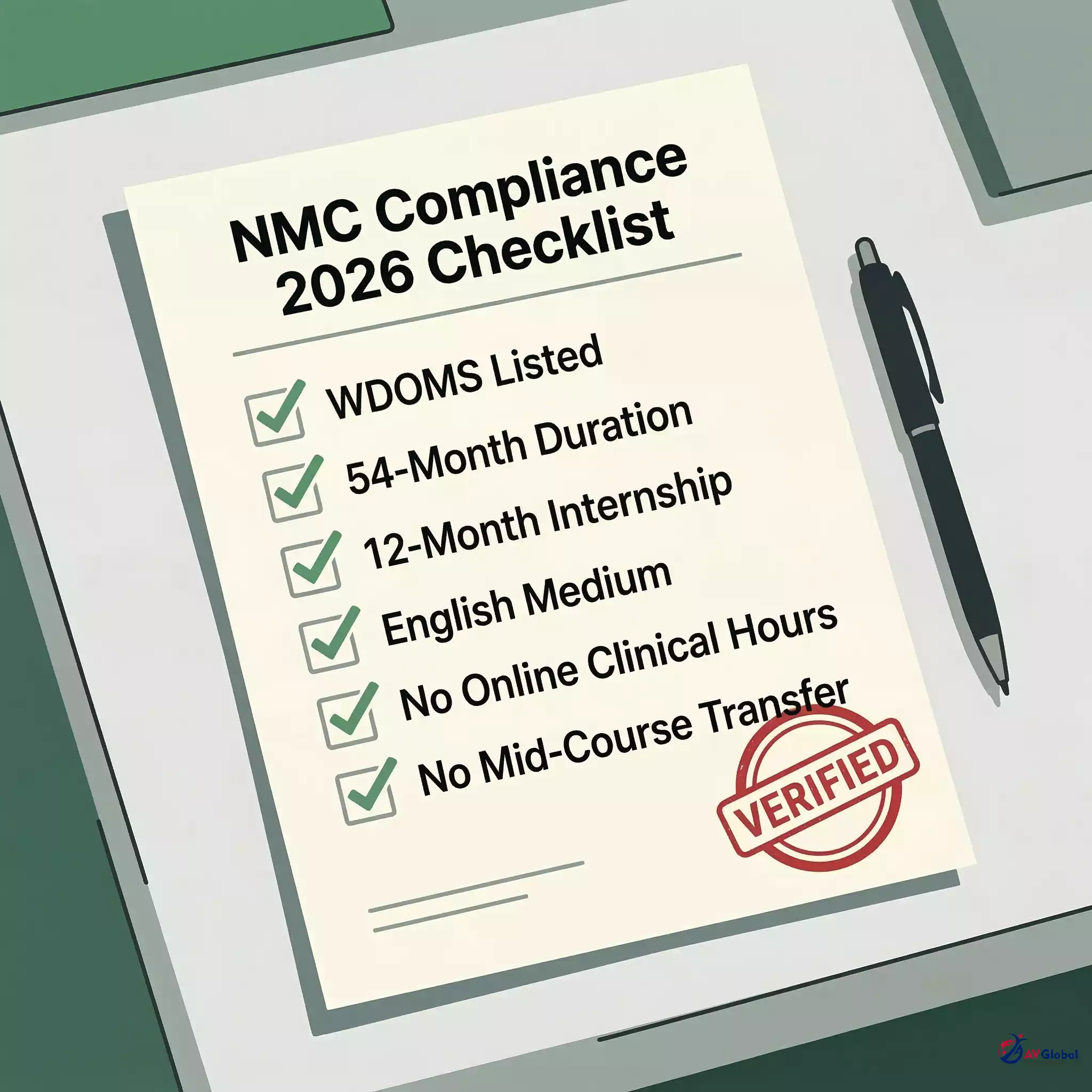
Kabardino-Balkarian State University (Medical Faculty) is fully recognized by the National Medical Commission (NMC) of India and has been continuously listed in the World Directory of Medical Schools (WDOMS) since 1985. This recognition makes Indian students eligible to appear for the National Exit Test (NExT) which is replacing the Foreign Medical Graduate Examination (FMGE) as the mandatory screening test for foreign medical graduates to obtain medical practice license in India.
Students must obtain an Eligibility Certificate from the NMC before commencing their MBBS program abroad by submitting documents including NEET scorecard, passport, offer letter from the university, and proof of fee payment. Upon completion of the 6-year MBBS degree including internship, students must apply for the NMC Screening Test Eligibility Certificate by submitting their degree certificate, internship completion certificate, and other required documents.
Only after clearing NExT can graduates register with State Medical Councils and practice medicine in India. Students must verify the current NMC recognition status on the official NMC India website at nmc.
org. in before enrolling, as recognition is subject to periodic review.
The NMC conducts annual inspections of recognized foreign universities and has authority to withdraw recognition if standards are not maintained. We strongly recommend checking the latest NMC notifications and Foreign Medical Graduate (FMG) regulations before making any admission decision.
Year: 2024 | Appeared: 38 | Passed: 13 | Pass Rate: 34% || Year: 2023 | Appeared: 42 | Passed: 15 | Pass Rate: 36% || Year: 2022 | Appeared: 35 | Passed: 11 | Pass Rate: 31% || Note: Data compiled from AV Global alumni tracking and publicly available FMGE results, representing KBSU Medical Faculty graduates who appeared for screening test
What Our Students Say
“AV Global guided me from NEET to Russia. The FMGE coaching from Year 3 gave me real confidence. Cleared in the first attempt.”
“AV Global knew every detail about Kabardino-Balkarian State University (Medical Faculty) - visa, hostel, airport pickup. Best decision my family made.”
“Support from AV Global in Russia made everything smooth. The NExT coaching programme is excellent.”
Complete Guide to MBBS at KBSU
Frequently Asked Questions
Yes, KBSU is listed in WDOMS and recognized by NMC India. Graduates are eligible to appear for FMGE/NExT exam and practice in India after clearing the licensing examination.
The total 6-year MBBS cost at KBSU is approximately ₹$30,650 (approx. Rs.
27. 0 Lakhs).
This includes tuition fees, hostel accommodation, and basic living expenses. AV Global provides transparent fee structure with no hidden charges.
KBSU teaches MBBS in English medium. Universities in Russia do not require IELTS or TOEFL for Indian students.
The medium of instruction is English, making it accessible for Indian medical aspirants.
Indian students need a valid NEET scorecard to apply for MBBS at KBSU. The cutoff varies each year based on seat availability.
Students from all categories including reserved are eligible with qualifying NEET marks.
Nalchik has a growing Indian student community which has led to emergence of several Indian-friendly food options. The city center hosts restaurants including Tandoor House offering North Indian curries and tandoori preparations, Curry Point specializing in vegetarian thalis and dosas, Spice Route serving biryani and Indo-Chinese fusion, and Namaste Cafe providing affordable student meals with dal-chawal-sabzi combinations.
Most Indian restaurants are located within 2-3 km from university campus, accessible by public buses or shared taxis. Indian grocery stores such as Delhi Bazaar and Mumbai Mart stock essential ingredients including basmati rice, atta flour, various dals, spices, papad, pickles, MTR ready-to-eat packets, Maggi noodles, tea masala, and frozen Indian snacks.
Monthly food costs vary significantly based on lifestyle choices: students cooking at home spend Rs. 5,000-9,000 monthly purchasing groceries and preparing own meals in hostel kitchens, while those dining frequently at Indian restaurants spend Rs.
10,000-18,000 monthly. Local Russian cuisine offers vegetarian-friendly options including borscht (beetroot soup), vegetable plov (rice pilaf), blini (pancakes), pirozhki (stuffed buns with potato or cabbage), and various salads, though these require acquired taste.
The university canteen serves affordable meals at 150-250 Rubles (Rs. 140-230) but predominantly features Russian cuisine with limited Indian options.
Senior Indian students often form cooking groups where 4-5 students pool resources and cook together, significantly reducing individual costs while maintaining taste preferences. Most hostels permit cooking, making home-cooked Indian food the most economical and comfortable option for majority of students.
KBSU provides well-maintained hostel accommodation for international students. Kabardino-Balkarian State University provides on-campus hostel accommodation within a 5-minute walk from the main medical faculty building.
The MBBS program at KBSU is 6 years including a 1-year internship. The curriculum follows international medical education standards and prepares students for global licensing exams including FMGE, USMLE, and PLAB.
Yes, graduates from KBSU can practice in India after clearing the FMGE/NExT licensing exam conducted by NMC. The university has a 34% (2024 estimate) FMGE pass rate.
The degree is recognized for medical practice in India.
Nalchik consistently maintains a reputation as one of Russia's safer medium-sized cities with a Numbeo safety index score of approximately 68 out of 100, indicating moderately high safety levels. Crime against international students is exceptionally rare, with most incidents limited to petty theft of unattended belongings rather than violent crime.
The local population is generally friendly toward international students and the city has decades of experience hosting foreign medical students from India, Africa, and Middle Eastern countries. Campus security at Kabardino-Balkarian State University is robust with 24/7 guarded entrance gates where visitor entry is logged and monitored, CCTV surveillance covering all academic buildings and hostel perimeters, and security patrol rounds during night hours.
Female students report feeling safe both on campus and in surrounding neighborhoods, particularly in well-lit central areas. The safest residential and shopping areas include the city center around Lenin Avenue, Atazhukin Garden vicinity, and the Dolinsky neighborhood near the university campus.
Students are advised to avoid poorly lit areas after 10 PM and travel in groups during late evenings. Emergency services in Russia operate on number 112 which connects to English-speaking operators who can dispatch police, ambulance, or fire services.
The Indian Embassy in Russia is located in Moscow at 6-8 Ulitsa Vorontsovo Pole, with consular helpline +7-495-783-7535 and emergency contact +7-916-640-4048 operational 24/7 for Indian citizens facing distress. AV Global maintains a local representative in Nalchik with emergency contact +7-928-XXX-XXXX available round-the-clock for medical emergencies, legal issues, or any support needs.
Students receive this contact during pre-departure briefing and representatives conduct monthly welfare check-ins. The university also operates an international students department providing support in English for visa extensions, academic concerns, and general welfare.
Overall, Nalchik provides a secure environment conducive to focused medical studies with the comfort of a tight-knit Indian student community providing additional safety through peer support networks.
After MBBS from KBSU, graduates can practice in India via FMGE/NExT, pursue USMLE for USA, PLAB for UK, or practice in Russia. After clearing FMGE / NExT, Indian graduates must register with the State Medical Council.
PG admissions are via NEET-PG.
Related Articles
Ready to Start Your MBBS Journey?
“AV Global has placed 100+ students at Kabardino-Balkarian State University (Medical Faculty). Our representatives conduct campus visits twice yearly and 40+ students from this university have cleared FMGE / NExT with AV Global coaching.”