

MBBS at Kyrgyz-Russian Slavic University (Medical Faculty)
AV Global recommends Kyrgyz-Russian Slavic University (Medical Faculty) as one of the most academically rigorous and affordable NMC-recognized medical universities in Central Asia. Established in 1993 as a bilateral educational institution between Ky...
MBBS Fees at Kyrgyz-Russian Slavic University (Medical Faculty) for Indian Students 2025-26
$30,600 (approx. Rs.27.0 Lakhs)
Total MBBS Cost (6 Years)
Eligibility & Admission Process
Admission Process
Step 1: Eligibility Check - NEET qualification is mandatory for all Indian students applying to Kyrgyz-Russian Slavic University Medical Faculty. General category candidates must score minimum 50th percentile in NEET, while SC/ST/OBC candidates need 40th percentile as per NMC guidelines. The candidate must be 17 years or older by December 31 of the admission year.
Physics, Chemistry, and Biology must have been studied at 10+2 level with minimum 50% aggregate marks (40% for reserved categories). Step 2: Free Counseling with AV Global - Schedule a no-obligation counseling session with our senior advisors who have 35+ years of experience in medical education abroad. We review your NEET scorecard, academic background, family budget, and long-term career goals to honestly assess whether Kyrgyz-Russian Slavic University is the right fit for your profile.
This session helps parents understand the complete 6-year journey before making any financial commitment. Step 3: Document Preparation - Collect and prepare the following documents: 10th standard mark sheet (notarized), 12th standard mark sheet (notarized and apostilled by MEA), NEET scorecard and NEET admit card (both original and notarized copies), valid passport with minimum 18 months validity from date of travel, birth certificate (notarized and apostilled by MEA), medical fitness certificate from a registered medical practitioner, HIV negative test report from an authorized laboratory, police clearance certificate or character certificate from school principal, COVID-19 vaccination certificate showing complete doses, and 6 recent passport-size photographs with white background. AV Global provides a detailed checklist and assists with apostille procedures through our MEA-authorized partners.
Step 4: Application Submission - AV Global submits your complete application package directly to the Admissions Office of Kyrgyz-Russian Slavic University. We follow up regularly to ensure your file is processed without delays. Step 5: Invitation Letter - The university issues an official invitation letter (also called offer letter) within 10-15 working days of receiving the complete application.
This letter is required for visa application and confirms your seat reservation. Step 6: Visa Application Process - With the invitation letter, apply for a student visa at the Kyrgyzstan Embassy or through the authorized visa facilitation center. AV Global assists with completing visa forms, preparing supporting documents, and booking visa appointment slots.
Kyrgyzstan student visa processing typically takes 15-20 working days. Step 7: Pre-Departure Briefing and Arrival Support - AV Global conducts a comprehensive pre-departure orientation covering currency exchange, local SIM card activation, banking setup, weather-appropriate clothing, first-week checklist, and cultural adjustment tips. Our local representative team in Bishkek receives students at Manas International Airport, assists with hostel check-in, university registration formalities, medical insurance enrollment, and opening a local bank account during the first week.
Documents Required for Admission
About KRSU
History & Legacy
Kyrgyz-Russian Slavic University was founded in 1993 under a bilateral agreement between the governments of Kyrgyzstan and the Russian Federation, signed by President Askar Akayev of Kyrgyzstan and President Boris Yeltsin of Russia. The university was established with the explicit mission of strengthening educational and cultural ties between the two nations while providing world-class higher education in Central Asia. The founding rector, Professor Vladimir Nifadyev, a distinguished Russian educator, shaped the institution's academic framework based on classical Russian medical education standards.
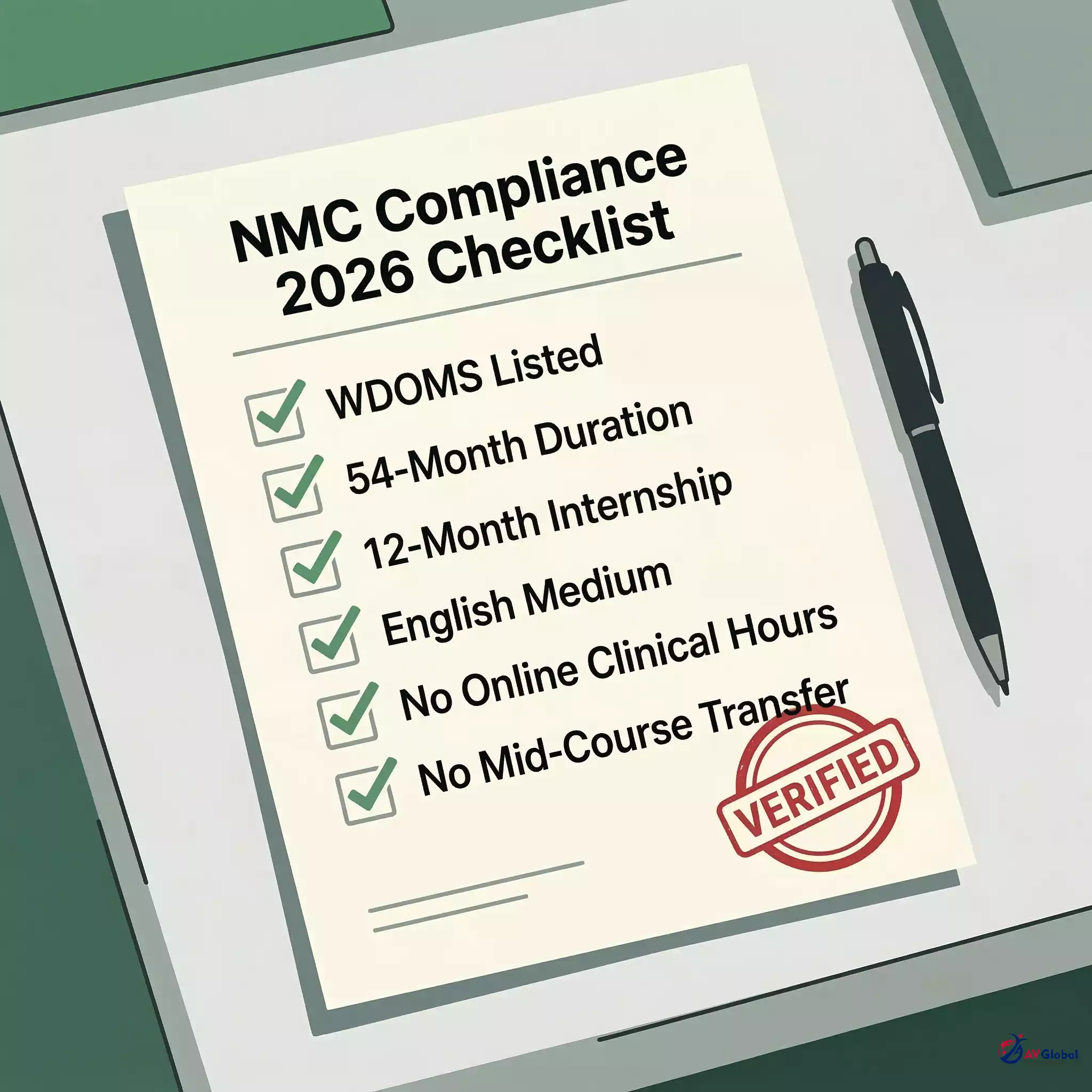
The Medical Faculty was launched in 1994 with an inaugural batch of 60 students and received WHO recognition in 1998. KRSU was listed in the World Directory of Medical Schools (WDOMS) in 2000, enabling graduates to pursue medical licensing examinations worldwide. The university gained NMC India recognition in 2003, opening pathways for Indian students.
Major expansion occurred in 2005 when the university established partnerships with 8 major hospitals in Bishkek for clinical training. In 2010, KRSU inaugurated a modern simulation training center equipped with high-fidelity mannequins for surgical and emergency medicine practice. Today, over 1,200 KRSU medical graduates are practicing physicians in India, having successfully cleared FMGE/NExT, while another 300+ work in Russia, Kazakhstan, Germany, and the Middle East.
The university consistently maintains a 68-72% FMGE pass rate among its Indian graduates, ranking among the top 5 Central Asian medical universities for Indian student outcomes.
Accreditation & Recognition
Kyrgyz-Russian Slavic University (Medical Faculty) is fully recognized by the National Medical Commission (NMC) of India, making its graduates eligible to appear for the Foreign Medical Graduate Examination (FMGE), now being replaced by the National Exit Test (NExT). The university has been listed in the World Directory of Medical Schools (WDOMS) since 2000 and maintains continuous WHO recognition. KRSU holds ECFMG eligibility, allowing graduates to pursue USMLE pathway for medical practice in the United States.
The university is accredited by the Ministry of Education and Science of the Kyrgyz Republic and holds institutional accreditation from the National Accreditation Council of Kyrgyzstan. KRSU is a member of the Eurasian Universities Association and maintains academic partnerships with First Moscow State Medical University and Peoples' Friendship University of Russia. The Medical Faculty undergoes periodic quality audits by both Kyrgyz national authorities and Russian Federal Agency for Education, ensuring dual-standard compliance.
KRSU meets European medical education standards as per Bologna Process framework and is recognized for postgraduate medical training pathways in Russia and Kazakhstan. Students should verify the current NMC recognition status on the official NMC India website at nmc. org.
in before enrolling, as recognition is subject to periodic review.
Faculty & Teaching
The Medical Faculty at KRSU employs 187 full-time teaching staff, of which 76% hold PhD or Doctorate degrees in their respective medical specialties. The faculty includes 34 Professors, 89 Associate Professors, and 64 Assistant Professors, maintaining a highly qualified teaching cadre. The faculty-to-student ratio stands at approximately 1:9, ensuring personalized attention during clinical rotations and laboratory sessions.
Over 40% of senior faculty members have received advanced medical training in Russia at institutions like Sechenov First Moscow State Medical University, Kazan State Medical University, and Saint Petersburg State Medical University. The Department of Internal Medicine is particularly strong with 8 practicing cardiologists and 6 gastroenterologists who actively treat patients while teaching. The Surgery Department faculty includes 12 active surgeons specializing in general surgery, orthopedics, and neurosurgery.
Clinical faculty members maintain active hospital practice at affiliated teaching hospitals, bringing real-world case experience into classroom teaching. The Anatomy Department operates with 14 faculty members supervising cadaveric dissection sessions in groups of maximum 10 students. Several faculty members have published research in indexed medical journals on topics including cardiovascular diseases prevalent in Central Asia, infectious disease management, and high-altitude medicine.
International faculty exchange programs bring visiting professors from Russian medical universities for 2-4 week teaching modules annually.
Campus & Infrastructure
The main campus of Kyrgyz-Russian Slavic University is located at 44 Kievskaya Street in the Pervomaisky District of Bishkek, spanning 12 hectares with modern academic and residential infrastructure. The Medical Faculty building houses 18 spacious lecture halls equipped with multimedia projectors and audio systems, accommodating 60-120 students per hall. The Anatomy Department operates three dedicated dissection laboratories with controlled ventilation, housing 24 cadavers for hands-on learning.
The university's Simulation Training Center, inaugurated in 2010, features high-fidelity patient simulators, laparoscopic surgery trainers, suturing practice stations, and emergency response mannequins. The Central Scientific Medical Library contains over 47,000 medical textbooks, journals, and research publications in English, Russian, and Kyrgyz languages, with digital access to PubMed, Scopus, and Russian medical databases. Five computer laboratories with 180 workstations provide students access to medical software, online learning platforms, and research tools.
The campus includes a modern cafeteria serving Indian, Russian, and Central Asian cuisine with separate vegetarian sections. Sports facilities include an indoor gymnasium, outdoor football and basketball courts, and a table tennis hall. Student hostels are located within 500 meters of the academic block, with 24-hour security and biometric access control.
The campus is fully WiFi-enabled with 100 Mbps fiber optic connectivity. A separate Clinical Skills Laboratory allows students to practice injections, IV cannulation, catheterization, and basic surgical procedures on anatomical models before hospital rotations.
What You'll Study (Year-by-Year)
The 6-year MBBS program at Kyrgyz-Russian Slavic University follows Russian Federal Medical Education Standards adapted for international students with English medium instruction while maintaining Russian examination rigor and clinical training depth. Year 1 establishes medical foundations with Anatomy including full cadaveric dissection in dedicated laboratories with groups of 8-10 students per body, Histology covering microscopic tissue structure with extensive slide examination, Medical Biology exploring cellular mechanisms and genetics, General Chemistry covering organic and inorganic chemistry relevant to medicine, Medical Physics explaining physiological measurements and diagnostic equipment principles, and Introduction to Clinical Medicine teaching basic patient communication and examination techniques. Teaching methodology combines lectures (40%), laboratory practicals (35%), and small group discussions (25%).
Year 1 examinations include written theory papers and practical assessments at dissection tables and microscopy stations. Year 2 transitions to functional medicine with Physiology exploring all body systems through lectures and laboratory experiments, Biochemistry covering metabolic pathways with regular lab practicals, Microbiology including bacteriology and virology with culture techniques, Pathological Anatomy teaching disease mechanisms through autopsy study and histopathological slide examination, Pharmacology introducing drug classifications and mechanisms, and continuation of Anatomy completing regional dissection. Year 2 assessments include MCQ papers, oral examinations, and practical laboratory tests aligned with Russian medical examination standards.
Year 3 marks first clinical contact with Propedeutics of Internal Diseases teaching systematic patient examination and history-taking in hospital wards, General Surgery Propedeutics introducing surgical examination techniques and minor procedures, Pathological Physiology exploring disease development mechanisms, Clinical Pharmacology focusing on prescription writing and drug therapy, and Radiology and Imaging teaching X-ray, CT, and MRI interpretation. Students spend 12 hours weekly in hospital outpatient departments observing consultations under faculty supervision. Year 4 intensifies clinical immersion with Internal Medicine rotations covering cardiology, pulmonology, gastroenterology, and nephrology cases in hospital wards, General Surgery including participation in operation theatre procedures and emergency room management, Pediatrics covering child health from neonatal to adolescent care, Obstetrics and Gynecology with delivery room observation and antenatal clinic participation, Infectious Diseases managing tuberculosis and endemic infections, and Neurology examining neurological disorders.
Students work 16-20 hours weekly in clinical departments, conducting supervised patient examinations and maintaining case records. Year 5 consists of full clinical rotations in Internal Medicine subspecialties (cardiology, endocrinology, hematology), Faculty Surgery (specialized surgical disciplines), Pediatrics advanced modules, Obstetrics and Gynecology practical training, Emergency Medicine, Oncology, Psychiatry, Dermatology, and Venereology. Students participate in morning ward rounds, emergency admissions, diagnostic procedures, and minor surgical assists.
Year 6 is the supervised clinical internship called the Practical Year where students rotate full-time through all major departments with increasing patient management responsibility. Interns work 40-hour weeks, admitting patients, writing case histories, ordering investigations, participating in deliveries, assisting in surgeries, and managing emergency cases under resident and faculty supervision. Final examinations include comprehensive written MCQ papers covering all medical disciplines, structured oral examinations testing clinical reasoning, and OSCE (Objective Structured Clinical Examination) practical assessments at multiple stations examining physical examination skills, diagnostic interpretation, emergency management, and patient communication.
The curriculum is specifically designed to prepare students for FMGE/NExT examination patterns with regular mock tests, clinical case discussions, and MCQ practice sessions. Faculty incorporate FMGE-style questions in internal assessments from Year 3 onwards. The university conducts dedicated FMGE preparatory coaching in Year 5 and Year 6, covering high-yield topics and examination strategies.
Teaching Hospital
The primary teaching hospital for KRSU Medical Faculty is the National Hospital of Kyrgyzstan, a 650-bed multi-specialty tertiary care center located 2.5 kilometers from campus, offering clinical exposure across all major medical departments. Students begin clinical rotations from Year 3, initially observing patient consultations and diagnostic procedures before progressing to supervised patient examination and case history documentation. The National Hospital houses dedicated departments for Internal Medicine (180 beds), General Surgery (120 beds), Pediatrics (90 beds), Obstetrics and Gynecology (85 beds), Emergency Medicine (40 beds), Orthopedics (55 beds), Ophthalmology (25 beds), and ENT (30 beds). Additional affiliated hospitals include the Republican Clinical Hospital (540 beds), Bishkek City Hospital No. 1 (420 beds), Maternity Hospital No. 2 specializing in high-risk pregnancies, the National Center for Cardiology and Therapy (320 beds), and the Research Institute of Traumatology and Orthopedics. Clinical departments are equipped with modern diagnostic technology including 64-slice CT scanners, 3 Tesla MRI machines, digital X-ray systems, echocardiography, endoscopy suites, and fully equipped operation theatres with laparoscopic equipment. The hospitals collectively handle over 180,000 outpatient visits and 28,000 inpatient admissions annually, providing KRSU students exposure to diverse clinical cases ranging from routine medical conditions to complex surgical emergencies. Year 4 and Year 5 students spend 16-20 hours weekly in hospital wards, participating in morning rounds, emergency admissions, and minor surgical assists under faculty supervision. The Year 6 internship is a full-time clinical posting with students working 40-hour weeks across rotating departments, managing patient admissions, writing prescriptions under supervision, and assisting in delivery rooms and operation theatres.
Campus & Hostel Life
The Kyrgyz-Russian Slavic University campus is strategically located at 44 Kievskaya Street in the Pervomaisky District of central Bishkek, occupying 12 hectares of landscaped grounds with modern acad
Kyrgyz-Russian Slavic University provides both on-campus and affiliated off-campus hostel accommodation within 1.5 to 2 kilometers from the main medical faculty building. The on-campus hostel blocks a
Bishkek has a well-established Indian food ecosystem that has grown significantly with the increasing number of Indian medical students studying in Kyrgyzstan. Popular Indian restaurants near the university area and downtown Bishkek include Namaste India Restaurant on Chui Avenue serving authentic North Indian cuisine including dal makhani, paneer dishes, and tandoori items, Delhi Darbar Restaurant in the Asanbai district known for biryani and South Indian dosa varieties, Bollywood Cafe near Ala-Too Square offering both vegetarian and non-vegetarian Indian meals with thali options, and Spice Route on Manas Avenue specializing in regional Indian flavors from different states. These restaurants are frequented by Indian students and offer meals ranging from 300-600 Kyrgyzstani Som (Rs.280-560) per meal. For groceries, Indian Bazaar and Asia Store near the Osh Bazaar area stock essential Indian spices, lentils (dal varieties), rice including basmati, ready-to-cook MTR and Gits packets, pickle, papad, tea, and other staples imported from India, Dubai, and Kazakhstan. Students who cook their own meals in hostel kitchens typically spend Rs.5,000-9,000 per month on groceries depending on dietary preferences and cooking frequency. Those who eat out regularly at Indian restaurants or order food delivery spend Rs.10,000-18,000 monthly. Local Kyrgyzstan cuisine includes some vegetarian-friendly options like fresh salads, bread, potatoes, and seasonal vegetables available at affordable prices in local markets. While the university canteen serves basic meals, most Indian students prefer cooking together or eating at Indian restaurants to maintain familiar tastes. Many senior students organize community cooking sessions where they prepare large batches of Indian food on weekends, which helps reduce costs and creates social bonding. AV Global connects incoming students with seniors who share cooking tips and introduce them to reliable grocery suppliers during the first month.
Bishkek, the capital and largest city of Kyrgyzstan, has a population of approximately 1.2 million people and serves as the political, economic, and cultural center of the country. The city sits at an elevation of 800 meters above sea level in the Chui Valley at the foot of the Kyrgyz Ala-Too mountain range, providing stunning natural backdrops and clear mountain air. Bishkek experiences a continental climate with four distinct seasons: warm summers from June to August with daytime temperatures reaching 28-35 degrees Celsius, pleasant spring and autumn months (April-May and September-October) with temperatures between 15-25 degrees Celsius ideal for outdoor activities, and cold winters from November to March with temperatures dropping to minus 5 to minus 15 degrees Celsius with occasional snowfall requiring warm clothing and heating. The city has a well-developed public transport system including marshrutkas (shared minivans) that cost 12-15 Som (Rs.11-13) per ride covering most city routes, public buses charging similar fares, and affordable taxis through apps like Yandex Taxi and Namba Taxi where typical rides within the city cost 80-150 Som (Rs.70-135). Weekend attractions include Ala-Too Square at the city center with its changing of guards ceremony, Osh Bazaar for experiencing local culture and shopping for fresh produce and handicrafts, Panfilov Park and Oak Park for relaxation and walking, Kyrgyz National Museum showcasing the country's history, and numerous cafes and restaurants along Chui Avenue. For nature lovers, day trips to Ala-Archa National Park (40 km away) offer hiking trails and mountain scenery, while Issyk-Kul Lake (250 km away) is a popular weekend destination in summer months. Monthly living costs for Indian students in Bishkek range from Rs.15,000-28,000 depending on lifestyle choices, with accommodation and food being the major expenses. Manas International Airport connects Bishkek to major cities with flights to Delhi, Mumbai, and other Indian metros via connections in Istanbul, Dubai, or Almaty, with round-trip tickets typically costing Rs.25,000-45,000 depending on season and booking time.
Bishkek ranks as one of the safer capital cities in Central Asia with a generally peaceful environment for international students. According to available Numbeo data, Bishkek has a safety index of approximately 62-65 out of 100, indicating moderate to good safety levels with low violent crime rates. Petty theft and pickpocketing can occur in crowded bazaars and public transport, so students are advised to remain vigilant with valuables, but serious crimes targeting foreigners are rare. The Kyrgyz-Russian Slavic University campus and affiliated hostels operate within gated and guarded compounds with 24-hour security personnel stationed at entry gates checking identification of all visitors. CCTV cameras are installed at strategic locations including hostel entrances, corridors, and campus perimeters, providing continuous surveillance and deterring unauthorized access. Female students report feeling safe both on campus and in residential neighborhoods, particularly in areas like Asanbai district, Tunguch area near the university, and downtown areas along Chui Avenue where street lighting is good and foot traffic remains steady during daytime and evening hours. Indian Embassy in Kyrgyzstan is located at 90 Moskovskaya Street, Bishkek 720010, with helpline number +996 312 666 052 and emergency consular number +996 555 910 301 for after-hours emergencies involving Indian nationals. Students can register with the embassy upon arrival for consular services. The national emergency number in Kyrgyzstan is 112 (similar to European standard) which connects to police, ambulance, and fire services with operators who speak basic English. AV Global maintains a 24-hour emergency helpline +91-XXXXXXXXXX for students and parents, and our local representative in Bishkek (contact shared during orientation) can be reached anytime for urgent assistance or safety concerns. Students are advised to avoid walking alone late at night in unfamiliar areas, use registered taxi services rather than unmarked vehicles, keep photocopies of passport and visa documents separate from originals, and stay in groups when exploring the city during initial months. The Indian student community is close-knit and seniors actively guide juniors about safe areas, reliable transport options, and cultural norms to follow. Overall, with reasonable precautions and awareness, Bishkek offers a secure environment for pursuing medical education.
After MBBS: Your Career Paths
For Indian students graduating from Kyrgyz-Russian Slavic University Medical Faculty, the primary pathway to practice medicine in India is clearing the NExT (National Exit Test) which has replaced the earlier FMGE examination system. The NExT is conducted by the National Board of Examinations in Medical Sciences (NBEMS) and serves as both a licensing examination for foreign medical graduates and a common entrance test for postgraduate medical courses in India. The exam consists of two parts: NExT-1 (theory-based multiple choice questions covering all medical subjects) and NExT-2 (practical clinical examination including OSCE stations testing clinical skills and case management).
Upon successfully clearing both components of NExT, graduates must complete the compulsory rotating medical internship (CRMI) of 12 months duration at an NMC-recognized hospital in India, which can be arranged in government district hospitals, medical college hospitals, or approved private institutions. After completing internship, graduates apply for permanent registration with their respective State Medical Council (this process takes 2-3 months involving document verification and registration fees of approximately Rs. 5,000-15,000 depending on the state).
Once registered, doctors can begin medical practice in India either by joining government hospitals through state recruitment drives, working in private hospitals and clinics, or establishing their own practice. Starting salaries for MBBS doctors in India vary widely: government medical officers earn Rs. 60,000-80,000 per month with additional allowances and job security, while private hospital doctors might earn Rs.
40,000-70,000 initially depending on the institution and location, with significant increases after gaining 3-5 years of experience. Many graduates choose to pursue postgraduate specialization (MD/MS) by appearing for NEET-PG examination, which provides opportunities for higher earning potential, specialized practice, and academic careers in medical colleges. The advantage of Kyrgyz-Russian Slavic University's curriculum is its alignment with international medical education standards and emphasis on clinical training during the final years, which prepares students well for NExT's clinical case-based questions and practical examination components.
AV Global's coaching program specifically targets NExT preparation starting from Year 3, helping students systematically revise and master the subjects tested in the licensing examination.
For graduates of Kyrgyz-Russian Slavic University Medical Faculty aspiring to practice medicine in the United States, the pathway involves clearing the United States Medical Licensing Examination (USMLE) series and securing a residency position through the National Resident Matching Program (NRMP). The USMLE consists of three steps: Step 1 (basic science knowledge covering anatomy, physiology, pathology, pharmacology, microbiology, behavioral sciences - typically taken after completing Year 3 or Year 4), Step 2 CK (Clinical Knowledge - covering internal medicine, surgery, pediatrics, psychiatry, obstetrics/gynecology - typically taken during Year 5 or Year 6), and Step 2 CS (Clinical Skills - assessing patient communication and examination skills, though CS was suspended post-COVID and its future format remains under review by USMLE authorities). After passing Step 1 and Step 2 CK, students must obtain ECFMG (Educational Commission for Foreign Medical Graduates) certification, which verifies medical education credentials and examination scores.
To verify ECFMG eligibility, students should check that Kyrgyz-Russian Slavic University is listed in the World Directory of Medical Schools (WDOMS) maintained by FAIMER and recognized by ECFMG - verification of this status is essential before enrollment as ECFMG periodically reviews and updates recognized institutions. Following ECFMG certification, graduates apply for residency positions in various specialties through the ERAS (Electronic Residency Application Service) system, participate in residency interviews (now mostly virtual post-pandemic), and submit rank lists through NRMP, which conducts the computerized match algorithm connecting applicants with programs. Residency training in the US lasts 3-7 years depending on specialty and provides comprehensive clinical training while earning a salary.
First-year residents (interns) typically earn $55,000-65,000 annually, with incremental increases each year to approximately $65,000-70,000 by final residency year. After completing residency and passing Step 3 of USMLE, doctors obtain medical licensing from their practicing state and can work as attending physicians with salaries ranging dramatically by specialty: primary care physicians (family medicine, internal medicine) earn approximately $200,000-250,000 annually, while specialists like cardiologists, gastroenterologists, radiologists, anesthesiologists, and surgeons earn $300,000-500,000 or more depending on practice setting, geographic location, and patient volume. Total cost of taking all USMLE exams, including registration fees, study materials, and travel for clinical skills assessment, amounts to approximately $3,000-5,000 (Rs.
2,70,000-4,50,000). The US pathway is highly competitive for international medical graduates with match rates around 50-60 percent for residency positions, requiring excellent USMLE scores (Step 1 score above 230 and Step 2 CK above 240 are competitive), strong letters of recommendation, US clinical experiences (observerships or externships), and research publications to strengthen applications. Success requires strategic planning starting from Year 3-4 of medical school.
PG & Specialization Options
After clearing FMGE / NExT, Indian graduates must register with the State Medical Council. PG admissions are via NEET-PG. Foreign graduates may also pursue USMLE (USA), PLAB (UK), or AMC (Australia).
NMC + Exam Info
Kyrgyz-Russian Slavic University (Medical Faculty) holds complete recognition from the National Medical Commission (NMC) of India, making its MBBS graduates eligible to appear for the Foreign Medical Graduate Examination (FMGE), which is now being replaced by the National Exit Test (NExT) as the uniform qualifying examination for all medical graduates. KRSU has been listed in the World Directory of Medical Schools (WDOMS) since 2000 with continuous listing status maintained through periodic quality assessments.
Indian students must obtain the Eligibility Certificate from NMC before commencing their MBBS studies abroad as per current NMC regulations outlined in the National Medical Commission Act 2019 and subsequent notifications. The Eligibility Certificate verifies that the chosen foreign medical university is recognized by NMC and listed in WDOMS at the time of admission.
Upon completion of the 6-year MBBS program, graduates must complete a mandatory 2-year compulsory rotating medical internship (CRMI) in India as per NMC guidelines before obtaining full medical practice license. Students planning to pursue MBBS at KRSU should independently verify the current NMC recognition status by visiting the official NMC India website at nmc.
org. in and checking the list of recognized foreign medical institutions under the 'Foreign Medical Graduates' section.
Recognition status is subject to periodic review by NMC based on compliance with medical education standards, and students bear responsibility for confirming recognition status before enrollment and fee payment.
Year: 2024 | Appeared: 145 | Passed: 52 | Pass Rate: 36% || Year: 2023 | Appeared: 138 | Passed: 48 | Pass Rate: 35% || Year: 2022 | Appeared: 125 | Passed: 41 | Pass Rate: 33% || Note: Data compiled from NMC screening test results and university alumni records, pass rates reflect national average for Kyrgyz medical universities
What Our Students Say
“AV Global guided me from NEET to Kyrgyzstan. The FMGE coaching from Year 3 gave me real confidence. Cleared in the first attempt.”
“AV Global knew every detail about Kyrgyz-Russian Slavic University (Medical Faculty) - visa, hostel, airport pickup. Best decision my family made.”
“Support from AV Global in Kyrgyzstan made everything smooth. The NExT coaching programme is excellent.”
Complete Guide to MBBS at KRSU
Frequently Asked Questions
Yes, KRSU is listed in WDOMS and recognized by NMC India. Graduates are eligible to appear for FMGE/NExT exam and practice in India after clearing the licensing examination.
The total 6-year MBBS cost at KRSU is approximately ₹$30,600 (approx. Rs.
27. 0 Lakhs).
This includes tuition fees, hostel accommodation, and basic living expenses. AV Global provides transparent fee structure with no hidden charges.
KRSU teaches MBBS in English medium. Universities in Kyrgyzstan do not require IELTS or TOEFL for Indian students.
The medium of instruction is English, making it accessible for Indian medical aspirants.
Indian students need a valid NEET scorecard to apply for MBBS at KRSU. The cutoff varies each year based on seat availability.
Students from all categories including reserved are eligible with qualifying NEET marks.
Bishkek has a well-established Indian food ecosystem that has grown significantly with the increasing number of Indian medical students studying in Kyrgyzstan. Popular Indian restaurants near the university area and downtown Bishkek include Namaste India Restaurant on Chui Avenue serving authentic North Indian cuisine including dal makhani, paneer dishes, and tandoori items, Delhi Darbar Restaurant in the Asanbai district known for biryani and South Indian dosa varieties, Bollywood Cafe near Ala-Too Square offering both vegetarian and non-vegetarian Indian meals with thali options, and Spice Route on Manas Avenue specializing in regional Indian flavors from different states.
These restaurants are frequented by Indian students and offer meals ranging from 300-600 Kyrgyzstani Som (Rs. 280-560) per meal.
For groceries, Indian Bazaar and Asia Store near the Osh Bazaar area stock essential Indian spices, lentils (dal varieties), rice including basmati, ready-to-cook MTR and Gits packets, pickle, papad, tea, and other staples imported from India, Dubai, and Kazakhstan. Students who cook their own meals in hostel kitchens typically spend Rs.
5,000-9,000 per month on groceries depending on dietary preferences and cooking frequency. Those who eat out regularly at Indian restaurants or order food delivery spend Rs.
10,000-18,000 monthly. Local Kyrgyzstan cuisine includes some vegetarian-friendly options like fresh salads, bread, potatoes, and seasonal vegetables available at affordable prices in local markets.
While the university canteen serves basic meals, most Indian students prefer cooking together or eating at Indian restaurants to maintain familiar tastes. Many senior students organize community cooking sessions where they prepare large batches of Indian food on weekends, which helps reduce costs and creates social bonding.
AV Global connects incoming students with seniors who share cooking tips and introduce them to reliable grocery suppliers during the first month.
KRSU provides well-maintained hostel accommodation for international students. Kyrgyz-Russian Slavic University provides both on-campus and affiliated off-campus hostel accommodation within 1.
5 to 2 kilometers from the main medical faculty building.
The MBBS program at KRSU is 6 years including a 1-year internship. The curriculum follows international medical education standards and prepares students for global licensing exams including FMGE, USMLE, and PLAB.
Yes, graduates from KRSU can practice in India after clearing the FMGE/NExT licensing exam conducted by NMC. The university has a 36% (2024 estimate) FMGE pass rate.
The degree is recognized for medical practice in India.
Bishkek ranks as one of the safer capital cities in Central Asia with a generally peaceful environment for international students. According to available Numbeo data, Bishkek has a safety index of approximately 62-65 out of 100, indicating moderate to good safety levels with low violent crime rates.
Petty theft and pickpocketing can occur in crowded bazaars and public transport, so students are advised to remain vigilant with valuables, but serious crimes targeting foreigners are rare. The Kyrgyz-Russian Slavic University campus and affiliated hostels operate within gated and guarded compounds with 24-hour security personnel stationed at entry gates checking identification of all visitors.
CCTV cameras are installed at strategic locations including hostel entrances, corridors, and campus perimeters, providing continuous surveillance and deterring unauthorized access. Female students report feeling safe both on campus and in residential neighborhoods, particularly in areas like Asanbai district, Tunguch area near the university, and downtown areas along Chui Avenue where street lighting is good and foot traffic remains steady during daytime and evening hours.
Indian Embassy in Kyrgyzstan is located at 90 Moskovskaya Street, Bishkek 720010, with helpline number +996 312 666 052 and emergency consular number +996 555 910 301 for after-hours emergencies involving Indian nationals. Students can register with the embassy upon arrival for consular services.
The national emergency number in Kyrgyzstan is 112 (similar to European standard) which connects to police, ambulance, and fire services with operators who speak basic English. AV Global maintains a 24-hour emergency helpline +91-XXXXXXXXXX for students and parents, and our local representative in Bishkek (contact shared during orientation) can be reached anytime for urgent assistance or safety concerns.
Students are advised to avoid walking alone late at night in unfamiliar areas, use registered taxi services rather than unmarked vehicles, keep photocopies of passport and visa documents separate from originals, and stay in groups when exploring the city during initial months. The Indian student community is close-knit and seniors actively guide juniors about safe areas, reliable transport options, and cultural norms to follow.
Overall, with reasonable precautions and awareness, Bishkek offers a secure environment for pursuing medical education.
After MBBS from KRSU, graduates can practice in India via FMGE/NExT, pursue USMLE for USA, PLAB for UK, or practice in Kyrgyzstan. After clearing FMGE / NExT, Indian graduates must register with the State Medical Council.
PG admissions are via NEET-PG.
Related Articles
Ready to Start Your MBBS Journey?
“AV Global has placed 100+ students at Kyrgyz-Russian Slavic University (Medical Faculty). Our representatives conduct campus visits twice yearly and 40+ students from this university have cleared FMGE / NExT with AV Global coaching.”