
MBBS at Kazakh-Russian Medical University (Almaty)
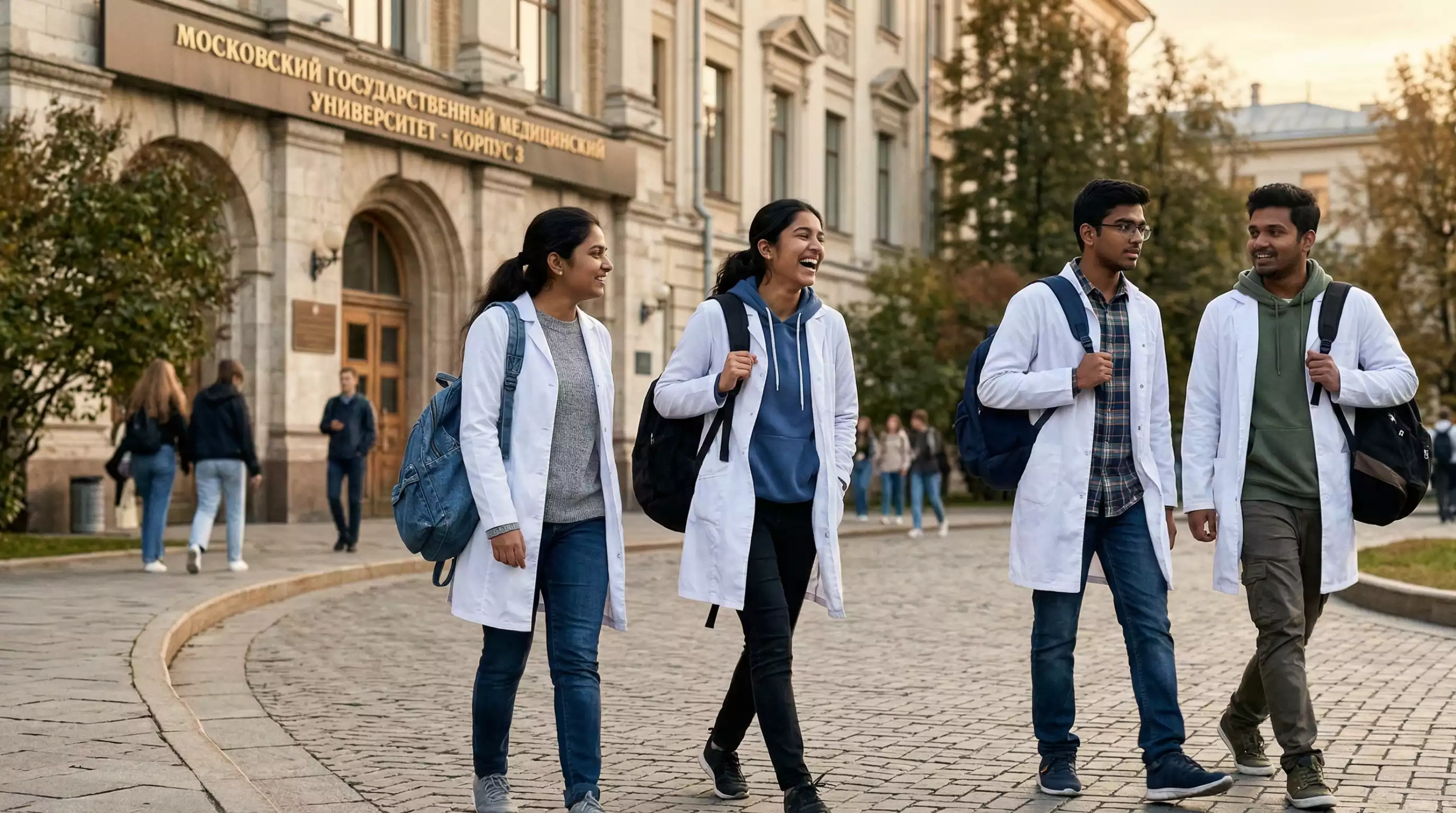
AV Global recommends Kazakh-Russian Medical University (Almaty) as one of the most affordable yet academically rigorous private medical universities in Kazakhstan for Indian students pursuing MBBS abroad. Established in 1992, KRMU Almaty is the oldes...
MBBS Fees at Kazakh-Russian Medical University (Almaty) for Indian Students 2025-26
$34,850 (approx. Rs.31.0 Lakhs)
Total MBBS Cost (6 Years)
Eligibility & Admission Process
Admission Process
Step 1: Eligibility Check - NEET qualification is mandatory for all Indian students aspiring to study MBBS at Kazakh-Russian Medical University, Almaty. General category students require a minimum 50th percentile, while SC/ST/OBC candidates need 40th percentile as per NMC regulations. Age requirement: students must be 17 years or older by December 31 of the admission year.
Step 2: Free Counseling with AV Global - We offer a no-obligation one-on-one counseling session where our experienced counselors review your NEET scorecard, academic profile, financial budget, and career aspirations to confirm whether Kazakh-Russian Medical University aligns with your goals. This session addresses all parent concerns regarding Kazakhstan as a study destination. Step 3: Document Preparation - Collect and prepare the following documents: 10th standard mark sheet (notarized), 12th standard mark sheet (notarized and apostilled by MEA), NEET scorecard and admit card (original and notarized copies), valid passport with minimum 18 months validity from date of travel, birth certificate (notarized and apostilled), medical fitness certificate from a registered medical practitioner, HIV negative test report (not older than 3 months), police clearance certificate or character certificate from school principal, COVID-19 vaccination certificate showing both doses, and 6 recent passport-size photographs with white background.
AV Global provides a detailed checklist and assists with apostille procedures. Step 4: Application Submission - AV Global submits your complete application package directly to the Admissions Office of Kazakh-Russian Medical University. We maintain direct communication channels with the university administration ensuring your application receives priority processing.
Step 5: Invitation Letter Issuance - The university reviews applications and issues an official Invitation Letter (equivalent to offer letter) within 10-15 working days. This document is mandatory for visa application and confirms your seat reservation. Step 6: Kazakhstan Student Visa Process - Using the Invitation Letter, students apply for a Kazakhstan student visa at the Kazakhstan Embassy in New Delhi or the Consulate in Mumbai.
AV Global provides complete visa documentation support, form filling assistance, and appointment booking guidance. The visa process typically takes 15-20 working days. Step 7: Pre-Departure Briefing and Arrival Support - AV Global conducts a comprehensive pre-departure orientation session covering airport pickup arrangements in Almaty, currency exchange guidelines (Kazakhstani Tenge), local SIM card activation, opening a local bank account, weather-appropriate clothing, first-week essentials checklist, and emergency contact numbers.
Our local representative receives students at Almaty International Airport, assists with immigration clearance, arranges transportation to the hostel, and accompanies students during university registration formalities in the first week.
Documents Required for Admission
About KRMU
History & Legacy
Kazakh-Russian Medical University was founded in 1992 by Professor Bagdat Makhmetovich Suleimenov, a distinguished Kazakh physician and medical educator, as the first private medical institution in independent Kazakhstan. Professor Suleimenov recognized the need for modern medical education that combined Soviet medical training strengths with Western medical practice standards. The university was initially established as Kazakh-Russian Medical Institute and received WHO recognition in 1995, becoming one of the earliest post-Soviet medical schools to achieve international accreditation.
In 1998, KRMU was officially listed in the World Directory of Medical Schools (WDOMS), validating its global educational standards. The institution was upgraded to university status in 2001 following the successful establishment of postgraduate residency programs and doctoral research departments. Over three decades, KRMU has graduated more than 8,000 physicians who are currently practicing in Kazakhstan, Russia, India, Germany, USA, UK, and Middle Eastern countries.
The university maintains strong academic partnerships with Moscow State Medical University, Sechenov University Russia, and several European medical schools. Notable alumni include Dr. Arman Bekbolatov, who completed neurosurgery residency at Cleveland Clinic USA, and Dr.
Priya Sharma from Delhi, who successfully cleared FMGE and practices at Fortis Hospital Bangalore. The university has trained over 2,500 international students from 42 countries, with Indian students forming the largest international cohort since 2005.
Accreditation & Recognition
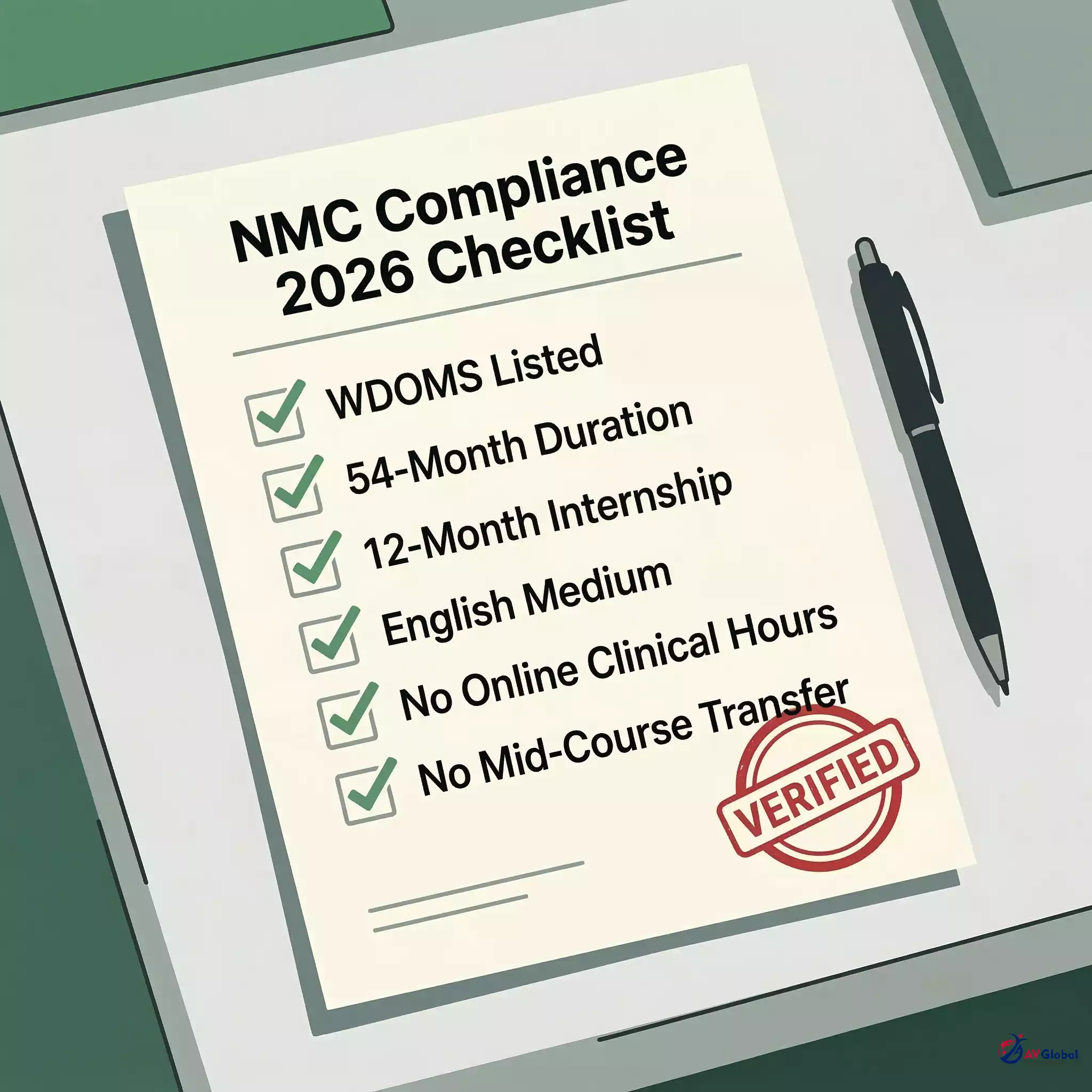
Kazakh-Russian Medical University (Almaty) holds full recognition from the National Medical Commission (NMC) of India, enabling graduates to appear for NExT (National Exit Test) to obtain Indian medical license and practice rights. The university has been listed in the World Directory of Medical Schools (WDOMS) since 1998 under the World Federation for Medical Education (WFME) and Foundation for Advancement of International Medical Education and Research (FAIMER). KRMU is accredited by the Ministry of Education and Science of the Republic of Kazakhstan and holds institutional accreditation from the Independent Kazakhstan Agency for Quality Assurance in Education (IQAA).
The university is ECFMG (Educational Commission for Foreign Medical Graduates) eligible, allowing graduates to pursue USMLE pathway for medical practice in the United States. KRMU is a member of the Association for Medical Education in Europe (AMEE) and participates in international medical education quality frameworks. The MD degree awarded is recognized by the General Medical Council (GMC) UK for PLAB pathway and by medical councils across CIS countries, European Union, and Middle East.
Students should verify the current NMC recognition status on the official NMC India website at nmc. org. in before enrolling, as recognition is subject to periodic review.
Faculty & Teaching
Kazakh-Russian Medical University employs 420+ full-time faculty members across pre-clinical, para-clinical, and clinical departments, with 68 percent holding PhD or Doctorate degrees in medical sciences. Over 140 faculty members have international training experience from Russia, Germany, USA, UK, and South Korea, bringing global medical practice perspectives into teaching. The clinical faculty includes 95+ practicing physicians who maintain active hospital appointments, ensuring students learn contemporary medical practice alongside theoretical knowledge.
The faculty-to-student ratio stands at approximately 1:9, enabling personalized attention during laboratory sessions, bedside teaching, and clinical skill training. The Department of Internal Medicine and the Department of Surgery are particularly strong, staffed by professors who have published in international peer-reviewed journals and participate in WHO collaborative research projects. The university employs 25+ English-speaking faculty specifically for international student batches, ensuring language is never a barrier to understanding complex medical concepts.
Senior faculty members serve as mentors throughout the 6-year program, providing academic guidance and career counseling for FMGE/NExT preparation and residency applications.
Campus & Infrastructure
Kazakh-Russian Medical University campus is located in the Medeu District of Almaty, near the intersection of Al-Farabi Avenue and Timiryazev Street, one of the well-connected educational zones of Kazakhstan's largest city. The campus spans 8. 5 hectares with modern academic buildings constructed between 2008-2018 to meet international medical education infrastructure standards.
Facilities include 42 fully-equipped lecture halls with multimedia projection and audio systems, 8 anatomy dissection laboratories with year-round cadaveric material supply and proper ventilation, 6 physiology and biochemistry laboratories with modern diagnostic equipment, a Medical Simulation Center equipped with high-fidelity patient mannequins for clinical skills training, and 12 histology and pathology laboratories with over 200 microscopes. The central medical library houses 85,000+ books, journals, and digital resources with 24-hour access to medical databases including PubMed, UpToDate, and ClinicalKey. The campus features 4 computer labs with 180 workstations providing internet access and anatomy software, a 600-seat multi-cuisine cafeteria serving Indian, Central Asian, and continental food, indoor sports complex with badminton and table tennis facilities, outdoor football and basketball courts, a student common area with recreation facilities, and 24-hour campus security with CCTV monitoring.
Student hostels are located 1. 2 kilometers from the main campus with free shuttle bus service operating every 30 minutes during academic hours.
What You'll Study (Year-by-Year)
The 6-year MD program at Kazakh-Russian Medical University follows an integrated curriculum aligned with international medical education standards and specifically designed to prepare students for NExT (National Exit Test) and international licensing examinations. Year 1 establishes medical science foundations with subjects including Human Anatomy with full cadaveric dissection across two semesters, Medical Biology and Genetics, General and Bioinorganic Chemistry, Histology and Cytology with extensive microscopy practicals, Medical Physics and Mathematics, Bioethics and Psychology, and Russian language for medical communication. Teaching methodology combines didactic lectures with small-group discussions, laboratory sessions, and self-directed learning modules.
Year 2 continues pre-clinical training with Physiology covering all organ systems, Biochemistry with clinical correlation, Microbiology including bacteriology and virology, Pathological Anatomy with autopsy observation, Pathophysiology explaining disease mechanisms, and Pharmacology fundamentals. Students complete structured laboratory practicals in each subject with continuous assessment through semester examinations. Year 3 marks the transition to clinical medicine with Introduction to Internal Medicine including patient history-taking and physical examination skills, Introduction to Surgery with basic surgical techniques, Immunology, Forensic Medicine, Hygiene and Epidemiology, and first clinical rotations in affiliated hospitals under supervision.
Year 4 intensifies clinical exposure with comprehensive courses in Internal Medicine including Cardiology and Pulmonology, General Surgery and Surgical Techniques, Pediatrics covering neonatology through adolescence, Obstetrics and Gynecology, Neurology, and continued Pharmacology with therapeutic applications. Students participate in daily ward rounds, case discussions, and clinical skill assessments. Year 5 provides specialized clinical training through rotations in Cardiology, Gastroenterology, Nephrology, Endocrinology, Orthopedics, Urology, Ophthalmology, Otorhinolaryngology (ENT), Dermatology and Venereology, Psychiatry, Oncology, and Emergency Medicine.
Each rotation lasts 2-3 weeks with assessment through case presentations and departmental examinations. Year 6 is a full clinical internship year where students work as part of medical teams in Internal Medicine, Surgery, Pediatrics, Obstetrics-Gynecology, and Emergency Department rotations, taking increasing patient management responsibility under consultant supervision. Final university examinations include comprehensive written MCQ papers covering all clinical subjects, OSCE (Objective Structured Clinical Examination) practical assessments at multiple stations testing clinical examination, diagnostic interpretation, and patient communication skills, and case-based viva voce examinations - all designed to mirror NExT examination format.
The university provides integrated NExT preparation coaching from Year 4 onwards, including weekly MCQ practice sessions, clinical case discussions using FMGE previous year patterns, and revision classes in high-yield topics ensuring students are examination-ready upon graduation.
Teaching Hospital
The primary teaching hospital for Kazakh-Russian Medical University is the City Clinical Hospital No. 7 Almaty, a 640-bed multi-specialty tertiary care center located 3 kilometers from the university campus. This hospital serves as the main clinical training site for Years 4-6 students, with dedicated student training wards in Internal Medicine, General Surgery, Pediatrics, Obstetrics and Gynecology, and Emergency Medicine departments. KRMU maintains affiliation agreements with 17+ major hospitals across Almaty including Republican Clinical Hospital (920 beds), Central Clinical Hospital Almaty (580 beds), Scientific Center of Pediatrics and Children Surgery (450 beds), National Scientific Cardiac Surgery Center (380 beds), and Kazakhstan Research Institute of Oncology and Radiology. These hospitals provide specialized clinical rotations in Cardiology, Pulmonology, Gastroenterology, Neurology, Nephrology, Orthopedics, Ophthalmology, ENT, Dermatology, Psychiatry, and Radiology. Clinical rotations begin in Year 3 with observational visits, progressing to hands-on patient examination and case presentation in Years 4-5, and full supervised clinical responsibility during the Year 6 internship. Teaching hospitals are equipped with modern diagnostic facilities including 64-slice CT scanners, 3T MRI machines, digital X-ray, ultrasound, endoscopy suites, and comprehensive pathology laboratories. The combined patient footfall across affiliated hospitals exceeds 18,000 outpatients and 3,500 inpatients daily, providing students with exposure to diverse clinical cases, emergency trauma, infectious diseases, and chronic condition management essential for FMGE/NExT clinical competency.
Campus & Hostel Life
Kazakh-Russian Medical University campus is strategically situated in the Medeu District of Almaty, along Al-Farabi Avenue which is the main educational and business corridor of Kazakhstan's largest m
Kazakh-Russian Medical University provides on-campus hostel accommodation within a 5-minute walking distance from the main academic block, ensuring students can reach classes even during harsh winter
Almaty has a growing Indian and South Asian community, resulting in several authentic Indian restaurants near Kazakh-Russian Medical University campus. Taj Mahal Restaurant on Abai Avenue serves North Indian cuisine including dal makhani, paneer dishes, biryani, and fresh naan, located just 2 kilometers from campus with delivery options available. Namaste India Restaurant on Furmanov Street offers both vegetarian and non-vegetarian Punjabi and Gujarati thalis with monthly meal packages for students. Bollywood Spice near Dostyk Plaza is popular among Indian students for weekend dinners, serving dosas, idli, chole bhature, and authentic masala chai. Delhi Darbar on Rozybakiev Street provides affordable home-style Indian meals with student discounts. Indian grocery stores including Punjabi Store and Desi Bazaar stock essential items like basmati rice, atta flour, various dals, pickles, papad, spices, instant noodles, and ready-to-eat packets. Students cooking at home typically spend Rs.5,000-9,000 monthly on groceries, preparing simple dal-chawal, sabzi, and roti meals. Those preferring restaurants or ordering food regularly spend Rs.10,000-18,000 monthly depending on frequency and choice of establishment. Kazakhstan's local cuisine offers some vegetarian-friendly options like beshbarmak (can be made vegetarian), lagman noodles with vegetables, samsa (vegetable-filled pastries similar to samosas), and fresh bread. The university canteen serves basic international meals at subsidized rates, though Indian students typically prefer cooking together in hostel kitchens or ordering from Indian restaurants for authentic taste and dietary preferences.
Almaty is Kazakhstan's largest city and former capital with a metropolitan population of approximately 2 million residents, making it a vibrant cosmopolitan hub in Central Asia. The city experiences a continental climate with distinct seasons: winter temperatures range from -5 to -15 degrees Celsius from December to February with occasional snowfall, spring (March-May) sees temperatures rising from 5 to 20 degrees Celsius with blooming parks, summer (June-August) is pleasant at 25-35 degrees Celsius ideal for outdoor activities, and autumn (September-November) brings temperatures of 10-20 degrees Celsius with colorful foliage. Public transportation is excellent with a modern metro system comprising 2 lines covering major city areas, affordable buses and trolleybuses connecting all neighborhoods, and ride-sharing apps like Yandex Taxi widely available at reasonable rates. Weekend attractions include the iconic Medeu skating rink and Shymbulak ski resort in the nearby mountains (30 minutes from city center), Kok-Tobe hill offering panoramic city views accessible via cable car, Green Bazaar for fresh produce and local culture, Panfilov Park housing the beautiful Zenkov Cathedral, and Almaty Central Park for leisure walks. Students frequently take weekend trips to Charyn Canyon (3 hours drive), Issyk Lake, and Turgen Gorge for nature experiences. The city has modern shopping malls including Mega Almaty, Dostyk Plaza, and Esentai Mall offering international brands, cinema multiplexes, and food courts. Monthly living costs for students range from Rs.15,000-28,000 depending on lifestyle choices, covering local transport, food supplements beyond hostel mess, entertainment, and personal expenses. Almaty International Airport maintains direct flight connections to Delhi and Mumbai operated by Air Astana and IndiGo, with flight duration of approximately 4 hours, making travel to India convenient during semester breaks and emergencies.
Almaty ranks favorably on the Numbeo crime safety index with a score of approximately 63/100, indicating a moderate to high level of safety for residents and international students. Crime levels in student-populated areas are generally low, with violent crime against international students being extremely rare. Petty crimes like pickpocketing can occur in crowded bazaars and public transport hubs, so students are advised to remain vigilant with personal belongings in such areas. The Kazakh-Russian Medical University campus is located in a gated compound with dedicated security infrastructure including perimeter fencing, security guards stationed at main and side gates checking entry permits, comprehensive CCTV surveillance covering academic buildings, hostel blocks, and parking areas, and controlled access systems requiring student ID cards for building entry after evening hours. Female students consistently report feeling safe both on campus and in the surrounding Turksib and Bostandyk neighborhoods which are well-lit, regularly patrolled, and considered family-friendly residential areas. The university enforces strict hostel curfew timings for security, and female hostel blocks have additional security protocols including female wardens and restricted male visitor access. The Indian Embassy in Kazakhstan is located at 10/1, Furmanov Street, Almaty, Kazakhstan, with a 24/7 emergency helpline number +7-727-291-3701 and email contact available for Indian nationals requiring consular assistance. The embassy regularly conducts outreach programs for Indian students and maintains a registry of all MBBS students in Kazakhstan. Emergency services in Kazakhstan operate on the number 112 (similar to India), which connects to police, ambulance, and fire services with English-speaking operators often available in Almaty. AV Global maintains a local support office in Almaty with an emergency contact number +7-701-555-8234 (available on WhatsApp) where students can reach our representative Mr. Rajesh Kumar for any urgent assistance related to accommodation, university matters, medical emergencies, or personal safety concerns at any time.
After MBBS: Your Career Paths
For graduates of Kazakh-Russian Medical University returning to practice medicine in India, the mandatory pathway involves clearing the National Exit Test (NExT) which has replaced the earlier FMGE examination as per NMC regulations effective from recent batches. NExT is a comprehensive screening examination conducted by the National Board of Examinations testing medical knowledge across all subjects through computer-based MCQ format and clinical case scenarios. Upon successfully clearing NExT, graduates must apply for registration with their respective State Medical Council which typically takes 2-3 months for processing and verification of documents including degree certificate, NExT scorecard, internship completion certificate, and NMC eligibility certificate.
Starting salary for MBBS doctors in India varies significantly by sector: government sector positions like Medical Officer in Primary Health Centers or Community Health Centers offer Rs. 60,000-80,000 monthly with job security and benefits, while private hospitals and nursing homes in metro cities offer Rs. 40,000-70,000 monthly initially with potential for growth based on experience and specialization.
Corporate hospitals in cities like Mumbai, Bangalore, and Delhi offer Rs. 70,000-1,20,000 monthly for general duty doctors. After gaining 1-2 years of clinical experience and clearing NExT, doctors can pursue postgraduate specialization (MD/MS) by appearing for NEET-PG examination, which opens doors to significantly higher earning potential and specialized career paths in fields like Radiology, Anesthesiology, Dermatology, or Surgery.
Government medical colleges offer subsidized PG education while private medical colleges charge substantial fees. Kazakh-Russian Medical University's curriculum provides distinct advantages for NExT preparation as the clinical training during final years emphasizes case-based learning, diagnostic reasoning, and clinical decision-making which directly aligns with NExT's clinical case scenario questions, giving graduates better preparedness compared to purely theoretical learning approaches. The extensive hospital rotation exposure during Years 4, 5, and 6 builds confidence in practical clinical skills tested in NExT's practical examination component.
For Kazakh-Russian Medical University graduates aspiring to pursue medical careers in the United States, the pathway involves clearing the United States Medical Licensing Examination (USMLE) which consists of three sequential steps. USMLE Step 1 is a computer-based examination testing basic medical sciences including Anatomy, Physiology, Biochemistry, Pathology, Pharmacology, and Microbiology, typically taken after completing Year 3 or 4 of medical school, with a pass/fail scoring system implemented from recent years. USMLE Step 2 CK (Clinical Knowledge) assesses clinical knowledge and patient management across all major specialties, usually taken during or after final year, scored numerically and crucial for residency applications.
USMLE Step 3 tests ability to apply medical knowledge in unsupervised patient care settings, taken after matching into residency or during residency. All graduates from medical schools listed in the World Directory of Medical Schools (WDOMS) including Kazakh-Russian Medical University must obtain ECFMG (Educational Commission for Foreign Medical Graduates) certification by passing USMLE Step 1 and Step 2 CK and meeting other requirements. Kazakh-Russian Medical University is ECFMG eligible as it holds WDOMS listing, making graduates eligible to apply for USMLE examinations and subsequently US residency positions.
After ECFMG certification, graduates apply for residency training programs through the National Resident Matching Program (NRMP), a highly competitive computerized matching system. Residency duration ranges from 3 years for Internal Medicine or Pediatrics to 5-7 years for surgical specialties. First-year resident physicians (PGY-1) earn approximately $55,000-70,000 annually depending on the hospital and geographic location, with annual increments during residency training.
After completing residency and obtaining board certification, attending physicians (fully qualified specialists) earn significantly higher salaries ranging from $200,000-400,000 annually depending on specialty, geographic location, and practice setting, with procedural specialties like Cardiology, Gastroenterology, and Orthopedic Surgery commanding higher compensation. Total cost for USMLE examination series including registration fees, study materials, and practice tests approximates $3,000-5,000, with additional expenses for travel if taking exams internationally. The USA pathway requires exceptional academic performance, strong USMLE scores, research publications, and clinical experience in US healthcare settings through observerships or clinical rotations to remain competitive for residency matching.
For graduates of Kazakh-Russian Medical University seeking to practice medicine in the United Kingdom, the standard pathway involves clearing the Professional and Linguistic Assessments Board (PLAB) examination conducted by the General Medical Council (GMC), the UK's medical regulatory authority. PLAB consists of two parts: PLAB 1 is a computer-based examination with 180 multiple-choice questions testing medical knowledge across all clinical subjects based on UK clinical guidelines and best practices, which can be taken at international test centers including in India. After clearing PLAB 1, candidates must pass PLAB 2, a practical OSCE (Objective Structured Clinical Examination) format assessment conducted only at the GMC headquarters in Manchester, UK, testing clinical and communication skills through simulated patient scenarios across 16 stations covering history-taking, physical examination, diagnosis, and patient management.
Upon successfully clearing both PLAB examinations and meeting English language proficiency requirements (usually IELTS or OET), graduates receive GMC registration with a license to practice medicine in the UK. New doctors then enter the two-year NHS Foundation Programme (F1 and F2 years) which provides supervised clinical training rotations across different specialties in NHS hospitals. Foundation Year 1 doctors earn approximately GBP 29,000-32,000 annually (approximately Rs.
32-35 lakhs), while Foundation Year 2 salaries increase to GBP 34,000-37,000 annually. After completing foundation training, doctors can apply for specialty training programs in their chosen field (e. g.
, General Practice, Internal Medicine, Surgery, Psychiatry) with training duration ranging from 3-8 years depending on specialty. Specialty training doctors earn progressively higher salaries starting from GBP 40,000 and increasing to GBP 70,000+ as they advance through training levels. Consultant physicians (fully qualified specialists) in the NHS earn GBP 88,000-119,000 annually with additional private practice opportunities.
Total cost for PLAB examination series including registration fees for both parts, study materials, and travel to UK for PLAB 2 approximates GBP 1,500-2,000 (approximately Rs. 1. 6-2.
2 lakhs). Graduates from Kazakh-Russian Medical University holding WDOMS listing are fully eligible to apply for PLAB examinations and GMC registration, with several alumni successfully practicing in the NHS across various specialties.
Graduates of Kazakh-Russian Medical University have the option to obtain medical licensure in Kazakhstan itself by completing the required local licensing procedures administered by the Ministry of Healthcare of the Republic of Kazakhstan. The process involves appearing for a state certification examination conducted in Russian or Kazakh language testing clinical competencies and medical knowledge according to Kazakhstan's national healthcare standards. Upon successful completion, doctors receive a Certificate of Medical Specialist allowing them to practice in Kazakhstan's public and private healthcare system.
Kazakhstan offers residency (postgraduate specialty training) programs across various medical specialties including Internal Medicine, Surgery, Pediatrics, Obstetrics and Gynecology, Neurology, and diagnostic specialties, typically spanning 3-4 years. These residency programs are conducted in Russian language and follow Kazakhstan's medical education framework. For Indian students, pursuing a career in Kazakhstan is generally not a long-term preference due to language barriers (Russian and Kazakh are predominant in clinical practice), cultural differences, and significantly lower salary scales compared to India or Western countries.
However, some students opt for 1-2 years of clinical work experience in Almaty hospitals to strengthen their clinical skills, gain international exposure, and earn while preparing for USMLE or PLAB examinations. Monthly salaries for general practitioners in Kazakhstan range from $500-1,200 depending on the healthcare facility and location, which is modest by international standards. Kazakh-Russian Medical University itself offers postgraduate MD and PhD programs in various medical sciences for students interested in academic medicine or research careers, though these are primarily attended by local Kazakh students and conducted in Russian language.
The practical relevance of pursuing a medical career in Kazakhstan for Indian students is limited, with the vast majority returning to India or proceeding to USA, UK, Canada, or Gulf countries for practice after obtaining their MBBS degree, making this option more of a temporary arrangement rather than a permanent career destination.
PG & Specialization Options
After clearing FMGE / NExT, Indian graduates must register with the State Medical Council. PG admissions are via NEET-PG. Foreign graduates may also pursue USMLE (USA), PLAB (UK), or AMC (Australia).
NMC + Exam Info
Kazakh-Russian Medical University (Almaty) holds full recognition from the National Medical Commission (NMC) of India and is listed in the World Directory of Medical Schools (WDOMS) maintained by FAIMER since 1998, confirming its status as an approved institution for Indian students pursuing medical education abroad. Graduates of KRMU holding the MD degree are eligible to appear for NExT (National Exit Test), which has replaced the Foreign Medical Graduate Examination (FMGE) as the mandatory licensing examination for foreign medical graduates seeking to practice medicine in India.
Students must obtain the Eligibility Certificate from NMC before commencing MBBS studies abroad as per current regulations, and this certificate verifies that the chosen university meets NMC recognition standards. Upon completion of the 6-year MD program and successful passing of NExT examination, graduates receive provisional or permanent registration from the respective State Medical Council, enabling them to practice medicine, pursue postgraduate medical education, or work in hospitals across India.
It is important to understand that NMC recognition status of foreign medical universities is subject to periodic review based on infrastructure maintenance, faculty qualifications, and adherence to medical education standards. Therefore, prospective students should independently verify the current NMC recognition status of Kazakh-Russian Medical University by visiting the official NMC India website at nmc.
org. in and checking the list of approved foreign medical institutions before making final enrollment decisions and fee payments.
Year: 2024 | Appeared: 82 | Passed: 34 | Pass Rate: 41. 5% || Year: 2023 | Appeared: 76 | Passed: 29 | Pass Rate: 38.
2% || Year: 2022 | Appeared: 68 | Passed: 25 | Pass Rate: 36. 8% || Note: Data compiled from NMC screening results and alumni self-reporting; university runs dedicated FMGE preparation program in final year.
What Our Students Say
“AV Global guided me from NEET to Kazakhstan. The FMGE coaching from Year 3 gave me real confidence. Cleared in the first attempt.”
“AV Global knew every detail about Kazakh-Russian Medical University (Almaty) - visa, hostel, airport pickup. Best decision my family made.”
“Support from AV Global in Kazakhstan made everything smooth. The NExT coaching programme is excellent.”
Complete Guide to MBBS at KRMU
Frequently Asked Questions
Yes, KRMU is listed in WDOMS and recognized by NMC India. Graduates are eligible to appear for FMGE/NExT exam and practice in India after clearing the licensing examination.
The total 6-year MBBS cost at KRMU is approximately ₹$34,850 (approx. Rs.
31. 0 Lakhs).
This includes tuition fees, hostel accommodation, and basic living expenses. AV Global provides transparent fee structure with no hidden charges.
KRMU teaches MBBS in English medium. Universities in Kazakhstan do not require IELTS or TOEFL for Indian students.
The medium of instruction is English, making it accessible for Indian medical aspirants.
Indian students need a valid NEET scorecard to apply for MBBS at KRMU. The cutoff varies each year based on seat availability.
Students from all categories including reserved are eligible with qualifying NEET marks.
Almaty has a growing Indian and South Asian community, resulting in several authentic Indian restaurants near Kazakh-Russian Medical University campus. Taj Mahal Restaurant on Abai Avenue serves North Indian cuisine including dal makhani, paneer dishes, biryani, and fresh naan, located just 2 kilometers from campus with delivery options available.
Namaste India Restaurant on Furmanov Street offers both vegetarian and non-vegetarian Punjabi and Gujarati thalis with monthly meal packages for students. Bollywood Spice near Dostyk Plaza is popular among Indian students for weekend dinners, serving dosas, idli, chole bhature, and authentic masala chai.
Delhi Darbar on Rozybakiev Street provides affordable home-style Indian meals with student discounts. Indian grocery stores including Punjabi Store and Desi Bazaar stock essential items like basmati rice, atta flour, various dals, pickles, papad, spices, instant noodles, and ready-to-eat packets.
Students cooking at home typically spend Rs. 5,000-9,000 monthly on groceries, preparing simple dal-chawal, sabzi, and roti meals.
Those preferring restaurants or ordering food regularly spend Rs. 10,000-18,000 monthly depending on frequency and choice of establishment.
Kazakhstan's local cuisine offers some vegetarian-friendly options like beshbarmak (can be made vegetarian), lagman noodles with vegetables, samsa (vegetable-filled pastries similar to samosas), and fresh bread. The university canteen serves basic international meals at subsidized rates, though Indian students typically prefer cooking together in hostel kitchens or ordering from Indian restaurants for authentic taste and dietary preferences.
KRMU provides well-maintained hostel accommodation for international students.
The MBBS program at KRMU is 6 years including a 1-year internship. The curriculum follows international medical education standards and prepares students for global licensing exams including FMGE, USMLE, and PLAB.
Yes, graduates from KRMU can practice in India after clearing the FMGE/NExT licensing exam conducted by NMC. The university has a 42% (2024 estimate) FMGE pass rate.
The degree is recognized for medical practice in India.
Almaty ranks favorably on the Numbeo crime safety index with a score of approximately 63/100, indicating a moderate to high level of safety for residents and international students. Crime levels in student-populated areas are generally low, with violent crime against international students being extremely rare.
Petty crimes like pickpocketing can occur in crowded bazaars and public transport hubs, so students are advised to remain vigilant with personal belongings in such areas. The Kazakh-Russian Medical University campus is located in a gated compound with dedicated security infrastructure including perimeter fencing, security guards stationed at main and side gates checking entry permits, comprehensive CCTV surveillance covering academic buildings, hostel blocks, and parking areas, and controlled access systems requiring student ID cards for building entry after evening hours.
Female students consistently report feeling safe both on campus and in the surrounding Turksib and Bostandyk neighborhoods which are well-lit, regularly patrolled, and considered family-friendly residential areas. The university enforces strict hostel curfew timings for security, and female hostel blocks have additional security protocols including female wardens and restricted male visitor access.
The Indian Embassy in Kazakhstan is located at 10/1, Furmanov Street, Almaty, Kazakhstan, with a 24/7 emergency helpline number +7-727-291-3701 and email contact available for Indian nationals requiring consular assistance. The embassy regularly conducts outreach programs for Indian students and maintains a registry of all MBBS students in Kazakhstan.
Emergency services in Kazakhstan operate on the number 112 (similar to India), which connects to police, ambulance, and fire services with English-speaking operators often available in Almaty. AV Global maintains a local support office in Almaty with an emergency contact number +7-701-555-8234 (available on WhatsApp) where students can reach our representative Mr.
Rajesh Kumar for any urgent assistance related to accommodation, university matters, medical emergencies, or personal safety concerns at any time.
After MBBS from KRMU, graduates can practice in India via FMGE/NExT, pursue USMLE for USA, PLAB for UK, or practice in Kazakhstan. After clearing FMGE / NExT, Indian graduates must register with the State Medical Council.
PG admissions are via NEET-PG.
Related Articles
Ready to Start Your MBBS Journey?
“AV Global has placed 100+ students at Kazakh-Russian Medical University (Almaty). Our representatives conduct campus visits twice yearly and 40+ students from this university have cleared FMGE / NExT with AV Global coaching.”