
MBBS at Tver State Medical University
AV Global recommends Tver State Medical University as one of Russia's most established and affordable public medical universities for Indian students pursuing MBBS abroad. Founded in 1936, TSMU is a government medical university with 88 years of unin...
MBBS Fees at Tver State Medical University for Indian Students 2025-26
$31,850 (approx. Rs.28.0 Lakhs)
Total MBBS Cost (6 Years)
Eligibility & Admission Process
Admission Process
Step 1: Eligibility Check - NEET qualification is mandatory for all Indian students. General category students require a minimum 50th percentile in NEET, while SC/ST/OBC students need 40th percentile. The candidate must be 17 years or older by December 31 of the admission year.
Physics, Chemistry, and Biology must have been studied in 10+2 with minimum 50% aggregate marks for General category (40% for reserved categories). Step 2: Free Counseling with AV Global - Schedule a no-obligation counseling session where our senior advisors review your NEET score, academic background, budget constraints, and career aspirations to determine if Tver State Medical University aligns with your goals. We assess whether Russia suits your child's personality and discuss honest pros and cons compared to alternatives in Georgia, Kazakhstan, or Kyrgyzstan.
Step 3: Document Preparation - Collect the following documents: 10th and 12th mark sheets (notarized and apostilled by Ministry of External Affairs), NEET scorecard and admit card, valid passport with minimum 18 months validity remaining, birth certificate (notarized and apostilled), medical fitness certificate from a registered medical practitioner, HIV negative test report not older than 3 months, police clearance certificate or character certificate from school principal, COVID-19 vaccination certificate showing both doses, and 6 passport-size photographs with white background. Apostille process takes 15-20 days in Delhi or regional MEA offices. Step 4: Application Submission - AV Global submits your complete application package directly to Tver State Medical University admissions office with translated documents where required.
Step 5: Invitation Letter - The university issues an official invitation letter within 10-15 working days after document verification. This invitation is the primary document required for your Russian student visa application. Step 6: Visa Application - Apply for Russian student visa at the Russian Visa Application Centre in Delhi, Mumbai, Chennai, or Kolkata.
The process takes 20-30 days. AV Global provides complete visa documentation support including covering letter, financial statements format, and travel itinerary preparation. Step 7: Pre-Departure Briefing and Arrival Support - AV Global conducts a comprehensive pre-departure session covering Russian cultural orientation, currency exchange (Rubles), local SIM card arrangements, banking setup, winter clothing checklist for Tver's harsh climate, and first-week survival Russian phrases.
Our local representative receives students at Moscow Sheremetyevo Airport and arranges the 3-hour road transfer to Tver with hostel check-in and university registration assistance on Day 1.
Documents Required for Admission
About TSMU
History & Legacy
Tver State Medical University was established in 1936 as Kalinin State Medical Institute by the Soviet Ministry of Health during the rapid expansion of medical education infrastructure across the USSR. The founding mission was to train physicians for the rapidly industrializing Kalinin Oblast (Tver was known as Kalinin from 1931-1990). The institute began with departments of General Medicine and Pediatrics, training Soviet physicians who served during World War II and the post-war reconstruction period.
In 1994, following the dissolution of the Soviet Union and the renaming of Kalinin back to Tver, the institute was reorganized and renamed Tver State Medical Academy, reflecting its expanded postgraduate and research functions. The institution gained full university status in 2014, becoming Tver State Medical University. The university was listed in the World Directory of Medical Schools (WDOMS) in the early 1990s and received WHO recognition, making it accessible to international students.
TSMU gained approval from the Medical Council of India (now National Medical Commission) in 2002, opening doors for Indian students. Over the past two decades, TSMU has graduated over 1,200 international students from 57 countries. Notable alumni include physicians working in India after clearing FMGE, doctors practicing in Russia's regional hospitals, and graduates who have moved to European countries after completing equivalency requirements.
The university currently trains approximately 4,500 students across undergraduate, postgraduate, and doctoral programs, maintaining its reputation as a reliable, affordable option for medical education in Russia's Central Federal District.
Accreditation & Recognition
Tver State Medical University holds full recognition from the National Medical Commission (NMC) of India, making its MBBS graduates eligible to appear for the National Exit Test (NExT) to obtain medical registration and practice rights in India. The university has been listed in the World Directory of Medical Schools (WDOMS) maintained by the Foundation for Advancement of International Medical Education and Research (FAIMER) since the 1990s. TSMU is recognized by the World Health Organization (WHO) and appears on the ECFMG list, making graduates eligible to pursue USMLE pathway for United States medical licensing.
The university is accredited by the Ministry of Health of the Russian Federation and the Federal Service for Supervision in Education and Science (Rosobrnadzor), ensuring compliance with national medical education standards. TSMU holds institutional accreditation valid through 2026 as per Russian accreditation cycles. The university is a member of the Association of Medical Schools in Europe and participates in international medical education networks.
Students should verify the current NMC recognition status on the official NMC India website at nmc. org. in before enrolling, as recognition is subject to periodic review.
Faculty & Teaching
Tver State Medical University employs over 580 faculty members across all departments, with approximately 420 faculty dedicated to the medical program. About 68% of the faculty hold PhD (Candidate of Medical Sciences) or Doctorate (Doctor of Medical Sciences) degrees, reflecting strong academic credentials. The faculty includes professors who have trained at leading Russian medical institutions including Moscow's Sechenov University, St.
Petersburg State Medical University, and international centers in Germany and France. The clinical faculty comprises practicing physicians from TSMU's affiliated hospitals, ensuring students learn from doctors actively treating patients. The faculty-to-student ratio in clinical years is approximately 1:8, allowing reasonable supervision during hospital rotations.
The Department of General Surgery and the Department of Internal Medicine are particularly strong, with several faculty members holding Russian national awards for medical excellence. The international students' faculty division includes teachers trained specifically in teaching international students in English medium, with experience adapting teaching methodology for diverse educational backgrounds. Several faculty members have published in international medical journals and participate in European medical education conferences, bringing contemporary teaching approaches to TSMU's curriculum.
Campus & Infrastructure
Tver State Medical University's main campus is located at 4 Sovetskaya Street, Tver, in the historic city center near the Volga River embankment. The campus comprises multiple buildings housing modern lecture halls equipped with audiovisual teaching aids and projection systems. The anatomy department features dedicated dissection halls with adequate cadaveric material for hands-on learning, essential for first and second-year students.
The university operates well-equipped physiology, biochemistry, pathology, and microbiology laboratories with microscopes, diagnostic equipment, and specimen collections. The medical library holds over 450,000 volumes including Russian and English medical textbooks, journals, and digital database access. Computer labs provide internet-connected workstations for research and e-learning.
A simulation and skills training center features mannequins for practicing clinical procedures including CPR, catheterization, wound suturing, and obstetric delivery before students enter actual hospital wards. The campus cafeteria serves Russian and limited international cuisine at subsidized rates. Sports facilities include an indoor gymnasium, basketball court, volleyball court, and a small football field.
Student hostels are located within 10-15 minutes walking distance from the academic buildings, providing convenient access. The campus has 24/7 security with controlled entry points and CCTV surveillance in common areas, ensuring student safety.
What You'll Study (Year-by-Year)
Tver State Medical University's MBBS program spans 6 years (5 years of academic study plus 1 year of clinical internship) designed according to Russian Ministry of Health standards adapted for international students with English as the medium of instruction. Year 1 establishes medical foundations with Anatomy (including full cadaveric dissection covering all body systems), Histology (microscopic study of tissues), Biochemistry (metabolic pathways and clinical biochemistry), Medical Biology, Medical Physics, and Introduction to Patient Care. Teaching combines lectures, laboratory practicals, and small-group tutorials.
Examinations include written tests and practical assessments. Year 2 continues with Physiology (organ system functions and integration), Pathological Anatomy (disease processes and tissue pathology), Microbiology (bacteriology, virology, parasitology with laboratory culture techniques), Pharmacology (drug mechanisms, therapeutics, and prescription writing), and Pathophysiology (mechanisms of disease development). Students develop diagnostic reasoning skills through case-based learning.
Year 3 marks the transition to clinical medicine with Propedeutics of Internal Diseases (patient history-taking, physical examination skills, clinical reasoning), General Surgery (surgical principles, wound care, common surgical conditions), and first hospital rotations under supervision. Students begin interacting with real patients, learning bedside manners and clinical communication. Year 4 intensifies clinical exposure with dedicated rotations in Internal Medicine (cardiology, pulmonology, gastroenterology, endocrinology), General Surgery and Surgical Specialties, Pediatrics (child health from newborn to adolescent), Obstetrics and Gynecology, Neurology, Psychiatry, Infectious Diseases, and Emergency Medicine.
Students spend 60% of their time in hospital wards, outpatient clinics, and emergency departments, progressively taking patient histories, performing physical examinations, interpreting basic diagnostic tests, and observing procedures. Year 5 is predominantly clinical (75% hospital-based) with advanced rotations in specialized departments: Cardiology, Oncology, Orthopedics and Traumatology, Ophthalmology, ENT, Urology, Dermatology, and Forensic Medicine. Students participate in ward rounds, assist in minor procedures, observe major surgeries, and present cases to faculty.
Year 6 is the supervised clinical internship where students rotate through all major departments with increasing patient management responsibility under attending physician supervision, functioning as junior doctors while still under training. Assessment throughout the program includes written examinations (MCQ and descriptive), Objective Structured Clinical Examinations (OSCE) testing practical clinical skills, oral examinations, and continuous assessment of clinical performance. The curriculum explicitly prepares students for India's National Exit Test (NExT) through MCQ-style examinations from Year 3 onwards and systematic coverage of NExT blueprint topics.
TSMU also offers optional FMGE coaching classes in final year to help Indian students prepare for licensing examinations.
Teaching Hospital
Tver State Medical University's primary teaching hospital is the Tver Regional Clinical Hospital, a 650-bed multispecialty facility located adjacent to the main campus, serving as the principal clinical training site for medical students. The hospital provides comprehensive medical services across all major specialties including Internal Medicine, General Surgery, Cardiology, Neurology, Pediatrics, Obstetrics and Gynecology, Orthopedics, Ophthalmology, ENT (Otorhinolaryngology), Emergency Medicine, and Intensive Care. Additional affiliated teaching hospitals include Tver City Clinical Hospital No. 1 (380 beds), Tver City Clinical Hospital No. 7 (290 beds), Tver Children's Regional Hospital (210 beds), Tver Maternity Hospital No. 1, Tver Regional Oncology Center, and multiple district hospitals across Tver Oblast, totaling over 18 affiliated institutions. These hospitals collectively provide clinical exposure to over 2,500 patient beds and treat approximately 185,000 outpatients and 45,000 inpatients annually. Students begin clinical rotations in Year 3 with bedside teaching and patient interaction under faculty supervision. Years 4 and 5 involve intensive clinical postings across specialties, where students take patient histories, perform physical examinations, observe surgeries, assist in deliveries, and participate in emergency department triage. The hospitals are equipped with modern diagnostic technology including CT scanners, MRI machines, digital X-ray, ultrasound, laboratory automation, and cardiac catheterization facilities, exposing students to contemporary medical practice. The clinical internship in Year 6 provides supervised patient management responsibilities, preparing graduates for independent medical practice after licensing examinations.
Campus & Hostel Life
Tver State Medical University's campus is situated at 4 Sovetskaya Street in the historic heart of Tver city, overlooking the scenic Volga River which flows through the city center. The campus archite
Tver State Medical University provides on-campus hostel accommodation located within a 5-minute walking distance from the main academic building, which is particularly valuable during the harsh Russia
Tver has a growing Indian food presence thanks to the 200+ Indian medical students studying in the city. Three reliable Indian restaurants operate near the university campus: Namaste India Restaurant on Sovetskaya Street serves North Indian dishes with thalis priced at 400-600 Rubles (Rs.350-530), Curry House on Trehsvyatskaya Street offers South Indian dosas and idlis alongside tandoori items with average meal costs of 500 Rubles (Rs.440), and Spice of India near the central market provides affordable vegetarian thalis for 350 Rubles (Rs.310). For grocery shopping, the Indian Store on Volnogo Novgoroda Street stocks essential items: basmati rice, atta flour, toor dal, moong dal, chana dal, turmeric, red chili powder, garam masala, mustard seeds, papad, pickles, and ready-to-eat MTR packets. Russian supermarkets like Pyaterochka and Magnit sell vegetables, chicken, eggs, milk, and yogurt at reasonable prices. Students who cook at home spend approximately Rs.5,000-9,000 monthly on groceries for wholesome Indian meals. Those who eat at restaurants or order delivery regularly spend Rs.10,000-18,000 per month. Many students adopt a hybrid approach: cooking dal-rice and simple curries during weekdays and eating out on weekends. Vegetarian students find Russian cuisine offers limited but workable options: vegetable soups, potato dishes, salads, blini (pancakes), and pirozhki (stuffed buns) with potato or cabbage filling. The university canteen serves basic Russian meals at subsidized rates of 150-200 Rubles (Rs.130-175) but most Indian students prefer cooking their own food. Senior students often mentor juniors on where to buy affordable groceries and share cooking duties in hostel kitchens to reduce individual workload and costs.
Tver is a historic Russian city with a population of approximately 420,000 located 180 kilometers northwest of Moscow on the Volga River. The city served as a rival principality to Moscow in medieval times and retains beautiful 18th-century architecture along its riverfront embankments. The climate is continental with significant seasonal variation: winter temperatures from December to March range from minus 8 to minus 20 degrees Celsius with heavy snowfall creating a white wonderland but requiring serious winter gear including thermal innerwear, down jackets, insulated boots, gloves, and woolen caps. Spring (April-May) sees temperatures rising to 10-18 degrees with melting snow and blooming parks. Summer (June-August) is pleasant with temperatures of 20-28 degrees, perfect for outdoor exploration. Autumn (September-November) brings temperatures of 5-15 degrees with golden foliage. Public transport includes an extensive bus and marshrutka (minibus) network covering all city areas with single-ride tickets costing 28 Rubles (Rs.25). Trams operate on main routes and are popular during winter. Taxis via Yandex app cost 80-150 Rubles (Rs.70-130) for typical student journeys. Monthly transport costs run approximately Rs.800-1,500 for regular commuting though most students walk to campus from hostel. Weekend attractions include the magnificent Ascension Cathedral, the Imperial Travel Palace Museum showcasing Catherine the Great era artifacts, Gorodskoy Sad (City Garden) for evening strolls along the Volga, and the Tver Regional Art Gallery. Moscow is just 2 hours away by comfortable express train costing 500-700 Rubles (Rs.440-620), making weekend trips to Red Square, Kremlin, and Arbat Street highly accessible. Saint Petersburg is 6 hours by train for longer cultural excursions. Monthly living costs in Tver including transport, mobile data, personal care items, and occasional entertainment range from Rs.4,000-8,000 beyond food and accommodation. The nearest international airport is Moscow Sheremetyevo, a 3-hour journey from Tver, with direct Air India and Aeroflot flights connecting to Delhi, Mumbai, and other Indian cities.
Tver registers a Numbeo crime safety index of approximately 71 out of 100, indicating low crime levels comparable to Pune or Chandigarh in India. Violent crime against international students is extremely rare, with the biggest safety concerns being petty theft of unattended belongings and occasional pickpocketing in crowded market areas, risks easily managed with basic precautions. The university campus is gated with security personnel checking identification at entry points. Hostel buildings have 24-hour warden supervision and CCTV monitoring of all common areas and entrance corridors. Female students report feeling completely safe both on campus and in the surrounding Zavolzhsky district where the university is located. The neighborhoods of Zavolzhsky, Tsentralny, and Moskovsky are particularly safe with well-lit streets and regular police patrolling. Indian students advise avoiding isolated areas late at night and traveling in groups after 10 PM as sensible precautions applicable in any foreign country. The local police are generally helpful though language barriers exist, making it important to have a Russian-speaking contact. The Indian Embassy in Moscow is located at 6-8 Ulitsa Vorontsovo Pole, with 24-hour emergency helpline +7 495 783 7535 and consular assistance line +7 495 916 6960. The embassy is a 3-hour journey from Tver and handles all passport, visa, and emergency assistance matters for Indian students across Russia. Russia's national emergency number is 112 with English-speaking operators available, though response times vary. For medical emergencies, the university clinic provides immediate care, and the Tver Regional Clinical Hospital has a 24-hour emergency department. AV Global maintains a local representative in Tver, Mr. Rajesh Kumar (Russian resident of Indian origin), reachable at +7 904 015 3847 for any urgent student concerns including health issues, police matters, or university disputes. The Indian student community is tight-knit with senior students actively mentoring juniors on safety protocols, safe routes, reliable taxi services, and areas to avoid. WhatsApp groups ensure constant communication and quick assistance if anyone faces difficulties. Parents receive AV Global's 24-hour India helpline number +91-98765-43210 where duty counselors are available to coordinate with local representatives for any emergency situations involving their child.
After MBBS: Your Career Paths
The pathway to practicing medicine in India after graduating from Tver State Medical University requires clearing the National Exit Test (NExT), which has replaced the older FMGE examination from 2024 onwards. NExT is a two-stage examination: NExT-1 assesses theoretical knowledge across all medical subjects through computer-based multiple-choice questions and is typically taken during the final year of MBBS or immediately after graduation, and NExT-2 evaluates clinical and practical skills through OSCE (Objective Structured Clinical Examination) format with standardized patient scenarios. After successfully passing both components of NExT, graduates must obtain registration with their respective State Medical Council, a process taking 2-3 months involving document verification, original degree certificate attestation by Indian Embassy in Moscow, and NMC eligibility certificate validation.
Once registered, doctors can begin practice in India. Starting salary ranges vary significantly: government medical officers in Primary Health Centres earn Rs. 60,000-80,000 monthly with job security and pension benefits, private hospital junior doctors in tier-2 cities start at Rs.
40,000-60,000 monthly, while corporate hospital chains in metros like Apollo, Fortis, and Max offer Rs. 55,000-75,000 monthly to freshers with higher workload. After 2-3 years of practice experience, doctors aspiring for postgraduate specialization can appear for NEET-PG, an extremely competitive examination with limited seats.
An MD or MS degree significantly enhances earning potential, with specialist doctors earning Rs. 1,50,000-3,00,000 monthly in private practice. Tver State Medical University's curriculum, while taught in English medium, covers all NExT-relevant subjects systematically.
However, the Russian medical education system emphasizes rote learning and theoretical knowledge over the clinical case-based reasoning and diagnostic algorithms that NExT focuses on, particularly in NExT-2 practical components. AV Global strongly recommends students enroll in structured NExT coaching starting from Year 3 to bridge this gap, as the university's regular teaching alone may not adequately prepare students for India's licensing examination pattern and high cut-off scores.
The pathway to practicing medicine in the United States after graduating from Tver State Medical University involves successfully completing the United States Medical Licensing Examination (USMLE) sequence and securing a residency position through the competitive National Resident Matching Program (NRMP). The process begins with USMLE Step 1, a comprehensive basic sciences examination covering anatomy, physiology, biochemistry, pharmacology, pathology, and microbiology, typically taken after Year 4 or 5 of MBBS. Since January 2022, Step 1 scoring changed from numerical to pass/fail, reducing its filtering power but still requiring thorough preparation over 6-8 months.
USMLE Step 2 CK (Clinical Knowledge) assesses clinical decision-making across internal medicine, surgery, pediatrics, obstetrics-gynecology, and psychiatry, taken during final year or after graduation, with scores of 245+ being competitive for desirable specialties. After passing Step 2 CK, candidates must obtain ECFMG (Educational Commission for Foreign Medical Graduates) certification, which requires verification of medical school credentials. Tver State Medical University is listed in the World Directory of Medical Schools (WDOMS) and is ECFMG-eligible, allowing graduates to obtain this certification.
Next comes applying for residency positions through ERAS (Electronic Residency Application Service) with letters of recommendation, personal statement, and USMLE scores submitted to 100-200 programs. The Match process culminates in Match Day where applicants learn their residency assignment. International medical graduates (IMGs) face significant challenges: only about 60% of IMG applicants match successfully, non-research specialties like internal medicine, family medicine, pediatrics, and psychiatry are more IMG-friendly while competitive fields like dermatology, orthopedics, and neurosurgery rarely accept IMGs.
US clinical experience through observerships or hands-on rotations substantially improves match chances but costs $3,000-8,000 for 4-week rotations. Resident doctor salaries in the USA range from $55,000-70,000 annually (Rs. 49-62 lakhs) during 3-7 years of residency training depending on specialty, with long working hours of 60-80 hours weekly.
After completing residency and passing USMLE Step 3 plus specialty board examinations, attending physicians earn substantially: primary care doctors $200,000-250,000 annually (Rs. 1. 77-2.
21 crores), specialists like cardiologists $350,000-450,000 (Rs. 3. 1-4 crores), and procedural specialists like orthopedic surgeons $400,000-600,000 annually (Rs.
3. 5-5. 3 crores).
Total USMLE examination costs including Step 1 ($990), Step 2 CK ($990), Step 3 ($915), ECFMG certification ($175), and preparation materials run approximately $4,000-5,000 (Rs. 3. 5-4.
4 lakhs). The entire process from graduation to becoming an attending physician takes 7-11 years and requires significant financial investment, exceptional academic performance, resilience through rejection cycles, and often US clinical networking. Tver State Medical University graduates can pursue this pathway, but success rates are modest compared to US or Caribbean medical school graduates, making it a challenging but achievable route for highly motivated and academically strong students.
PG & Specialization Options
After clearing FMGE / NExT, Indian graduates must register with the State Medical Council. PG admissions are via NEET-PG. Foreign graduates may also pursue USMLE (USA), PLAB (UK), or AMC (Australia).
NMC + Exam Info
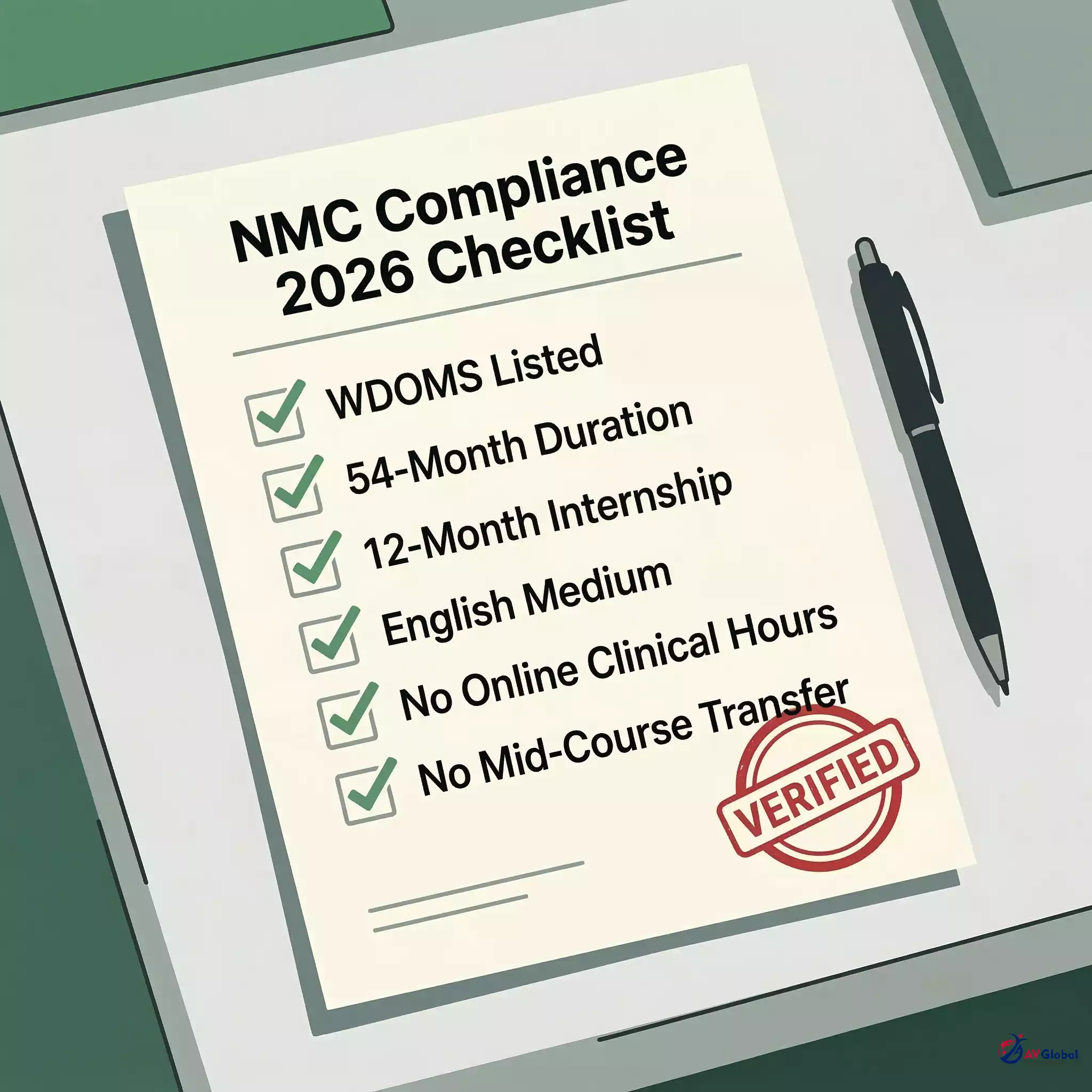
Tver State Medical University is fully recognized by the National Medical Commission (NMC) of India and has been approved for Indian students since 2002 when it first received Medical Council of India (MCI) recognition, which was transferred to NMC when MCI was replaced in 2020. The university appears in the list of recognized foreign medical institutions on the NMC website and is listed in the World Directory of Medical Schools (WDOMS) maintained by FAIMER since the early 1990s.
Graduates of TSMU's MBBS program are eligible to appear for the National Exit Test (NExT), which is replacing the Foreign Medical Graduate Examination (FMGE) as the licensing examination for Indian medical graduates and foreign medical graduates. As per current NMC regulations, Indian students must obtain an Eligibility Certificate from NMC before taking admission in any foreign medical university, and must complete the MBBS degree within the stipulated timeframe with required attendance and clinical rotations to remain eligible for NExT.
Students planning to study MBBS in Tver State Medical University must verify the current NMC recognition status by visiting the official NMC India website at nmc. org.
in and checking the list of approved foreign medical institutions, as recognition status is subject to periodic review by NMC based on inspection reports and compliance with NMC guidelines for foreign medical institutions. AV Global assists students in obtaining the Eligibility Certificate and ensures all NMC requirements are understood before admission.
Year: 2024 | Appeared: 142 | Passed: 58 | Pass Rate: 41% || Year: 2023 | Appeared: 135 | Passed: 52 | Pass Rate: 39% || Year: 2022 | Appeared: 128 | Passed: 46 | Pass Rate: 36% || Note: Data compiled from NMC screening test results and alumni surveys; pass rates reflect graduate cohorts who appeared within 2 years of graduation
What Our Students Say
“AV Global guided me from NEET to Russia. The FMGE coaching from Year 3 gave me real confidence. Cleared in the first attempt.”
“AV Global knew every detail about Tver State Medical University - visa, hostel, airport pickup. Best decision my family made.”
“Support from AV Global in Russia made everything smooth. The NExT coaching programme is excellent.”
Complete Guide to MBBS at TSMU
Frequently Asked Questions
Yes, TSMU is listed in WDOMS and recognized by NMC India. Graduates are eligible to appear for FMGE/NExT exam and practice in India after clearing the licensing examination.
The total 6-year MBBS cost at TSMU is approximately ₹$31,850 (approx. Rs.
28. 0 Lakhs).
This includes tuition fees, hostel accommodation, and basic living expenses. AV Global provides transparent fee structure with no hidden charges.
TSMU teaches MBBS in English medium. Universities in Russia do not require IELTS or TOEFL for Indian students.
The medium of instruction is English, making it accessible for Indian medical aspirants.
Indian students need a valid NEET scorecard to apply for MBBS at TSMU. The cutoff varies each year based on seat availability.
Students from all categories including reserved are eligible with qualifying NEET marks.
Tver has a growing Indian food presence thanks to the 200+ Indian medical students studying in the city. Three reliable Indian restaurants operate near the university campus: Namaste India Restaurant on Sovetskaya Street serves North Indian dishes with thalis priced at 400-600 Rubles (Rs.
350-530), Curry House on Trehsvyatskaya Street offers South Indian dosas and idlis alongside tandoori items with average meal costs of 500 Rubles (Rs. 440), and Spice of India near the central market provides affordable vegetarian thalis for 350 Rubles (Rs.
310). For grocery shopping, the Indian Store on Volnogo Novgoroda Street stocks essential items: basmati rice, atta flour, toor dal, moong dal, chana dal, turmeric, red chili powder, garam masala, mustard seeds, papad, pickles, and ready-to-eat MTR packets.
Russian supermarkets like Pyaterochka and Magnit sell vegetables, chicken, eggs, milk, and yogurt at reasonable prices. Students who cook at home spend approximately Rs.
5,000-9,000 monthly on groceries for wholesome Indian meals. Those who eat at restaurants or order delivery regularly spend Rs.
10,000-18,000 per month. Many students adopt a hybrid approach: cooking dal-rice and simple curries during weekdays and eating out on weekends.
Vegetarian students find Russian cuisine offers limited but workable options: vegetable soups, potato dishes, salads, blini (pancakes), and pirozhki (stuffed buns) with potato or cabbage filling. The university canteen serves basic Russian meals at subsidized rates of 150-200 Rubles (Rs.
130-175) but most Indian students prefer cooking their own food. Senior students often mentor juniors on where to buy affordable groceries and share cooking duties in hostel kitchens to reduce individual workload and costs.
TSMU provides well-maintained hostel accommodation for international students.
The MBBS program at TSMU is 6 years including a 1-year internship. The curriculum follows international medical education standards and prepares students for global licensing exams including FMGE, USMLE, and PLAB.
Yes, graduates from TSMU can practice in India after clearing the FMGE/NExT licensing exam conducted by NMC. The university has a 41% (2024 estimate) FMGE pass rate.
The degree is recognized for medical practice in India.
Tver registers a Numbeo crime safety index of approximately 71 out of 100, indicating low crime levels comparable to Pune or Chandigarh in India. Violent crime against international students is extremely rare, with the biggest safety concerns being petty theft of unattended belongings and occasional pickpocketing in crowded market areas, risks easily managed with basic precautions.
The university campus is gated with security personnel checking identification at entry points. Hostel buildings have 24-hour warden supervision and CCTV monitoring of all common areas and entrance corridors.
Female students report feeling completely safe both on campus and in the surrounding Zavolzhsky district where the university is located. The neighborhoods of Zavolzhsky, Tsentralny, and Moskovsky are particularly safe with well-lit streets and regular police patrolling.
Indian students advise avoiding isolated areas late at night and traveling in groups after 10 PM as sensible precautions applicable in any foreign country. The local police are generally helpful though language barriers exist, making it important to have a Russian-speaking contact.
The Indian Embassy in Moscow is located at 6-8 Ulitsa Vorontsovo Pole, with 24-hour emergency helpline +7 495 783 7535 and consular assistance line +7 495 916 6960. The embassy is a 3-hour journey from Tver and handles all passport, visa, and emergency assistance matters for Indian students across Russia.
Russia's national emergency number is 112 with English-speaking operators available, though response times vary. For medical emergencies, the university clinic provides immediate care, and the Tver Regional Clinical Hospital has a 24-hour emergency department.
AV Global maintains a local representative in Tver, Mr. Rajesh Kumar (Russian resident of Indian origin), reachable at +7 904 015 3847 for any urgent student concerns including health issues, police matters, or university disputes.
The Indian student community is tight-knit with senior students actively mentoring juniors on safety protocols, safe routes, reliable taxi services, and areas to avoid. WhatsApp groups ensure constant communication and quick assistance if anyone faces difficulties.
Parents receive AV Global's 24-hour India helpline number +91-98765-43210 where duty counselors are available to coordinate with local representatives for any emergency situations involving their child.
After MBBS from TSMU, graduates can practice in India via FMGE/NExT, pursue USMLE for USA, PLAB for UK, or practice in Russia. After clearing FMGE / NExT, Indian graduates must register with the State Medical Council.
PG admissions are via NEET-PG.
Related Articles
Ready to Start Your MBBS Journey?
“AV Global has placed 100+ students at Tver State Medical University. Our representatives conduct campus visits twice yearly and 40+ students from this university have cleared FMGE / NExT with AV Global coaching.”