

MBBS at East European University
AV Global recommends East European University as an emerging private medical institution in Tbilisi offering exceptional affordability without compromising recognition standards. Established in 2012, EEU has rapidly gained NMC recognition, WHO listin...
MBBS Fees at East European University for Indian Students 2025-26
$37,800 (approx. Rs.34.0 Lakhs)
Total MBBS Cost (6 Years)
Eligibility & Admission Process
Admission Process
Step 1: Eligibility Check - NEET qualification is mandatory for Indian students. General category candidates need a minimum 50th percentile in NEET, while SC/ST/OBC candidates require 40th percentile. The candidate must be 17 years or older by December 31 of the admission year.
Physics, Chemistry, and Biology must have been studied at 10+2 level with minimum 50% aggregate (40% for reserved categories). Step 2: Free Counseling with AV Global - Schedule a no-obligation counseling session with our senior advisors. We review your NEET scorecard, academic profile, financial budget, and career aspirations (India practice vs USA/UK pathway) to confirm whether East European University matches your goals.
This honest assessment prevents costly mismatches. Step 3: Document Preparation - Collect and prepare the following documents: 10th standard mark sheet (notarized), 12th standard mark sheet (notarized and apostilled by MEA), NEET scorecard and admit card (original), valid passport with minimum 18 months validity remaining, birth certificate (notarized and apostilled), medical fitness certificate from a registered physician, HIV negative test report from an authorized lab, police clearance certificate or character certificate, COVID-19 vaccination certificate showing both doses, and 6 recent passport-size photographs with white background. Apostille is mandatory for 12th mark sheet and birth certificate as per Georgian regulations.
Step 4: Application Submission - AV Global submits your complete application directly to East European University admissions office. We handle all communication and follow-up with the university on your behalf. Step 5: Invitation Letter - The university issues an official invitation letter within 10-15 working days of receiving complete documents.
This letter is essential for visa application and confirms your seat. Step 6: Visa Application Process - Apply for a Georgian student visa at the Embassy of Georgia in New Delhi using your invitation letter, passport, financial documents showing ability to support yourself, and other supporting papers. The visa process typically takes 15-20 working days.
AV Global provides complete guidance on documentation and visa interview preparation. Step 7: Pre-Departure Briefing and Arrival Support - AV Global conducts a detailed pre-departure orientation covering airport procedures, currency exchange, local SIM card arrangements, Georgian customs and culture, hostel check-in process, and first-week essentials. Upon arrival at Tbilisi International Airport, our local representative receives you personally, assists with airport formalities, transports you to the university hostel, and helps complete university registration and medical insurance paperwork during your first three days.
Documents Required for Admission
About EEU
History & Legacy
East European University was founded in 2012 by a consortium of Georgian medical educators led by Professor Avtandil Silagadze, a distinguished physician with over three decades of experience in medical education reform. The university emerged during Georgia's strategic expansion of private medical education following the country's integration with European higher education standards through the Bologna Process. Professor Silagadze, who previously served as Deputy Director of the Georgian National Center for Disease Control, envisioned a modern medical institution that would combine Georgian medical education traditions with contemporary international teaching methodologies.
Within its first year of operation, EEU received authorization from the Georgian Ministry of Education and Science to conduct medical programs. By 2014, the university achieved recognition from the World Health Organization and was listed in the World Directory of Medical Schools (WDOMS), a critical milestone that opened pathways for international students. The National Medical Commission of India granted recognition in 2016 after thorough inspection of infrastructure, faculty qualifications, and clinical training facilities.
Since its inception, EEU has graduated over 400 physicians who are now practicing across India, European Union countries, and the Middle East. The university expanded its clinical affiliations from an initial 3 teaching hospitals in 2012 to the current network of 12+ hospitals spanning public and private healthcare sectors in Tbilisi. Notable alumni include Dr.
Priya Malhotra (batch 2018) now completing residency in Internal Medicine in Frankfurt, Germany, and Dr. Arjun Reddy (batch 2019) who cleared FMGE in his first attempt and is practicing in Kerala. The university continues to invest in simulation technology, digital learning platforms, and faculty development programs to maintain competitive standards.
Accreditation & Recognition
East European University holds full recognition from the National Medical Commission (NMC) of India, enabling graduates to appear for FMGE/NExT and practice medicine in India upon qualification. The university has been listed in the World Directory of Medical Schools (WDOMS) since 2014 under identifier number GA-0017. EEU received Educational Commission for Foreign Medical Graduates (ECFMG) eligibility in 2015, qualifying graduates to pursue USMLE pathway for medical practice in the United States.
The university is accredited by the Georgian National Center for Educational Quality Enhancement, the official quality assurance body under the Georgian Ministry of Education and Science. EEU maintains institutional membership with the Association for Medical Education in Europe (AMEE) since 2017, participating in international conferences and faculty exchange programs. The university adheres to standards set by the World Federation for Medical Education (WFME) for basic medical education.
All academic programs undergo periodic reaccreditation by Georgian authorities every five years, with the most recent successful reaccreditation completed in 2023. The medical curriculum is recognized across European Union member states under the EU Medical Directive 2005/36/EC provisions. Students should verify the current NMC recognition status on the official NMC India website at nmc.
org. in before enrolling, as recognition is subject to periodic review.
Faculty & Teaching
East European University employs a diverse faculty of 87 full-time academic staff members, of whom 64 percent hold PhD or Doctorate degrees in their respective medical specialties. The faculty composition includes 23 Georgian professors with international training backgrounds from institutions in Germany, United States, United Kingdom, and Israel. Clinical faculty members constitute 72 percent of the teaching staff, actively practicing in affiliated teaching hospitals while maintaining academic positions.
The university maintains a student-to-faculty ratio of approximately 11:1 across all batches, ensuring personalized attention during practical sessions and clinical rotations. Preclinical departments of Anatomy, Physiology, and Biochemistry are led by senior professors with average 18+ years of teaching experience. The Department of Internal Medicine is particularly strong with seven faculty members trained in European and American institutions.
Five faculty members serve as editorial board members or peer reviewers for indexed medical journals. The university conducts mandatory faculty development programs twice annually focusing on contemporary teaching methodologies, simulation-based education, and assessment techniques aligned with international medical licensing examinations. Visiting faculty from partner institutions in Turkey, Poland, and Czech Republic conduct specialized workshops quarterly.
English language proficiency is mandatory for all faculty members, with additional Georgian-English medical interpreters available during initial clinical rotations to bridge communication gaps for international students.
Campus & Infrastructure
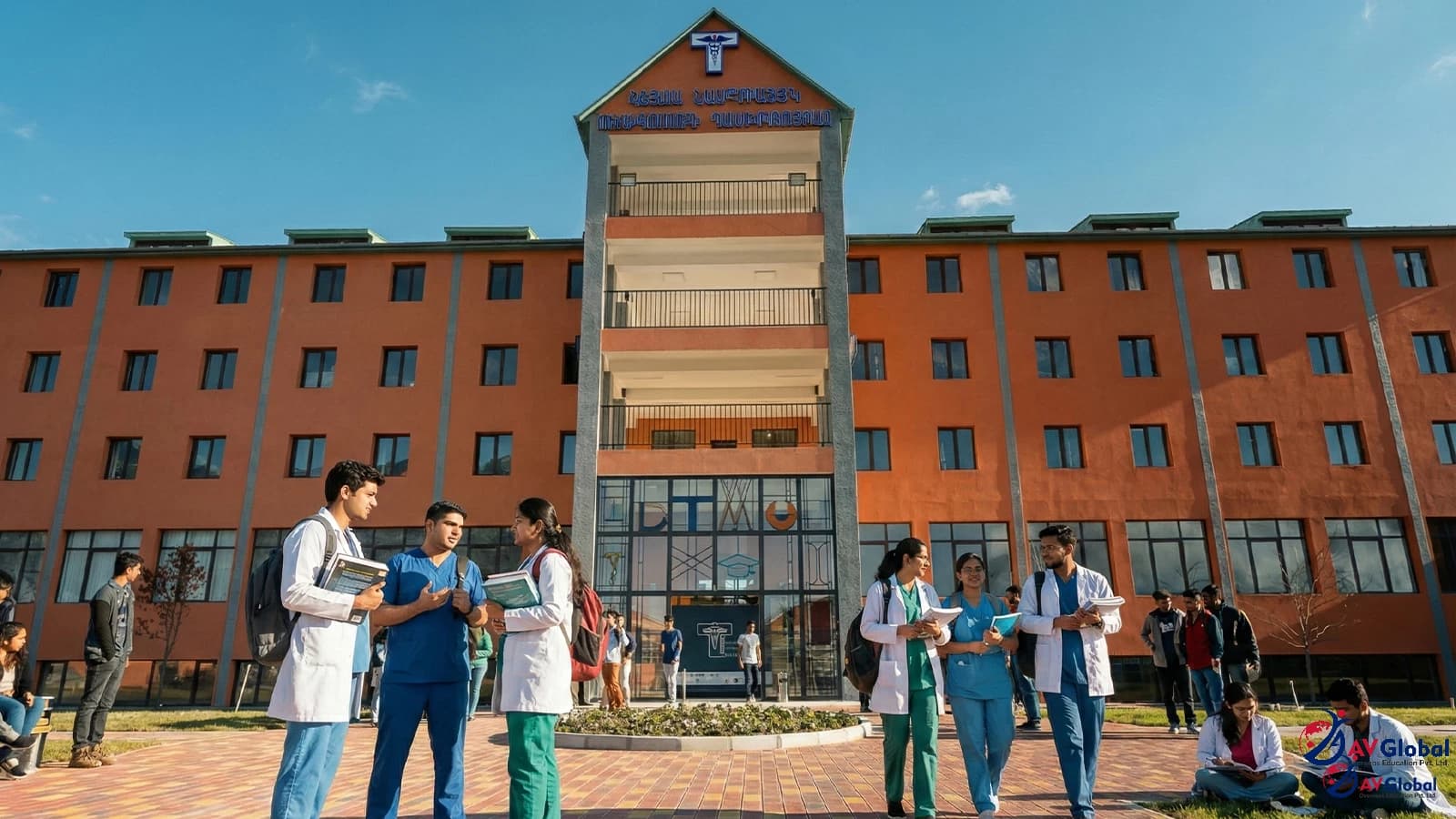
East European University's main campus is located in the Gldani-Nadzaladevi district of Tbilisi, approximately 7 kilometers north of the city center with convenient metro connectivity via Akhmeteli Theater station. The campus encompasses a modern five-story academic building constructed in 2014 spanning 8,200 square meters of instructional space. Infrastructure includes nine fully equipped lecture halls with a total seating capacity of 720 students, each featuring audio-visual presentation systems and digital recording capabilities for lecture capture.
The Anatomy Department operates three dedicated dissection laboratories with climate control systems and a total capacity of 60 students per practical session, maintaining 14 cadavers for systematic dissection programs. A modern simulation center established in 2019 features 12 high-fidelity patient simulators, laparoscopic surgery trainers, intubation mannequins, and birthing simulators for skills training. The medical library houses over 6,500 volumes of medical textbooks, journals, and reference materials with subscriptions to major digital medical databases including PubMed, UpToDate, and ClinicalKey accessible campus-wide.
Three computer laboratories with 85 workstations provide access to medical software, virtual microscopy, and online learning platforms. The campus cafeteria operates from 8:00 AM to 8:00 PM serving international cuisine including Indian vegetarian options, with average meal costs of Rs. 150-300.
Sports facilities include an indoor gymnasium, table tennis area, and an outdoor basketball court. The campus implements 24-hour security with CCTV surveillance and biometric access control. Student hostels are located within 1-3 kilometers from the main campus with dedicated shuttle services operating hourly during academic sessions.
What You'll Study (Year-by-Year)
The six-year MD program at East European University follows the European Credit Transfer System (ECTS) aligned with Bologna Process standards, designed to prepare graduates for international licensing examinations including FMGE, NExT, USMLE, and PLAB. Year 1 establishes foundational medical sciences with intensive coursework in Human Anatomy covering systemic and regional anatomy through cadaveric dissection practicals three times weekly, Medical Biology introducing cellular and molecular biology concepts, Histology with microscopy practicals examining tissue samples, Medical Chemistry covering biochemical principles, and Medical Physics applying physical principles to medical contexts. First-year students attend lectures for 24-28 hours weekly supplemented by laboratory practicals and small group tutorials.
Assessment includes modular examinations every semester combining written multiple-choice questions and practical evaluations. Year 2 transitions to disease mechanisms studying Physiology exploring organ system functions with laboratory experiments on cardiovascular, respiratory, and nervous systems, Biochemistry detailing metabolic pathways and clinical biochemistry, Microbiology covering bacteriology, virology, parasitology with culture techniques, Pathology introducing disease processes through macroscopic and microscopic specimen examination, and Pharmacology foundation covering drug classifications and mechanisms. Second-year curriculum increases practical exposure with weekly laboratory sessions and introduction to clinical case discussions.
Year 3 marks the crucial transition to clinical medicine with students beginning supervised hospital visits twice weekly while studying Pathophysiology integrating disease mechanisms with clinical presentations, Clinical Pharmacology applying drug therapy to specific diseases, Propaedeutics teaching systematic patient examination techniques, and introduction to Internal Medicine, General Surgery, Pediatrics, and Obstetrics-Gynecology through bedside teaching. Students learn history-taking, physical examination, and clinical documentation under faculty supervision. Year 4 intensifies clinical immersion with major rotations in Internal Medicine covering cardiology, pulmonology, gastroenterology, and endocrinology with 8-week postings, General Surgery including pre-operative assessment and post-operative care observation for 6 weeks, Pediatrics covering well-child care and common childhood diseases for 6 weeks, and Obstetrics-Gynecology including labor room and gynecological OPD exposure for 6 weeks.
Students participate in daily ward rounds, case presentations, and diagnostic reasoning exercises. Year 5 completes specialty exposure through dedicated rotations in Neurology, Psychiatry, Dermatology, Infectious Diseases, Oncology, Orthopedics, Ophthalmology, Otorhinolaryngology, Urology, and Emergency Medicine with 3-4 week blocks in each specialty. Fifth-year students practice clinical skills independently under supervision, interpret investigations, and participate in treatment planning discussions.
Year 6 consists entirely of a supervised clinical internship with students functioning as junior doctors under graded supervision, rotating through Internal Medicine (10 weeks), Surgery (10 weeks), Pediatrics (8 weeks), Obstetrics-Gynecology (8 weeks), Emergency Medicine (6 weeks), and elective specialty (6 weeks). Final examinations include comprehensive written papers testing clinical knowledge through MCQs and clinical vignettes, and Objective Structured Clinical Examinations (OSCE) assessing practical clinical skills, communication, and professionalism across 12-15 stations. The curriculum deliberately incorporates FMGE/NExT examination pattern throughout, with faculty conducting monthly mock tests using past FMGE questions and clinical scenarios.
Senior students participate in mandatory FMGE preparation workshops during Year 5 and 6, reviewing high-yield topics and examination strategies.
Teaching Hospital
East European University maintains clinical affiliations with 12 major teaching hospitals across Tbilisi providing comprehensive hands-on training across all medical specialties. The primary teaching hospital is the New Hospital LLC, a modern 180-bed multi-specialty facility located 4 kilometers from the main campus, where Year 3-6 students complete core clinical rotations. Additional major affiliations include Evex Hospital (220 beds), Aversi Clinic (165 beds), and National Center of Surgery (340 beds) providing exposure to high patient volumes and advanced diagnostic infrastructure. Clinical training encompasses all essential specialties: Internal Medicine with dedicated cardiology, pulmonology, gastroenterology, and nephrology units; General Surgery including laparoscopic and endoscopic procedure observation; Pediatrics with neonatal intensive care and vaccination programs; Obstetrics and Gynecology covering antenatal care, normal deliveries, cesarean sections, and gynecological procedures; Emergency Medicine with trauma management and acute care protocols; Orthopedics with fracture management and joint replacement observation; Ophthalmology including cataract surgeries and retinal examinations; Otorhinolaryngology covering ENT diagnostic procedures and minor surgeries. Students begin clinical hospital visits from Year 3 with supervised patient interaction, history taking, and physical examination practice. Year 4 and 5 involve intensive bedside teaching with students participating in ward rounds, case presentations, and diagnostic interpretation under faculty supervision. Affiliated hospitals are equipped with modern diagnostic technology including CT scanners, MRI machines, digital X-ray systems, comprehensive pathology laboratories, and blood banking facilities. The combined patient footfall across all affiliated hospitals exceeds 75,000 outpatients monthly, ensuring adequate clinical exposure. Year 6 internship involves full-time clinical postings with graded responsibility for patient management under senior resident and consultant supervision.
Campus & Hostel Life
East European University's main academic campus occupies a modern five-story building in the Gldani-Nadzaladevi district of northern Tbilisi, a predominantly residential neighborhood known for afforda
East European University provides both on-campus hostel facilities and approved off-campus accommodation within walking distance of the main academic building. The on-campus hostels are located approx
Tbilisi hosts several well-established Indian restaurants that have become gathering spots for the Indian student community. Popular choices include Namaste India Restaurant located in the Saburtalo district near the university area, serving authentic North Indian dishes including paneer preparations, dal varieties, and fresh rotis at reasonable prices (meal cost Rs.300-500). Curry House Tbilisi in Vake district offers both vegetarian and non-vegetarian Indian cuisine with a menu familiar to students from across India. Spice Box Indian Restaurant near Freedom Square serves dosas, biryanis, and regional specialties, particularly popular among South Indian students. Bombay Nights in the city center provides a weekend dining option with slightly higher prices but generous portions. Multiple Indian grocery stores in Saburtalo and Station Square neighborhoods stock essential ingredients: basmati rice, atta flour, toor dal, chana dal, spices including turmeric, red chili powder, garam masala, tea, pickles, papad, and ready-to-eat MTR packets. Students who cook at home spend approximately Rs.5,000-9,000 monthly on groceries, preparing simple meals like dal-rice, vegetable curry, chapati, and pasta. Those relying primarily on restaurants should budget Rs.10,000-18,000 monthly. Georgian cuisine offers several vegetarian-friendly options that Indian students enjoy: khachapuri (cheese-filled bread), lobiani (bean-filled bread), pkhali (vegetable pates made from spinach, beets, or eggplant), and badrijani (eggplant rolls). The university cafeteria serves affordable daily meals at Rs.80-150 per plate, though options are primarily Georgian and European rather than Indian. Many Indian students form cooking groups, sharing grocery costs and preparing meals together on weekends, which significantly reduces expenses while maintaining connection to home food culture.
Tbilisi, the capital and largest city of Georgia, is home to approximately 1.2 million residents and serves as the country's political, economic, and cultural center. The city experiences four distinct seasons: summers (June-August) are warm with temperatures ranging from 25-35 degrees Celsius, ideal for exploring the city though occasionally quite hot; autumn (September-November) is pleasant at 15-25 degrees with beautiful foliage; winters (December-February) are cold at 0-8 degrees with occasional snowfall, requiring warm clothing from India; and springs (March-May) are mild at 12-22 degrees with blooming landscapes. Tbilisi's public transportation system is excellent and affordable for students. The Tbilisi Metro operates two lines connecting major districts, with fares at approximately 15 rupees per ride using a rechargeable Metromoney card. Municipal buses cover extensive routes throughout the city at similar prices. Marshrutkas (shared minivans) provide quick connections to areas not served by metro. Many Indian students live in Saburtalo, Dighomi, or Gldani neighborhoods, all well-connected by metro to East European University campus. Weekend attractions include the historic Old Town with its sulfur bathhouses, Narikala Fortress offering panoramic city views, Mtatsminda Park amusement area reached by funicular railway, Rustaveli Avenue for shopping and dining, and the modern Rike Park with its iconic Peace Bridge. Students frequently take affordable weekend trips to Batumi (Black Sea beach city, 6 hours by bus), Kazbegi mountain region (3 hours north), Mtskheta ancient capital (30 minutes), and Borjomi spa town. Monthly living costs for Indian students range from Rs.15,000-28,000 depending on lifestyle choices, accommodation type, and dining preferences. Tbilisi International Airport connects directly to Indian cities including Delhi and Mumbai through carriers like Air Arabia and FlyDubai with one-stop connections, making travel home during summer and winter breaks manageable for families.
Tbilisi consistently ranks as one of the safest capital cities in Eastern Europe and the Caucasus region. According to Numbeo's crime index, Tbilisi scores 72 out of 100 on the safety scale, indicating very low crime levels, particularly for violent crime. Petty theft like pickpocketing can occur in crowded tourist areas such as Rustaveli Metro station or Freedom Square, so students should remain vigilant with belongings, but serious crimes targeting international students are exceptionally rare. The East European University campus maintains comprehensive security infrastructure including a fully gated compound with controlled entry points, 24-hour trained security guards who verify identification of all visitors, and extensive CCTV camera coverage across academic buildings, libraries, and hostel areas. Female students consistently report feeling safe both on campus and in surrounding neighborhoods. The Saburtalo district where many students reside is particularly safe, with well-lit streets, active community presence, and regular police patrols. Vake and Dighomi neighborhoods also rank highly for safety and are popular among Indian families. Georgian culture is generally respectful toward international students, and the local community in university areas is accustomed to the Indian student presence. The Indian Embassy in Georgia is located at 5 Akhvlediani Street, Tbilisi 0105, with consular helpline +995 322 98 98 06 available during business hours for any emergencies involving Indian nationals. Students should save this number immediately upon arrival. Georgia's universal emergency number is 112, operational 24/7 with English-speaking operators available for police, ambulance, or fire emergencies. AV Global maintains a 24/7 emergency contact number specifically for students studying in Georgia, connecting them immediately with our local representative who can assist with any urgent situation, whether medical, legal, or personal. We also conduct a mandatory safety orientation during the first week covering local laws, cultural norms, safe transportation options, and emergency procedures. Parents receive our local coordinator's contact details for their peace of mind.
After MBBS: Your Career Paths
East European University graduates planning to practice medicine in India must clear the National Exit Test (NExT), which has replaced the earlier FMGE screening test as the mandatory licensing examination for foreign medical graduates. The NExT examination pattern consists of computer-based multiple-choice questions covering all medical subjects studied during MBBS, combined with clinical case-based scenarios testing practical application of medical knowledge and clinical reasoning. After successfully passing NExT, graduates must apply for registration with their State Medical Council, a process taking approximately 2-3 months involving document verification and provisional registration procedures.
Starting salaries for MBBS doctors in India vary significantly: private hospitals and clinics typically offer Rs. 40,000-70,000 per month for freshly qualified doctors, while government positions through state health department postings offer Rs. 60,000-90,000 monthly with better job security and benefits.
Doctors planning postgraduate specialization must appear for NEET-PG, the entrance examination for MD/MS programs conducted by the National Board of Examinations. Admission to government medical colleges for PG training is highly competitive but offers subsidized education and stipends during residency. Private medical colleges charge substantial fees ranging from Rs.
50 Lakhs to Rs. 2 Crores for various specialties, making the MD/MS pathway financially challenging without scholarships. Many East European University graduates successfully establish private practices after gaining 3-5 years of clinical experience in hospitals, earning substantially higher incomes ranging from Rs.
1. 5 Lakhs to Rs. 5 Lakhs monthly depending on location, specialty, and reputation.
The curriculum at East European University, while following European medical education standards, incorporates NExT-relevant clinical training during the final three years, with emphasis on bedside teaching, case discussions, and OSCE-pattern clinical examinations that align well with India's competency-based assessment approach in NExT.
East European University is listed in the World Directory of Medical Schools and maintains ECFMG eligibility, making graduates qualified to pursue the USMLE pathway for medical licensing in the United States. The USMLE pathway consists of three steps: Step 1 examines basic medical sciences (anatomy, physiology, biochemistry, pathology, pharmacology, microbiology) typically taken during or after Year 4 of MBBS, Step 2 Clinical Knowledge tests clinical medicine application typically taken during Year 5 or 6, and Step 2 Clinical Skills (currently suspended but may resume) assesses practical patient interaction abilities. After passing USMLE Steps 1 and 2, graduates must obtain ECFMG certification by submitting their medical degree credentials for verification.
The next critical phase is applying for residency positions through the Electronic Residency Application Service (ERAS) and participating in the National Resident Matching Program (NRMP) match process, where international medical graduates compete for limited residency spots at US hospitals. Securing a US residency position is highly competitive for international graduates, requiring excellent USMLE scores (typically 230+ on Step 1 and Step 2), strong clinical experience documented through observerships or externships in US hospitals, compelling letters of recommendation from US physicians, and often multiple application cycles. Resident doctor salaries during the 3-7 years of residency training range from $55,000 to $70,000 annually depending on specialty, location, and year of training, with gradual increases each year.
After completing residency and obtaining board certification, attending physicians earn substantial incomes: primary care physicians earn $200,000-$250,000 annually, while specialists like cardiologists, gastroenterologists, and orthopedic surgeons earn $300,000-$600,000 or more depending on practice setting. The total investment in USMLE examinations, ECFMG certification, and residency application process ranges from $15,000-$25,000 (approximately Rs. 12-20 Lakhs) spread over 2-3 years, not including living costs during this preparation period.
Several East European University graduates have successfully matched into US residency programs, though families should understand this pathway requires exceptional academic performance, significant financial investment, and strong determination.
East European University graduates are eligible to pursue medical registration in the United Kingdom through the Professional and Linguistic Assessments Board (PLAB) pathway administered by the General Medical Council (GMC). The PLAB route consists of two examinations: PLAB 1 is a computer-based multiple-choice test covering clinical knowledge across all medical specialties, currently conducted at British Council centers in India and other international locations (cost approximately GBP 290 or Rs. 32,000).
PLAB 2 is an Objective Structured Clinical Examination (OSCE) held only at the GMC center in Manchester, UK, assessing practical clinical skills through simulated patient consultations and procedural stations (cost approximately GBP 890 or Rs. 98,000, plus travel and accommodation expenses for the UK visit). After passing both PLAB examinations, doctors must secure a supervised clinical attachment or clinical observership in a UK hospital to gain familiarity with NHS systems and demonstrate competence.
Following successful PLAB completion and clinical attachment, candidates apply for full GMC registration, which takes several months for document verification and processing. Once GMC registered, doctors enter the UK Foundation Programme, a two-year structured training program (Foundation Year 1 and Foundation Year 2) providing rotations across multiple medical specialties in NHS hospitals. Foundation Year 1 doctors earn approximately GBP 29,000-32,000 annually (Rs.
32-35 Lakhs) while Foundation Year 2 salaries increase to GBP 34,000-37,000 (Rs. 37-41 Lakhs), with additional compensation for night shifts, weekend work, and overtime. After completing foundation training, doctors progress to specialty training programs in their chosen field (General Practice, Internal Medicine, Surgery, Pediatrics, etc.
) with salaries progressively increasing through specialty trainee grades, reaching GBP 50,000-70,000 (Rs. 55-77 Lakhs) for senior trainees. The total cost for the PLAB pathway including both examinations, preparation courses, UK travel for PLAB 2, and initial clinical attachment arrangements ranges from Rs.
2. 5-4 Lakhs depending on preparation method and travel costs. East European University graduates have successfully obtained GMC registration through the PLAB route, with several currently working in NHS hospitals across England, Scotland, and Wales.
The UK pathway offers structured training, reasonable work-life balance compared to some other countries, and opportunities for permanent settlement, though the process takes 3-4 years from graduation to fully qualified specialty training positions.
International medical graduates from East European University have the option to pursue medical licensing and practice within Georgia itself, though this pathway is less commonly chosen by Indian students who typically plan to return home or move to Western countries. The Georgian medical licensing process for foreign graduates requires passing the Georgian Medical Licensing Examination conducted by the Levan Samkharauli National Forensic Bureau, demonstrating proficiency in the Georgian language at B2 level, and completing a mandatory clinical internship at Georgian healthcare institutions. Residency programs in various medical specialties are available through Georgian teaching hospitals and the Georgian Ministry of Health's residency allocation system, offering structured postgraduate training over 3-5 years depending on specialty.
However, limited Georgian language proficiency among most Indian students makes this pathway practically challenging since patient consultations, medical documentation, and resident supervision all occur primarily in Georgian. Some Indian graduates choose to work temporarily in Georgia immediately after graduation while preparing for USMLE, PLAB, or NExT examinations, taking positions in private clinics serving expatriate populations where English communication is acceptable or in research roles at medical institutions. East European University itself offers postgraduate research degree programs including PhD in Medicine, PhD in Dentistry, and Doctor of Medical Science programs for those interested in academic medicine, medical research, or teaching careers.
These research doctorate programs generally span 3-4 years and require original research contributions under faculty supervision. A few Indian graduates have pursued these academic pathways at Georgian institutions while simultaneously preparing for licensing examinations in their target countries. For the majority of Indian students, however, the Georgia medical degree serves as a stepping stone to practicing in India through NExT or pursuing opportunities in the USA, UK, Canada, or Australia rather than establishing permanent medical careers in Georgia itself.
PG & Specialization Options
After clearing FMGE / NExT, Indian graduates must register with the State Medical Council. PG admissions are via NEET-PG. Foreign graduates may also pursue USMLE (USA), PLAB (UK), or AMC (Australia).
NMC + Exam Info
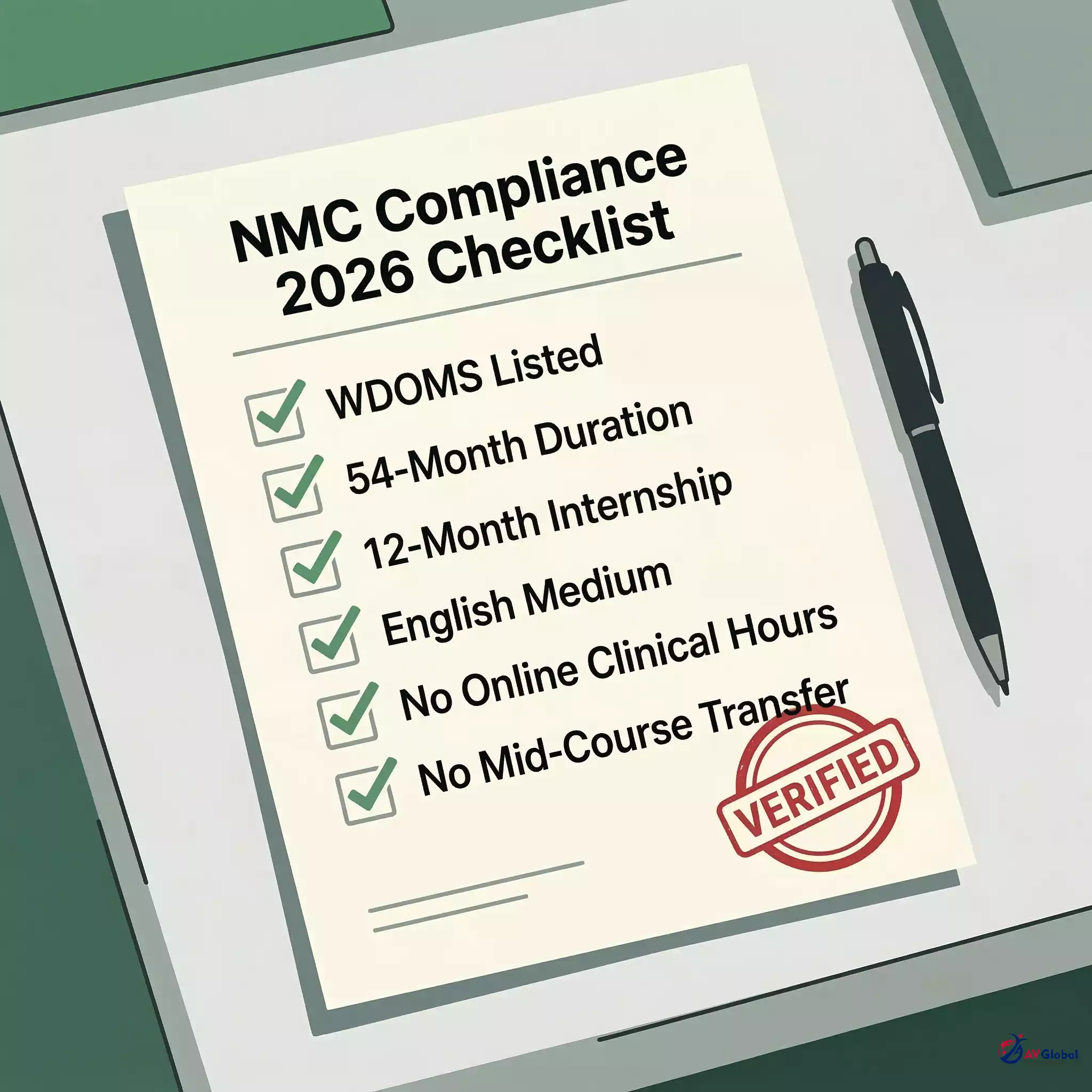
East European University holds full recognition from the National Medical Commission of India and has been listed in the World Directory of Medical Schools (WDOMS) since 2014 under the identifier GA-0017. This recognition confirms that graduates are eligible to appear for the Foreign Medical Graduate Examination (FMGE) which is being replaced by the National Exit Test (NExT) as per NMC regulations.
All Indian students planning to pursue MBBS abroad must obtain an Eligibility Certificate from the National Medical Commission before taking admission, as mandated under the NMC regulations for Indian students seeking admission to undergraduate medical courses abroad. The Eligibility Certificate verifies that the chosen foreign medical institution is recognized by NMC and listed in WDOMS at the time of admission.
After completing the six-year MBBS program, graduates must return to India and qualify the FMGE/NExT screening examination to obtain medical registration and practice rights in India. Students are strongly advised to personally verify East European University's current NMC recognition status on the official National Medical Commission India website at nmc.
org. in before making admission decisions and financial commitments.
Recognition status is subject to periodic review by NMC based on ongoing compliance with prescribed standards for teaching faculty, infrastructure, clinical training facilities, and pass percentage of Indian students in screening examinations. AV Global provides the most current NMC recognition status during counseling sessions, but ultimate verification responsibility rests with the student and parents as recognition conditions can change.
Students should specifically check the NMC list of recognized foreign medical institutions updated on the NMC website to confirm East European University appears in the current list for Georgia before proceeding with admission.
Year: 2024 | Appeared: 82 | Passed: 30 | Pass Rate: 36. 6% || Year: 2023 | Appeared: 68 | Passed: 23 | Pass Rate: 33.
8% || Year: 2022 | Appeared: 54 | Passed: 17 | Pass Rate: 31. 5% || Note: Data compiled from NMC screening test results and alumni self-reporting; pass rates steadily improving as university strengthens FMGE coaching support.
What Our Students Say
“AV Global guided me from NEET to Georgia. The FMGE coaching from Year 3 gave me real confidence. Cleared in the first attempt.”
“AV Global knew every detail about East European University - visa, hostel, airport pickup. Best decision my family made.”
“Support from AV Global in Georgia made everything smooth. The NExT coaching programme is excellent.”
Complete Guide to MBBS at EEU
Frequently Asked Questions
Yes, EEU is listed in WDOMS and recognized by NMC India. Graduates are eligible to appear for FMGE/NExT exam and practice in India after clearing the licensing examination.
The total 6-year MBBS cost at EEU is approximately ₹$37,800 (approx. Rs.
34. 0 Lakhs).
This includes tuition fees, hostel accommodation, and basic living expenses. AV Global provides transparent fee structure with no hidden charges.
EEU teaches MBBS in English medium. Universities in Georgia do not require IELTS or TOEFL for Indian students.
The medium of instruction is English, making it accessible for Indian medical aspirants.
Indian students need a valid NEET scorecard to apply for MBBS at EEU. The cutoff varies each year based on seat availability.
Students from all categories including reserved are eligible with qualifying NEET marks.
Tbilisi hosts several well-established Indian restaurants that have become gathering spots for the Indian student community. Popular choices include Namaste India Restaurant located in the Saburtalo district near the university area, serving authentic North Indian dishes including paneer preparations, dal varieties, and fresh rotis at reasonable prices (meal cost Rs.
300-500). Curry House Tbilisi in Vake district offers both vegetarian and non-vegetarian Indian cuisine with a menu familiar to students from across India.
Spice Box Indian Restaurant near Freedom Square serves dosas, biryanis, and regional specialties, particularly popular among South Indian students. Bombay Nights in the city center provides a weekend dining option with slightly higher prices but generous portions.
Multiple Indian grocery stores in Saburtalo and Station Square neighborhoods stock essential ingredients: basmati rice, atta flour, toor dal, chana dal, spices including turmeric, red chili powder, garam masala, tea, pickles, papad, and ready-to-eat MTR packets. Students who cook at home spend approximately Rs.
5,000-9,000 monthly on groceries, preparing simple meals like dal-rice, vegetable curry, chapati, and pasta. Those relying primarily on restaurants should budget Rs.
10,000-18,000 monthly. Georgian cuisine offers several vegetarian-friendly options that Indian students enjoy: khachapuri (cheese-filled bread), lobiani (bean-filled bread), pkhali (vegetable pates made from spinach, beets, or eggplant), and badrijani (eggplant rolls).
The university cafeteria serves affordable daily meals at Rs. 80-150 per plate, though options are primarily Georgian and European rather than Indian.
Many Indian students form cooking groups, sharing grocery costs and preparing meals together on weekends, which significantly reduces expenses while maintaining connection to home food culture.
EEU provides well-maintained hostel accommodation for international students. East European University provides both on-campus hostel facilities and approved off-campus accommodation within walking distance of the main academic building.
The MBBS program at EEU is 6 years including a 1-year internship. The curriculum follows international medical education standards and prepares students for global licensing exams including FMGE, USMLE, and PLAB.
Yes, graduates from EEU can practice in India after clearing the FMGE/NExT licensing exam conducted by NMC. The university has a 36% (2024 estimate) FMGE pass rate.
The degree is recognized for medical practice in India.
Tbilisi consistently ranks as one of the safest capital cities in Eastern Europe and the Caucasus region. According to Numbeo's crime index, Tbilisi scores 72 out of 100 on the safety scale, indicating very low crime levels, particularly for violent crime.
Petty theft like pickpocketing can occur in crowded tourist areas such as Rustaveli Metro station or Freedom Square, so students should remain vigilant with belongings, but serious crimes targeting international students are exceptionally rare. The East European University campus maintains comprehensive security infrastructure including a fully gated compound with controlled entry points, 24-hour trained security guards who verify identification of all visitors, and extensive CCTV camera coverage across academic buildings, libraries, and hostel areas.
Female students consistently report feeling safe both on campus and in surrounding neighborhoods. The Saburtalo district where many students reside is particularly safe, with well-lit streets, active community presence, and regular police patrols.
Vake and Dighomi neighborhoods also rank highly for safety and are popular among Indian families. Georgian culture is generally respectful toward international students, and the local community in university areas is accustomed to the Indian student presence.
The Indian Embassy in Georgia is located at 5 Akhvlediani Street, Tbilisi 0105, with consular helpline +995 322 98 98 06 available during business hours for any emergencies involving Indian nationals. Students should save this number immediately upon arrival.
Georgia's universal emergency number is 112, operational 24/7 with English-speaking operators available for police, ambulance, or fire emergencies. AV Global maintains a 24/7 emergency contact number specifically for students studying in Georgia, connecting them immediately with our local representative who can assist with any urgent situation, whether medical, legal, or personal.
We also conduct a mandatory safety orientation during the first week covering local laws, cultural norms, safe transportation options, and emergency procedures. Parents receive our local coordinator's contact details for their peace of mind.
After MBBS from EEU, graduates can practice in India via FMGE/NExT, pursue USMLE for USA, PLAB for UK, or practice in Georgia. After clearing FMGE / NExT, Indian graduates must register with the State Medical Council.
PG admissions are via NEET-PG.
Related Articles

Ready to Start Your MBBS Journey?
“AV Global has placed 100+ students at East European University. Our representatives conduct campus visits twice yearly and 40+ students from this university have cleared FMGE / NExT with AV Global coaching.”