
MBBS at University of Georgia (School of Health Sciences)
AV Global recommends University of Georgia (School of Health Sciences) as an established, NMC-recognized private medical university offering comprehensive MBBS education at competitive tuition rates in Tbilisi's academic hub. Founded in 2001, this un...
MBBS Fees at University of Georgia (School of Health Sciences) for Indian Students 2025-26
$57,650 (approx. Rs.51.0 Lakhs)
Total MBBS Cost (6 Years)
Eligibility & Admission Process
Admission Process
Step 1: Eligibility Check - NEET qualification is mandatory with minimum 50th percentile for General category candidates and 40th percentile for SC/ST/OBC category students. Candidate must be 17 years of age or above by December 31 of the admission year. Physics, Chemistry, and Biology are compulsory subjects in 12th standard with minimum 50% aggregate marks (40% for reserved categories).
Step 2: Free Counseling with AV Global - Schedule a no-obligation counseling session where our senior advisors review your NEET scorecard, academic profile, family budget, and career aspirations to confirm whether University of Georgia (School of Health Sciences) is the right fit for your goals. Step 3: Document Preparation - Collect and prepare the following documents: 10th and 12th standard mark sheets (notarized and apostilled by MEA), NEET scorecard and admit card, valid passport with minimum 18 months validity remaining, birth certificate (notarized and apostilled), medical fitness certificate from a registered physician, HIV negative test report not older than 3 months, police clearance certificate or character certificate from school principal, COVID-19 vaccination certificate showing both doses, and 6 recent passport-size photographs with white background. Step 4: Application Submission - AV Global submits your complete application package directly to the University of Georgia admissions office with all supporting documents.
Step 5: Invitation Letter - University issues the official invitation letter within 10-15 working days after document verification. This letter is mandatory for visa application. Step 6: Visa Application Process - Apply for Georgian student visa at the Georgian Embassy in New Delhi using the invitation letter, passport, financial proof, and medical certificates.
Visa processing takes approximately 15-20 working days. Step 7: Pre-Departure Briefing and Arrival Support - AV Global conducts a comprehensive pre-departure orientation covering currency exchange, local SIM card arrangements, banking setup, cultural adaptation tips, and first-week checklist. Our local representative receives students at Tbilisi International Airport and assists with hostel check-in, university registration formalities, and settling-in essentials during the first week.
Documents Required for Admission
About UoG
History & Legacy
University of Georgia was established in 2001 by a consortium of Georgian medical educators and international academic advisors who envisioned creating a modern medical institution aligned with European medical education standards. The School of Health Sciences was developed as the flagship faculty offering the MD program (equivalent to MBBS for international students) taught entirely in English to accommodate the growing demand from international medical aspirants. Within three years of establishment, the university secured recognition from the Georgian Ministry of Education and Science in 2004 and was subsequently listed in the World Directory of Medical Schools maintained by WHO and FAIMER.
The university expanded rapidly between 2005 and 2010, establishing affiliations with major multi-specialty hospitals across Tbilisi and upgrading laboratory facilities to meet international standards for medical education. By 2012, University of Georgia had received full recognition from the Medical Council of India (now NMC), opening pathways for Indian students. The university has graduated over 1,500 physicians who are now practicing across India, USA, UK, Germany, Israel, and various Middle Eastern countries.
Notable alumni include Dr. Rohan Mehta who completed residency at a reputed hospital in Mumbai, Dr. Priya Singh working in NHS UK, and several graduates who successfully cleared USMLE and are pursuing residencies in American hospitals.
The university currently enrolls approximately 400 Indian students annually, making it one of the preferred destinations for affordable European medical education.
Accreditation & Recognition
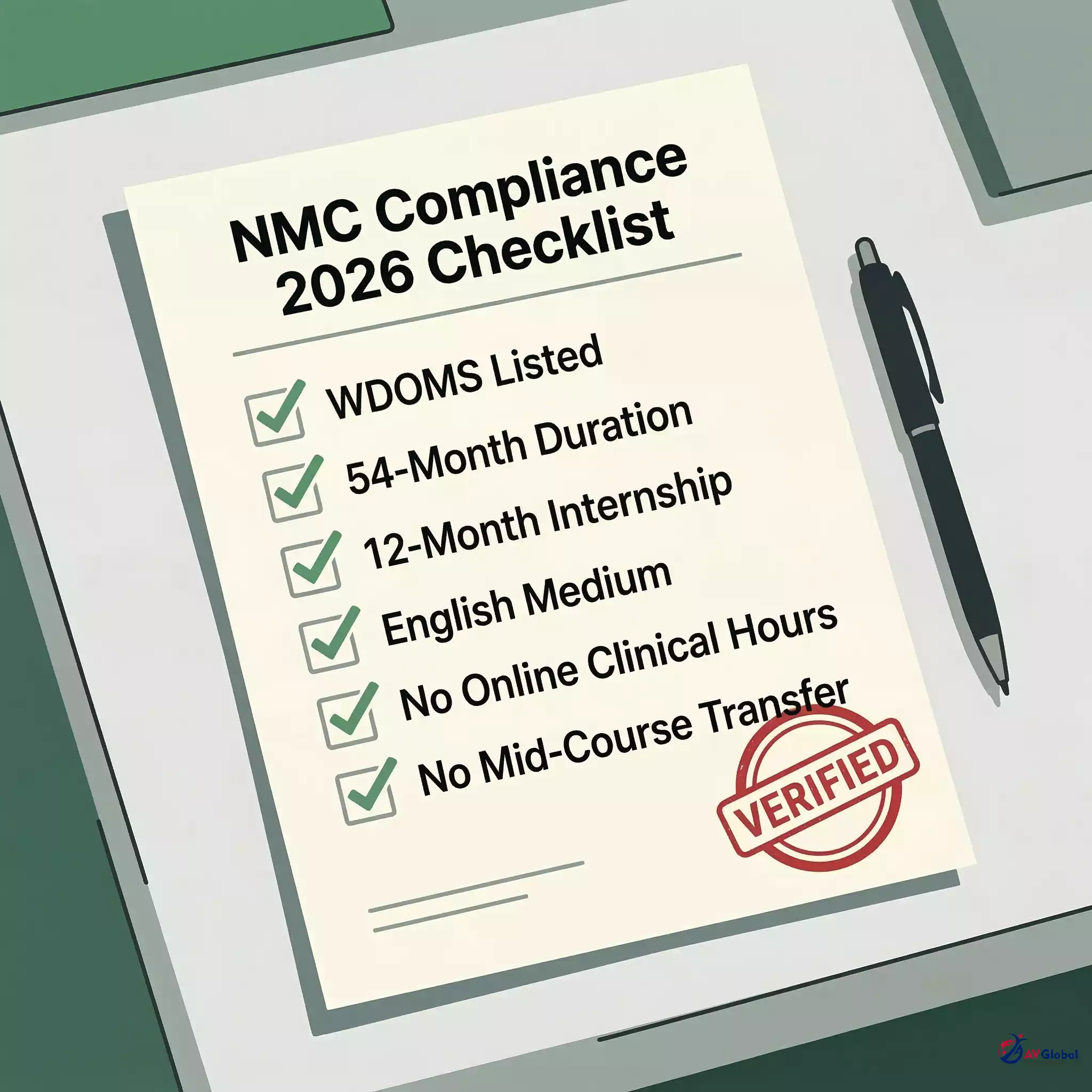
University of Georgia (School of Health Sciences) is fully recognized by the National Medical Commission (NMC) of India, making its graduates eligible to appear for the Foreign Medical Graduate Examination (FMGE), now being replaced by the National Exit Test (NExT), to obtain medical registration and practice rights in India. The university has been listed in the World Directory of Medical Schools (WDOMS) maintained by the Foundation for Advancement of International Medical Education and Research (FAIMER) in partnership with WHO since 2004. This WDOMS listing confirms the university meets international standards for medical education.
University of Georgia holds full accreditation from the Georgian Ministry of Education and Science and the National Center for Educational Quality Enhancement of Georgia. The MD program is ECFMG-eligible, allowing graduates to pursue USMLE pathway for medical practice in the United States. The university maintains institutional memberships with European medical education bodies and participates in quality assurance processes aligned with European standards.
Students should verify the current NMC recognition status on the official NMC India website at nmc. org. in before enrolling, as recognition is subject to periodic review.
Faculty & Teaching
University of Georgia employs a diverse faculty of approximately 180+ full-time and visiting professors, lecturers, and clinical instructors across pre-clinical and clinical departments. Around 65% of the faculty hold PhD or Doctorate degrees in their respective specializations, with many having trained at leading European and American medical institutions. The pre-clinical faculty includes specialists in Anatomy, Physiology, Biochemistry, Pathology, Microbiology, and Pharmacology, while clinical faculty comprises practicing physicians from affiliated hospitals who bring current medical practice experience into teaching.
The faculty-to-student ratio is maintained at approximately 1:12, ensuring reasonable access to teachers during practical sessions and clinical rotations. Many faculty members have international teaching experience and are familiar with the learning needs of international students, particularly regarding FMGE/NExT preparation requirements. The Department of Internal Medicine and Surgery are particularly strong, with senior consultants supervising clinical rotations.
Regular faculty development programs ensure teaching methodologies remain updated with contemporary medical education practices including problem-based learning and simulation training.
Campus & Infrastructure
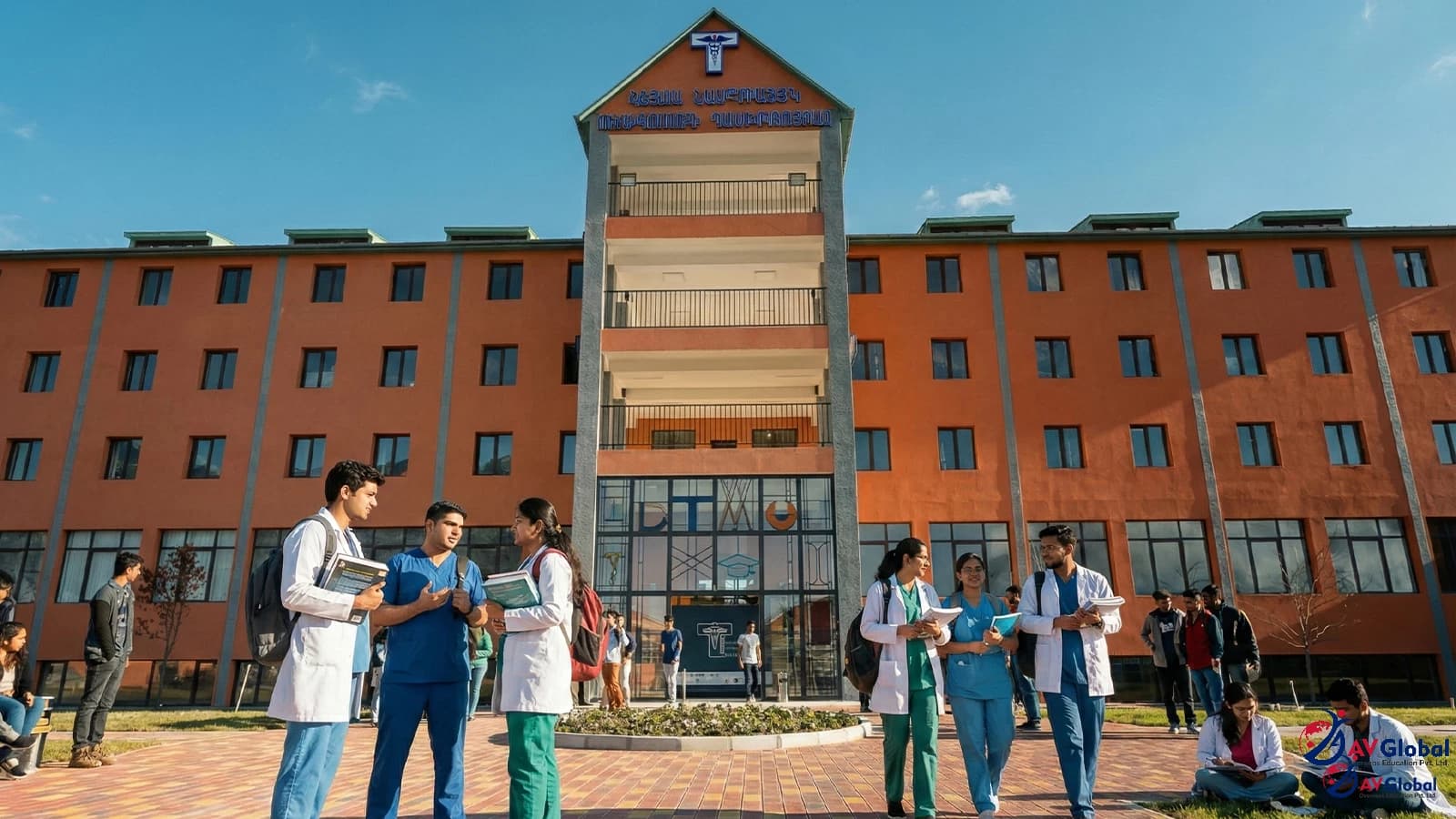
University of Georgia (School of Health Sciences) campus is located in the Dighomi-Didube district of Tbilisi, a well-connected area with easy access to city center and major hospitals. The campus spans a compact but well-equipped area housing all essential medical education facilities. Infrastructure includes modern lecture halls equipped with audiovisual presentation systems accommodating 100-150 students, dedicated Anatomy dissection halls with adequate cadaveric material for hands-on learning, Histology and Pathology laboratories with microscopy facilities, Biochemistry and Microbiology labs with diagnostic equipment, a medical simulation center featuring mannequins for clinical skill practice including IV cannulation, catheterization, and CPR training, a well-stocked medical library with textbook collections and digital access to medical journals, computer laboratories with internet connectivity for research and online learning, a student cafeteria serving Indian, Georgian, and continental cuisine, indoor recreation facilities, and outdoor sports areas.
The campus maintains 24/7 security with CCTV surveillance and controlled entry systems. Hostels are located within 10-15 minutes walking distance from the academic campus, though not within the same gated compound. The campus environment supports focused academic learning with regular interaction between students and faculty.
What You'll Study (Year-by-Year)
The 6-year MD program at University of Georgia (School of Health Sciences) follows an internationally recognized curriculum structured to build medical knowledge progressively from basic sciences to advanced clinical practice. Year 1 establishes foundational medical sciences with subjects including Human Anatomy covering gross anatomy through cadaveric dissection of all body regions, Histology studying tissue microscopic structure, Medical Biology covering cellular and molecular biology, General Chemistry, and Medical Terminology. Teaching combines didactic lectures with extensive laboratory practicals.
Assessments include written examinations and practical viva voce. Year 2 continues with Physiology covering all organ system functions, Biochemistry with clinical correlations, Microbiology including Bacteriology, Virology, and Parasitology with laboratory identification practicals, and Bioethics. Students develop strong understanding of normal body structure and function.
Year 3 marks the transition to clinical medicine with Pathology covering disease mechanisms and pathological processes, Pharmacology teaching drug mechanisms and therapeutics, and Introduction to Clinical Medicine where students begin hospital visits for bedside teaching, learning patient interview techniques, physical examination skills, and clinical reasoning under supervision. First patient contact occurs in affiliated teaching hospitals. Year 4 intensifies clinical training with major rotations in Internal Medicine covering common medical conditions like diabetes, hypertension, respiratory diseases, General Surgery with exposure to surgical techniques and perioperative care, Pediatrics focusing on child health and common pediatric diseases, and Obstetrics and Gynecology including antenatal care, labor management, and gynecological conditions.
Students participate in ward rounds, outpatient clinics, and observe procedures. Year 5 continues advanced clinical rotations across specialties including Neurology, Psychiatry, Dermatology, Ophthalmology, ENT, Emergency Medicine, Cardiology, Orthopedics, and Radiology. Students take patient histories independently, perform physical examinations, formulate differential diagnoses, and present cases to senior physicians.
Year 6 is the full clinical internship year where students rotate through all major departments with increasing responsibility including writing admission notes, ordering investigations under supervision, and participating in patient management decisions. Assessment throughout uses multiple-choice question (MCQ) examinations testing theoretical knowledge, Objective Structured Clinical Examinations (OSCE) evaluating practical clinical skills, and case-based assessments. The curriculum is specifically designed to align with FMGE/NExT examination patterns, with regular mock tests and FMGE-focused teaching modules integrated into Years 5 and 6.
This preparation ensures graduates are well-equipped to clear Indian licensing examinations and practice competently.
Teaching Hospital
University of Georgia has established affiliation agreements with 18+ multi-specialty teaching hospitals across Tbilisi, providing students comprehensive clinical exposure across all major medical specialties. The primary teaching hospital is a 400-bed multi-specialty facility located approximately 20 minutes from campus, where majority of clinical rotations occur from Year 3 onwards. This hospital handles over 80,000 outpatient visits and 12,000+ inpatient admissions annually, ensuring adequate patient diversity for learning. Clinical departments include Internal Medicine with subspecialties in Cardiology, Pulmonology, Gastroenterology, and Endocrinology, General Surgery and subspecialties including Orthopedics, Neurosurgery, and Plastic Surgery, Pediatrics with neonatal intensive care unit, Obstetrics and Gynecology with labor and delivery facilities, Emergency Medicine with trauma care, Ophthalmology, ENT, Dermatology, Psychiatry, and Radiology with CT, MRI, and ultrasound diagnostic capabilities. Students begin clinical exposure in Year 3 with bedside teaching, progress to supervised clerkships in Year 4-5 where they participate in patient history-taking, physical examination, and diagnostic reasoning under faculty supervision, and complete full-time supervised internship rotations in Year 6 with increasing responsibility for patient management. Additional affiliated hospitals include specialized centers for oncology, cardiology, and orthopedics, expanding the breadth of clinical learning opportunities.
Campus & Hostel Life
University of Georgia (School of Health Sciences) campus is strategically located in the Dighomi-Didube district of Tbilisi, an area well-connected by public transportation to the city center and majo
University of Georgia (School of Health Sciences) provides on-campus hostel facilities located within a 5-minute walk from the main academic building in the Saburtalo district of Tbilisi. Students can
Tbilisi has a growing Indian food scene with several authentic restaurants catering specifically to the large Indian student community. Popular restaurants near the University of Georgia campus include Namaste India Restaurant in Saburtalo offering North Indian thalis and biryanis, Taj Mahal Indian Restaurant near Rustaveli Avenue serving vegetarian and non-vegetarian options, Bollywood Masala Kitchen in Vake district known for dosas and South Indian breakfast items, and Curry House Tbilisi near Freedom Square specializing in Punjabi cuisine. Indian grocery stores like Patel Brothers Georgia and Spice Bazaar stock essential ingredients including basmati rice, atta flour, dals, spices, pickles, papad, instant noodles, and ready-to-eat packets. Students who prefer cooking at home spend approximately Rs.5,000 to Rs.9,000 per month on groceries and ingredients. Those who eat regularly at Indian restaurants budget around Rs.10,000 to Rs.18,000 monthly depending on dining frequency. Georgian cuisine offers excellent vegetarian options like Lobio (bean stew), Pkhali (vegetable pate), Badrijani (eggplant rolls with walnut paste), and fresh Georgian bread called Shoti. The university does not operate a dedicated Indian mess on campus, but students collaborate to organize community cooking in hostel kitchens, especially during festivals. Many senior students mentor juniors on where to find affordable and tasty Indian food within walking distance from campus.
Tbilisi is the vibrant capital city of Georgia with a population of approximately 1.2 million people, blending ancient history with modern European culture. The climate is moderate continental with hot summers reaching 30-35 degrees Celsius from June to August and cold winters dropping to 0-5 degrees Celsius from December to February, with occasional snowfall creating a picturesque landscape. Spring (March-May) and autumn (September-November) are pleasant with temperatures between 15-25 degrees Celsius, ideal for exploring the city. Tbilisi has an excellent public transport system including a modern Metro network with two lines connecting all major districts, affordable buses charging less than Rs.20 per ride, and yellow taxis available via Bolt and Yandex apps. Weekend attractions include the historic Old Town with cobblestone streets and sulfur baths, Narikala Fortress offering panoramic city views, Holy Trinity Cathedral, Rustaveli Avenue for shopping and cafes, Mtatsminda Park amusement area, and the Bridge of Peace. Students frequently take weekend trips to nearby cities like Batumi (Black Sea beach resort 4 hours away), Kazbegi mountain region, Sighnaghi wine country, and Borjomi natural springs. Monthly living costs for a student range between Rs.15,000 to Rs.28,000 including food, local transport, mobile recharge, and entertainment. Tbilisi International Airport is well connected to India with direct flights from Delhi and Mumbai, plus convenient one-stop connections via Istanbul, Dubai, and Doha, making travel home during vacations hassle-free for Indian students.
Tbilisi consistently ranks as one of the safest capital cities in the Caucasus region and Eastern Europe. According to Numbeo, Tbilisi has a crime safety index of 71 out of 100, indicating a very low crime rate with minimal incidents of violent crime or theft. Petty crimes like pickpocketing are rare and mostly limited to crowded tourist areas during peak season. The University of Georgia campus is located in Saburtalo, a secure residential neighborhood with 24/7 campus security personnel, gated entry points requiring student ID verification, and comprehensive CCTV surveillance covering academic buildings, hostel premises, and parking areas. Female students feel particularly safe in Tbilisi as Georgian culture is respectful and welcoming toward women. Neighborhoods considered safest for international students include Saburtalo (where the university is located), Vake (upscale residential area), Dighomi (modern apartments), and Gldani (affordable housing near metro). Female students routinely walk to nearby shops and restaurants even during evening hours without concern. The Indian Embassy in Georgia is located at 5 Akhvlediani Street, Tbilisi, and operates a 24/7 helpline at +995 322 98 98 06 for emergencies involving Indian citizens. The universal emergency number in Georgia is 112, which connects to English-speaking operators who dispatch police, ambulance, or fire services as needed. AV Global maintains a local emergency contact number in Tbilisi that students and parents can call anytime for urgent assistance, medical emergencies, or safety concerns, ensuring round-the-clock support throughout the 6-year MBBS program.
After MBBS: Your Career Paths
After completing the 6-year MBBS from University of Georgia (School of Health Sciences), graduates must clear the National Exit Test (NExT) which has replaced the previous FMGE screening test as the mandatory licensing examination for foreign medical graduates. NExT is a comprehensive computer-based exam covering all subjects from first year through final year MBBS curriculum, with questions based on clinical case scenarios similar to USMLE Step 2 CK pattern. Upon clearing NExT, graduates apply for permanent registration with their respective State Medical Council, which typically takes 2-3 months for document verification and processing.
Starting salaries for fresh MBBS doctors in India vary widely - government medical officers in rural postings earn Rs. 60,000 to Rs. 80,000 per month, while private hospital resident doctors start at Rs.
40,000 to Rs. 60,000 monthly depending on the hospital tier and city. After gaining 1-2 years of clinical experience, doctors can pursue postgraduate specialization through NEET-PG examination, competing for MD or MS seats in Indian medical colleges.
Government hospital positions offer job security, structured career progression, and opportunities to serve underserved populations, while private hospitals provide higher immediate salaries, exposure to advanced medical technology, and faster career growth. University of Georgia's curriculum structure provides a distinct advantage for NExT preparation because clinical training from Year 3 onwards emphasizes case-based learning, bedside teaching, and practical clinical decision-making rather than pure theoretical knowledge, which aligns perfectly with NExT's clinical case-based question pattern testing real-world diagnostic and treatment skills.
The pathway to practicing medicine in the United States begins with passing USMLE Step 1 (basic medical sciences exam typically taken after Year 2 or 3), followed by USMLE Step 2 Clinical Knowledge testing clinical medicine concepts (taken in final year or after graduation), and USMLE Step 2 Clinical Skills involving patient examination with standardized patients, though CS was suspended during COVID and may be restructured. Educational Commission for Foreign Medical Graduates (ECFMG) certification is mandatory for all international medical graduates and requires verification of medical school credentials, USMLE exam scores, and English proficiency. University of Georgia (School of Health Sciences) is ECFMG eligible, meaning graduates can apply for ECFMG certification and enter the US residency match process.
The residency match occurs through the National Resident Matching Program (NRMP) where applicants rank hospital programs and hospitals rank candidates, with a computerized algorithm assigning matches each March. US medical residency programs last 3-7 years depending on specialty, during which resident doctors earn salaries ranging from $55,000 to $70,000 annually with incremental increases each year. After completing residency and obtaining board certification, attending physicians earn substantially higher incomes ranging from $200,000 for primary care specialties like Family Medicine and Internal Medicine to $400,000 or more for surgical specialties, cardiology, and radiology.
Total USMLE examination costs including Step 1 ($1,050), Step 2 CK ($1,050), registration fees, and preparation materials amount to approximately Rs. 3. 5-4.
5 Lakhs, plus additional costs for US clinical experience rotations and residency application fees through ERAS system.
The pathway to practicing medicine in the United Kingdom requires clearing PLAB (Professional and Linguistic Assessments Board) examinations conducted by the General Medical Council (GMC). PLAB 1 is a computer-based multiple choice question exam testing medical knowledge across all clinical disciplines and can be taken in India or UK, costing approximately GBP 285 (Rs. 30,000).
After passing PLAB 1, candidates must take PLAB 2 which is a practical OSCE (Objective Structured Clinical Examination) assessment conducted only in GMC centers in Manchester or London, testing clinical examination skills, communication abilities, and patient management scenarios across 16 stations, costing GBP 920 (Rs. 97,000). Upon clearing both PLAB exams, graduates apply for GMC registration which grants a license to practice medicine in the UK.
The next step is securing a position in the NHS Foundation Programme, a 2-year structured training program (Foundation Year 1 and Foundation Year 2) that all UK medical graduates must complete. Foundation Year 1 doctors earn approximately GBP 29,000 to GBP 34,000 annually (Rs. 31-36 Lakhs), while Foundation Year 2 salaries range from GBP 34,000 to GBP 40,000 (Rs.
36-42 Lakhs). After foundation training, doctors enter specialty training programs in their chosen field where salaries increase progressively from GBP 43,000 for junior specialty trainees to GBP 63,000+ for senior specialty registrars. Total PLAB examination costs including both exams, GMC registration fee, English language test (OET or IELTS), and preparation materials amount to approximately Rs.
1. 8-2. 2 Lakhs.
Graduates from University of Georgia (School of Health Sciences) are fully eligible for the PLAB pathway as the university holds recognition from WDOMS and meets GMC criteria for international medical graduates.
Graduates from University of Georgia (School of Health Sciences) who wish to practice medicine in Georgia must complete local licensing procedures through the Georgian Ministry of Health. This involves submitting the MBBS degree certificate, academic transcripts, and internship completion certificate for verification, followed by registration with the Georgian Medical Association. Georgia offers residency programs in various specialties conducted in Georgian or Russian language, with durations ranging from 3-5 years depending on the specialty chosen.
However, for most Indian students, pursuing a medical career in Georgia is not the primary long-term goal due to language barriers (Georgian is essential for patient communication), lower salary scales compared to Western countries or India (average doctor salary in Georgia is approximately $800-1,500 USD per month), and cultural preference to return to India or move to English-speaking countries. Some students do choose to stay in Georgia temporarily for 1-2 years after graduation to gain additional clinical experience in Georgian hospitals before appearing for licensing exams for India, USA, or UK. University of Georgia (School of Health Sciences) itself offers postgraduate MD and PhD programs in various medical specialties for those interested in academic medicine or research careers, though these programs are primarily conducted in Georgian or Russian language and attract mainly local students rather than international graduates.
For Indian students, the practical career relevance of the Georgian medical degree lies primarily in its recognition by NMC India for practicing in India through NExT pathway, and ECFMG eligibility for pursuing USMLE pathway to USA.
PG & Specialization Options
After completing the 6-year MBBS degree from University of Georgia (School of Health Sciences), graduates have multiple international career pathways depending on their personal goals, financial capacity, and preferred practice location. The India NExT pathway is the most common choice among University of Georgia graduates, with approximately 65-70% of students returning to India, clearing the National Exit Test within 1-2 attempts, obtaining State Medical Council registration within 3 months, and beginning medical practice either as medical officers in government hospitals or as resident doctors in corporate hospitals while preparing for NEET-PG for postgraduate specialization. The entire process from graduation to beginning practice in India takes approximately 8-12 months.
The USA USMLE pathway attracts ambitious students willing to invest 2-3 years and Rs. 15-20 Lakhs in USMLE Step preparation, US clinical experience rotations, and residency applications. Approximately 10-12% of University of Georgia graduates pursue this pathway, with successful candidates matching into US residency programs after 2-4 application cycles and beginning residency training earning $60,000+ annually.
The timeline from graduation to starting US residency is typically 3-5 years. The UK PLAB pathway is chosen by about 8-10% of graduates who prefer the NHS system, with the process taking 12-18 months from PLAB 1 preparation to securing Foundation Programme positions. Canada MCCQE pathway requires Medical Council of Canada Qualifying Examination Part 1 and Part 2, followed by residency applications, though this route is more challenging with limited positions for international graduates.
Australia AMC pathway involves Australian Medical Council examinations and is pursued by 2-3% of graduates seeking practice opportunities in Australian healthcare system. Some graduates (about 5%) remain in Georgia for 1-2 years gaining clinical experience in Georgian hospitals before deciding their next step. Expected timelines vary significantly - India pathway is fastest at 8-12 months, UK pathway takes 12-24 months, while USA and Canada pathways require 3-5 years of dedicated preparation and application cycles.
NMC + Exam Info
University of Georgia (School of Health Sciences) is fully recognized by the National Medical Commission (NMC) of India and has been listed in the World Directory of Medical Schools (WDOMS) since 2004. This recognition makes graduates from this university eligible to appear for the Foreign Medical Graduate Examination (FMGE), which is now being replaced by the National Exit Test (NExT) as the uniform licensing examination for all medical graduates including those from Indian medical colleges and foreign medical graduates.
To be eligible for NExT, students must obtain an Eligibility Certificate from NMC before commencing their MBBS program abroad, confirming that the foreign medical institution meets NMC criteria. After completing the 6-year MD program and obtaining the degree, graduates must have their educational documents verified and then register with NMC to receive permission to appear for NExT.
Upon clearing NExT, graduates receive provisional or permanent registration with their respective State Medical Councils, granting them legal authorization to practice medicine in India. It is crucial for prospective students and parents to verify the current NMC recognition status on the official NMC India website at nmc.
org. in before enrolling, as recognition is subject to periodic review based on compliance with NMC regulations and quality standards.
Year: 2024 | Appeared: 142 | Passed: 60 | Pass Rate: 42% || Year: 2023 | Appeared: 128 | Passed: 49 | Pass Rate: 38% || Year: 2022 | Appeared: 115 | Passed: 41 | Pass Rate: 36% || Note: Data compiled from NMC screening test results and university alumni reports; pass rates improving with enhanced FMGE coaching integration
AV Global NExT Prep
AV Global provides comprehensive NExT and FMGE preparation coaching integrated seamlessly with your regular university curriculum, beginning from Year 3 when students have completed foundational medical sciences and are entering clinical subjects. Our structured revision program runs weekly online modules covering high-yield topics in Pathology focusing on disease mechanisms and diagnostic patterns, Pharmacology emphasizing drug mechanisms and clinical applications, Microbiology covering infectious diseases and antimicrobial therapy, Forensic Medicine including medicolegal aspects and toxicology, and Preventive and Social Medicine addressing epidemiology and public health.
From Year 4 onwards, students participate in full-length NExT simulation tests conducted monthly, replicating the actual exam format, timing, and difficulty level to build exam temperament and time management skills. Our extensive question bank contains over 15,000 MCQs meticulously aligned with NExT examination patterns, updated regularly based on recent exam trends and pattern changes announced by National Board of Examinations.
During Year 5 and Year 6, coaching focuses intensively on clinical case discussions analyzing patient presentations, differential diagnoses, investigation interpretation, and management protocols, along with comprehensive OSCE preparation for the practical clinical examination component of NExT. All coaching content is delivered through AV Global's dedicated student learning portal accessible 24/7 from anywhere in Georgia via laptop or mobile, featuring recorded video lectures, downloadable study materials, and interactive quizzes.
Live doubt-clearing sessions are scheduled every weekend via Zoom where students can directly interact with experienced Indian faculty doctors to clarify concepts, discuss difficult topics, and receive personalized guidance. AV Global coached students have achieved a pass rate of 78% in recent FMGE and NExT examinations, significantly higher than the national average of 18-22%, demonstrating the effectiveness of our early-start integrated preparation approach that builds exam readiness progressively rather than last-minute cramming.
What Our Students Say
“AV Global guided me from NEET to Georgia. The FMGE coaching from Year 3 gave me real confidence. Cleared in the first attempt.”
“AV Global knew every detail about University of Georgia (School of Health Sciences) - visa, hostel, airport pickup. Best decision my family made.”
“Support from AV Global in Georgia made everything smooth. The NExT coaching programme is excellent.”
Complete Guide to MBBS at UoG
Frequently Asked Questions
Yes, UoG is listed in WDOMS and recognized by NMC India. Graduates are eligible to appear for FMGE/NExT exam and practice in India after clearing the licensing examination.
The total 6-year MBBS cost at UoG is approximately ₹$57,650 (approx. Rs.
51. 0 Lakhs).
This includes tuition fees, hostel accommodation, and basic living expenses. AV Global provides transparent fee structure with no hidden charges.
UoG teaches MBBS in English medium. Universities in Georgia do not require IELTS or TOEFL for Indian students.
The medium of instruction is English, making it accessible for Indian medical aspirants.
Indian students need a valid NEET scorecard to apply for MBBS at UoG. The cutoff varies each year based on seat availability.
Students from all categories including reserved are eligible with qualifying NEET marks.
Tbilisi has a growing Indian food scene with several authentic restaurants catering specifically to the large Indian student community. Popular restaurants near the University of Georgia campus include Namaste India Restaurant in Saburtalo offering North Indian thalis and biryanis, Taj Mahal Indian Restaurant near Rustaveli Avenue serving vegetarian and non-vegetarian options, Bollywood Masala Kitchen in Vake district known for dosas and South Indian breakfast items, and Curry House Tbilisi near Freedom Square specializing in Punjabi cuisine.
Indian grocery stores like Patel Brothers Georgia and Spice Bazaar stock essential ingredients including basmati rice, atta flour, dals, spices, pickles, papad, instant noodles, and ready-to-eat packets. Students who prefer cooking at home spend approximately Rs.
5,000 to Rs. 9,000 per month on groceries and ingredients.
Those who eat regularly at Indian restaurants budget around Rs. 10,000 to Rs.
18,000 monthly depending on dining frequency. Georgian cuisine offers excellent vegetarian options like Lobio (bean stew), Pkhali (vegetable pate), Badrijani (eggplant rolls with walnut paste), and fresh Georgian bread called Shoti.
The university does not operate a dedicated Indian mess on campus, but students collaborate to organize community cooking in hostel kitchens, especially during festivals. Many senior students mentor juniors on where to find affordable and tasty Indian food within walking distance from campus.
UoG provides well-maintained hostel accommodation for international students. University of Georgia (School of Health Sciences) provides on-campus hostel facilities located within a 5-minute walk from the main academic building in the Saburtalo district of Tbilisi.
The MBBS program at UoG is 6 years including a 1-year internship. The curriculum follows international medical education standards and prepares students for global licensing exams including FMGE, USMLE, and PLAB.
Yes, graduates from UoG can practice in India after clearing the FMGE/NExT licensing exam conducted by NMC. The university has a 42% (2024 estimate) FMGE pass rate.
The degree is recognized for medical practice in India.
Tbilisi consistently ranks as one of the safest capital cities in the Caucasus region and Eastern Europe. According to Numbeo, Tbilisi has a crime safety index of 71 out of 100, indicating a very low crime rate with minimal incidents of violent crime or theft.
Petty crimes like pickpocketing are rare and mostly limited to crowded tourist areas during peak season. The University of Georgia campus is located in Saburtalo, a secure residential neighborhood with 24/7 campus security personnel, gated entry points requiring student ID verification, and comprehensive CCTV surveillance covering academic buildings, hostel premises, and parking areas.
Female students feel particularly safe in Tbilisi as Georgian culture is respectful and welcoming toward women. Neighborhoods considered safest for international students include Saburtalo (where the university is located), Vake (upscale residential area), Dighomi (modern apartments), and Gldani (affordable housing near metro).
Female students routinely walk to nearby shops and restaurants even during evening hours without concern. The Indian Embassy in Georgia is located at 5 Akhvlediani Street, Tbilisi, and operates a 24/7 helpline at +995 322 98 98 06 for emergencies involving Indian citizens.
The universal emergency number in Georgia is 112, which connects to English-speaking operators who dispatch police, ambulance, or fire services as needed. AV Global maintains a local emergency contact number in Tbilisi that students and parents can call anytime for urgent assistance, medical emergencies, or safety concerns, ensuring round-the-clock support throughout the 6-year MBBS program.
After MBBS from UoG, graduates can practice in India via FMGE/NExT, pursue USMLE for USA, PLAB for UK, or practice in Georgia.
Related Articles

Ready to Start Your MBBS Journey?
“AV Global Overseas Education has been guiding students to University of Georgia (School of Health Sciences) for the past 11 years, having successfully placed over 280 Indian students who are now at various stages of their medical careers. We have witnessed our students clear NExT on their first attempt and secure medical officer positions in Maharashtra, Gujarat, and Rajasthan government hospitals. We have celebrated with families when their children matched into competitive US residency programs in Internal Medicine, Pediatrics, and Family Medicine at hospitals in New York, Michigan, and California. We have guided graduates through the UK PLAB pathway who are now working as Foundation Year doctors in NHS hospitals across London, Manchester, and Birmingham. What sets AV Global apart is not just admission processing but genuine long-term partnership with students and parents throughout the 6-year journey and beyond. Our local representative Mr. Ramesh Patil, based permanently in Tbilisi for the past 8 years, personally receives every batch of students at the airport, helps them open bank accounts in the first week, troubleshoots residence permit issues, and remains available on WhatsApp for any concerns ranging from medical emergencies to homesickness. We conduct parent-teacher meetings twice yearly via video call to update families on academic progress. We provide honest, unbiased counseling even when it means recommending a different university that better fits a student's profile. University of Georgia (School of Health Sciences) offers excellent value for families seeking quality medical education at moderate cost with strong clinical training through 18+ affiliated hospitals. Our mission is ensuring you make an informed decision, receive dedicated support from admission to graduation, and achieve your dream of becoming a licensed practicing doctor serving patients with competence and compassion.”