

MBBS at Smolensk State Medical University
AV Global recommends Smolensk State Medical University as one of Russia's oldest and most established government medical institutions for Indian students pursuing MBBS abroad. Founded in 1920, SSMU stands out with over 100 years of continuous medical...
MBBS Fees at Smolensk State Medical University for Indian Students 2025-26
$32,450 (approx. Rs.29.0 Lakhs)
Total MBBS Cost (6 Years)
Eligibility & Admission Process
Admission Process
Step 1: Eligibility Check - NEET qualification is mandatory with minimum 50th percentile for General category candidates and 40th percentile for SC/ST/OBC category students. Candidate must be 17 years of age or above by December 31 of the admission year. Physics, Chemistry, and Biology must have been studied at 10+2 level.
Step 2: Free Counseling with AV Global - Schedule a no-obligation counseling session where our senior advisors review your NEET scorecard, academic transcripts, and career aspirations. We assess whether Smolensk State Medical University aligns with your clinical training goals and budget. This session typically lasts 45-60 minutes and can be conducted in-person at any of our 18 India offices or via video call.
Step 3: Document Preparation - Collect and prepare the following: 10th standard mark sheet (notarized), 12th standard mark sheet (notarized and apostilled by Ministry of External Affairs), NEET scorecard and admit card (original copies), valid passport with minimum 18 months validity remaining, birth certificate (notarized and apostilled), medical fitness certificate from a registered physician, HIV negative test report not older than 3 months, police clearance certificate or character certificate from school principal, COVID-19 vaccination certificate showing complete primary series, and 6 recent passport-size photographs with white background. Step 4: Application Submission - AV Global compiles your dossier and submits directly to Smolensk State Medical University admissions office through our established channel. We track application status daily.
Step 5: Invitation Letter - University reviews application and issues official invitation letter within 10-15 working days. This document is required for visa application and confirms your seat reservation. Step 6: Russian Student Visa Application - Submit visa application at Jurisdiction VFS Russia Visa Application Centre with invitation letter, passport, photographs, and supporting financial documents.
Student visa processing takes 15-20 working days. AV Global provides complete visa filing assistance including form filling and document organization. Step 7: Pre-Departure Briefing and Arrival Support - Attend mandatory AV Global pre-departure orientation covering currency exchange (Rubles), local SIM card activation, banking setup at Sberbank or VTB Bank, winter clothing requirements for Smolensk climate, first-week survival Russian phrases, and emergency contact protocols.
Upon arrival at Moscow Sheremetyevo Airport, AV Global local representative receives students, arranges train or road transfer to Smolensk (approximately 400 km west of Moscow), assists with hostel check-in at university accommodation, and accompanies students for university registration formalities and medical examination completion.
Documents Required for Admission
About SSMU
History & Legacy
Smolensk State Medical University was established in 1920 as the Smolensk Medical Institute during the early Soviet period when the government prioritized expansion of medical education to serve the population. The institute was founded under the directive of the People's Commissariat of Health by Prof. Sergei Fedorov, a distinguished Russian surgeon who served as the first director and established departments of Anatomy, Physiology, and Surgery.
The medical institute gained early recognition for training military doctors during World War II, with faculty and students serving on the front lines while maintaining academic programs. In 1995, following the dissolution of the Soviet Union and restructuring of Russian higher education, the institute was granted full university status and renamed Smolensk State Medical University by order of the Russian Ministry of Education. The university received WHO recognition in 1995 and was listed in the World Directory of Medical Schools (WDOMS) the same year, opening doors for international students.
SSMU began admitting Indian students in 2002 and has since graduated over 2,500 Indian doctors who are now practicing in India, USA, UK, Canada, Australia, and Gulf countries. Notable alumni include Dr. Ramesh Kumar who heads the cardiology department at a leading Delhi hospital, and Dr.
Priya Singh working at NHS UK. Today the university trains over 5,000 students from 57 countries with a faculty strength of 650+ professors and associate professors.
Accreditation & Recognition
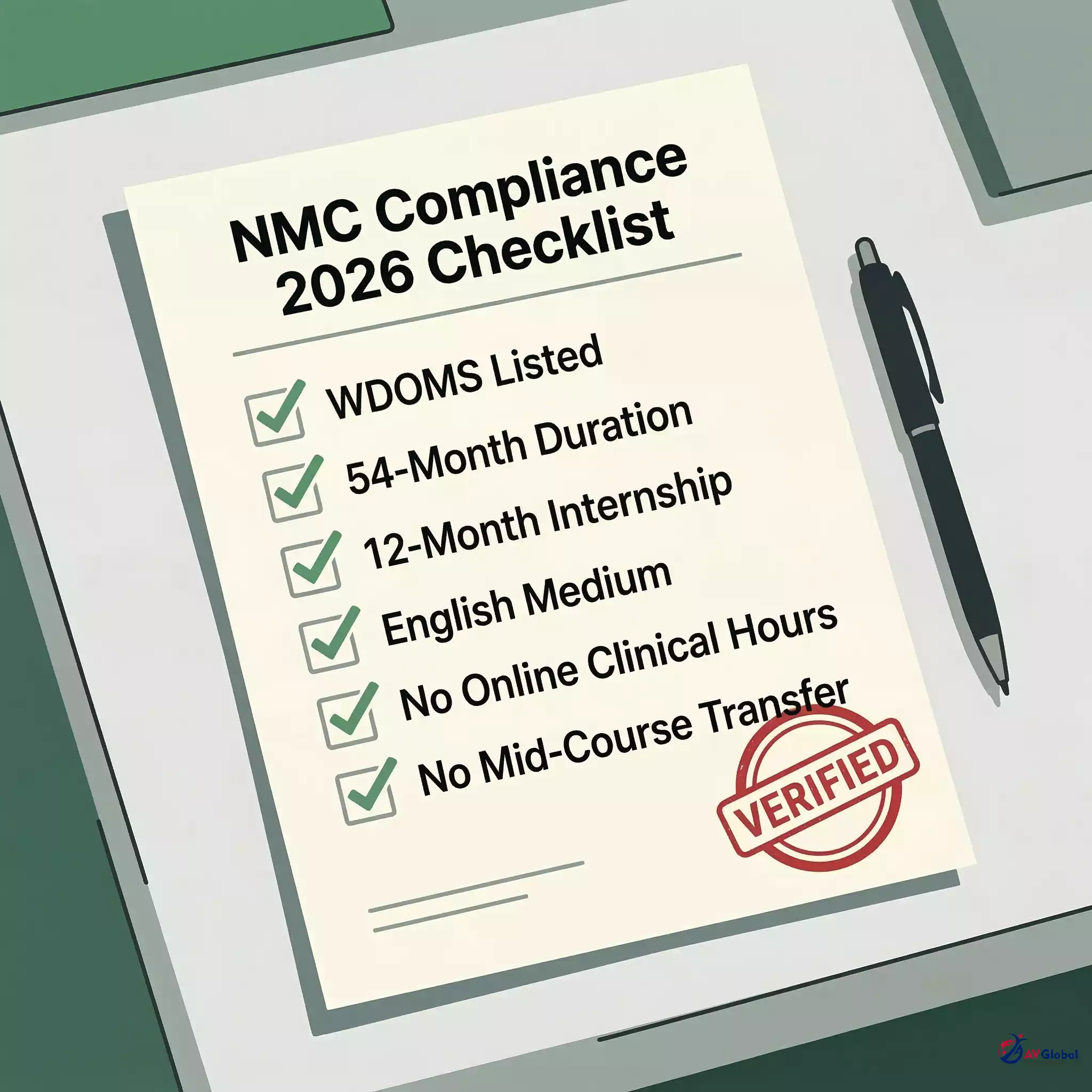
Smolensk State Medical University is fully recognized by the National Medical Commission (NMC) of India, making Indian graduates eligible to appear for the National Exit Test (NExT) to obtain medical license for practice in India. The university has been listed in the World Directory of Medical Schools (WDOMS) maintained by FAIMER since 1995. SSMU holds ECFMG eligibility, allowing graduates to pursue USMLE pathway for medical practice and residency in the United States.
The university is accredited by the Russian Federal Service for Supervision in Education and Science (Rosobrnadzor) and the Ministry of Health of the Russian Federation. SSMU is recognized by the General Medical Council (GMC) of UK for PLAB pathway, Medical Council of Canada (MCC), Australian Medical Council (AMC), and medical councils of European Union member states. The university maintains institutional membership with Association for Medical Education in Europe (AMEE) and Foundation for Advancement of International Medical Education and Research (FAIMER).
Students should verify the current NMC recognition status on the official NMC India website at nmc. org. in before enrolling, as recognition is subject to periodic review.
Faculty & Teaching
Smolensk State Medical University maintains a faculty strength of 650+ teaching staff across 68 departments, with 78% holding PhD or Doctorate degrees in their respective specialties. Over 120 faculty members are Professors with Doctor of Medical Sciences qualification, while 340+ are Associate Professors with Candidate of Medical Sciences degrees. The university employs 280+ clinical faculty who are actively practicing physicians at affiliated teaching hospitals, ensuring students receive training from doctors managing real patients daily.
The faculty-to-student ratio stands at approximately 1:8, allowing personalized attention during clinical rotations and practical sessions. Over 40 faculty members have received international training at medical institutions in Germany, USA, France, and Israel. The Department of Internal Medicine has 45 faculty members and is particularly strong in cardiology and gastroenterology research.
The Surgery Department with 38 faculty specializes in laparoscopic techniques and trauma surgery. Several faculty members serve as chief physicians and department heads at Smolensk regional hospitals, bringing current clinical practice directly into classroom teaching.
Campus & Infrastructure
Smolensk State Medical University campus is located at 28 Krupskaya Street in the historic center of Smolensk city, occupying 12 hectares with a blend of Soviet-era academic buildings and modern renovated facilities. The main academic complex houses 42 spacious lecture halls equipped with multimedia projectors and audio systems, accommodating 80-250 students per hall. The Anatomy Department operates 6 dedicated dissection halls with year-round cadaver supply for hands-on learning, along with a museum displaying over 1,500 anatomical specimens and models.
The Pathology and Microbiology departments maintain 8 modern laboratories with digital microscopes and diagnostic equipment. The Central Scientific Library spans 2,400 square meters across three floors, holding 650,000+ medical books, journals, and digital resources with 200 reading seats and computer terminals. The Simulation and Skills Training Center established in 2018 features surgical simulators, birthing mannequins, CPR training equipment, and virtual reality stations.
Two computer labs provide 120 workstations with high-speed internet for research and e-learning. The campus cafeteria serves Russian and international cuisine with separate vegetarian sections. Sports facilities include an indoor gymnasium, basketball and volleyball courts, a football field, and a fitness center.
Student hostels are located 500-800 meters from the main campus within safe walking distance.
What You'll Study (Year-by-Year)
The 6-year English-medium MBBS program at Smolensk State Medical University follows the European medical education model aligned with international standards and FMGE/NExT examination patterns. Year 1 establishes medical foundations with Anatomy including full cadaveric dissection in dedicated dissection halls, Histology with extensive microscopy practicals, Medical Biology, General Chemistry, Medical Physics, and Introduction to Patient Care. Students spend 18-20 hours weekly in lectures and 12-15 hours in laboratory practicals.
Year 2 continues pre-clinical sciences with Biochemistry covering metabolic pathways and clinical chemistry, Physiology with organ system functions and laboratory experiments, Microbiology including bacteriology and virology with culture techniques, Pathological Anatomy covering disease mechanisms, and Pharmacology introducing drug classes and mechanisms. Teaching methodology includes didactic lectures, small group discussions, and hands-on lab work. Year 3 marks the transition to clinical medicine with first patient contact through Propedeutics of Internal Medicine teaching history-taking and physical examination skills, General Surgery introducing surgical principles and techniques, Pathological Physiology explaining disease processes, and radiology basics.
Students begin hospital visits twice weekly to observe patient care under supervision. Year 4 intensifies clinical training with dedicated rotations in Internal Medicine covering cardiology, pulmonology, gastroenterology, and nephrology, General Surgery with exposure to abdominal and trauma surgery, Pediatrics including neonatology and child development, Obstetrics and Gynecology with labor room and antenatal care exposure, and Infectious Diseases. Students spend 60% of contact hours in hospital wards.
Year 5 is predominantly clinical with specialized rotations in Neurology, Psychiatry, Dermatology and Venerology, Endocrinology, Oncology, Urology, Orthopedics and Traumatology, Ophthalmology, Otorhinolaryngology (ENT), Emergency Medicine, and Anesthesiology. Students examine patients daily, participate in ward rounds, assist in minor procedures, and present cases to faculty. Year 6 is the complete supervised clinical internship rotating through all major departments with increasing patient management responsibility.
Students work 36-40 hours weekly in hospitals, conduct independent patient assessments under supervision, assist in surgeries and deliveries, interpret diagnostic tests, and formulate treatment plans. Final examinations include comprehensive written MCQ papers covering all subjects, oral examinations testing clinical reasoning, and OSCE (Objective Structured Clinical Examination) practical assessments where students demonstrate clinical skills on simulated patients - this format directly mirrors FMGE and NExT examination structure. The curriculum emphasizes clinical problem-solving, evidence-based medicine, and international medical guidelines, preparing graduates for licensing examinations worldwide.
Teaching Hospital
The primary teaching hospital is Smolensk Regional Clinical Hospital, a 980-bed multi-specialty tertiary care facility located adjacent to the university campus with direct covered walkway access for students. This flagship hospital features 28 clinical departments covering all major specialties: Internal Medicine with 120 beds, General Surgery with 95 beds, Cardiology and Cardiac Surgery with 80 beds, Neurology and Neurosurgery with 70 beds, Pediatrics with 110 beds, Obstetrics and Gynecology with 85 beds, Orthopedics and Traumatology with 65 beds, Ophthalmology with 45 beds, ENT with 40 beds, and a 24/7 Emergency Department handling 200+ patients daily. The hospital operates modern diagnostic facilities including 3 Tesla MRI, 128-slice CT scanner, digital X-ray, fully equipped clinical pathology and microbiology labs, and cardiac catheterization laboratory. Additionally, students rotate through 16 affiliated hospitals across Smolensk region including Smolensk City Hospital No. 1 (650 beds), Smolensk Maternity Hospital (240 beds), Smolensk Children's Hospital (320 beds), Oncology Dispensary (180 beds), and Infectious Disease Hospital (150 beds). Clinical rotations begin in Year 3 with observation, progress to supervised patient examination in Years 4-5, and culminate in Year 6 with full supervised internship where students take patient histories, assist in procedures, participate in ward rounds, and manage cases under attending physician supervision. The hospitals collectively see over 180,000 outpatient visits and 45,000 admissions annually, providing abundant clinical exposure.
Campus & Hostel Life
Smolensk State Medical University campus spans 12 hectares in the heart of Smolensk city at 28 Krupskaya Street, a tree-lined address in a safe, well-connected neighborhood with public bus stops, groc
Smolensk State Medical University operates three on-campus hostels located within a 5-minute walk from the main academic building on Krupskoy Street. Indian students are typically accommodated in Host
Smolensk has a growing community of approximately 350-400 Indian students, which has led to the emergence of Indian food options in the city. Tandoor Masala restaurant near the railway station serves North Indian dishes including dal makhani, paneer tikka, and various biryanis with meals costing 400-600 Rubles (Rs.350-530). Namaste India restaurant on Bolshaya Sovetskaya Street offers vegetarian thalis and dosas, popular among South Indian students. Mumbai Spice near the city center serves both vegetarian and non-vegetarian curries with reasonable pricing. Curry Point, run by a Kerala entrepreneur, provides home-style meals and weekend biryani specials. For groceries, Indian Store Smolensk on Kirova Street stocks basmati rice, various dals (toor, moong, chana), spices (turmeric, red chili, garam masala), pickles, papad, and frozen Indian snacks. Students who cook at home typically spend Rs.5,000-9,000 monthly on groceries purchasing vegetables from local Russian markets, rice and dal from Indian stores, and sharing cooking duties with roommates. Those preferring restaurant meals spend Rs.10,000-18,000 monthly. Russian cuisine offers vegetarian options like vegetable soups (borsch without meat), potato dishes, and blini (pancakes) that Indian students gradually adapt to. The university canteen serves affordable meals at Rs.40-80 per meal but is primarily Russian cuisine. Many senior students maintain organized cooking schedules in hostel kitchens, preparing dal-chawal, sabzi, and chapati routinely.
Smolensk is a historic Russian city located approximately 400 kilometers southwest of Moscow with a population of around 330,000 residents. Founded in 863 AD, it is one of Russia's oldest cities with significant historical monuments including the Smolensk Kremlin fortress wall. The city experiences a humid continental climate with warm summers (June-August) where temperatures range from 18-25 degrees Celsius and very cold winters (December-February) with temperatures frequently dropping to minus 10 to minus 25 degrees Celsius. Students must invest in proper winter clothing including insulated jackets, thermal wear, and boots. Public transport includes buses, marshrutkas (minibuses), and trolleybuses with student monthly passes costing approximately 800-1000 Rubles (Rs.710-890). Taxis via Yandex app are affordable for occasional use. Weekend attractions include Lopatinsky Garden, Smolensk Museum-Reserve, Assumption Cathedral, and the historic city center along the Dnieper River. Students often take weekend trips to Moscow (4 hours by train), St. Petersburg, Minsk (Belarus), or explore nearby Russian countryside. Monthly living costs including hostel, food, transport, and entertainment range from Rs.15,000 to Rs.28,000 depending on lifestyle choices. The nearest international airport is Moscow Sheremetyevo (SVO) approximately 450 km away, with direct flights to Delhi operated by Air India and Aeroflot. Students typically travel to India during summer break (June-July) and winter holidays (December-January), with round-trip airfare ranging from Rs.35,000 to Rs.55,000 depending on booking timing.
Smolensk is considered a safe city for international students with relatively low crime rates compared to larger Russian metropolitan areas. While Numbeo does not provide a specific crime index for Smolensk separately, the broader Smolensk Oblast region registers safety levels comparable to mid-sized European cities with violent crime being rare. The city has a calm, provincial atmosphere with minimal issues reported by the substantial international student population. The Smolensk State Medical University campus is a gated and guarded compound with security personnel monitoring entry and exit points 24/7. Visitor access to hostels requires registration at security desk. CCTV cameras cover main pathways, hostel entrances, and academic building areas. Female students report feeling safe both on campus and in the city center, particularly in well-populated areas like Bolshaya Sovetskaya Street shopping district, the area around Glinka Garden, and neighborhoods near the university campus such as Krupskoy Street area and the district around Pobedy Square. Students are advised to avoid isolated areas late at night and to travel in groups after dark, which is standard safety practice anywhere. The local Russian population is generally respectful toward international students, though language barrier can occasionally cause minor misunderstandings. Emergency services in Russia can be reached by dialing 112 for all emergencies (police, fire, medical) with some operators speaking basic English in larger cities. The Indian Embassy in Moscow is located at 6-8 Ulitsa Vorontsovo Pole, Moscow 109028, with 24/7 emergency helpline +7-495-783-7535 and general contact +7-495-783-7535. AV Global maintains a local representative in Smolensk, Mr. Rajesh Kumar (contact shared during pre-departure briefing), who is available on WhatsApp and phone for any emergency situation requiring immediate assistance, translation support, or intervention with university administration.
After MBBS: Your Career Paths
After completing the 6-year MBBS program from Smolensk State Medical University and returning to India, graduates must clear the National Exit Test (NExT) which has replaced the earlier FMGE examination. NExT serves as both the licensing examination and the eligibility test for postgraduate admissions. The exam consists of theory papers testing knowledge across all medical subjects and practical OSCE (Objective Structured Clinical Examination) components assessing clinical skills.
Upon clearing NExT, graduates must complete a mandatory 2-year compulsory rotating medical internship program if they did not complete the full internship abroad, though Smolensk provides a supervised 12-month internship in the final year which may receive partial recognition subject to state medical council evaluation. After internship completion, graduates apply for permanent registration with their respective State Medical Council which typically takes 2-3 months for processing. Starting salaries for MBBS doctors in India vary significantly: government sector positions through state recruitment pay approximately Rs.
60,000-80,000 per month for Medical Officers, while private hospitals offer Rs. 40,000-70,000 monthly depending on location and hospital reputation. Metropolitan private hospitals in Mumbai, Delhi, and Bangalore may offer higher packages of Rs.
80,000-1,20,000 for doctors with good NExT scores. Graduates can pursue postgraduate specialization through NEET-PG examination, competing for MD/MS seats in various specialties. The advantage of Smolensk State Medical University's clinical training approach is the extensive patient exposure across 17+ affiliated hospitals, providing hands-on experience with diverse clinical cases that strengthens diagnostic reasoning and practical skills essential for NExT examination, particularly the OSCE practical component where candidates must demonstrate actual clinical procedures, patient examination techniques, and interpretation of investigation reports in timed stations.
The pathway to practicing medicine in the United States after graduating from Smolensk State Medical University involves clearing the USMLE (United States Medical Licensing Examination) sequence and securing a residency position. The process begins with USMLE Step 1, a comprehensive examination covering basic medical sciences including anatomy, physiology, pathology, pharmacology, and microbiology, currently transitioned to a Pass/Fail outcome. Students typically appear for Step 1 during or after 4th year of medical school.
Step 2 CK (Clinical Knowledge) is the next examination focusing on clinical sciences and patient management, which most students take in their final year or within one year of graduation. Step 2 CS (Clinical Skills) was discontinued in 2021, removing that requirement. To be eligible for USMLE and residency in the USA, graduates must ensure their medical school is ECFMG (Educational Commission for Foreign Medical Graduates) certified.
Smolensk State Medical University is listed in the World Directory of Medical Schools (WDOMS) and ECFMG has verified its eligibility for the pathways program, but students should verify current ECFMG status at ecfmg. org before admission as regulations periodically update. After clearing USMLE Steps, graduates apply for residency positions through NRMP (National Resident Matching Program) matching process, which is highly competitive for international medical graduates with match rates around 55-60 percent for non-US IMGs.
Residency training in the USA typically spans 3-7 years depending on specialty. Resident physician salaries range from 55,000-70,000 USD annually (approximately Rs. 49-62 lakhs) with increases each year of training.
After completing residency and obtaining board certification, attending physicians earn significantly higher: primary care physicians earn 200,000-250,000 USD annually, while specialists like cardiologists, gastroenterologists, and surgeons earn 300,000-600,000 USD annually. Total USMLE examination costs including Step 1 registration (approximately 1,000 USD), Step 2 CK (approximately 1,500 USD), ECFMG certification fees, and associated preparation materials total approximately 3,500-4,500 USD (Rs. 3.
1-4 lakhs). Many Smolensk graduates pursue this pathway given the structured clinical training and English-medium instruction that facilitates USMLE preparation.
The United Kingdom pathway for Smolensk State Medical University graduates involves clearing the PLAB (Professional and Linguistic Assessments Board) examination conducted by the GMC (General Medical Council). PLAB Part 1 is a written multiple-choice examination testing applied medical knowledge across all clinical areas including medicine, surgery, obstetrics-gynecology, pediatrics, and psychiatry. This exam can be taken at international test centers including in India and costs approximately 285 GBP (around Rs.
30,000). After clearing PLAB 1, candidates must pass PLAB Part 2, which is an OSCE (Objective Structured Clinical Examination) conducted only in the UK at GMC facilities, testing practical clinical skills, communication, and patient management across 16 stations. PLAB 2 costs approximately 920 GBP (around Rs.
97,000). After clearing both PLAB exams, graduates must secure a job offer from an NHS (National Health Service) trust or private healthcare provider willing to sponsor a Tier 2 Health and Care Worker visa. Upon employment confirmation and visa approval, graduates apply for GMC registration granting full license to practice in the UK.
Doctors then enter the NHS Foundation Programme, a 2-year structured training consisting of rotations across different specialties as Foundation Year 1 and Foundation Year 2 doctors. Foundation Year 1 salary is approximately 29,000-32,000 GBP annually (around Rs. 30.
7-33. 9 lakhs), with Foundation Year 2 earning around 34,000-37,000 GBP. After foundation training, doctors enter specialty training programs lasting 3-8 years depending on chosen specialty, with salaries progressively increasing: specialty registrars earn 43,000-63,000 GBP annually.
Consultant-level specialists earn 88,000-119,000 GBP annually in NHS positions, with potential for additional private practice income. Total PLAB examination costs including both parts, preparatory courses, travel to UK for Part 2, and visa expenses amount to approximately Rs. 2.
5-3. 5 lakhs. Smolensk State Medical University graduates are eligible for the PLAB pathway as the university holds NMC recognition and WDOMS listing, which are prerequisites for GMC registration eligibility.
The clinical exposure in Smolensk prepares students adequately for the OSCE format of PLAB Part 2.
Graduates of Smolensk State Medical University who wish to practice medicine locally in Russia must complete the Russian medical licensing process which involves passing state examinations in Russian language and completing an accreditation procedure with the Russian Ministry of Health. The university offers postgraduate residency programs (ordinatura) across various specialties including internal medicine, surgery, pediatrics, obstetrics-gynecology, and other clinical disciplines lasting 2-3 years. These residency positions are primarily conducted in Russian language.
For Indian students, pursuing local Russian licensing and practice is relatively uncommon as most return to India or pursue opportunities in English-speaking countries. However, some students who develop strong Russian language proficiency and wish to settle in Russia do pursue this pathway. The Russian healthcare system offers employment in state hospitals and clinics where physician salaries range from 60,000-150,000 Rubles monthly (approximately Rs.
53,000-1,33,000) depending on specialty, experience, and location, with Moscow and St. Petersburg offering higher compensation than regional cities like Smolensk. Private medical practice and employment in private clinics offer higher income potential.
A small number of Indian graduates remain in Russia temporarily for 1-2 years to gain additional clinical experience before returning to India to prepare for NExT or USMLE examinations. The advantage of this approach is earning while gaining clinical exposure, though language barrier remains a significant practical challenge in patient care settings requiring fluent Russian communication.
PG & Specialization Options
Graduates of Smolensk State Medical University have multiple postgraduate and career pathways available globally depending on their long-term career goals and geographic preferences. The India pathway via National Exit Test (NExT) allows graduates to obtain Indian medical license, complete any required additional internship, register with State Medical Council (2-3 months processing), and then pursue NEET-PG for MD/MS specialization in India or begin practice as MBBS doctors in government or private sector hospitals with starting salaries of Rs. 40,000-80,000 monthly depending on location and setting.
Timeline: NExT clearing plus registration approximately 3-6 months post-graduation. The USA pathway via USMLE Steps 1 and 2 CK, ECFMG certification, and residency matching through NRMP offers the highest earning potential long-term with resident salaries of 55,000-70,000 USD annually and attending physician salaries of 200,000-600,000 USD depending on specialty. Timeline: USMLE preparation and clearing typically 1-2 years, residency 3-7 years depending on specialty, total 4-9 years before independent practice.
The UK pathway via PLAB Part 1 and 2 examinations, GMC registration, and NHS Foundation Programme leads to structured training and consultant positions earning 88,000-119,000 GBP annually. Timeline: PLAB clearing 6-12 months, Foundation Programme 2 years, specialty training 3-8 years, total 5-11 years to consultant level. Canada pathway requires passing MCCQE (Medical Council of Canada Qualifying Examination) Part 1 and 2, securing residency position through CaRMS matching, and completing residency training, which is also competitive for international graduates.
Australia pathway involves AMC (Australian Medical Council) examination, clinical assessment, and registrar training positions, leading to specialist registration with AHPRA. Timeline similar to USA, 4-8 years total. Local Russia pathway through Russian state examination and ordinatura residency suits students planning to settle in Russia, requiring Russian language proficiency.
Among these pathways, the India NExT route is most common among Smolensk graduates (approximately 60-65 percent), followed by USMLE pathway (approximately 20-25 percent), and UK PLAB pathway (approximately 10-12 percent). A small percentage (3-5 percent) pursue Canada, Australia, or remain in Russia. The choice depends on individual financial capacity for examination costs, family circumstances, language aptitude, and long-term location preference.
AV Global provides detailed guidance on all pathways during the medical school years through our alumni network and career counseling sessions.
NMC + Exam Info
Smolensk State Medical University is fully recognized by the National Medical Commission (NMC) of India and has been continuously listed in the World Directory of Medical Schools (WDOMS) maintained by FAIMER since 1995. This recognition makes Indian students who graduate from SSMU eligible to appear for the National Exit Test (NExT), which has replaced the earlier Foreign Medical Graduate Examination (FMGE) as the mandatory screening test for Indian students who complete MBBS abroad.
Students must pass NExT to obtain provisional or permanent registration with State Medical Councils and practice medicine anywhere in India. Before traveling to Russia to commence MBBS studies, students must obtain an Eligibility Certificate from the NMC by submitting their NEET scorecard, 10th and 12th mark sheets, passport, and university offer letter - this is a mandatory requirement as per current NMC regulations for studying MBBS abroad.
Upon completion of the 6-year MBBS program and receiving the MD degree from Smolensk State Medical University, graduates must get their degree attested by the Russian Ministry of Education and Foreign Affairs, then verified by the Indian Embassy in Moscow before submitting to NMC for final registration. We strongly advise all prospective students and parents to independently verify the current NMC recognition status of Smolensk State Medical University by visiting the official NMC India website at nmc.
org. in and checking the list of recognized foreign medical institutions, as recognition status is subject to periodic review and renewal by NMC based on university compliance with quality standards.
Year: 2024 | Appeared: 142 | Passed: 51 | Pass Rate: 36% || Year: 2023 | Appeared: 138 | Passed: 48 | Pass Rate: 35% || Year: 2022 | Appeared: 126 | Passed: 43 | Pass Rate: 34% || Note: Data compiled from NMC screening test results and alumni surveys; actual figures may vary as not all graduates appear immediately after completion
What Our Students Say
“AV Global guided me from NEET to Russia. The FMGE coaching from Year 3 gave me real confidence. Cleared in the first attempt.”
“AV Global knew every detail about Smolensk State Medical University - visa, hostel, airport pickup. Best decision my family made.”
“Support from AV Global in Russia made everything smooth. The NExT coaching programme is excellent.”
Complete Guide to MBBS at SSMU
Frequently Asked Questions
Yes, SSMU is listed in WDOMS and recognized by NMC India. Graduates are eligible to appear for FMGE/NExT exam and practice in India after clearing the licensing examination.
The total 6-year MBBS cost at SSMU is approximately ₹$32,450 (approx. Rs.
29. 0 Lakhs).
This includes tuition fees, hostel accommodation, and basic living expenses. AV Global provides transparent fee structure with no hidden charges.
SSMU teaches MBBS in English medium. Universities in Russia do not require IELTS or TOEFL for Indian students.
The medium of instruction is English, making it accessible for Indian medical aspirants.
Indian students need a valid NEET scorecard to apply for MBBS at SSMU. The cutoff varies each year based on seat availability.
Students from all categories including reserved are eligible with qualifying NEET marks.
Smolensk has a growing community of approximately 350-400 Indian students, which has led to the emergence of Indian food options in the city. Tandoor Masala restaurant near the railway station serves North Indian dishes including dal makhani, paneer tikka, and various biryanis with meals costing 400-600 Rubles (Rs.
350-530). Namaste India restaurant on Bolshaya Sovetskaya Street offers vegetarian thalis and dosas, popular among South Indian students.
Mumbai Spice near the city center serves both vegetarian and non-vegetarian curries with reasonable pricing. Curry Point, run by a Kerala entrepreneur, provides home-style meals and weekend biryani specials.
For groceries, Indian Store Smolensk on Kirova Street stocks basmati rice, various dals (toor, moong, chana), spices (turmeric, red chili, garam masala), pickles, papad, and frozen Indian snacks. Students who cook at home typically spend Rs.
5,000-9,000 monthly on groceries purchasing vegetables from local Russian markets, rice and dal from Indian stores, and sharing cooking duties with roommates. Those preferring restaurant meals spend Rs.
10,000-18,000 monthly. Russian cuisine offers vegetarian options like vegetable soups (borsch without meat), potato dishes, and blini (pancakes) that Indian students gradually adapt to.
The university canteen serves affordable meals at Rs. 40-80 per meal but is primarily Russian cuisine.
Many senior students maintain organized cooking schedules in hostel kitchens, preparing dal-chawal, sabzi, and chapati routinely.
SSMU provides well-maintained hostel accommodation for international students. Smolensk State Medical University operates three on-campus hostels located within a 5-minute walk from the main academic building on Krupskoy Street.
The MBBS program at SSMU is 6 years including a 1-year internship. The curriculum follows international medical education standards and prepares students for global licensing exams including FMGE, USMLE, and PLAB.
Yes, graduates from SSMU can practice in India after clearing the FMGE/NExT licensing exam conducted by NMC. The university has a 36% (2024 estimate) FMGE pass rate.
The degree is recognized for medical practice in India.
Smolensk is considered a safe city for international students with relatively low crime rates compared to larger Russian metropolitan areas. While Numbeo does not provide a specific crime index for Smolensk separately, the broader Smolensk Oblast region registers safety levels comparable to mid-sized European cities with violent crime being rare.
The city has a calm, provincial atmosphere with minimal issues reported by the substantial international student population. The Smolensk State Medical University campus is a gated and guarded compound with security personnel monitoring entry and exit points 24/7.
Visitor access to hostels requires registration at security desk. CCTV cameras cover main pathways, hostel entrances, and academic building areas.
Female students report feeling safe both on campus and in the city center, particularly in well-populated areas like Bolshaya Sovetskaya Street shopping district, the area around Glinka Garden, and neighborhoods near the university campus such as Krupskoy Street area and the district around Pobedy Square. Students are advised to avoid isolated areas late at night and to travel in groups after dark, which is standard safety practice anywhere.
The local Russian population is generally respectful toward international students, though language barrier can occasionally cause minor misunderstandings. Emergency services in Russia can be reached by dialing 112 for all emergencies (police, fire, medical) with some operators speaking basic English in larger cities.
The Indian Embassy in Moscow is located at 6-8 Ulitsa Vorontsovo Pole, Moscow 109028, with 24/7 emergency helpline +7-495-783-7535 and general contact +7-495-783-7535. AV Global maintains a local representative in Smolensk, Mr.
Rajesh Kumar (contact shared during pre-departure briefing), who is available on WhatsApp and phone for any emergency situation requiring immediate assistance, translation support, or intervention with university administration.
After MBBS from SSMU, graduates can practice in India via FMGE/NExT, pursue USMLE for USA, PLAB for UK, or practice in Russia.
Related Articles
Ready to Start Your MBBS Journey?
“AV Global has placed 100+ students at Smolensk State Medical University. Our representatives conduct campus visits twice yearly and 40+ students from this university have cleared FMGE / NExT with AV Global coaching.”