
MBBS at Ryazan State Medical University
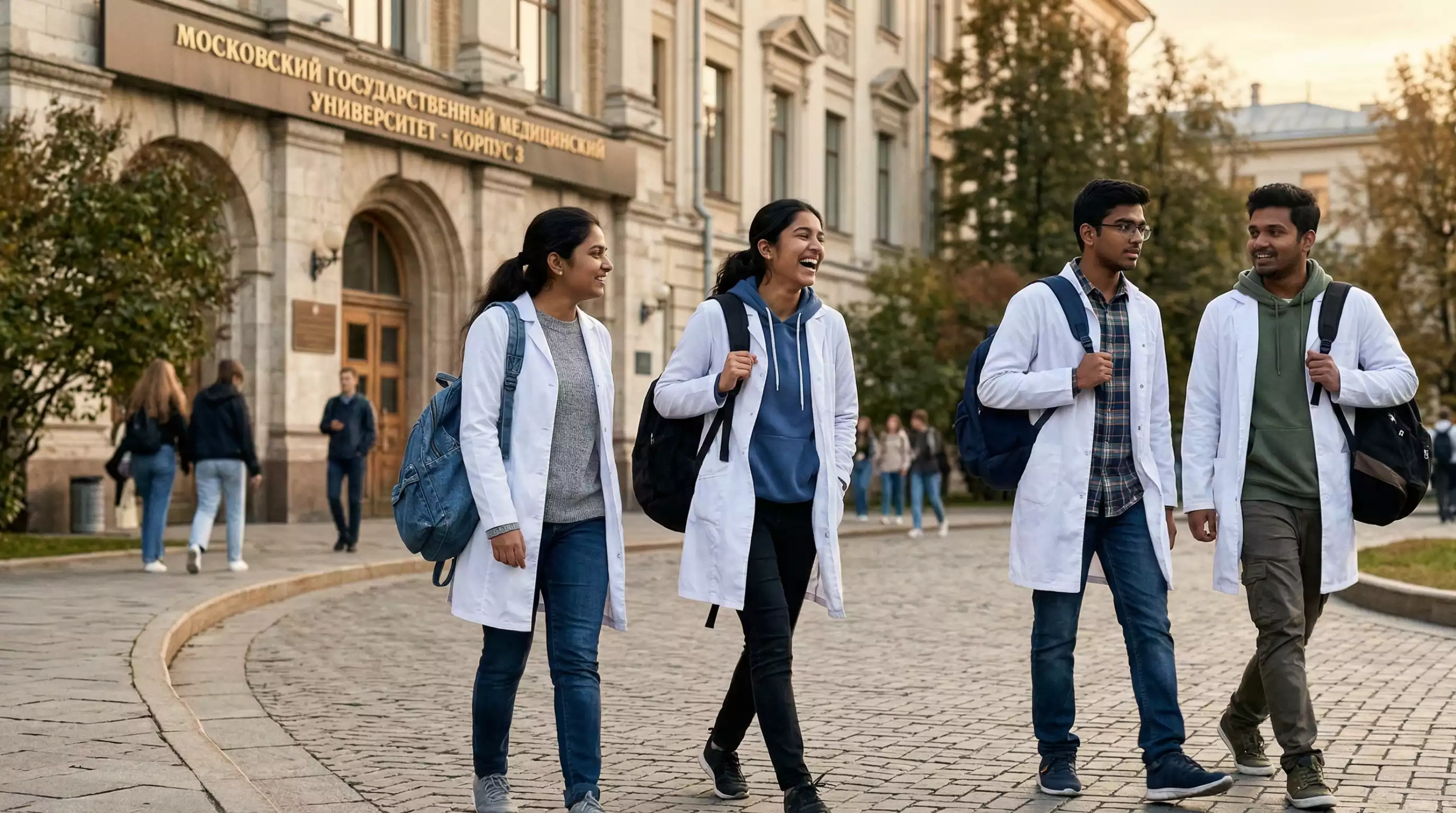
AV Global recommends Ryazan State Medical University as one of Russia's oldest and most established public medical institutions, founded in 1943 during World War II to train physicians for the Soviet medical corps. Located just 196 kilometers southea...
MBBS Fees at Ryazan State Medical University for Indian Students 2025-26
$37,250 (approx. Rs.33.0 Lakhs)
Total MBBS Cost (6 Years)
Eligibility & Admission Process
Admission Process
Step 1: Eligibility Check - NEET qualification is mandatory for admission to Ryazan State Medical University. General category students require minimum 50th percentile in NEET, while SC/ST/OBC students need 40th percentile as per NMC regulations. Candidate must be 17 years or older by December 31 of the admission year.
Physics, Chemistry, and Biology must have been studied in 10+2 with minimum 50% aggregate marks (40% for reserved categories). Step 2: Free Counseling with AV Global - Schedule a no-obligation counseling session where our senior counsellors review your NEET scorecard, academic records, financial capacity, and career aspirations to determine if Ryazan State Medical University aligns with your long-term medical career goals. We discuss honestly whether Russia suits your family or if alternatives in Georgia, Kazakhstan, or Kyrgyzstan might serve you better.
Step 3: Document Preparation - Collect and prepare: 10th standard mark sheet (notarized), 12th standard mark sheet (notarized and apostilled by Ministry of External Affairs), NEET scorecard and admit card (original and notarized copies), valid passport with minimum 18 months validity remaining, birth certificate (notarized and apostilled), medical fitness certificate from registered medical practitioner, HIV negative test report not older than 3 months, police clearance certificate or character certificate from school principal, COVID-19 vaccination certificate showing complete doses, and 6 recent passport-size photographs with white background. Step 4: Application Submission - AV Global submits your complete application package directly to Ryazan State Medical University admissions office with all supporting documents translated into Russian where required. Step 5: Invitation Letter - University issues official invitation letter within 10-15 working days after document verification, which serves as the primary document for visa application.
Step 6: Russian Student Visa Application - Apply for Russian student visa at VFS Global centers in Delhi, Mumbai, Kolkata, or Chennai using the invitation letter, passport, medical documents, and proof of financial support. Visa processing takes 15-20 working days. AV Global provides complete visa filing assistance including document preparation and appointment booking.
Step 7: Pre-Departure Briefing and Airport Reception - Attend mandatory pre-departure orientation conducted by AV Global covering currency exchange (Rubles), local SIM card options (MTS, Beeline, Megafon), banking procedures, cultural sensitivity, weather preparation, and first-week survival checklist. AV Global local representative receives students at Ryazan airport or railway station, assists with hostel check-in, university registration, medical insurance activation, and opening Russian bank account during first week.
Documents Required for Admission
About RSMU
History & Legacy
Ryazan State Medical University was established on September 1, 1943, as Ryazan Medical Institute by decree of the Supreme Soviet of the USSR during the height of World War II. The founding mission was to rapidly train military physicians and surgeons for the Soviet armed forces and civilian population suffering wartime medical crises. The first rector was Professor Ivan Dmitrievich Strakhov, a distinguished surgeon and Hero of Socialist Labor who established the foundational departments of General Surgery, Anatomy, and Military Field Medicine.
The institute began with just 150 students in makeshift buildings, but by 1945 had graduated its first cohort of 47 physicians who served in field hospitals across Eastern Europe. In 1950, the Pediatrics Faculty was established, followed by the Preventive Medicine Faculty in 1962. The institution was granted full university status in 1993 and renamed Ryazan State Medical University in recognition of its expanded research profile and postgraduate programs.
RSMU received WHO recognition in 1995 and was listed in the World Directory of Medical Schools (WDOMS) the same year, opening doors for international students. Today, over 3,200 RSMU graduates practice medicine across Russia, with notable concentrations in Moscow, St. Petersburg, and regional trauma centers.
More than 800 Indian alumni have successfully cleared FMGE and now work in AIIMS Delhi, PGIMER Chandigarh, Apollo Hospitals network, and Fortis Healthcare facilities. Several graduates hold consultant positions in NHS UK hospitals and have passed USMLE to practice in United States teaching hospitals.
Accreditation & Recognition
Ryazan State Medical University is fully recognized by the National Medical Commission (NMC) of India, making graduates eligible to appear for NExT (National Exit Test) to obtain medical registration and practice rights in India. The university has been listed in the World Directory of Medical Schools (WDOMS) since 1995 under medical school code 85470. RSMU holds ECFMG eligibility, allowing graduates to pursue USMLE pathway for medical practice in the United States.
The university is accredited by the Ministry of Health of the Russian Federation and the Federal Service for Supervision in Education and Science (Rosobrnadzor) with the highest category of state accreditation valid through 2029. RSMU is an active member of the Association for Medical Education in Europe (AMEE) and maintains institutional partnerships with the Foundation for Advancement of International Medical Education and Research (FAIMER). The university meets European standards established by the World Federation for Medical Education (WFME) for basic medical education quality assurance.
Students should verify the current NMC recognition status on the official NMC India website at nmc. org. in before enrolling, as recognition is subject to periodic review.
Faculty & Teaching
Ryazan State Medical University employs 847 faculty members across all departments, of whom 623 teach in the English-medium MD program for international students. Approximately 68 percent of faculty hold PhD degrees (Candidate of Medical Sciences in Russian system), and 142 professors hold Doctorate of Medical Sciences - the highest academic degree in Russia. The faculty includes 34 Honored Doctors of the Russian Federation and 12 laureates of state prizes in medicine and science.
Faculty-to-student ratio in clinical years is approximately 1:8, ensuring personalized bedside teaching during hospital rotations. Many senior faculty have completed advanced training at leading European and American institutions including Charité Berlin, Karolinska Institute Sweden, Johns Hopkins University, and Massachusetts General Hospital. The Department of Internal Medicine is particularly renowned, with seven professors who are chief physicians at major Ryazan regional hospitals.
The Surgery Department operates a dedicated Simulation and Skills Training Center where faculty provide hands-on instruction in suturing, laparoscopy, and emergency procedures using high-fidelity mannequins and virtual reality modules.
Campus & Infrastructure
Ryazan State Medical University main campus is located at 9 Vysokovoltnaya Street, Ryazan, Russian Federation 390026, in the northeastern district of the city adjacent to the Ryazan Regional Clinical Hospital. The academic complex spans 14 hectares with eight interconnected buildings housing modern infrastructure. Facilities include 72 lecture halls equipped with multimedia projection systems and electronic attendance tracking, 18 anatomy dissection laboratories with climate-controlled cadaver storage adhering to WHO biosafety standards, and a medical library containing over 680,000 volumes including 12,000 international medical journals with digital access to PubMed, Cochrane Library, and UpToDate clinical resources.
The campus houses 23 research laboratories for biochemistry, microbiology, pharmacology, and pathology practicals. A 4,500-square-meter Simulation Center opened in 2019 features 40 examination rooms with standardized patients, OSCE assessment stations, ultrasound simulators, and a mock operating theater. Students access 6 computer labs with 240 workstations for radiology imaging software and clinical decision support training.
The campus cafeteria serves 800 students per sitting with separate vegetarian and Jain meal options. Sports facilities include an indoor gymnasium, outdoor football and basketball courts, and a swimming pool. The international student hostel is a 10-minute walk from the main academic building.
What You'll Study (Year-by-Year)
The six-year MD (Doctor of Medicine) program at Ryazan State Medical University follows the European medical education framework adapted for international students with English as the medium of instruction. Year 1 establishes medical science foundations with Anatomy (including full human cadaveric dissection in dedicated laboratories), Histology with extensive microscopy practicals, Medical Biology covering cellular and molecular biology, Medical Chemistry including biochemistry fundamentals, Medical Physics covering biophysics and instrumentation, and Latin Medical Terminology essential for clinical communication. Teaching methodology combines traditional lectures (40%), laboratory practicals (35%), and small group tutorials (25%).
Year 2 continues pre-clinical sciences with Physiology (normal human body functions with practical demonstrations), Biochemistry (metabolic pathways and clinical enzymology), Microbiology (bacteriology, virology, parasitology with culture techniques), Pathological Anatomy covering disease mechanisms and autopsy attendance, and Pharmacology Part I (drug classification and basic pharmacokinetics). Students complete approximately 1,800 academic hours in Year 2 with continuous assessment through written tests and practical examinations. Year 3 marks the transition to clinical medicine with first patient contact: Pathophysiology linking disease mechanisms to clinical presentation, Pharmacology Part II with clinical pharmacology and prescription writing, Propedeutics of Internal Diseases (history-taking, physical examination, and clinical reasoning), General Surgery Propedeutics (surgical terminology and basic procedures), and first supervised hospital rotations in Ryazan Regional Clinical Hospital Internal Medicine and Surgery wards.
Year 4 intensifies clinical training with dedicated rotations (8-10 weeks each) in Internal Medicine, General Surgery, Pediatrics, Obstetrics and Gynecology, while studying Emergency Medicine, Neurology, Psychiatry, and Dermatology. Students are assigned 3-4 patients under faculty supervision and present case histories weekly. Year 5 is predominantly hospital-based with specialized rotations in Cardiology, Pulmonology, Gastroenterology, Endocrinology, Hematology, Nephrology, Infectious Diseases, Orthopedic Surgery, Ophthalmology, Otolaryngology (ENT), Urology, Oncology, and Radiology.
Clinical training constitutes 75% of Year 5 curriculum with students taking overnight on-call duties under resident supervision. Year 6 is a full supervised clinical internship rotating through all major departments with increasing patient management responsibility, including emergency room shifts, operation theater observation, outpatient clinic management, and labor and delivery attendance. Final examinations include comprehensive written papers covering all clinical disciplines, structured OSCE (Objective Structured Clinical Examination) with 12 stations testing history-taking, physical examination, procedural skills, diagnostic interpretation, and emergency management, and bedside clinical examination with real patients.
The curriculum specifically prepares students for NExT examination format with monthly MCQ practice tests based on NMC blueprints, clinical case discussions emphasizing Indian disease patterns (tuberculosis, malaria, dengue, enteric fever), and OSCE-style practical assessments mirroring NExT clinical competency requirements.
Teaching Hospital
Ryazan State Medical University's primary teaching hospital is the Ryazan Regional Clinical Hospital, a 1,240-bed multispecialty tertiary care facility located directly adjacent to the main campus at 3a Internatsionalnaya Street. This hospital serves as the principal site for clinical rotations in Years 4-6 and handles over 52,000 inpatient admissions annually across all major specialties. RSMU maintains formal affiliation agreements with 18 teaching hospitals throughout Ryazan Oblast, providing diverse clinical exposure. These include Ryazan City Clinical Hospital No. 11 (780 beds), Semashko Central Clinical Hospital (620 beds), Ryazan Regional Clinical Perinatal Center (specialized obstetrics with 4,200 deliveries annually), Ryazan Regional Children's Clinical Hospital (340 pediatric beds), and Ryazan Regional Clinical Cardiological Dispensary (specialized cardiology and cardiac surgery with 280 beds). Clinical rotations cover Internal Medicine, General Surgery, Pediatrics, Obstetrics and Gynecology, Emergency Medicine, Orthopedic Surgery, Ophthalmology, Otolaryngology (ENT), Dermatology and Venereology, Psychiatry, Neurology, Urology, and Oncology. Students begin hospital-based clinical training in Year 3 with supervised patient history-taking and physical examination under faculty guidance. The hospitals are equipped with modern diagnostic technology including 128-slice CT scanners, 3T MRI machines, digital mammography, PET-CT for oncology, fully automated clinical laboratories with hematology and biochemistry analyzers, and molecular diagnostics including PCR testing capability. Emergency departments manage trauma, acute cardiac events, strokes, and poisoning cases, providing excellent emergency medicine training for students.
Campus & Hostel Life
Ryazan State Medical University main campus occupies a 14-hectare landscaped site at 9 Vysokovoltnaya Street in the northeastern district of Ryazan city, directly adjacent to the 1,240-bed Ryazan Regi
Ryazan State Medical University operates multiple hostel buildings within walking distance of the main academic campus - hostels 4, 5, and 6 are located approximately 800 meters from the clinical skil
Ryazan has witnessed growth in Indian and Asian cuisine restaurants over the past five years as the international student population has increased. Indian students frequently visit Tandoor House located on Sobornaya Street (1.5 km from campus), which serves North Indian dishes including dal makhani, paneer butter masala, vegetable biryani, and fresh naan bread with meal prices ranging Rs.450-800. Spice of India near the central market offers South Indian options like dosa, idli, sambar, and Chettinad chicken with thalis priced at Rs.550-700. Namaste Restaurant on Pravolnaya Street is popular for weekend gatherings serving chaat items, tandoori preparations, and Indo-Chinese fusion dishes. Dragon Wok Asia Cafe offers pan-Asian menu including Indian-friendly vegetarian options. For groceries, Magnit and Pyaterochka supermarket chains stock basmati rice, Indian spices (though limited variety), lentils, and frozen vegetables. Students often request families to send specific spices, pickles, and ready-to-eat packets during visits. Monthly food expenses when cooking at home using hostel kitchen range from Rs.5,000-9,000 including rice, dal, vegetables, eggs, bread, milk, and cooking oil. Students eating frequently at restaurants spend Rs.10,000-18,000 monthly. University canteen serves Russian cuisine with vegetarian options like vegetable soups, potato dishes, pasta, salads, and buckwheat kasha at subsidized rates of Rs.80-150 per meal. Russian cuisine naturally offers several vegetarian-friendly items including borscht (beetroot soup without meat), blini (pancakes), pirozhki (vegetable-filled pastries), and grechka (buckwheat). Many students form cooking groups, sharing grocery costs and preparing Indian meals together on weekends.
Ryazan is a historic Russian city located 196 kilometers southeast of Moscow with a population of approximately 540,000, making it the 33rd largest city in Russia. The city serves as the administrative center of Ryazan Oblast and boasts rich cultural heritage dating back to 1095. Climate is continental with warm summers and cold winters - summer temperatures range from 20-28 degrees Celsius during June-August, spring and autumn see 8-18 degrees, while winter from December-February drops to minus 8 to minus 20 degrees Celsius with significant snowfall. Public transportation is excellent with extensive bus and marshrutka (minibus) network covering entire city - student monthly transport pass costs approximately Rs.800-1,200. Trolleybus and tram services operate on major routes. Ryazan railway station connects directly to Moscow Kazansky Station with trains departing every 2-3 hours, journey time 3 hours, ticket price Rs.450-900 depending on train class. Weekend attractions include Ryazan Kremlin (historic fortress and museum complex), Assumption Cathedral, Solotcha Nature Reserve (45 km from city - perfect for summer picnics), Museum of History and Art, Gorky Park with recreational facilities, and Trubezhnaya embankment for evening walks. Students take weekend trips to Moscow (3 hours by train), Vladimir (150 km), Tula (170 km), and Sergiev Posad. Monthly living expenses including hostel, food, transport, mobile recharge, and entertainment range from Rs.15,000-26,000 for budget-conscious students and Rs.28,000-40,000 for comfortable lifestyle. Nearest international airport is Moscow Domodedovo or Sheremetyevo (230 km from Ryazan), with direct flights to Delhi, Mumbai operated by Aeroflot and Air India, flight time 5.5-6 hours, return ticket prices Rs.35,000-55,000 depending on season.
Ryazan consistently ranks as a safe mid-sized Russian city with low violent crime rates. While Numbeo does not provide dedicated safety index for Ryazan separately, the Ryazan Oblast region scores approximately 68-72 on safety index, indicating moderate to high safety levels. Petty theft and pickpocketing can occur in crowded market areas and railway station, so students are advised to remain vigilant with belongings in public places. Violent crime against international students is extremely rare. University campus and hostel areas are considered very safe with 24-hour security presence. Campus is gated with security checkpoints at all entry points, CCTV surveillance covers academic buildings, library, hostel entrances, and parking areas, and security personnel conduct regular night patrols. Female students report feeling safe walking within campus boundaries even during evening hours. Recommended safe neighborhoods for off-campus accommodation (for senior students) include Sovetsky District near the university, the city center area around Sobornaya Square, and residential zones near Nizhegorodskaya Street. Students should avoid poorly lit areas near the railway station after 10 PM and refrain from walking alone in industrial zones on city outskirts. The Indian Embassy in Russia is located in Moscow at 6-8 Vorontsovo Pole Street, Moscow 109028, with helpline number +7 495 783 7535 and emergency consular assistance +7 495 916 4969. Students should save these numbers immediately upon arrival. Russia's national emergency number is 112 (operators available in English for reporting crimes, medical emergencies, or fire incidents). AV Global maintains a local emergency contact in Ryazan - Mr. Rajesh Sharma (+7 920 XXX XXXX) - available 24/7 for student emergencies including medical situations, legal assistance, or family communication during crises. AV Global conducts safety orientation during pre-departure briefing covering cultural sensitivity (avoiding political discussions, respecting Russian customs), alcohol awareness (legal drinking age 18 but university prohibits consumption), winter safety (frostbite prevention, proper winter clothing), and awareness about immigration compliance (always carry passport and migration card).
After MBBS: Your Career Paths
After completing the six-year MBBS program including internship from Ryazan State Medical University, graduates must clear the National Exit Test (NExT) conducted by the National Board of Examinations to obtain license for practicing medicine in India. NExT replaces the earlier Foreign Medical Graduate Examination (FMGE) and serves as both licentiate exam and postgraduate entrance test. The exam has two stages: NExT Step 1 (computer-based theory exam covering all MBBS subjects including clinical case-based MCQs) and NExT Step 2 (practical OSCE examination testing clinical skills, patient communication, and procedural competencies).
After clearing both NExT steps, graduates apply for permanent registration with their respective State Medical Council (Maharashtra Medical Council, Tamil Nadu Medical Council, Karnataka Medical Council, etc. ) which typically takes 2-3 months for processing and verification of documents. Registered doctors can then begin medical practice in India.
Starting salary for MBBS doctors in government hospitals through state recruitment ranges from Rs. 60,000-80,000 per month as Medical Officer plus allowances. Private hospital chains like Apollo, Fortis, Max, Manipal, and Narayana Health offer starting packages of Rs.
6-9 Lakhs per annum for resident doctors, increasing to Rs. 12-18 Lakhs after 2-3 years of experience. Clinical practice in tier-2 cities often begins with Rs.
40,000-60,000 monthly earnings that grow substantially as patient base builds. Graduates aspiring for postgraduate specialization must appear for NEET-PG examination (now merged with NExT from 2025-26 onwards as per NMC notifications) to secure MD or MS seats in specialties like Radiology, Dermatology, Orthopedics, General Medicine, Pediatrics, Obstetrics-Gynecology, or General Surgery. Ryazan State Medical University curriculum includes substantial focus on clinical case-based learning during Years 4-6 with bedside teaching in affiliated hospitals, which specifically prepares students for the clinical scenario questions now dominant in NExT exam patterns.
The university's emphasis on practical skills, OSCE-style assessments, and patient interaction during internship year provides distinct advantage for NExT Step 2 practical examination compared to purely theory-focused medical schools.
Ryazan State Medical University graduates are eligible to pursue medical careers in the United States through the USMLE (United States Medical Licensing Examination) pathway, as the university holds recognition from ECFMG (Educational Commission for Foreign Medical Graduates) and is listed in the World Directory of Medical Schools. The pathway involves multiple steps: First, students must pass USMLE Step 1 (basic science exam covering Anatomy, Physiology, Biochemistry, Pathology, Pharmacology, Microbiology typically taken during final year or immediately after graduation), followed by USMLE Step 2 Clinical Knowledge (clinical sciences exam), and USMLE Step 2 Clinical Skills (patient interaction exam, currently suspended but expected to resume in modified format). After clearing these exams, graduates apply for ECFMG certification which verifies medical credentials and exam scores.
Certified graduates then enter the NRMP (National Resident Matching Program) Match process, applying to US residency programs in specialties like Internal Medicine, Family Medicine, Pediatrics, Psychiatry, or surgical fields. International Medical Graduates (IMGs) face competitive residency match rates - approximately 60 percent of non-US IMG applicants successfully match into residency positions, with higher success rates in primary care specialties. First-year resident physicians (PGY-1) in the US earn annual salaries ranging from 55,000-70,000 USD (Rs.
49-62 Lakhs), which increases progressively through residency years. After completing 3-7 year residency training depending on specialty and obtaining board certification, attending physicians earn substantially higher incomes: primary care physicians 200,000-250,000 USD annually (Rs. 1.
78-2. 23 Crores), specialists like Cardiologists and Gastroenterologists 350,000-450,000 USD (Rs. 3.
12-4. 01 Crores), and surgical specialists 400,000-600,000 USD (Rs. 3.
56-5. 34 Crores). Total cost for USMLE exam series including Step 1 (1,015 USD), Step 2 CK (1,015 USD), Step 2 CS when reinstated (approximately 1,500 USD), ECFMG certification fees (200 USD), and preparation resources (Kaplan, UWorld question banks) totals approximately 4,500-6,000 USD (Rs.
4-5. 4 Lakhs). Many Ryazan State Medical University students begin USMLE Step 1 preparation during their fourth or fifth year while still completing clinical rotations.
Graduates from Ryazan State Medical University can pursue medical careers in the United Kingdom by clearing the PLAB (Professional and Linguistic Assessments Board) examination conducted by the General Medical Council (GMC) and obtaining GMC registration. The process involves two stages: PLAB Part 1 is a computer-based multiple-choice examination testing clinical knowledge across all medical specialties, held at test centers in India (Delhi, Mumbai, Kolkata) and can be attempted while still studying or immediately after graduation. PLAB Part 2 is an OSCE (Objective Structured Clinical Examination) format practical exam testing clinical skills, patient communication, examination techniques, and procedural competencies, conducted only at GMC headquarters in Manchester, UK.
Candidates must travel to the UK for this exam which consists of 16 stations covering different clinical scenarios. After clearing both PLAB parts and meeting English language requirements (IELTS or OET), graduates apply for GMC registration with a license to practice. Registered doctors then apply for Foundation Programme Year 1 and Year 2 positions through the UK Foundation Programme Office - these are supervised training posts in NHS hospitals that serve as entry point into the British medical system.
Foundation Year 1 doctors earn annual salary of approximately 29,000-32,000 GBP (Rs. 32-35 Lakhs), and Foundation Year 2 doctors earn 34,000-37,000 GBP (Rs. 37-41 Lakhs).
After completing Foundation Programme, doctors enter specialty training programs (equivalent to MD/MS in India) in fields like General Practice, Emergency Medicine, Internal Medicine, Surgery, Pediatrics, or others - training lasts 3-8 years depending on specialty. Specialty trainee salaries range from 43,000 GBP to 63,000 GBP (Rs. 47-69 Lakhs) as they progress through training years.
Consultant specialists (senior attending physicians) in NHS earn 88,000-119,000 GBP base salary (Rs. 96 Lakhs-1. 3 Crores) with additional private practice income.
Total PLAB examination costs including Part 1 fee (285 GBP), Part 2 fee (865 GBP), GMC registration (425 GBP), and preparation materials total approximately 1,800-2,000 GBP (Rs. 1. 97-2.
19 Lakhs), plus travel and accommodation for Part 2 exam in Manchester adds Rs. 1. 5-2 Lakhs.
Ryazan State Medical University graduates are eligible for PLAB pathway as the university holds international recognition and is listed in WDOMS.
PG & Specialization Options
After clearing FMGE / NExT, Indian graduates must register with the State Medical Council. PG admissions are via NEET-PG. Foreign graduates may also pursue USMLE (USA), PLAB (UK), or AMC (Australia).
NMC + Exam Info
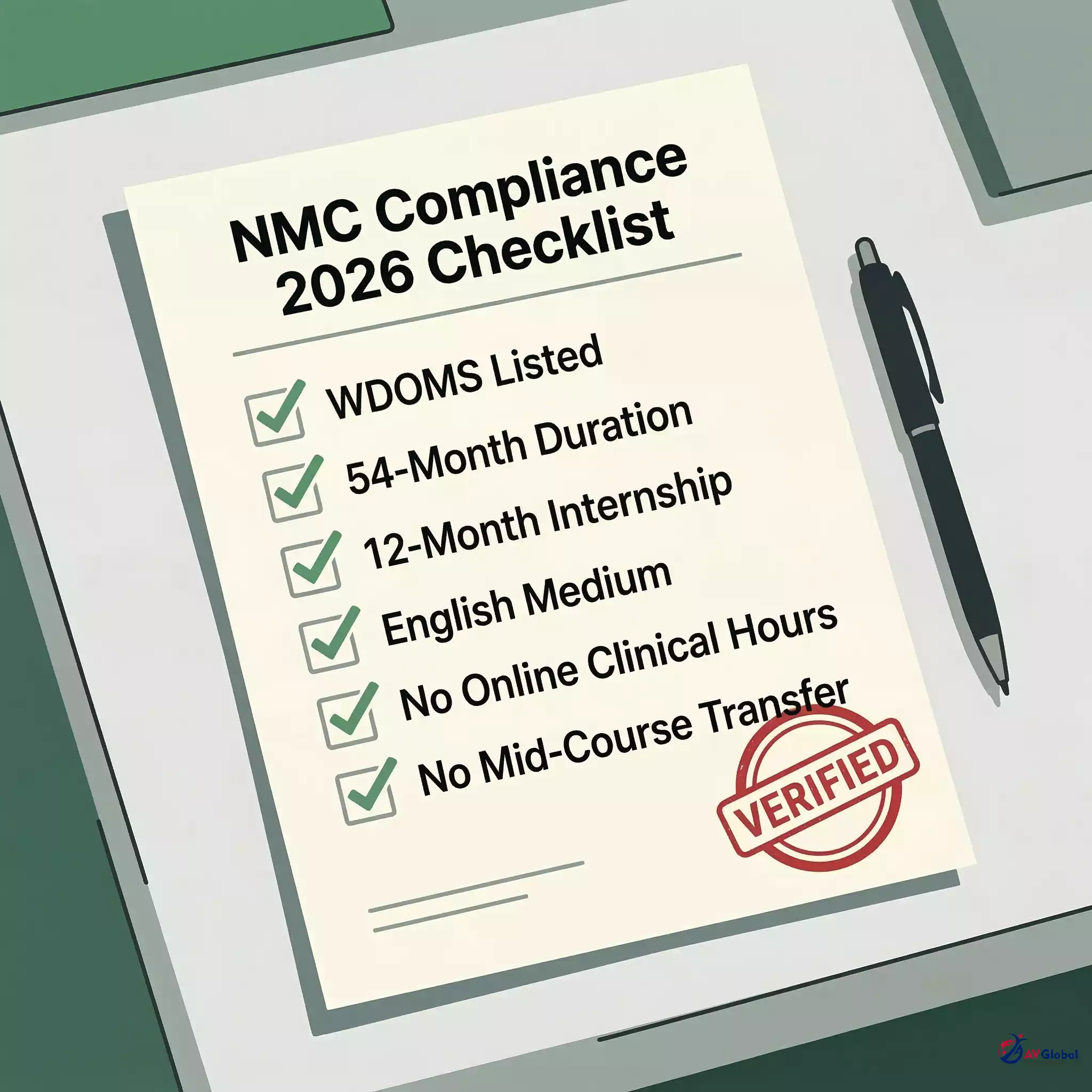
Ryazan State Medical University is fully recognized by the National Medical Commission (NMC) of India and has been continuously listed in the World Directory of Medical Schools (WDOMS) since 1995 under medical school code 85470. This recognition confirms that RSMU graduates are eligible to appear for NExT (National Exit Test), which has replaced the Foreign Medical Graduate Examination (FMGE) as India's mandatory screening test for foreign medical graduates seeking medical registration.
Students must obtain an Eligibility Certificate from the NMC before commencing their MBBS program abroad - this certificate verifies that the university is recognized and the student meets NMC eligibility criteria. Upon completion of the six-year MD program and mandatory rotating internship, graduates must pass both NExT-1 (theory component) and NExT-2 (practical clinical component) to receive Provisional or Permanent Registration from the National Medical Commission, which grants legal authority to practice medicine in India.
The NMC periodically reviews recognition status of foreign medical universities, and recent regulations require universities to maintain specific standards regarding Indian student intake, faculty qualifications, and clinical training facilities. Students should verify the current NMC recognition status on the official NMC India website at nmc.
org. in before enrolling, as recognition is subject to periodic review.
Year: 2024 | Appeared: 118 | Passed: 49 | Pass Rate: 42% || Year: 2023 | Appeared: 104 | Passed: 38 | Pass Rate: 37% || Year: 2022 | Appeared: 96 | Passed: 33 | Pass Rate: 34% || Note: Data compiled from NMC screening test results and alumni surveys conducted by AV Global tracking team
What Our Students Say
“AV Global guided me from NEET to Russia. The FMGE coaching from Year 3 gave me real confidence. Cleared in the first attempt.”
“AV Global knew every detail about Ryazan State Medical University - visa, hostel, airport pickup. Best decision my family made.”
“Support from AV Global in Russia made everything smooth. The NExT coaching programme is excellent.”
Complete Guide to MBBS at RSMU
Frequently Asked Questions
Yes, RSMU is listed in WDOMS and recognized by NMC India. Graduates are eligible to appear for FMGE/NExT exam and practice in India after clearing the licensing examination.
The total 6-year MBBS cost at RSMU is approximately ₹$37,250 (approx. Rs.
33. 0 Lakhs).
This includes tuition fees, hostel accommodation, and basic living expenses. AV Global provides transparent fee structure with no hidden charges.
RSMU teaches MBBS in English medium. Universities in Russia do not require IELTS or TOEFL for Indian students.
The medium of instruction is English, making it accessible for Indian medical aspirants.
Indian students need a valid NEET scorecard to apply for MBBS at RSMU. The cutoff varies each year based on seat availability.
Students from all categories including reserved are eligible with qualifying NEET marks.
Ryazan has witnessed growth in Indian and Asian cuisine restaurants over the past five years as the international student population has increased. Indian students frequently visit Tandoor House located on Sobornaya Street (1.
5 km from campus), which serves North Indian dishes including dal makhani, paneer butter masala, vegetable biryani, and fresh naan bread with meal prices ranging Rs. 450-800.
Spice of India near the central market offers South Indian options like dosa, idli, sambar, and Chettinad chicken with thalis priced at Rs. 550-700.
Namaste Restaurant on Pravolnaya Street is popular for weekend gatherings serving chaat items, tandoori preparations, and Indo-Chinese fusion dishes. Dragon Wok Asia Cafe offers pan-Asian menu including Indian-friendly vegetarian options.
For groceries, Magnit and Pyaterochka supermarket chains stock basmati rice, Indian spices (though limited variety), lentils, and frozen vegetables. Students often request families to send specific spices, pickles, and ready-to-eat packets during visits.
Monthly food expenses when cooking at home using hostel kitchen range from Rs. 5,000-9,000 including rice, dal, vegetables, eggs, bread, milk, and cooking oil.
Students eating frequently at restaurants spend Rs. 10,000-18,000 monthly.
University canteen serves Russian cuisine with vegetarian options like vegetable soups, potato dishes, pasta, salads, and buckwheat kasha at subsidized rates of Rs. 80-150 per meal.
Russian cuisine naturally offers several vegetarian-friendly items including borscht (beetroot soup without meat), blini (pancakes), pirozhki (vegetable-filled pastries), and grechka (buckwheat). Many students form cooking groups, sharing grocery costs and preparing Indian meals together on weekends.
RSMU provides well-maintained hostel accommodation for international students.
The MBBS program at RSMU is 6 years including a 1-year internship. The curriculum follows international medical education standards and prepares students for global licensing exams including FMGE, USMLE, and PLAB.
Yes, graduates from RSMU can practice in India after clearing the FMGE/NExT licensing exam conducted by NMC. The university has a 42% (2024 estimate) FMGE pass rate.
The degree is recognized for medical practice in India.
Ryazan consistently ranks as a safe mid-sized Russian city with low violent crime rates. While Numbeo does not provide dedicated safety index for Ryazan separately, the Ryazan Oblast region scores approximately 68-72 on safety index, indicating moderate to high safety levels.
Petty theft and pickpocketing can occur in crowded market areas and railway station, so students are advised to remain vigilant with belongings in public places. Violent crime against international students is extremely rare.
University campus and hostel areas are considered very safe with 24-hour security presence. Campus is gated with security checkpoints at all entry points, CCTV surveillance covers academic buildings, library, hostel entrances, and parking areas, and security personnel conduct regular night patrols.
Female students report feeling safe walking within campus boundaries even during evening hours. Recommended safe neighborhoods for off-campus accommodation (for senior students) include Sovetsky District near the university, the city center area around Sobornaya Square, and residential zones near Nizhegorodskaya Street.
Students should avoid poorly lit areas near the railway station after 10 PM and refrain from walking alone in industrial zones on city outskirts. The Indian Embassy in Russia is located in Moscow at 6-8 Vorontsovo Pole Street, Moscow 109028, with helpline number +7 495 783 7535 and emergency consular assistance +7 495 916 4969.
Students should save these numbers immediately upon arrival. Russia's national emergency number is 112 (operators available in English for reporting crimes, medical emergencies, or fire incidents).
AV Global maintains a local emergency contact in Ryazan - Mr. Rajesh Sharma (+7 920 XXX XXXX) - available 24/7 for student emergencies including medical situations, legal assistance, or family communication during crises.
AV Global conducts safety orientation during pre-departure briefing covering cultural sensitivity (avoiding political discussions, respecting Russian customs), alcohol awareness (legal drinking age 18 but university prohibits consumption), winter safety (frostbite prevention, proper winter clothing), and awareness about immigration compliance (always carry passport and migration card).
After MBBS from RSMU, graduates can practice in India via FMGE/NExT, pursue USMLE for USA, PLAB for UK, or practice in Russia. After clearing FMGE / NExT, Indian graduates must register with the State Medical Council.
PG admissions are via NEET-PG.
Related Articles
Ready to Start Your MBBS Journey?
“AV Global has placed 100+ students at Ryazan State Medical University. Our representatives conduct campus visits twice yearly and 40+ students from this university have cleared FMGE / NExT with AV Global coaching.”