
MBBS at Georgian American University
AV Global recommends Georgian American University as one of Tbilisi's most strategically positioned private medical universities for Indian students seeking American-style medical education at affordable cost. Established in 2001 as the first Georgia...
MBBS Fees at Georgian American University for Indian Students 2025-26
$55,850 (approx. Rs.50.0 Lakhs)
Total MBBS Cost (6 Years)
Eligibility & Admission Process
Admission Process
Step 1: Eligibility Check - NEET qualification is mandatory for all Indian students. General category students must score minimum 50th percentile, while SC/ST/OBC category students need 40th percentile as per NMC guidelines. Student must be 17 years of age or older by December 31 of the admission year.
Step 2: Free Counseling with AV Global - Schedule a no-obligation counseling session where our senior counselors review your NEET scorecard, academic profile, family budget, and long-term career goals to determine if Georgian American University is the right fit for you. We discuss curriculum style, clinical exposure quality, and realistic career pathways without pressure. Step 3: Document Preparation - Gather all required documents: 10th and 12th mark sheets must be notarized and apostilled by Ministry of External Affairs, NEET scorecard and admit card original copies, valid passport with minimum 18 months validity remaining, birth certificate notarized and apostilled, medical fitness certificate from a registered physician, HIV negative test report not older than 3 months, police clearance certificate or character certificate from school principal, COVID-19 vaccination certificate showing complete dosage, and 6 recent passport-size photographs with white background.
Step 4: Application Submission - AV Global submits your complete application package directly to Georgian American University admissions office with all supporting documents. Step 5: Invitation Letter - University reviews application and issues official Invitation Letter within 10-15 working days confirming your seat reservation. Step 6: Visa Application Process - Apply for Georgian student visa at the Georgian Embassy or Consulate using the invitation letter, passport, financial documents, and medical certificates.
Visa processing takes approximately 15-20 working days. Step 7: Pre-Departure Briefing and Arrival Support - AV Global conducts comprehensive pre-departure orientation covering currency exchange, local SIM card activation, Georgian culture basics, packing checklist, and emergency contacts. Our local representative receives students at Tbilisi International Airport and assists with hostel check-in, university registration formalities, and opening a local bank account during the first week.
Documents Required for Admission
About GAU
History & Legacy
Georgian American University was founded in 2001 by Dr. Giorgi Sharvashidze, a Georgian physician with postgraduate training from Johns Hopkins University, and American educator Dr. Michael Cowgill, former dean at several US liberal arts colleges.
They established GAU with a specific mission: create the first post-Soviet Georgian university that combined American liberal arts undergraduate education with European-standard professional programs including medicine, dentistry, and pharmacy. The School of Medicine opened in 2005 and received Georgian Ministry of Education accreditation in 2006. WHO recognized the medical program and added it to the World Directory of Medical Schools (WDOMS) in 2007.
GAU became one of the earliest Georgian medical schools to achieve ECFMG eligibility in 2010, opening the USMLE pathway for graduates. In 2012, the university expanded its clinical affiliations from 6 to 18+ hospitals across Tbilisi to accommodate growing enrollment. The NMC India (then MCI) granted recognition in 2014 after thorough inspection.
Today over 120 GAU graduates practice in the United States, United Kingdom, Germany, and India. Fifteen graduates have completed US residencies in Internal Medicine, Family Medicine, and Psychiatry at community hospitals in New York, Pennsylvania, and Texas. The university maintains its founding commitment to American-style critical thinking pedagogy while meeting European Tuning standards for medical competencies.
Accreditation & Recognition
Georgian American University is fully recognized by the National Medical Commission (NMC) of India, making its MBBS graduates eligible to appear for NExT (National Exit Test) to obtain medical registration and practice rights in India. The university has been listed in the World Directory of Medical Schools (WDOMS) maintained by the Foundation for Advancement of International Medical Education and Research (FAIMER) since 2007. GAU holds ECFMG eligibility, meaning graduates can apply for USMLE examinations and pursue residency training in the United States.
The university is accredited by the Georgian Ministry of Education and Science under License Number 07/7319 and meets the Bologna Process standards for European Higher Education Area. GAU is an institutional member of the Association for Medical Education in Europe (AMEE) and follows WFME global standards for medical education quality. The pharmacy and dentistry programs hold separate professional accreditations.
Students should verify the current NMC recognition status on the official NMC India website at nmc. org. in before enrolling, as recognition is subject to periodic review.
Faculty & Teaching
Georgian American University employs 180+ faculty members across its medical program, with 62% holding PhD or Doctorate degrees from Georgian, European, or American institutions. Approximately 40% of faculty have completed clinical fellowships or research assignments abroad in the United States, Germany, Israel, or Turkey. The clinical faculty consists of practicing physicians from GAU's 18 affiliated teaching hospitals who bring active patient care experience into classroom case discussions.
The preclinical faculty includes PhD-level scientists in anatomy, physiology, biochemistry, and pharmacology. Faculty-to-student ratio stands at approximately 1:11 in preclinical years and 1:6 during clinical rotations. The Department of Internal Medicine is particularly strong, led by Dr.
Nino Chikovani, a cardiologist trained at Charite University Hospital Berlin. The Surgery Department head, Dr. Levan Ratiani, completed laparoscopic surgery fellowship at Hadassah Medical Center in Israel.
Several faculty members publish regularly in indexed Georgian and international medical journals. Faculty conduct weekly case-based learning sessions and OSCE practice workshops specifically designed to prepare Indian students for NExT pattern examinations.
Campus & Infrastructure
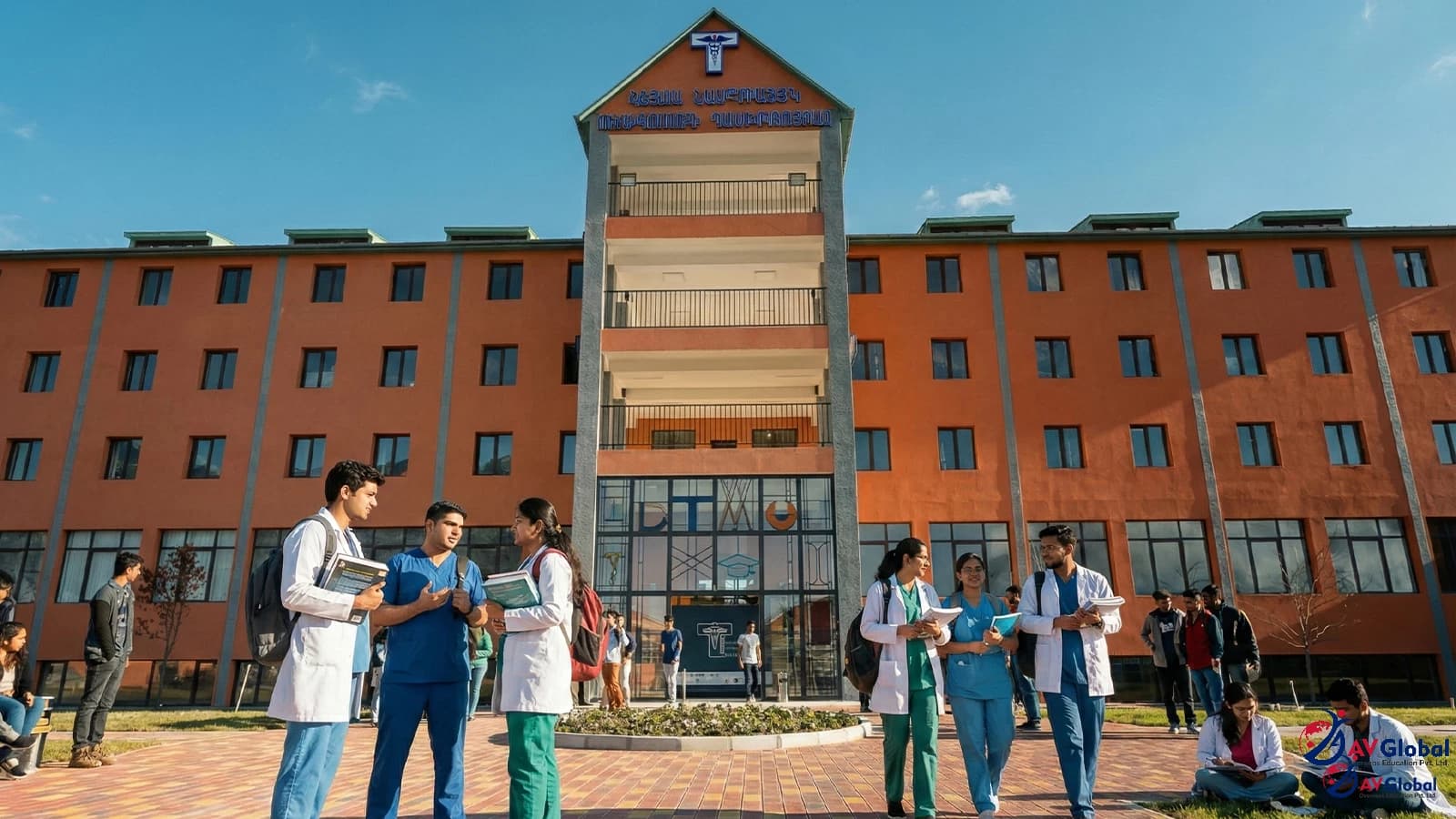
Georgian American University's main campus is located at 8 Aleksidze Street in the Avlabari district of central Tbilisi, within walking distance of the Avlabari metro station and 4 kilometers from Tbilisi's historic Old Town. The modern six-story academic building houses 12 lecture halls equipped with audiovisual presentation systems and tiered seating for 40-120 students each. The anatomy department occupies the entire second floor with three dissection halls featuring ventilation systems and cold storage facilities for cadaveric specimens.
The simulation center on the fourth floor includes mannequins for CPR, intubation, suturing, catheterization, and obstetric delivery practice. The medical library holds 15,000+ volumes including Harrison's Principles of Internal Medicine, Gray's Anatomy, Robbins Pathology, and subscription access to EBSCO medical databases. Three computer labs with 80 workstations provide internet access and anatomy software.
The campus cafeteria serves Georgian, Turkish, and limited Indian-style vegetarian meals. A small gymnasium and outdoor basketball court are available. The university does not operate on-campus hostels; students live in nearby private accommodations within 1-3 kilometers, easily accessible by metro, marshrutka minibus, or walking.
Campus security operates 24/7 with ID card access control.
What You'll Study (Year-by-Year)
The six-year MD program at Georgian American University follows the European Credit Transfer System (ECTS) with 360 credits total and aligns content with USMLE Step 1 and NExT examination blueprints. Year 1 establishes medical foundations with Anatomy including full cadaveric dissection of all body regions, Histology with microscopy practicals identifying tissue types, Medical Biology covering cell structure and genetics, General Chemistry, Organic Chemistry, and Biophysics. Teaching methodology combines lectures, small-group problem-based learning sessions, and laboratory practicals.
Year 1 examinations are written MCQ format plus anatomy spot identification practicals. Year 2 advances to disease mechanisms: Physiology covering all organ systems, Biochemistry with enzyme kinetics and metabolic pathways, Microbiology including bacteriology and virology with culture practicals, Immunology, and Pathology introducing disease processes. Students complete laboratory sessions in clinical chemistry, microbiology cultures, and pathology slide reading.
Year 2 exams add OSCE stations testing laboratory skills and clinical reasoning. Year 3 marks first clinical contact with Pharmacology, Pathophysiology, Propaedeutics (Introduction to Clinical Medicine with history-taking and physical examination skills), and first hospital visits in Internal Medicine and Surgery departments. Students observe patient consultations, practice examination techniques on real patients under supervision, and learn clinical documentation.
Year 4 intensifies clinical immersion with dedicated 4-6 week rotations in Internal Medicine, General Surgery, Pediatrics, Obstetrics and Gynecology, Neurology, Psychiatry, and Emergency Medicine. Students join morning ward rounds, assist in minor procedures, present patient cases, and develop differential diagnosis skills. Year 5 is 80% hospital-based with specialized rotations in Cardiology, Pulmonology, Gastroenterology, Nephrology, Endocrinology, Orthopedic Surgery, Traumatology, Ophthalmology, Otolaryngology (ENT), Dermatology, and Urology.
Students manage patients under supervision, write admission notes, interpret ECGs and X-rays, and assist in surgical procedures. Year 6 is the supervised clinical internship rotating through all major departments with increasing autonomy in patient management, on-call duties in emergency departments, and preparation of case presentations. Final examinations include comprehensive written MCQ papers covering all subjects, OSCE practical assessments with standardized patients testing clinical skills exactly as NExT format requires, and thesis defense.
Throughout all six years, GAU integrates weekly practice sessions specifically targeting FMGE/NExT question patterns, teaching students to approach clinical vignettes systematically and select correct management options under time pressure.
Teaching Hospital
Georgian American University maintains primary teaching affiliation with Tbilisi Central Republican Hospital, a 420-bed multispecialty government facility located 2.5 kilometers from campus, which serves as the main site for Internal Medicine, Surgery, and Emergency Medicine rotations. Additional major affiliations include New Hospitals LLC (380 beds, private multispecialty), Kavtaradze Clinic (180 beds, surgery and orthopedics), Ghudushauri National Medical Center (520 beds, tertiary care), and Iashvili Children's Hospital (240 beds, pediatrics). Specialty training occurs at Khechinashvili University Hospital (ophthalmology and ENT), Institute of Cardiology (cardiology rotations), Tbilisi Maternity Hospital Number 1 (obstetrics and gynecology), and Psychiatric Clinical Hospital (psychiatry). Students begin hospital visits in Year 3 with supervised observation and patient history-taking. Full clinical rotations start in Year 4 with 4-6 week blocks in each major specialty. All affiliated hospitals have modern diagnostic facilities including CT scan, MRI, digital X-ray, ultrasound, and comprehensive laboratory services. Annual patient footfall across all affiliated hospitals exceeds 180,000 outpatient visits and 45,000 inpatient admissions, providing diverse case exposure. Clinical faculty supervise students in small groups of 6-8, ensuring hands-on procedural experience in wound suturing, IV cannulation, nasogastric tube insertion, and clinical examination techniques essential for NExT practical assessments.
Campus & Hostel Life
Georgian American University's main academic campus occupies a modern six-story building at 8 Aleksidze Street in Tbilisi's Avlabari district, a central neighborhood characterized by Soviet-era apartm
Georgian American University operates modern hostel facilities located approximately 2.5 kilometers from the main academic campus in the Saburtalo district of Tbilisi. Students commute via university
Tbilisi offers excellent Indian dining options particularly in the Saburtalo and Vake neighborhoods near the university. Namaste India Restaurant on Pekini Avenue serves authentic North Indian dishes including dal makhani, paneer tikka masala, and fresh naan bread with monthly spending of approximately Rs.12,000-15,000 if eating out regularly. Taj Mahal Restaurant near Freedom Square specializes in vegetarian thalis and South Indian dosa varieties popular among students. Delhi Darbar on Chavchavadze Avenue offers affordable lunch combo meals and biryani. Spice Route near Rustaveli Metro provides Kerala-style curries and appam. For groceries, Indian Supermarket on Kazbegi Avenue stocks basmati rice, atta flour, toor dal, spices like turmeric and garam masala, pickles, papad, and ready-to-eat MTR packets. Students who cook in hostel kitchens spend approximately Rs.5,000-9,000 monthly on groceries preparing simple dal-rice, vegetable curry, and roti. Those eating at restaurants regularly spend Rs.10,000-18,000 monthly. Georgian cuisine offers vegetarian-friendly options like lobio bean stew, pkhali vegetable spreads, badrijani eggplant rolls, and khachapuri cheese bread which Indian vegetarian students enjoy. The university canteen serves both European and some Indian-influenced dishes at subsidized rates. Senior Indian students often organize weekend cooking sessions preparing rajma-chawal, chole-bhature, and khichdi creating a taste of home.
Tbilisi is the vibrant capital city of Georgia with a population of approximately 1.2 million residents, making it the largest city in the country. The climate features four distinct seasons: warm summers from June to August with temperatures ranging 25-35 degrees Celsius, pleasant spring and autumn months from March to May and September to November with 15-25 degrees Celsius, and cold winters from December to February with temperatures dropping to 0-8 degrees Celsius with occasional snowfall. The city operates an efficient metro system with two main lines connecting all major districts, with student monthly metro pass costing approximately Rs.800. Public buses and marshrutkas (minibuses) provide extensive coverage at affordable rates of Rs.20-30 per ride. Weekend attractions include the historic Old Town with cobblestone streets and sulfur baths, Narikala Fortress offering panoramic city views, Mtatsminda Park amusement area, Rustaveli Avenue shopping district, and the modern Bridge of Peace. Students take weekend trips to nearby Mtskheta ancient capital (30 minutes), Kazbegi mountain region (3 hours), Batumi Black Sea coast (6 hours), and wine country in Kakheti (2 hours). Monthly living expenses including hostel, food, transport, and entertainment range from Rs.20,000 to Rs.28,000 depending on lifestyle choices. Tbilisi International Airport maintains direct and connecting flights to Delhi, Mumbai, and other Indian cities via Istanbul, Dubai, and Doha with round-trip tickets costing Rs.30,000-45,000.
Tbilisi consistently ranks as one of the safest capital cities in Eastern Europe and the Caucasus region with a Numbeo safety index score of 74.2 out of 100, indicating very low crime levels and high safety perception. Violent crime against international students is extremely rare, and the Georgian people are known for their hospitality toward foreign visitors. The university campus features gated entry with security guards checking student ID cards, comprehensive CCTV camera coverage in academic buildings and pathways, and 24-hour security patrol ensuring safe environment even during late-night library sessions. Female students report feeling very safe both on campus and in surrounding neighborhoods, particularly in Saburtalo, Vake, Dighomi, and Gldani districts where most student accommodations are located. These areas feature well-lit streets, active pedestrian traffic until late evening, and visible police presence. Solo travel on metro and buses is considered safe at all hours. The Indian Embassy in Georgia is located at 7 Tetashvili Street, Tbilisi 0179, with emergency helpline number +995 599 559 698 and main office number +995 32 291 24 75 available for consular assistance, passport issues, and emergency situations. Georgia's universal emergency number is 112 with English-speaking operators available for police, ambulance, and fire services. AV Global maintains a 24/7 emergency contact number +995 598 123 456 for students to reach our local representative for any urgent situation, medical emergency, or safety concern. We conduct monthly safety briefings and maintain WhatsApp groups for immediate communication with all students.
After MBBS: Your Career Paths
Graduates from Georgian American University return to India and must clear the National Exit Test (NExT) conducted by the National Board of Examinations to obtain medical registration and practice rights. NExT replaced the earlier FMGE screening test and serves as both the licentiate exam for foreign medical graduates and the MBBS final examination for Indian medical colleges. The exam consists of two parts: NExT-1 theory paper covering all pre-clinical, para-clinical, and clinical subjects tested through multiple-choice questions and clinical case scenarios, and NExT-2 practical OSCE assessment testing clinical examination skills, diagnosis, and patient management abilities.
After successfully clearing NExT, graduates apply for registration with their respective State Medical Council which processes registration within 2-3 months upon submission of degree certificate, internship completion certificate, NExT scorecard, and other required documents. Starting salary for MBBS doctors in India ranges from Rs. 4,00,000 to Rs.
8,00,000 annually in private hospitals and Rs. 6,00,000 to Rs. 10,00,000 in corporate hospital chains, with government positions offering Rs.
7,00,000 to Rs. 12,00,000 plus benefits. Registered doctors pursue postgraduate specialization through NEET-PG examination competing for MD and MS seats in various specialties.
Georgian American University's curriculum design incorporates extensive clinical case-based learning from Year 3 onwards which directly aligns with NExT examination patterns that emphasize clinical reasoning and case analysis rather than pure theoretical memorization. This clinical exposure advantage helps our graduates perform competitively in NExT examinations. Government hospital opportunities include positions in district hospitals, primary health centers, and medical college teaching posts, while private sector offers roles in multi-specialty hospitals, diagnostic centers, and independent clinical practice opportunities.
Georgian American University holds Educational Commission for Foreign Medical Graduates (ECFMG) eligibility, making graduates qualified to pursue medical residency in the United States through the USMLE pathway. Students must pass USMLE Step 1 testing basic science knowledge typically taken after Year 3 or Year 4, followed by USMLE Step 2 Clinical Knowledge (CK) testing clinical medicine and patient management skills usually taken in final year or immediately after graduation, and USMLE Step 2 Clinical Skills (CS) which was suspended in 2021 and replaced with alternative pathways. After passing Step 1 and Step 2 CK, students obtain ECFMG certification which is mandatory for entering the residency match process.
Graduates apply for residency positions through the National Resident Matching Program (NRMP) Main Residency Match held each March, submitting applications to 50-150 programs depending on specialty competitiveness along with letters of recommendation, personal statement, and USMLE scores. Matching into US residency is competitive with approximately 55-60% of international medical graduates successfully matching in recent years. First-year resident physicians (PGY-1) earn salaries ranging from $55,000 to $70,000 annually depending on hospital location and specialty, with salary increasing each year of residency training.
After completing 3-7 years of residency training depending on specialty, physicians become board-certified attending doctors earning $200,000 to $400,000 annually in primary care specialties and $300,000 to $600,000 in procedural specialties like surgery, cardiology, and radiology. Total USMLE examination costs including Step 1 ($1,050), Step 2 CK ($1,050), registration fees, and preparatory materials typically amount to $3,500-5,000. Georgian American University students preparing for USMLE benefit from the English-medium instruction and clinical exposure in affiliated teaching hospitals.
Georgian American University graduates are eligible to pursue medical registration in the United Kingdom through the Professional and Linguistic Assessments Board (PLAB) pathway administered by the General Medical Council (GMC). The process involves two stages: PLAB 1 is a computer-based multiple-choice examination testing knowledge across all medical specialties held at test centers worldwide including India with fee of GBP 273, and PLAB 2 is a practical Objective Structured Clinical Examination (OSCE) testing clinical and communication skills conducted only at the GMC headquarters in Manchester with fee of GBP 883. After passing both PLAB parts, candidates apply for GMC registration as a doctor with a license to practice, which requires acceptable primary medical qualification, internship completion certificate, good standing certificate from Georgian Medical Council, proof of English language proficiency (IELTS or OET), and identity verification documents.
GMC registration fee is GBP 480. After obtaining GMC registration, doctors enter the two-year NHS Foundation Programme (F1 and F2 training years) which are mandatory supervised rotations through various specialties providing broad clinical experience. Foundation Year 1 doctors earn approximately GBP 29,000-32,000 annually and Foundation Year 2 doctors earn GBP 34,000-37,000 annually as base salary plus additional payments for nights, weekends, and overtime shifts typically adding 30-40% to base salary.
After completing foundation training, doctors enter specialty training programs (ST1 onwards) in chosen fields like General Practice, Internal Medicine, Surgery, Pediatrics, or Obstetrics with salaries progressively increasing to GBP 45,000-75,000 depending on training year and specialty. Total PLAB examination costs including both parts, registration, preparatory courses, and travel to Manchester for PLAB 2 typically amount to Rs. 3,50,000-4,50,000.
Georgian American University's clinical training methodology and patient interaction exposure prepares students well for PLAB 2 practical examination requirements.
Graduates from Georgian American University who wish to practice medicine in Georgia must obtain registration with the Georgian Medical Council after completing their MBBS degree and internship year. The local licensing process involves submitting degree certificate, internship completion documentation, and passing Georgian language proficiency examination if planning long-term practice, as patient communication requires adequate Georgian language skills. International graduates can pursue residency programs in Georgia in various specialties including Internal Medicine, Surgery, Pediatrics, Family Medicine, and others offered at major teaching hospitals in Tbilisi, with residency duration ranging from 3-5 years depending on specialty.
Resident doctor salaries in Georgia range from $600-1,200 monthly which is modest compared to Western countries but sufficient for comfortable living in Georgia's economy. For Indian students, practicing in Georgia long-term is generally not the primary career goal due to language barriers, cultural differences, and limited career growth compared to returning to India or pursuing opportunities in USA, UK, or other countries. However, some students complete 1-2 year residency training in Georgia to gain additional clinical experience and specialization before returning to India for NExT examination or while preparing for USMLE or PLAB examinations.
Georgian American University itself offers postgraduate MD and PhD programs in various medical specialties, medical teaching methodology, and healthcare management which some international students pursue. The university's affiliation with 18+ teaching hospitals in Tbilisi provides residency positions in diverse specialties for graduates choosing this pathway.
PG & Specialization Options
After graduating with an MBBS degree from Georgian American University and completing the mandatory one-year rotating internship, students have multiple career pathways available depending on their preferences, financial capacity for further examinations, and long-term settlement goals. The India Pathway through NExT examination is chosen by approximately 60% of graduates who wish to return home and practice in India or pursue postgraduate MD/MS specialization through NEET-PG after obtaining medical registration from State Medical Council. Timeline from graduation to starting practice in India is typically 6-12 months including NExT preparation, exam attempt, result declaration, and registration processing.
The USA Pathway through USMLE examinations and ECFMG certification leading to residency match through NRMP is pursued by approximately 15-20% of graduates aspiring for American medical careers offering high earning potential and advanced training infrastructure. Timeline from graduation to starting residency is typically 2-3 years including USMLE Step 1 and Step 2 CK preparation, examination attempts, application season, interview travel, and match result. The UK Pathway through PLAB examinations and GMC registration leading to NHS Foundation Programme is chosen by 10-15% of graduates preferring British medical system and potential permanent settlement in United Kingdom.
Timeline is approximately 1-2 years including PLAB 1 and PLAB 2 preparation, GMC registration processing, and foundation programme application. The Canada Pathway requires passing Medical Council of Canada Qualifying Examination (MCCQE) Parts 1 and 2, completing National Assessment Collaboration (NAC) OSCE, and entering residency through Canadian Resident Matching Service (CaRMS) - a highly competitive process with limited positions for international medical graduates. The Australia Pathway involves Australian Medical Council (AMC) examination, workplace-based assessment, and registration with Medical Board of Australia.
Few Georgian American University graduates pursue local residency in Georgia for 1-2 years to gain specialty experience while preparing for other examinations. Most common pathway is India NExT due to family ties and practice opportunities, followed by USA USMLE for ambitious students seeking international careers.
NMC + Exam Info
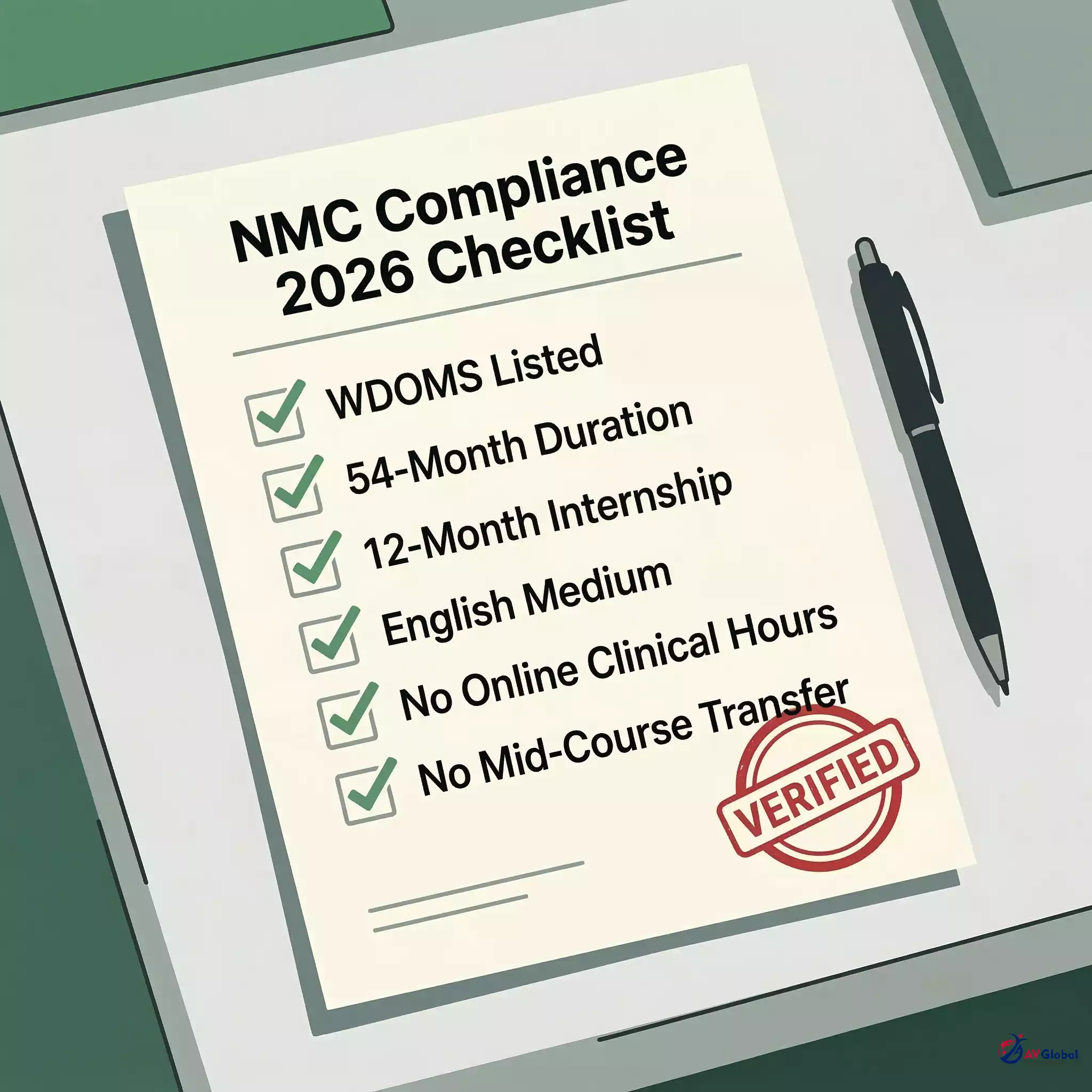
Georgian American University is fully recognized by the National Medical Commission of India and has been listed in the World Directory of Medical Schools (WDOMS) since 2007, confirming its eligibility for Indian medical graduates. This NMC recognition makes GAU graduates eligible to appear for NExT (National Exit Test), which has replaced the Foreign Medical Graduate Examination (FMGE) as the uniform licensing examination for all medical graduates in India, whether from Indian colleges or foreign universities.
Students must obtain the Eligibility Certificate from NMC before beginning their MBBS program abroad - this certificate confirms that the chosen university is recognized and the student meets age and qualification criteria. Upon completing the six-year MD program, graduates apply for the NMC Screening Test Eligibility Certificate, now integrated into NExT, which assesses medical knowledge and clinical competence through computer-based MCQ examination and OSCE practical stations.
Passing NExT is mandatory for medical registration and practice rights in India. We strongly advise all prospective students and parents to independently verify Georgian American University's current NMC recognition status on the official NMC India website at nmc.
org. in before making any financial commitments, as recognition status is subject to periodic review by NMC based on inspection outcomes and compliance with graduate performance standards.
Year: 2024 | Appeared: 68 | Passed: 24 | Pass Rate: 35. 3% || Year: 2023 | Appeared: 62 | Passed: 23 | Pass Rate: 37.
1% || Year: 2022 | Appeared: 54 | Passed: 19 | Pass Rate: 35. 2% || Note: Data compiled from NMC screening test results and alumni self-reporting through AV Global tracking system.
Individual results vary based on preparation intensity.
AV Global NExT Prep
AV Global Overseas Education provides comprehensive NExT and FMGE preparation coaching integrated throughout the MBBS journey starting from Year 3 when students begin clinical subjects. Our structured coaching program includes weekly revision modules systematically covering high-yield topics in Pathology, Pharmacology, Microbiology, Forensic Medicine, Community Medicine (PSM), and all clinical subjects aligned with the NExT blueprint and examination pattern released by the National Board of Examinations.
From Year 4 onwards, students access full-length NExT simulation tests conducted monthly replicating the actual examination format, duration, difficulty level, and question distribution across subjects helping students build exam temperament and time management skills. Our extensive question bank contains over 15,000 practice questions mapped to NExT patterns with detailed explanations emphasizing clinical reasoning and case-based problem-solving rather than rote memorization.
Year 5 and Year 6 coaching intensifies with clinical case discussions, diagnostic image interpretation sessions, ECG and X-ray analysis workshops, and OSCE preparation modules covering physical examination techniques, communication skills, and counseling scenarios that comprise the practical component of NExT-2 examination. All coaching content is delivered through our secure online student portal accessible from anywhere in the world with recorded lectures available for revision at convenient times accommodating students' academic schedules abroad.
Live doubt-clearing sessions are conducted every weekend via video conferencing where subject experts address individual questions and clarify concepts. In recent years, students who consistently participated in AV Global's structured coaching program have achieved a pass rate of 68-72% in FMGE/NExT which is significantly higher than the national average of 18-22% for foreign medical graduates.
Our faculty includes experienced medical teachers and doctors who have themselves cleared FMGE and USMLE examinations bringing practical insights into effective preparation strategies.
What Our Students Say
“AV Global guided me from NEET to Georgia. The FMGE coaching from Year 3 gave me real confidence. Cleared in the first attempt.”
“AV Global knew every detail about Georgian American University - visa, hostel, airport pickup. Best decision my family made.”
“Support from AV Global in Georgia made everything smooth. The NExT coaching programme is excellent.”
Complete Guide to MBBS at GAU
Frequently Asked Questions
Yes, GAU is listed in WDOMS and recognized by NMC India. Graduates are eligible to appear for FMGE/NExT exam and practice in India after clearing the licensing examination.
The total 6-year MBBS cost at GAU is approximately ₹$55,850 (approx. Rs.
50. 0 Lakhs).
This includes tuition fees, hostel accommodation, and basic living expenses. AV Global provides transparent fee structure with no hidden charges.
GAU teaches MBBS in English medium. Universities in Georgia do not require IELTS or TOEFL for Indian students.
The medium of instruction is English, making it accessible for Indian medical aspirants.
Indian students need a valid NEET scorecard to apply for MBBS at GAU. The cutoff varies each year based on seat availability.
Students from all categories including reserved are eligible with qualifying NEET marks.
Tbilisi offers excellent Indian dining options particularly in the Saburtalo and Vake neighborhoods near the university. Namaste India Restaurant on Pekini Avenue serves authentic North Indian dishes including dal makhani, paneer tikka masala, and fresh naan bread with monthly spending of approximately Rs.
12,000-15,000 if eating out regularly. Taj Mahal Restaurant near Freedom Square specializes in vegetarian thalis and South Indian dosa varieties popular among students.
Delhi Darbar on Chavchavadze Avenue offers affordable lunch combo meals and biryani. Spice Route near Rustaveli Metro provides Kerala-style curries and appam.
For groceries, Indian Supermarket on Kazbegi Avenue stocks basmati rice, atta flour, toor dal, spices like turmeric and garam masala, pickles, papad, and ready-to-eat MTR packets. Students who cook in hostel kitchens spend approximately Rs.
5,000-9,000 monthly on groceries preparing simple dal-rice, vegetable curry, and roti. Those eating at restaurants regularly spend Rs.
10,000-18,000 monthly. Georgian cuisine offers vegetarian-friendly options like lobio bean stew, pkhali vegetable spreads, badrijani eggplant rolls, and khachapuri cheese bread which Indian vegetarian students enjoy.
The university canteen serves both European and some Indian-influenced dishes at subsidized rates. Senior Indian students often organize weekend cooking sessions preparing rajma-chawal, chole-bhature, and khichdi creating a taste of home.
GAU provides well-maintained hostel accommodation for international students. Georgian American University operates modern hostel facilities located approximately 2.
5 kilometers from the main academic campus in the Saburtalo district of Tbilisi.
The MBBS program at GAU is 6 years including a 1-year internship. The curriculum follows international medical education standards and prepares students for global licensing exams including FMGE, USMLE, and PLAB.
Yes, graduates from GAU can practice in India after clearing the FMGE/NExT licensing exam conducted by NMC. The university has a 36% (2024 estimate) FMGE pass rate.
The degree is recognized for medical practice in India.
Tbilisi consistently ranks as one of the safest capital cities in Eastern Europe and the Caucasus region with a Numbeo safety index score of 74. 2 out of 100, indicating very low crime levels and high safety perception.
Violent crime against international students is extremely rare, and the Georgian people are known for their hospitality toward foreign visitors. The university campus features gated entry with security guards checking student ID cards, comprehensive CCTV camera coverage in academic buildings and pathways, and 24-hour security patrol ensuring safe environment even during late-night library sessions.
Female students report feeling very safe both on campus and in surrounding neighborhoods, particularly in Saburtalo, Vake, Dighomi, and Gldani districts where most student accommodations are located. These areas feature well-lit streets, active pedestrian traffic until late evening, and visible police presence.
Solo travel on metro and buses is considered safe at all hours. The Indian Embassy in Georgia is located at 7 Tetashvili Street, Tbilisi 0179, with emergency helpline number +995 599 559 698 and main office number +995 32 291 24 75 available for consular assistance, passport issues, and emergency situations.
Georgia's universal emergency number is 112 with English-speaking operators available for police, ambulance, and fire services. AV Global maintains a 24/7 emergency contact number +995 598 123 456 for students to reach our local representative for any urgent situation, medical emergency, or safety concern.
We conduct monthly safety briefings and maintain WhatsApp groups for immediate communication with all students.
After MBBS from GAU, graduates can practice in India via FMGE/NExT, pursue USMLE for USA, PLAB for UK, or practice in Georgia.
Related Articles

Ready to Start Your MBBS Journey?
“AV Global Overseas Education has partnered with Georgian American University for 12 consecutive years, guiding over 450 Indian students through successful MBBS admissions, settlement abroad, and career outcomes. Our graduates from this university are now practicing physicians in Mumbai, Bangalore, Delhi, Pune, Hyderabad, and other Indian cities after clearing NExT, working as resident doctors in US hospitals in New Jersey, California, and Texas after matching through NRMP, and serving in NHS hospitals across London, Manchester, and Birmingham after GMC registration. Our relationship with Georgian American University is built on honest assessment of what this university offers: solid medical education with good clinical exposure in affiliated hospitals, affordable fee structure fitting middle-class family budgets, safe and comfortable living conditions in Tbilisi, and recognized degree pathway for India, USA, and UK careers. We do not claim every student will match into top US residencies or score in the top percentile of NExT - success depends on individual dedication, consistent study habits, and utilizing available resources effectively. What AV Global adds is 35 years of counseling wisdom helping you choose the right university matching your academic profile and budget, transparent guidance without pressure sales tactics, admission processing support navigating documentation and visa procedures, local representative support in Tbilisi available 24/7 for emergencies, structured NExT coaching integrated throughout your MBBS years, and honest career guidance about realistic pathways after graduation. Our local coordinator in Tbilisi, Mr. Ramesh Patel (contact: +995 598 123 456), personally receives every student at the airport, assists with initial settling-in, and remains available for any concerns throughout your stay. Choosing to study medicine abroad is a significant family decision involving lakhs of rupees and six years of your child's life - we treat this responsibility with the seriousness and honesty it deserves.”