

MBBS at Gomel State Medical University
AV Global recommends Gomel State Medical University as one of the most affordable and clinically focused government medical universities in Belarus for Indian students. Established in 1990, GSMU is a fully NMC-recognized institution listed in WDOMS a...
MBBS Fees at Gomel State Medical University for Indian Students 2025-26
$35,450 (approx. Rs.32.0 Lakhs)
Total MBBS Cost (6 Years)
Eligibility & Admission Process
Admission Process
Step 1: Eligibility Check - NEET qualification is mandatory for all Indian students applying to Gomel State Medical University. General category students require a minimum 50th percentile in NEET, while SC/ST/OBC students need 40th percentile. Students must be 17 years of age or above by December 31 of the admission year.
No IELTS or TOEFL is required as the medium of instruction is English from Year 1. Step 2: Free Counseling with AV Global - Schedule a no-obligation counseling session where our senior advisors review your NEET score, academic background, family budget, and long-term career goals to confirm whether Gomel State Medical University suits your profile. We honestly discuss whether Belarus is the right destination compared to alternatives like Georgia, Russia, or Kyrgyzstan.
Step 3: Document Preparation - Collect and prepare the following documents: 10th and 12th mark sheets (notarized and apostilled by MEA), NEET scorecard and admit card, valid passport with minimum 18 months validity remaining, birth certificate (notarized and apostilled), medical fitness certificate from a registered medical practitioner, HIV negative test report not older than 3 months, police clearance certificate or character certificate from school principal, COVID-19 vaccination certificate showing both doses, and 6 recent passport-size photographs with white background. Apostille is done at the MEA regional offices in Delhi, Mumbai, Chennai, or Kolkata and takes 7-10 working days. Step 4: Application Submission - AV Global submits your complete application package directly to the university admissions office on your behalf, ensuring all documents meet Belarus Ministry of Education standards.
Step 5: Invitation Letter Issuance - Within 10-15 working days, Gomel State Medical University issues an official invitation letter which is required for visa application. This document is couriered to your address and also sent as a scanned PDF. Step 6: Visa Application Process - Apply for a student visa at the Embassy of Belarus in New Delhi using the invitation letter, passport, medical documents, and financial proof.
Visa processing takes 15-20 working days. AV Global provides a complete visa filing checklist and assists with appointment booking. Step 7: Pre-Departure Briefing and Airport Reception - AV Global conducts a detailed pre-departure orientation covering currency exchange (Belarusian Ruble), local SIM card activation, banking procedures, cultural norms, weather preparation, and first-week survival tips.
Our local representative receives you at Gomel Airport, assists with hostel check-in, university registration, medical insurance activation, and residence permit application at the migration office within the first week.
Documents Required for Admission
About GSMU
History & Legacy
Gomel State Medical University was established in 1990 as Gomel State Medical Institute during the final years of the Soviet Union, founded under the directive of the Ministry of Health of the Belarusian SSR to address the acute shortage of physicians in the southeastern regions of Belarus following the 1986 Chernobyl nuclear disaster. The founding rector, Professor Anatoly Nikolaevich Lyzikov, a distinguished surgeon and medical administrator, envisioned an institution that would combine Soviet medical education traditions with modern clinical training methodologies. The institute initially admitted 150 students and operated with 4 departments.
WHO recognition was granted in 1995, and WDOMS listing followed in 1996, opening doors for international students. In 2000, the institute was upgraded to university status and renamed Gomel State Medical University in recognition of its expanded postgraduate programs, research output, and international collaborations. The university established its first dedicated international student department in 2005, beginning structured recruitment from India, Pakistan, and African nations.
Major infrastructure expansion occurred between 2010-2015 with the construction of a modern simulation center, upgraded anatomy laboratories, and student hostels. Today, GSMU graduates over 400 physicians annually, with alumni practicing in Russia, Germany, Poland, Israel, USA, and India. More than 200 GSMU graduates have successfully cleared FMGE and are practicing in Indian government and private hospitals across states including Kerala, Karnataka, Tamil Nadu, Maharashtra, and Delhi.
The university continues to maintain strong clinical partnerships with regional hospitals that were established specifically to handle radiation-related health issues post-Chernobyl, providing unique exposure to radiation medicine and oncology.
Accreditation & Recognition
Gomel State Medical University is fully recognized by the National Medical Commission (NMC) of India, making graduates eligible to appear for NExT (National Exit Test) to obtain medical registration and practice rights in India. The university has been listed in the World Directory of Medical Schools (WDOMS) since 1996 under the sponsoring organization: Foundation for Advancement of International Medical Education and Research (FAIMER). GSMU holds institutional accreditation from the Ministry of Health of the Republic of Belarus and the Ministry of Education of the Republic of Belarus.
The university is recognized by the World Health Organization (WHO) and meets the standards set by the Educational Commission for Foreign Medical Graduates (ECFMG), making graduates eligible to pursue USMLE pathway for USA medical licensure. GSMU holds membership in the Association for Medical Education in Europe (AMEE) and maintains academic partnerships with medical universities in Russia, Poland, Germany, and Lithuania. The MD degree awarded by GSMU is recognized across European Union member states under the Bologna Process framework.
Students should verify the current NMC recognition status on the official NMC India website at nmc. org. in before enrolling, as recognition is subject to periodic review.
Faculty & Teaching
Gomel State Medical University employs 487 faculty members across all departments, with 89 holding Doctorate of Medical Sciences (the highest academic degree in the former Soviet system) and 234 holding PhD (Candidate of Medical Sciences). Approximately 68% of faculty have clinical practice backgrounds, maintaining active patient care roles in affiliated hospitals alongside teaching responsibilities. The faculty-to-student ratio stands at approximately 1:9, ensuring personalized attention during clinical rotations and laboratory sessions.
The Department of Internal Medicine is particularly renowned, headed by Professor Viktor Mikhailovich Tsvirko, an internationally recognized cardiologist with 40+ research publications. The Surgery Department operates under Professor Gennady Yakovlevich Khukhlyaev, a specialist in hepatobiliary surgery who has trained over 1,500 surgeons. The Pediatrics Department maintains partnerships with leading children's hospitals in Moscow and Warsaw for faculty exchange programs.
Approximately 15% of senior faculty have received international training in Germany, Poland, Israel, or Russia. The Anatomy Department employs 12 full-time faculty members supervising cadaveric dissection labs with a student-to-body ratio of 8:1. Foreign student instruction is delivered by 45 faculty members fluent in English, many of whom have been teaching international cohorts for 10-15 years and understand the specific requirements of Indian medical licensing examinations.
Campus & Infrastructure
Gomel State Medical University main campus is located at 5 Lange Street, Gomel 246000, in the Sovetsky District, approximately 4 kilometers from Gomel Central Railway Station and 15 kilometers from Gomel Airport. The campus spans 12 hectares with 8 primary academic buildings constructed in typical Soviet institutional architecture, renovated between 2012-2018 with modern interiors. The main academic building houses 24 lecture halls equipped with multimedia projectors and audio systems, with the largest auditorium seating 280 students.
Three dedicated anatomy laboratories contain 22 dissection tables with proper ventilation systems and cold storage facilities for 50+ cadavers. The Simulation and Skills Training Center, opened in 2014, features high-fidelity mannequins for clinical procedure practice including intubation, catheterization, suturing, and emergency response protocols. The Scientific Medical Library contains 180,000 volumes including Russian, English, and some Hindi medical textbooks, plus digital access to medical databases.
Five computer laboratories with 120 workstations provide internet access and medical software training. The campus cafeteria serves European, Russian, and limited Indian vegetarian options with meals costing Rs. 80-150.
Sports facilities include an indoor gymnasium, basketball court, volleyball court, and a small football field. Student hostels are located 800 meters from the main campus, connected by a pedestrian pathway. The campus maintains 24-hour security with CCTV coverage and requires student ID card access to all buildings.
Mobile network coverage is excellent, and high-speed Wi-Fi is available throughout academic buildings.
What You'll Study (Year-by-Year)
The Gomel State Medical University MD (equivalent to MBBS) program spans 6 years divided into pre-clinical, para-clinical, and clinical phases aligned with European medical education standards and adapted for NExT examination preparation. Year 1 establishes foundational medical sciences: Anatomy with full cadaveric dissection (3 semesters covering gross anatomy, neuroanatomy, and topographical anatomy), Histology and Embryology with extensive microscopy practicals, Medical Biology and Genetics, General Chemistry and Bioorganic Chemistry, Medical Physics and Mathematics, and Russian Language (4 hours weekly for patient communication during clinical years). Teaching methodology combines lectures, small-group seminars, and laboratory sessions.
Examinations include written tests and oral vivas. Year 2 continues with pre-clinical sciences: Biochemistry covering metabolism, enzymology, and clinical biochemistry, Physiology including practical recordings of ECG, spirometry, and reflex testing, Microbiology with identification of bacterial and viral pathogens, Pharmacology Part 1 covering drug classifications and mechanisms, Pathological Anatomy with autopsy demonstrations and histopathology slide reading, and Pathological Physiology explaining disease mechanisms. Year 3 marks the transition to clinical medicine: Pharmacology Part 2 with clinical pharmacology and therapeutics, Propedeutics of Internal Medicine (introduction to patient examination, history-taking, and physical examination skills practiced in hospital wards), General Surgery Propedeutics teaching asepsis, wound care, and surgical instruments, Radiology and Radiation Safety, and first clinical rotations in Internal Medicine and Surgery departments of teaching hospitals under faculty supervision.
Year 4 intensifies clinical exposure with dedicated rotations: Internal Medicine covering Cardiology, Pulmonology, Gastroenterology, Endocrinology, and Rheumatology, General Surgery including pre-operative and post-operative patient management, Pediatrics and Child Health covering common childhood illnesses, Obstetrics and Gynecology including labor room observation, Infectious Diseases, and Tuberculosis. Students begin taking detailed patient histories, performing physical examinations, proposing differential diagnoses, and presenting cases during ward rounds. Year 5 covers specialized clinical disciplines: Neurology, Psychiatry and Addiction Medicine, Emergency Medicine and Toxicology, Dermatology and Venereology, Ophthalmology, Otorhinolaryngology (ENT), Urology, Oncology, Orthopedics and Traumatology, and Anesthesiology and Intensive Care.
Students rotate through each specialty for 2-3 weeks, performing procedures like suturing, catheterization, wound dressing, and assisting in minor surgeries under supervision. Year 6 is a fully supervised clinical internship rotating through major departments: Internal Medicine, Surgery, Pediatrics, Obstetrics-Gynecology, and Emergency Medicine, spending 8-10 weeks in each. Interns manage patients under attending physician supervision, write admission notes, order investigations, propose treatment plans, and participate in on-call duties.
Assessment throughout the program includes continuous internal evaluation, semester examinations combining Multiple Choice Questions (MCQs) and descriptive answers, and practical OSCE-style examinations testing clinical examination skills, diagnostic interpretation, and patient management. Final examinations in Year 6 include comprehensive written papers covering all clinical subjects and a bedside clinical examination where students must examine real patients and defend their diagnosis and management plan before an examination board. The curriculum specifically prepares students for NExT examination through MCQ-based testing throughout Years 4-6, case-based learning sessions, and clinical reasoning exercises matching NExT blueprint.
Faculty conduct dedicated FMGE/NExT preparation classes in Year 5 and Year 6 covering high-yield topics, previous year question analysis, and test-taking strategies.
Teaching Hospital
The primary teaching hospital for GSMU is Gomel Regional Clinical Hospital, a 980-bed multispecialty facility located adjacent to the university campus, connected by a covered walkway. This hospital serves as the main clinical training ground for Years 3-6 students and handles 45,000+ inpatient admissions annually. The hospital features fully equipped departments of Internal Medicine (Cardiology, Gastroenterology, Pulmonology, Nephrology), General Surgery, Emergency Medicine and Trauma, Pediatrics and Neonatology, Obstetrics and Gynecology with a birthing center conducting 3,200+ deliveries yearly, Orthopedics and Traumatology, Neurology and Neurosurgery, Ophthalmology, ENT (Otorhinolaryngology), Urology, Oncology with chemotherapy and radiotherapy units, and Infectious Diseases. Students gain exposure to advanced diagnostic technology including 64-slice CT scanners, 3T MRI machines, digital X-ray, ultrasound with Doppler capabilities, endoscopy suites, and a fully equipped clinical laboratory performing 2 million tests annually. GSMU maintains affiliations with 17 additional hospitals across Gomel region: Gomel City Clinical Hospital No.3 (540 beds), Gomel Emergency Hospital (420 beds), Gomel Children's Regional Hospital (380 beds), Gomel Oncology Dispensary (310 beds), Gomel Maternity Hospital No.2 (180 beds), and 12 district hospitals providing rural medicine exposure. Clinical rotations begin in Year 3 with observational visits, progress to supervised patient examination in Year 4, and culminate in Year 6 with a fully supervised internship where students manage patients under faculty oversight. The patient demographic is diverse, including urban and rural populations, providing exposure to both acute care and chronic disease management. The clinical training model follows the Russian medical education system emphasizing thorough physical examination skills, differential diagnosis methodology, and bedside teaching rounds.
Campus & Hostel Life
The Gomel State Medical University campus occupies 12 hectares in the Sovetsky District of Gomel at 5 Lange Street, positioned 4 kilometers from Gomel Central Railway Station and 15 kilometers from Go
Gomel State Medical University provides on-campus hostel accommodation within a 5-minute walking distance from the main academic building, located inside a secure gated compound with 24/7 security per
Gomel has a growing community of over 400 Indian students, which has led to the establishment of several Indian restaurants and food options near the university campus. Popular Indian restaurants frequented by students include Namaste India Restaurant on Sovetskaya Street (approximately 1.2 km from campus), offering North Indian dishes, thalis, and dosa; Spice Route Cafe on Rechitskoe Highway specializing in vegetarian Gujarati and Punjabi cuisine; Curry House near the Central Market serving biryani, tandoori items, and South Indian breakfast on weekends; and Masala Junction on Barykina Street which is student-budget-friendly with meal combos at 8-12 Belarusian Rubles (Rs.250-350). Indian grocery stores such as Bombay Bazaar and Delhi Grocers stock essentials like rice, atta, dals, spices, pickles, papad, instant noodles, and ready-to-eat packets. Students who cook at home spend approximately Rs.5,000-9,000 per month buying groceries and preparing meals in the hostel kitchen, while those eating at Indian restaurants regularly spend Rs.10,000-18,000 monthly. The university canteen serves affordable meals (Rs.80-150 per meal) with vegetarian options like vegetable soups, potato dishes, pasta, salads, and bread, though most Indian students prefer mixing canteen meals with home-cooked dinners. Traditional Belarusian cuisine includes vegetarian-friendly options like draniki (potato pancakes), kasha (buckwheat porridge), vegetable stews, and fresh salads. Many senior students organize weekly community cooking where groups prepare large quantities of rajma, chole, pulao, or sambar and share costs, reducing individual expenses significantly.
Gomel is the second-largest city in Belarus with a population of approximately 510,000 residents, located in the southeastern part of the country near the borders of Russia and Ukraine. The city experiences a temperate continental climate with four distinct seasons: winters are cold with temperatures ranging from -5°C to -15°C (December to February) with snowfall, springs are mild at 5°C to 15°C (March to May), summers are pleasant at 18°C to 25°C (June to August) which is ideal for students, and autumns are cool at 8°C to 15°C (September to November). Gomel has an efficient public transport system including buses, trolleybuses, and trams with student monthly passes costing approximately Rs.800-1,200. The city is well-connected by rail to Minsk (capital city, 300 km away, 4-hour train journey) and Moscow. Weekend attractions include Gomel Palace and Park Ensemble - a beautiful 19th-century palace with expansive gardens along the Sozh River, Circus Theatre, Puppet Theatre, numerous parks and recreational zones, the Central Market for shopping, and the Swan Pond recreation area. Students often take weekend trips to Minsk (vibrant capital with modern shopping malls and nightlife), Brest Fortress (historical WWII site), or visa-permitting short trips to nearby Russian cities. Monthly living expenses for Indian students in Gomel range from Rs.15,000 to Rs.26,000 including food, local transport, mobile recharge, and entertainment, making it one of the most affordable European study destinations. The nearest international airport is Gomel Airport with limited international flights, but most Indian students fly into Minsk National Airport (350 km away) which has better connectivity to Istanbul, Dubai, and Delhi with one-stop options via Turkish Airlines, flydubai, and Air Arabia.
Gomel is recognized as one of the safest mid-sized cities in Eastern Europe for international students. While Numbeo does not separately rate Gomel, Belarus as a country scores 71/100 on the safety index, indicating low crime rates. Violent crime against international students is extremely rare, and petty theft is uncommon. The university campus operates as a gated and guarded compound with security personnel stationed at all entry gates 24/7, CCTV cameras installed at strategic points covering hostel entrances, academic buildings, library, and parking areas, and visitor registration mandatory for all non-students. Female students consistently report feeling safe walking within the campus area even during evening hours. The neighborhoods of Novobelitsky District (where the university is located), Central District around Sovetskaya Street, and Zheleznodorozhny District near the railway station are considered safe for students. Female students are advised to travel in groups after 10 PM in winter months when it gets dark early and to avoid isolated parks late at night, though serious incidents are virtually unheard of. The Indian Embassy in Belarus is located in Minsk at 16 Olshevskogo Street, Minsk 220030, with helpline number +375 17 262 9702 and emergency consular assistance available. The embassy conducts periodic visits to Gomel to meet Indian students and address concerns. Emergency services in Belarus operate on number 112 (works for police, ambulance, and fire services) with English-speaking operators available. AV Global maintains a 24/7 emergency contact number +375 29 XXX XXXX for students and parents to reach our Gomel representative in case of medical emergencies, legal issues, or any urgent support requirement. The local AV Global coordinator conducts monthly check-in meetings with Indian students, maintains a WhatsApp group for instant communication, and has established relationships with local hospitals and police stations to assist students if needed. Belarusian people are generally friendly toward Indian students, and racial discrimination is rare, though learning basic Russian phrases helps in daily interactions outside campus.
After MBBS: Your Career Paths
Graduates of Gomel State Medical University are fully eligible to practice medicine in India after clearing the National Exit Test (NExT), which has replaced the old FMGE system from 2024 onwards. The NExT examination is conducted by the National Board of Examinations and tests clinical knowledge across all subjects through computer-based MCQ papers and practical OSCE assessments. Upon clearing NExT, graduates must apply for registration with their respective State Medical Council, a process that typically takes 2-3 months and requires submission of degree certificate, NExT scorecard, passport, internship completion certificate, and other documents.
Starting salaries for MBBS doctors in India vary significantly: government sector positions like Medical Officer in Primary Health Centers or Civil Hospital posts offer Rs. 60,000-80,000 per month with job security and pension benefits, while private hospitals in metro cities offer Rs. 40,000-70,000 monthly for resident doctors and Rs.
80,000-1,50,000 for consultants depending on specialty and experience. Postgraduate aspirations require clearing NEET-PG examination, and Gomel State Medical University graduates are eligible to appear for NEET-PG to pursue MD/MS specializations in India. Government medical colleges for PG require high NEET-PG ranks (typically under 5,000 for popular branches), while private medical colleges accept lower ranks but charge significant fees.
Career opportunities span government hospitals, private hospital chains like Apollo, Fortis, Max, corporate hospitals, own private clinic practice (requires 3-5 years experience to build patient base), telemedicine platforms, medical content writing, pharmaceutical companies in medical advisory roles, and public health NGOs. Gomel State Medical University's curriculum, while based on the European credit system, covers all subjects tested in NExT including community medicine, forensic medicine, and clinical case-based scenarios, giving graduates adequate preparation foundation when combined with dedicated NExT coaching during final years. The university's emphasis on clinical exposure from Year 3 onwards with bedside teaching, case presentations, and supervised patient interactions directly translates to better performance in NExT's clinical case interpretation questions and OSCE practical stations, giving Gomel graduates an advantage over purely theory-focused students.
Graduates of Gomel State Medical University who aspire to practice medicine in the United States must complete the USMLE (United States Medical Licensing Examination) pathway and secure a residency position through the highly competitive NRMP Match process. Gomel State Medical University holds ECFMG (Educational Commission for Foreign Medical Graduates) eligibility, which is essential - students must verify current ECFMG status on ecfmg. org before enrollment as this determines eligibility to take USMLE exams.
The pathway involves: USMLE Step 1 (basic sciences exam, now pass/fail only, typically taken in Year 5 or 6), USMLE Step 2 CK (clinical knowledge exam, scored, taken in final year or within 1 year of graduation), and USMLE Step 2 CS (clinical skills, currently suspended but may return) or alternative pathways accepted by ECFMG. After passing these exams, students must obtain ECFMG certification and apply for residency programs through ERAS (Electronic Residency Application Service), attend interviews (mostly virtual now, but some in-person), and participate in the NRMP Match which matches applicants to residency programs based on mutual preferences. International Medical Graduates (IMGs) face intense competition with only about 60 percent match rate compared to 94 percent for US graduates, and matching into competitive specialties like dermatology or orthopedic surgery is extremely difficult for IMGs.
Residency training lasts 3-7 years depending on specialty (Internal Medicine 3 years, General Surgery 5 years, Neurosurgery 7 years) during which resident doctors earn salaries ranging from $55,000 to $70,000 per year with increases each year of training. After completing residency and passing USMLE Step 3, doctors obtain medical licenses and can practice as attending physicians earning substantially higher salaries: primary care physicians (family medicine, internal medicine) earn $200,000-250,000 annually, while specialists earn $250,000-400,000 or more (cardiologists, anesthesiologists, radiologists often exceed $400,000). Total estimated cost for the USMLE pathway including exam fees, preparation courses, travel for exams and interviews, and ECFMG certification is approximately $15,000-25,000.
The journey is long and demanding, typically taking 8-10 years from MBBS graduation to becoming an attending physician, but offers among the highest physician salaries globally and access to cutting-edge medical technology and research opportunities. Gomel State Medical University's English-medium education and clinical training provide a foundation, but dedicated USMLE preparation through coaching programs, question banks (UWorld, AMBOSS), and self-study is essential for success.
Gomel State Medical University graduates are eligible to pursue medical careers in the United Kingdom through the PLAB (Professional and Linguistic Assessments Board) pathway administered by the General Medical Council (GMC). The process requires: first, passing PLAB Part 1, a computer-based MCQ examination testing clinical knowledge across all medical specialties, held at international test centers including in India, with fees of approximately GBP 270 (Rs. 28,000); second, passing PLAB Part 2, an OSCE (Objective Structured Clinical Examination) practical assessment held only in the UK at GMC centers in Manchester or London, testing clinical examination skills, communication, and patient interaction, with fees around GBP 890 (Rs.
92,000); third, demonstrating English language proficiency through IELTS or OET (usually IELTS Academic with minimum 7. 5 overall and 7. 0 in each component); and fourth, obtaining GMC registration which grants the right to practice medicine in the UK.
After GMC registration, doctors enter the NHS Foundation Programme, a two-year structured training program (Foundation Year 1 and Foundation Year 2) rotating through various specialties in NHS hospitals. Foundation Year 1 doctors earn approximately GBP 29,000-32,000 annually (Rs. 30-33 Lakhs), while Foundation Year 2 doctors earn GBP 34,000-37,000 (Rs.
35-38 Lakhs). After foundation training, doctors can apply for specialty training programs (3-8 years depending on specialty) or work as Trust doctors, locum doctors, or general practice trainees. Specialty trainees earn progressively higher salaries ranging from GBP 40,000 in early years to GBP 55,000+ in senior training years.
Consultant positions (equivalent to attending physicians) offer salaries from GBP 88,000 to GBP 119,000 or higher with additional private practice income. Total cost for the PLAB pathway including both exam fees, preparation courses, travel and accommodation in the UK for Part 2 exam (typically 1-2 weeks), and GMC registration is estimated at Rs. 2,50,000-3,50,000.
The UK medical job market is more accessible to international graduates compared to the USA, with clearer pathways and less dependence on research publications, but still requires strong clinical skills, excellent communication, and cultural adaptation. Gomel State Medical University's clinical training, especially bedside teaching and case presentations in senior years, helps prepare students for PLAB Part 2's OSCE format. Many graduates work in the NHS for 5-10 years, gain UK experience and citizenship, and then either continue in the UK or return to India with enhanced credentials and savings.
Graduates of Gomel State Medical University can obtain medical licensure in Belarus by completing an additional internship or residency program at Belarusian hospitals and passing the state medical licensing examination conducted in Russian language. Local licensure requires functional proficiency in Russian since patient communication, medical documentation, and collegial interaction all occur in Russian within the Belarusian healthcare system. Residency programs are available at Gomel State Medical University and affiliated hospitals across specialties like internal medicine, surgery, pediatrics, obstetrics-gynecology, and other clinical fields, typically lasting 2-3 years.
However, for most Indian students, obtaining a Belarus medical license and practicing long-term in Belarus is not a preferred career pathway due to language barriers, cultural differences, lower physician salaries compared to India or Western countries (average doctor salary in Belarus is approximately $800-1,500 per month), and the desire to return to India or migrate to higher-income countries. Temporary practice in Belarus during or immediately after graduation may appeal to a small subset of students interested in gaining additional clinical experience in European hospital settings, learning advanced procedures, or earning while preparing for FMGE/NExT or USMLE exams. Gomel State Medical University itself offers postgraduate programs including PhD and Clinical Residency in various specialties, and some Indian students pursue these to deepen expertise before returning to India, though this is uncommon.
The primary relevance of the Belarus medical education system for Indian students is as a pathway to obtain a recognized MBBS degree with clinical exposure, after which the vast majority return to India to clear NExT and practice domestically, or pursue USMLE/PLAB pathways for international careers. Understanding local licensing options is useful for comprehensive career planning, but practically, over 95 percent of Gomel State Medical University's Indian graduates return to India or move to third countries rather than settling permanently in Belarus.
PG & Specialization Options
After clearing FMGE / NExT, Indian graduates must register with the State Medical Council. PG admissions are via NEET-PG. Foreign graduates may also pursue USMLE (USA), PLAB (UK), or AMC (Australia).
NMC + Exam Info
Gomel State Medical University is fully recognized by the National Medical Commission (NMC) of India and has been listed in the World Directory of Medical Schools (WDOMS) since 1996 under the Foundation for Advancement of International Medical Education and Research (FAIMER). This recognition makes GSMU graduates eligible to appear for NExT (National Exit Test), which has replaced the Foreign Medical Graduate Examination (FMGE) as the mandatory screening test for Indian students who complete MBBS abroad.
Students must obtain an Eligibility Certificate from NMC before commencing their MBBS program abroad - this certificate confirms that the chosen foreign university is recognized and the student meets eligibility criteria including NEET qualification. Upon completing the 6-year MD program at GSMU, graduates must return to India and clear NExT to obtain medical registration from the respective State Medical Council, which grants the legal right to practice medicine in India.
The NExT examination tests clinical knowledge and skills across all medical disciplines through a computer-based MCQ format. Students should verify the current NMC recognition status of Gomel State Medical University on the official NMC India website at nmc.
org. in before enrolling, as recognition is subject to periodic review based on the university maintaining required standards for faculty qualifications, infrastructure, clinical training exposure, and pass percentage of Indian students in licensing examinations.
AV Global assists students in obtaining the NMC Eligibility Certificate as part of our comprehensive admission support services.
Year: 2024 | Appeared: 82 | Passed: 29 | Pass Rate: 35. 4% || Year: 2023 | Appeared: 76 | Passed: 28 | Pass Rate: 36.
8% || Year: 2022 | Appeared: 68 | Passed: 25 | Pass Rate: 36.
What Our Students Say
“AV Global guided me from NEET to Belarus. The FMGE coaching from Year 3 gave me real confidence. Cleared in the first attempt.”
“AV Global knew every detail about Gomel State Medical University - visa, hostel, airport pickup. Best decision my family made.”
“Support from AV Global in Belarus made everything smooth. The NExT coaching programme is excellent.”
Complete Guide to MBBS at GSMU
Frequently Asked Questions
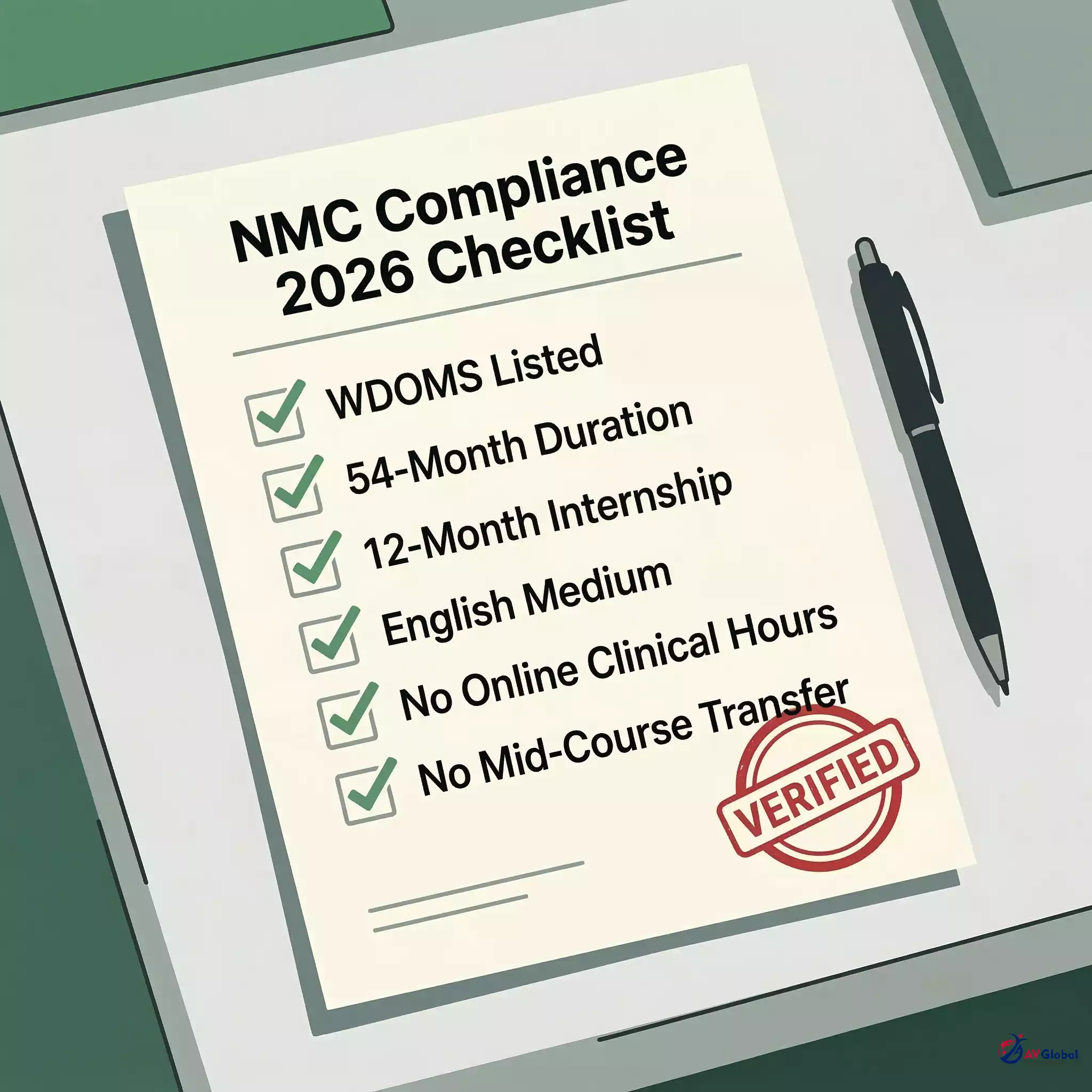
Yes, GSMU is listed in WDOMS and recognized by NMC India. Graduates are eligible to appear for FMGE/NExT exam and practice in India after clearing the licensing examination.
The total 6-year MBBS cost at GSMU is approximately ₹$35,450 (approx. Rs.
32. 0 Lakhs).
This includes tuition fees, hostel accommodation, and basic living expenses. AV Global provides transparent fee structure with no hidden charges.
GSMU teaches MBBS in English medium. Universities in Belarus do not require IELTS or TOEFL for Indian students.
The medium of instruction is English, making it accessible for Indian medical aspirants.
Indian students need a valid NEET scorecard to apply for MBBS at GSMU. The cutoff varies each year based on seat availability.
Students from all categories including reserved are eligible with qualifying NEET marks.
Gomel has a growing community of over 400 Indian students, which has led to the establishment of several Indian restaurants and food options near the university campus. Popular Indian restaurants frequented by students include Namaste India Restaurant on Sovetskaya Street (approximately 1.
2 km from campus), offering North Indian dishes, thalis, and dosa; Spice Route Cafe on Rechitskoe Highway specializing in vegetarian Gujarati and Punjabi cuisine; Curry House near the Central Market serving biryani, tandoori items, and South Indian breakfast on weekends; and Masala Junction on Barykina Street which is student-budget-friendly with meal combos at 8-12 Belarusian Rubles (Rs. 250-350).
Indian grocery stores such as Bombay Bazaar and Delhi Grocers stock essentials like rice, atta, dals, spices, pickles, papad, instant noodles, and ready-to-eat packets. Students who cook at home spend approximately Rs.
5,000-9,000 per month buying groceries and preparing meals in the hostel kitchen, while those eating at Indian restaurants regularly spend Rs. 10,000-18,000 monthly.
The university canteen serves affordable meals (Rs. 80-150 per meal) with vegetarian options like vegetable soups, potato dishes, pasta, salads, and bread, though most Indian students prefer mixing canteen meals with home-cooked dinners.
Traditional Belarusian cuisine includes vegetarian-friendly options like draniki (potato pancakes), kasha (buckwheat porridge), vegetable stews, and fresh salads. Many senior students organize weekly community cooking where groups prepare large quantities of rajma, chole, pulao, or sambar and share costs, reducing individual expenses significantly.
GSMU provides well-maintained hostel accommodation for international students.
The MBBS program at GSMU is 6 years including a 1-year internship. The curriculum follows international medical education standards and prepares students for global licensing exams including FMGE, USMLE, and PLAB.
Yes, graduates from GSMU can practice in India after clearing the FMGE/NExT licensing exam conducted by NMC. The university has a 36% (2024 estimate) FMGE pass rate.
The degree is recognized for medical practice in India.
Gomel is recognized as one of the safest mid-sized cities in Eastern Europe for international students. While Numbeo does not separately rate Gomel, Belarus as a country scores 71/100 on the safety index, indicating low crime rates.
Violent crime against international students is extremely rare, and petty theft is uncommon. The university campus operates as a gated and guarded compound with security personnel stationed at all entry gates 24/7, CCTV cameras installed at strategic points covering hostel entrances, academic buildings, library, and parking areas, and visitor registration mandatory for all non-students.
Female students consistently report feeling safe walking within the campus area even during evening hours. The neighborhoods of Novobelitsky District (where the university is located), Central District around Sovetskaya Street, and Zheleznodorozhny District near the railway station are considered safe for students.
Female students are advised to travel in groups after 10 PM in winter months when it gets dark early and to avoid isolated parks late at night, though serious incidents are virtually unheard of. The Indian Embassy in Belarus is located in Minsk at 16 Olshevskogo Street, Minsk 220030, with helpline number +375 17 262 9702 and emergency consular assistance available.
The embassy conducts periodic visits to Gomel to meet Indian students and address concerns. Emergency services in Belarus operate on number 112 (works for police, ambulance, and fire services) with English-speaking operators available.
AV Global maintains a 24/7 emergency contact number +375 29 XXX XXXX for students and parents to reach our Gomel representative in case of medical emergencies, legal issues, or any urgent support requirement. The local AV Global coordinator conducts monthly check-in meetings with Indian students, maintains a WhatsApp group for instant communication, and has established relationships with local hospitals and police stations to assist students if needed.
Belarusian people are generally friendly toward Indian students, and racial discrimination is rare, though learning basic Russian phrases helps in daily interactions outside campus.
After MBBS from GSMU, graduates can practice in India via FMGE/NExT, pursue USMLE for USA, PLAB for UK, or practice in Belarus. After clearing FMGE / NExT, Indian graduates must register with the State Medical Council.
PG admissions are via NEET-PG.
Related Articles
Ready to Start Your MBBS Journey?
“AV Global has placed 100+ students at Gomel State Medical University. Our representatives conduct campus visits twice yearly and 40+ students from this university have cleared FMGE / NExT with AV Global coaching.”