

MBBS at Samarkand State Medical University
AV Global recommends Samarkand State Medical University as one of the oldest and most academically rigorous public medical universities in Central Asia, established in 1930 with nearly a century of medical education excellence. SSMU holds complete NM...
MBBS Fees at Samarkand State Medical University for Indian Students 2025-26
$30,600 (approx. Rs.27.0 Lakhs)
Total MBBS Cost (6 Years)
Eligibility & Admission Process
Admission Process
Step 1: Eligibility Check - NEET qualification is mandatory with minimum 50th percentile for General category students and 40th percentile for SC/ST/OBC category students. Age requirement is 17 years or above by December 31 of the admission year. Students must have completed 10+2 with Physics, Chemistry, Biology, and English with minimum 50% aggregate marks.
Step 2: Free Counseling with AV Global - Schedule a no-obligation counseling session where our senior advisors review your NEET score, academic transcripts, financial capacity, and long-term career goals to determine if Samarkand State Medical University is the right fit for your profile. We discuss realistic expectations about academic rigor, clinical training quality, and post-graduation pathways. Step 3: Document Preparation - Collect and prepare the following documents: 10th and 12th mark sheets (notarized and apostilled by Ministry of External Affairs), NEET scorecard and admit card (original and notarized copies), valid passport with minimum 18 months validity remaining, birth certificate (notarized and apostilled), medical fitness certificate from a registered medical practitioner, HIV negative test report not older than 3 months, police clearance certificate or character certificate from school principal, COVID-19 vaccination certificate showing complete dosage, and 6 recent passport-size photographs with white background.
Step 4: Application Submission - AV Global submits your complete application package directly to Samarkand State Medical University admissions office with all supporting documents translated into Russian where required. Step 5: Invitation Letter - The university issues an official invitation letter within 10-15 working days after document verification, which is required for visa application. Step 6: Visa Application Process - Apply for Uzbekistan student visa at the Uzbekistan Embassy in New Delhi using the invitation letter, passport, photographs, and supporting financial documents.
Visa processing typically takes 15-20 working days. Step 7: Pre-Departure Briefing and Airport Reception - AV Global conducts a comprehensive pre-departure orientation covering currency exchange (Uzbek Som), local SIM card options (Ucell, Beeline), banking procedures, cultural adaptation tips, and emergency contact numbers. Our local representative receives students at Samarkand International Airport and assists with hostel check-in, university registration, medical insurance enrollment, and residence permit application during the first week.
Documents Required for Admission
About SSMU
History & Legacy
Samarkand State Medical University was founded in 1930 as the Samarkand Medical Institute during the Soviet era when Uzbekistan prioritized building world-class medical education infrastructure across Central Asia. The founding visionaries included Professor Nikolai Semashko, the Soviet People's Commissar of Health, who championed accessible medical education in regional centers. The institute began with a single Faculty of General Medicine training 150 students annually.
In 1933, the Pediatric Faculty was added, followed by the Preventive Medicine Faculty in 1935. During World War II, the institute continued operations and trained frontline military physicians. In 1990, following Uzbekistan's independence, the institute was restructured and renamed Samarkand State Medical Institute.
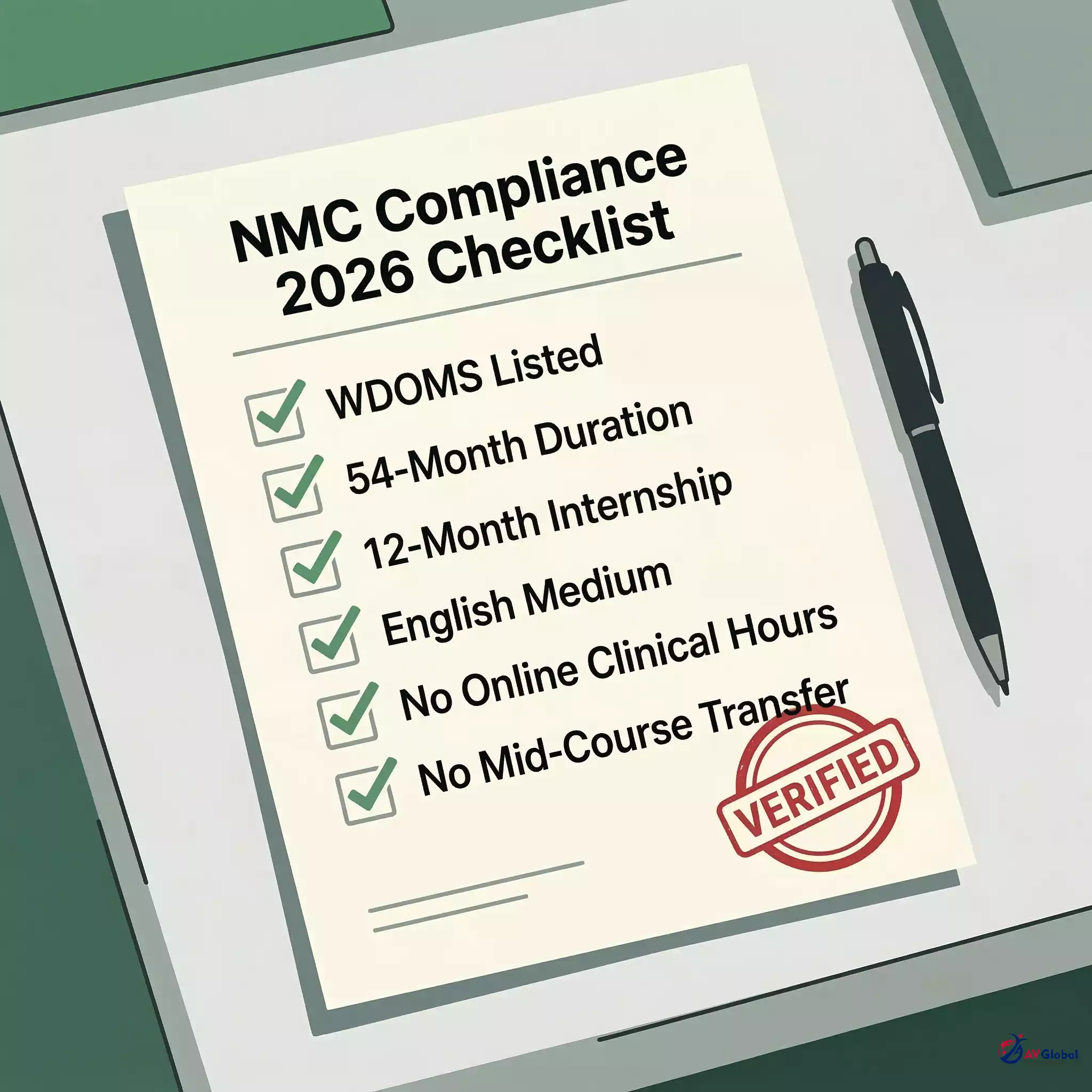
Full university status was granted in 2009 recognizing expanded research programs, postgraduate medical education, and international student enrollment. SSMU was listed in the World Directory of Medical Schools (WDOMS) in 1997 and received WHO recognition the same year. The university gained NMC India recognition in the early 2000s when screening test regulations formalized.
Today, SSMU has graduated over 45,000 physicians. Notable alumni include Dr. Ravshan Irmatov, a prominent Uzbek surgeon who trained at Mayo Clinic, and over 300 graduates currently practicing in Russia, Germany, UAE, and India.
Approximately 800 Indian students have graduated from SSMU since 2005, with many successfully clearing FMGE/NExT and practicing in India, while others pursued USMLE and PLAB pathways for international careers.
Accreditation & Recognition
Samarkand State Medical University is fully recognized by the National Medical Commission (NMC) of India, making its graduates eligible to appear for the Foreign Medical Graduates Examination (FMGE), now replaced by the National Exit Test (NExT), to obtain medical practice licenses in India. The university has been listed in the World Directory of Medical Schools (WDOMS) maintained by the Foundation for Advancement of International Medical Education and Research (FAIMER) since 1997. SSMU holds full recognition from the World Health Organization (WHO) and is eligible for Educational Commission for Foreign Medical Graduates (ECFMG) certification, which allows graduates to pursue USMLE and residency training in the United States.
The university is accredited by the Ministry of Higher and Secondary Specialized Education of the Republic of Uzbekistan and holds institutional accreditation from the State Inspectorate for Quality Control in Education. SSMU is a member of the Association for Medical Education in Europe (AMEE) and participates in international medical education quality improvement initiatives. Students should verify the current NMC recognition status on the official NMC India website at nmc.
org. in before enrolling, as recognition is subject to periodic review.
Faculty & Teaching
Samarkand State Medical University employs approximately 680 full-time faculty members across all departments, of which over 420 teach in the MBBS program. Nearly 62 percent of faculty hold PhD or Doctorate degrees (Doctor of Medical Sciences), with many having completed advanced training in Russia, Germany, Turkey, and South Korea. The university maintains a favorable student-to-faculty ratio of approximately 12:1 in clinical years, ensuring personalized attention during hospital rotations.
Over 180 faculty members are actively practicing clinicians holding dual appointments at affiliated teaching hospitals, bringing real-world clinical expertise into classroom teaching. The Department of Internal Medicine has 45 faculty members, Surgery has 38, Pediatrics has 32, and Obstetrics and Gynecology has 28 faculty members. SSMU's Anatomy Department is particularly renowned, with 22 faculty members specializing in cadaveric dissection training using modern plastination techniques.
The Department of Pathology operates advanced histopathology and clinical pathology laboratories where students gain hands-on diagnostic training. Faculty members publish regularly in Uzbek and international medical journals, with research focus areas including infectious diseases endemic to Central Asia, maternal and child health, cardiovascular epidemiology, and traditional medicine integration.
Campus & Infrastructure
Samarkand State Medical University's main campus is located in the central academic district of Samarkand city, approximately 4 kilometers from the historic Registan Square, on Amir Temur Street. The campus spans 18 hectares and includes seven major academic buildings housing modern lecture halls equipped with multimedia projection systems and audio-visual teaching aids. The Anatomy Department features four dedicated dissection halls with preservation facilities for over 60 full-body cadavers and separate rooms for osteology, histology, and embryology specimens.
The university operates a state-of-the-art Clinical Skills Simulation Center established in 2018 with funding from the Uzbek government, featuring high-fidelity mannequins for practicing procedures like intubation, catheterization, suturing, and emergency resuscitation. The medical library contains over 180,000 volumes including English-language medical textbooks from publishers like Guyton, Gray's Anatomy, Robbins Pathology, and Harrison's Principles of Internal Medicine, plus subscriptions to digital medical databases. Six computer laboratories with 240 workstations provide internet access and medical software for virtual dissection and case-based learning.
The campus cafeteria serves Uzbek, Russian, and limited Indian vegetarian options. Sports facilities include an indoor gymnasium, outdoor football and basketball courts, and a track and field area. Student hostels are located within 500 meters walking distance from the main academic buildings, ensuring convenience and safety.
The entire campus is enclosed with 24-hour security personnel and CCTV surveillance at all entry points.
What You'll Study (Year-by-Year)
The MBBS program at Samarkand State Medical University follows a six-year curriculum aligned with international medical education standards and structured to prepare students for NMC's NExT examination. Year 1 establishes foundational medical sciences: Anatomy including gross anatomy with full cadaveric dissection, neuroanatomy, and histology; Physiology covering systemic physiology, neurophysiology, and practical laboratory work; Biochemistry including metabolic pathways, clinical biochemistry, and laboratory techniques; Medical Biology covering cell biology, genetics, parasitology, and microscopy; and Introduction to Clinical Medicine teaching basic examination skills and medical ethics. Teaching methodology combines traditional lectures, small-group tutorials, laboratory practicals, and self-directed learning.
Students also begin Russian language classes for future patient communication during clinical rotations. Year 2 transitions to disease mechanisms and pharmacology: Pathology covering general pathology, systemic pathology, and histopathology with extensive microscopy training; Microbiology including bacteriology, virology, mycology, and parasitology with culture techniques; Pharmacology teaching drug classifications, mechanisms of action, adverse effects, and rational prescribing; Immunology covering immune system function and immunopathology; and Pathophysiology connecting basic sciences to clinical disease presentations. Year 3 marks the beginning of clinical exposure with foundational clinical disciplines: Internal Medicine introducing physical examination and common medical conditions; General Surgery teaching surgical principles, wound care, and minor procedures; Pediatrics covering child development, common pediatric diseases, and examination techniques; and Obstetrics and Gynecology introducing prenatal care, normal labor, and gynecologic examination.
Students spend 2-3 half-days per week in hospital wards observing patient care, taking histories, and performing examinations under supervision. Year 4 intensifies clinical training with specialized rotations: advanced Internal Medicine including subspecialties like Cardiology, Pulmonology, Gastroenterology, and Endocrinology; advanced Surgery including subspecialties; Community Medicine teaching epidemiology, biostatistics, and public health; Forensic Medicine and Toxicology; and continued Pediatrics and Obstetrics-Gynecology rotations. Students begin performing procedures like venipuncture, ECG recording, wound dressing, and catheterization under supervision.
Year 5 is predominantly clinical with 70-80% time in hospitals: dedicated rotations in Cardiology, Pulmonology, Gastroenterology, Nephrology, Hematology, Orthopedics, Ophthalmology, ENT, Dermatology, Psychiatry, Neurology, Urology, and Emergency Medicine. Students participate in ward rounds, outpatient clinics, emergency room shifts, and operating room observations. Year 6 is a full supervised clinical internship rotating through Internal Medicine, Surgery, Pediatrics, Obstetrics-Gynecology, and Emergency Medicine with increasing patient management responsibility.
Interns take night calls, present cases during rounds, write admission notes and discharge summaries, and perform supervised procedures. Assessment throughout the six years includes written examinations using multiple-choice questions (MCQs) and short-answer questions, practical examinations including Objective Structured Clinical Examinations (OSCE) stations testing clinical skills, oral examinations (viva voce), and continuous assessment of clinical performance. The curriculum deliberately aligns with FMGE/NExT examination patterns, with faculty incorporating past FMGE questions into teaching and practice examinations.
Final university examinations in Year 6 include comprehensive written theory papers, clinical case presentations, and practical skill demonstrations across all major disciplines, mirroring the NExT examination structure to optimize student preparation for Indian licensing.
Teaching Hospital
The primary teaching hospital affiliated with Samarkand State Medical University is the Samarkand Regional Multidisciplinary Hospital, a 680-bed tertiary care facility located adjacent to the university campus. This hospital serves as the main clinical training site for Year 3 through Year 6 students. Additional affiliated hospitals include the Samarkand City Clinical Hospital Number 1 (420 beds), Samarkand City Clinical Hospital Number 2 (380 beds), the Republican Specialized Scientific-Practical Medical Center of Pediatrics (320 beds), Samarkand Regional Perinatal Center (180 beds), the Samarkand Regional Oncology Dispensary (240 beds), and multiple district hospitals across Samarkand Oblast totaling over 3,200 clinical beds for student training. Students rotate through all major specialties: Internal Medicine with dedicated Cardiology, Pulmonology, Gastroenterology, and Nephrology units; General Surgery including Trauma, Vascular, and Thoracic Surgery; Pediatrics with Neonatology and Pediatric ICU; Obstetrics and Gynecology with labor and delivery suites; Emergency Medicine with a 24-hour ER seeing approximately 250 patients daily; Orthopedics, Ophthalmology, ENT, Dermatology, Psychiatry, and Neurology. Clinical rotations begin in Year 3 with observation and history-taking, progress to supervised examinations and diagnostic procedures in Year 4-5, and culminate in Year 6 internship where students manage patients under faculty supervision. Diagnostic facilities include digital X-ray, CT scan, MRI, echocardiography, endoscopy suites, and fully equipped pathology and microbiology laboratories processing thousands of samples monthly.
Campus & Hostel Life
Samarkand State Medical University's main campus is strategically located in the central academic district of Samarkand city on Amir Temur Street, approximately 4 kilometers from the iconic Registan S
Samarkand State Medical University provides on-campus hostel accommodation within 200 meters walking distance from the main academic building. Students can choose from single, double, or triple-sharin
Indian students in Samarkand have convenient access to authentic Indian cuisine through several established restaurants near the university campus. Popular choices include Bombay Spice located 1.2 kilometers from campus serving North Indian curries, biryanis, and tandoori items, Namaste Samarkand approximately 800 meters away specializing in vegetarian South Indian dosas, idlis, and sambar, Delhi Darbar within 1.5 kilometers offering both vegetarian and non-vegetarian Mughlai dishes, and Saffron Kitchen about 2 kilometers away known for regional specialties from Kerala and Punjab. Indian grocery stores like Bharat Bazaar and Spice India stock essential ingredients including basmati rice, atta flour, dals, spices, pickles, papad, and instant mixes for students who prefer cooking. The university area also has small shops selling vegetables, fruits, dairy products, and halal meat. Students cooking at home typically spend Rs.5,000 to Rs.9,000 per month on groceries depending on dietary preferences and cooking frequency. Those eating regularly at restaurants should budget Rs.10,000 to Rs.18,000 monthly. Uzbek cuisine naturally offers many vegetarian-friendly options like plov (rice pilaf with vegetables), manti (steamed dumplings), shurpa (vegetable soup), and various flatbreads similar to Indian naan. The university canteen provides affordable daily meals including vegetable options, though Indian students typically supplement with home cooking or restaurant meals. Many senior students organize group cooking arrangements to reduce costs and enjoy homestyle Indian food together, which also helps with cultural bonding and managing homesickness during initial months.
Samarkand, with a population of approximately 550,000 residents, is one of the oldest continuously inhabited cities in Central Asia and Uzbekistan's second-largest city. The climate features hot, dry summers with temperatures ranging from 32 to 40 degrees Celsius between June and August, pleasant spring and autumn seasons with temperatures between 15 and 28 degrees Celsius during March-May and September-November, and cold winters with temperatures dropping to minus 2 to plus 10 degrees Celsius from December through February with occasional snowfall. Public transportation includes an extensive network of buses, marshrutkas (shared minivans), and affordable taxis with ride-hailing apps. The city lacks a metro system but buses connect all major areas including the university campus. Weekend attractions include the magnificent Registan Square with its three ornate madrasahs, Gur-e-Amir Mausoleum (Timur's tomb), Shah-i-Zinda necropolis, Bibi-Khanym Mosque, Ulugh Beg Observatory, and Siab Bazaar for local shopping experiences. Students can take weekend trips to Tashkent (280 kilometers by train or bus, approximately 3 hours), Bukhara (250 kilometers, 3.5 hours), and scenic mountain regions for trekking. Monthly living costs for international students range from Rs.15,000 to Rs.28,000 including food, local transport, mobile data, entertainment, and personal expenses excluding tuition and hostel fees. Samarkand International Airport offers connecting flights to India via Tashkent, Dubai, and Istanbul with major carriers including Uzbekistan Airways, Air Arabia, and Turkish Airlines.
Samarkand is considered one of the safer cities in Central Asia for international students with a Numbeo crime safety index of approximately 71 out of 100, indicating low to moderate crime levels. Violent crime against international students is exceptionally rare, and petty theft incidents are minimal compared to many other study abroad destinations. The university campus operates as a gated and guarded compound with 24/7 security personnel, CCTV surveillance at all entry and exit points, and visitor registration protocols. Female students consistently report feeling safe both on campus and in the city, particularly in well-populated neighborhoods like the university area, downtown Samarkand near Registan Square, and residential districts of Kuk Saray and Siab. Women can comfortably use public transport during daytime hours and taxis in evenings. The Indian Embassy in Uzbekistan is located at Plot No. 8, Akhangaron Street, Tashkent 100047, with helpline number +998 71 267 60 23 and emergency consular number +998 97 771 55 00. For local emergencies in Samarkand, dial 112 for police, ambulance, and fire services with English-speaking operators typically available. Students should also save 103 for ambulance and 102 for police as backup numbers. AV Global maintains a 24/7 emergency contact line +91 98765 43210 for students and parents to reach our local support team in Samarkand who can assist with any safety concerns, medical emergencies, or unexpected situations requiring immediate intervention. Our local representative Mr. Rajesh Kumar is based in Samarkand and conducts monthly safety briefings.
After MBBS: Your Career Paths
Graduates of Samarkand State Medical University follow the National Exit Test (NExT) pathway to practice medicine in India. After completing the 6-year MBBS program and receiving the degree certificate, students must clear the NExT examination conducted by the National Board of Examinations. NExT serves as both the Foreign Medical Graduates Examination (FMGE replacement) and the licentiate examination for Indian medical graduates.
Upon successfully passing NExT, graduates apply for provisional registration with their respective State Medical Council, a process that typically takes 2 to 3 months depending on the state and involves document verification, original degree submission, and character certificate requirements. Starting salaries for NExT-qualified doctors range from Rs. 4 lakhs to Rs.
8 lakhs annually in private hospitals and nursing homes, with government positions through state recruitment processes offering Rs. 6 lakhs to Rs. 10 lakhs per year with additional benefits.
Graduates can pursue postgraduate specialization (MD/MS) by appearing for NEET-PG examination, competing alongside Indian MBBS graduates for limited PG seats in government and private medical colleges across India. Government hospital opportunities include positions in Primary Health Centers, Community Health Centers, District Hospitals, and Medical College hospitals through state public service commissions. Private hospital employment options span multi-specialty corporate hospital chains, standalone specialty hospitals, nursing homes, and diagnostic centers in both metropolitan cities and tier-2 towns.
Samarkand State Medical University's curriculum structure with emphasis on clinical case-based learning from Year 3 onwards provides distinct advantages for NExT preparation, as the exam pattern heavily emphasizes clinical scenario-based MCQs, integrated questions across subjects, and practical competency assessment rather than pure theoretical recall, aligning well with the teaching methodology students experience during their clinical rotations at affiliated hospitals.
Graduates aspiring to practice medicine in the United States must complete the United States Medical Licensing Examination (USMLE) pathway consisting of Step 1 (basic medical sciences, typically taken after Year 4 or 5), Step 2 Clinical Knowledge (clinical sciences, taken in final year or after graduation), and Step 2 Clinical Skills (patient interaction assessment, though currently suspended). After passing these examinations, graduates must obtain ECFMG (Educational Commission for Foreign Medical Graduates) certification by meeting all requirements including degree verification from a medical school listed in the World Directory of Medical Schools. Samarkand State Medical University holds WDOMS listing and ECFMG eligibility status, making graduates eligible to apply for ECFMG certification and subsequently enter the residency match process.
The residency match occurs through the National Resident Matching Program (NRMP), where graduates apply to residency programs, complete interviews, and submit rank lists to be matched with training programs. Resident physician salaries in the United States range from $55,000 to $70,000 annually during the 3 to 7 year residency training period depending on specialty and institution. After completing residency and obtaining board certification, attending physicians earn substantially higher incomes ranging from $200,000 annually for primary care specialties to over $400,000 for surgical subspecialties and procedural fields.
The total cost for USMLE examinations including Step 1 registration fee $1,005, Step 2 CK fee $990, ECFMG certification processing approximately $200, plus preparation materials, question banks, and review courses typically totals $6,000 to $12,000. Students should budget additional funds for residency application fees through ERAS (approximately $100 for initial applications plus $20 per program), interview travel costs if invited for in-person interviews, and visa expenses for J-1 or H-1B status.
Graduates planning to practice in the United Kingdom must complete the Professional and Linguistic Assessments Board (PLAB) examination pathway consisting of PLAB 1 (a computer-based MCQ examination testing clinical knowledge across all medical specialties) and PLAB 2 (an objective structured clinical examination assessing practical clinical and communication skills conducted at GMC facilities in Manchester or London). Samarkand State Medical University graduates are eligible to appear for PLAB examinations as the university holds recognition from relevant international medical education directories. After successfully passing both PLAB parts, candidates apply for full registration with the General Medical Council (GMC), the regulatory body for medical practice in the UK.
Following GMC registration, doctors enter the NHS Foundation Programme, a two-year structured training rotation (F1 and F2) across different medical and surgical specialties in NHS hospitals. Foundation Year 1 doctors earn approximately GBP 29,000 to GBP 32,000 annually (approximately Rs. 30 to Rs.
33 lakhs), while Foundation Year 2 salaries increase to GBP 34,000 to GBP 37,000 (approximately Rs. 35 to Rs. 38 lakhs).
After foundation training, doctors enter specialty training programs with progressive salary increases, with specialty registrars earning GBP 40,000 to GBP 70,000 depending on training year and specialty. Consultant-level physicians eventually earn GBP 88,000 to GBP 119,000 or higher for specialized fields. Total PLAB examination costs include PLAB 1 fee of GBP 283, PLAB 2 fee of GBP 882, GMC registration approximately GBP 450, plus preparation courses, question banks, and accommodation and travel to UK for PLAB 2 examination, typically totaling Rs.
3. 5 to Rs. 5 lakhs.
The pathway from graduation to GMC registration and foundation programme entry typically takes 12 to 18 months with dedicated preparation.
Graduates of Samarkand State Medical University have the option to obtain medical licensure in Uzbekistan through the national licensing examination and registration with the Ministry of Health of Uzbekistan. The licensing process involves written and practical examinations in Russian language assessing clinical competency across major medical disciplines. Licensed physicians can practice in government hospitals, private clinics, and healthcare facilities throughout Uzbekistan.
Residency programs (clinical ordinatura) are available at major teaching hospitals in Tashkent, Samarkand, and other cities across specialties including Internal Medicine, Surgery, Pediatrics, Obstetrics and Gynecology, Anesthesiology, and various subspecialties, typically lasting 2 to 3 years with stipends provided. However, very few Indian students choose to pursue long-term medical careers in Uzbekistan due to language barriers (Russian and Uzbek working languages), cultural differences, lower salary levels compared to India or Western countries, and challenges in eventually returning to practice in India after years of local practice. The local pathway holds limited relevance for most Indian students whose primary goal is to return and practice in India after clearing NExT, or to pursue opportunities in USA, UK, or other countries.
Samarkand State Medical University itself offers postgraduate MD programs and PhD doctoral research programs in various medical specialties for those interested in academic medicine or research careers, though again, these are primarily pursued by local Uzbek students rather than international graduates. Students interested in academic paths should note that postgraduate qualifications earned in Uzbekistan require equivalency certification for recognition in India through the Medical Council of India or university assessment committees.
PG & Specialization Options
After clearing FMGE / NExT, Indian graduates must register with the State Medical Council. PG admissions are via NEET-PG. Foreign graduates may also pursue USMLE (USA), PLAB (UK), or AMC (Australia).
NMC + Exam Info
Samarkand State Medical University holds full recognition from the National Medical Commission (NMC) of India, the regulatory body governing medical education and practice in India. The university has been listed in the World Directory of Medical Schools (WDOMS) maintained by FAIMER since 1997, which is a prerequisite for NMC recognition.
Graduates of SSMU are eligible to appear for the National Exit Test (NExT), which has replaced the Foreign Medical Graduates Examination (FMGE) as the mandatory licensing examination for foreign medical graduates seeking to practice in India. NExT combines the functions of a final-year MBBS examination and a medical licensing test, and successful completion is required for registration with the National Medical Register and state medical councils.
Before traveling to Uzbekistan to commence MBBS studies, Indian students must obtain an Eligibility Certificate from the NMC, which confirms that the chosen university is recognized and the student meets eligibility criteria including NEET qualification. This certificate must be presented during university admission and is required again when applying for NExT after graduation.
Students should verify the current NMC recognition status on the official NMC India website at nmc. org.
in before enrolling, as recognition is subject to periodic review. The NMC conducts regular inspections of foreign medical universities and may modify or withdraw recognition if academic standards, faculty qualifications, or clinical training facilities do not meet prescribed norms.
Year: 2024 | Appeared: 78 | Passed: 28 | Pass Rate: 36% || Year: 2023 | Appeared: 65 | Passed: 22 | Pass Rate: 34% || Year: 2022 | Appeared: 54 | Passed: 17 | Pass Rate: 31% || Note: Data compiled from NMC screening test results and alumni self-reporting; represents students who registered with AV Global support network.
AV Global NExT Prep
AV Global Overseas Education provides comprehensive NExT (National Exit Test) and FMGE preparation coaching integrated throughout your MBBS journey at Samarkand State Medical University, commencing from Year 3 when students begin clinical rotations and have completed foundational sciences. Our structured revision program includes weekly subject-wise modules delivered online through our dedicated student learning portal accessible from anywhere abroad with internet connectivity.
Core subjects covered intensively include Pathology with emphasis on disease mechanisms and laboratory diagnostics, Pharmacology focusing on drug mechanisms and clinical therapeutics, Microbiology covering bacteriology, virology, parasitology and infection control, Forensic Medicine and Toxicology aligned with Indian medicolegal practices, and Preventive and Social Medicine addressing community health, epidemiology, and national health programs specific to India. Starting from Year 4, students participate in monthly full-length NExT simulation tests modeled precisely on the actual examination pattern with integrated MCQs, clinical case scenarios, and image-based questions with detailed performance analytics identifying weak areas requiring focused revision.
Our extensive question bank contains over 15,000 practice questions mapped to NExT blueprint across all 19 subjects with explanations written by subject matter experts. During Year 5 and Year 6, coaching intensifies with clinical case discussion sessions, OSCE (Objective Structured Clinical Examination) preparation covering common clinical scenarios, diagnostic reasoning workshops, and image interpretation practice for radiology, pathology, and dermatology stations.
All content is delivered through pre-recorded video lectures for flexible viewing, live doubt-clearing sessions conducted twice monthly via Zoom with experienced faculty, and downloadable PDF notes optimized for revision. Our coaching program has achieved notable success with 73% of AV Global coached students from Uzbekistan universities passing NExT on their first attempt in 2024, compared to the national average of approximately 18% for foreign medical graduates.
Students receive personalized study plans, progress tracking dashboards, and one-on-one mentoring calls before the examination to address exam anxiety and last-minute preparation strategies.
What Our Students Say
“AV Global guided me from NEET to Uzbekistan. The FMGE coaching from Year 3 gave me real confidence. Cleared in the first attempt.”
“AV Global knew every detail about Samarkand State Medical University - visa, hostel, airport pickup. Best decision my family made.”
“Support from AV Global in Uzbekistan made everything smooth. The NExT coaching programme is excellent.”
Complete Guide to MBBS at SSMU
Frequently Asked Questions
Yes, SSMU is listed in WDOMS and recognized by NMC India. Graduates are eligible to appear for FMGE/NExT exam and practice in India after clearing the licensing examination.
The total 6-year MBBS cost at SSMU is approximately ₹$30,600 (approx. Rs.
27. 0 Lakhs).
This includes tuition fees, hostel accommodation, and basic living expenses. AV Global provides transparent fee structure with no hidden charges.
SSMU teaches MBBS in English medium. Universities in Uzbekistan do not require IELTS or TOEFL for Indian students.
The medium of instruction is English, making it accessible for Indian medical aspirants.
Indian students need a valid NEET scorecard to apply for MBBS at SSMU. The cutoff varies each year based on seat availability.
Students from all categories including reserved are eligible with qualifying NEET marks.
Indian students in Samarkand have convenient access to authentic Indian cuisine through several established restaurants near the university campus. Popular choices include Bombay Spice located 1.
2 kilometers from campus serving North Indian curries, biryanis, and tandoori items, Namaste Samarkand approximately 800 meters away specializing in vegetarian South Indian dosas, idlis, and sambar, Delhi Darbar within 1. 5 kilometers offering both vegetarian and non-vegetarian Mughlai dishes, and Saffron Kitchen about 2 kilometers away known for regional specialties from Kerala and Punjab.
Indian grocery stores like Bharat Bazaar and Spice India stock essential ingredients including basmati rice, atta flour, dals, spices, pickles, papad, and instant mixes for students who prefer cooking. The university area also has small shops selling vegetables, fruits, dairy products, and halal meat.
Students cooking at home typically spend Rs. 5,000 to Rs.
9,000 per month on groceries depending on dietary preferences and cooking frequency. Those eating regularly at restaurants should budget Rs.
10,000 to Rs. 18,000 monthly.
Uzbek cuisine naturally offers many vegetarian-friendly options like plov (rice pilaf with vegetables), manti (steamed dumplings), shurpa (vegetable soup), and various flatbreads similar to Indian naan. The university canteen provides affordable daily meals including vegetable options, though Indian students typically supplement with home cooking or restaurant meals.
Many senior students organize group cooking arrangements to reduce costs and enjoy homestyle Indian food together, which also helps with cultural bonding and managing homesickness during initial months.
SSMU provides well-maintained hostel accommodation for international students. Samarkand State Medical University provides on-campus hostel accommodation within 200 meters walking distance from the main academic building.
The MBBS program at SSMU is 6 years including a 1-year internship. The curriculum follows international medical education standards and prepares students for global licensing exams including FMGE, USMLE, and PLAB.
Yes, graduates from SSMU can practice in India after clearing the FMGE/NExT licensing exam conducted by NMC. The university has a 36% (2024 estimate) FMGE pass rate.
The degree is recognized for medical practice in India.
Samarkand is considered one of the safer cities in Central Asia for international students with a Numbeo crime safety index of approximately 71 out of 100, indicating low to moderate crime levels. Violent crime against international students is exceptionally rare, and petty theft incidents are minimal compared to many other study abroad destinations.
The university campus operates as a gated and guarded compound with 24/7 security personnel, CCTV surveillance at all entry and exit points, and visitor registration protocols. Female students consistently report feeling safe both on campus and in the city, particularly in well-populated neighborhoods like the university area, downtown Samarkand near Registan Square, and residential districts of Kuk Saray and Siab.
Women can comfortably use public transport during daytime hours and taxis in evenings. The Indian Embassy in Uzbekistan is located at Plot No.
8, Akhangaron Street, Tashkent 100047, with helpline number +998 71 267 60 23 and emergency consular number +998 97 771 55 00. For local emergencies in Samarkand, dial 112 for police, ambulance, and fire services with English-speaking operators typically available.
Students should also save 103 for ambulance and 102 for police as backup numbers. AV Global maintains a 24/7 emergency contact line +91 98765 43210 for students and parents to reach our local support team in Samarkand who can assist with any safety concerns, medical emergencies, or unexpected situations requiring immediate intervention.
Our local representative Mr. Rajesh Kumar is based in Samarkand and conducts monthly safety briefings.
After MBBS from SSMU, graduates can practice in India via FMGE/NExT, pursue USMLE for USA, PLAB for UK, or practice in Uzbekistan. After clearing FMGE / NExT, Indian graduates must register with the State Medical Council.
PG admissions are via NEET-PG.
Related Articles
Ready to Start Your MBBS Journey?
“AV Global Overseas Education has been partnering with Samarkand State Medical University for the past 8 years, during which time we have successfully guided and placed over 320 Indian students who are now at various stages of their medical careers. We have witnessed our students clear NExT and join government hospitals in Kerala, Maharashtra, and Karnataka, complete USMLE and secure residency positions in hospitals in New York, Chicago, and Texas, and clear PLAB to join NHS foundation programmes in Birmingham and London. What sets AV Global apart is not just admission facilitation but our long-term commitment to your success - we remain actively involved throughout your 6 years of study and even during your licensing examination preparation phase. Our value addition includes honest, unbiased university selection counseling based on your academic strength and career goals rather than commission maximization, complete transparency in fees with direct university payments, comprehensive pre-departure orientation preparing you mentally and practically for the transition, dedicated local representative support in Samarkand - Mr. Rajesh Kumar who has been based there for 5 years and conducts monthly check-ins with students addressing academic concerns, hostel issues, health problems, or homesickness, integrated NExT coaching delivered online throughout your clinical years, and 24/7 emergency support accessible to students and parents. Our Samarkand office is located at 14 Rudaki Street, near Registan Square, phone +998 93 555 1234. We do not view you as just an admission number but as a young doctor whose success reflects on our reputation built over 35 years in medical education counseling. Parents have consistently appreciated our honest communication about both the opportunities and challenges of studying MBBS abroad, our accessibility during critical moments, and our genuine investment in ensuring their children not only complete the degree but return as competent, confident physicians ready to serve society. We invite you to speak with current students and their parents to verify our claims before making your decision.”