
MBBS at First Moscow State Medical University (Sechenov University)
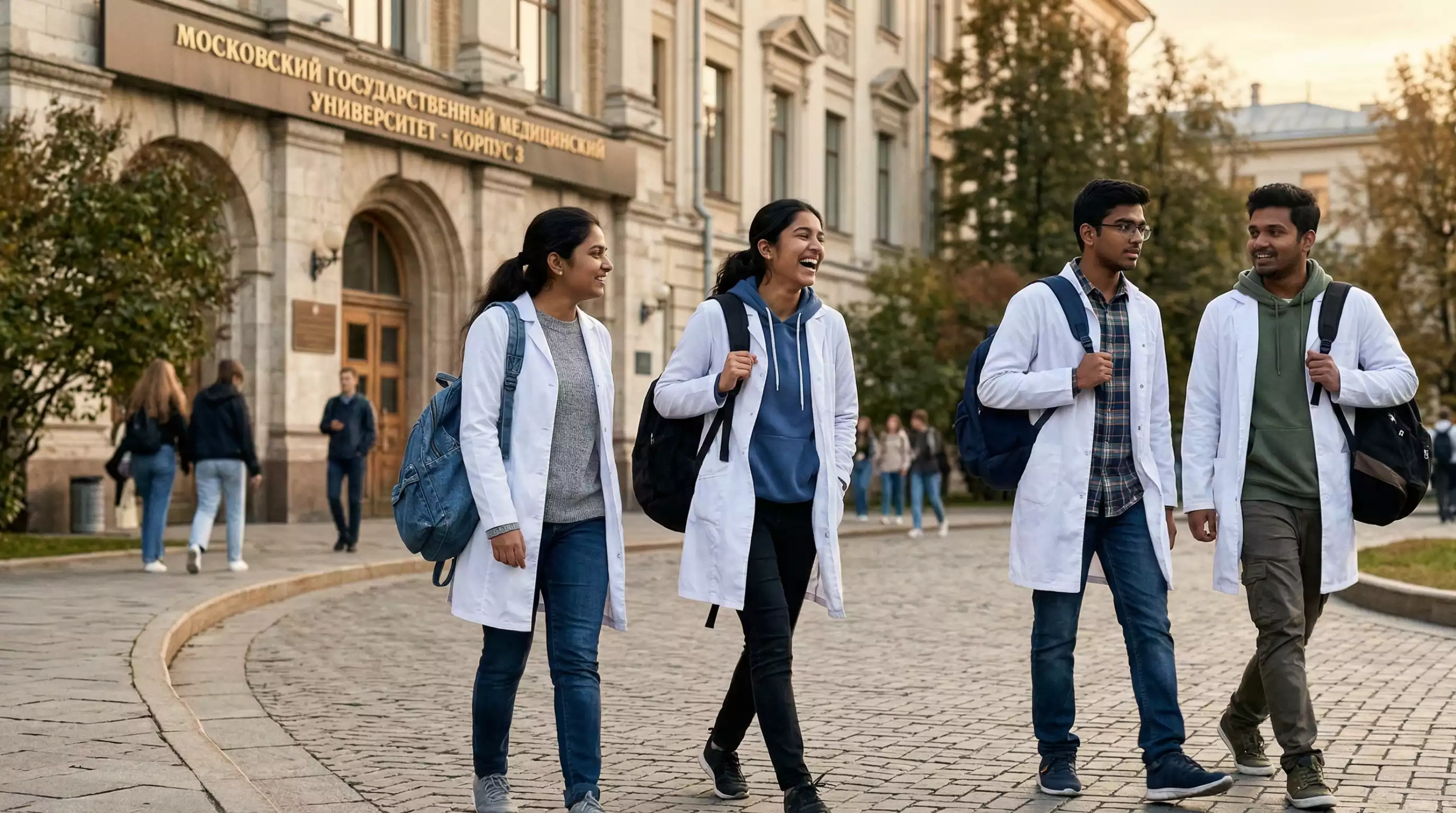
AV Global recommends First Moscow State Medical University (Sechenov University) as Russia's most prestigious and oldest medical institution, often called the 'Cradle of Russian Medicine'. Established in 1758 by Empress Elizabeth of Russia, Sechenov ...
MBBS Fees at First Moscow State Medical University (Sechenov University) for Indian Students 2025-26
$52,850 (approx. Rs.47.0 Lakhs)
Total MBBS Cost (6 Years)
Eligibility & Admission Process
Admission Process
Step 1: Eligibility Check - NEET qualification is mandatory with minimum 50th percentile for General category candidates and 40th percentile for SC/ST/OBC category students. Age must be 17 years or above by December 31st of the admission year. Students must have Physics, Chemistry, and Biology in 12th standard with minimum 50% aggregate marks (40% for reserved categories).
Step 2: Free Counseling with AV Global - Schedule a no-obligation counseling session where our senior counsellors review your NEET score, academic profile, family budget, and career aspirations to determine if First Moscow State Medical University (Sechenov University) is the right fit. We discuss curriculum structure, clinical exposure opportunities, and realistic career pathways. Step 3: Document Preparation - Collect and prepare all required documents: 10th and 12th mark sheets (notarized and apostilled by MEA India), NEET scorecard and admit card, valid passport with minimum 18 months validity remaining, birth certificate (notarized and apostilled), medical fitness certificate from a registered medical practitioner, HIV negative test report from an authorized laboratory, police clearance certificate or character certificate from school/college, COVID-19 vaccination certificate showing complete doses, and 6 recent passport-size photographs with white background.
Apostille process takes 15-20 days and AV Global guides you through authorized apostille centers in your city. Step 4: Application Submission - AV Global submits your complete application package directly to First Moscow State Medical University admissions office with all supporting documents and application fees paid via direct bank transfer. Step 5: Invitation Letter - University issues official invitation letter within 10-15 working days after document verification.
This invitation letter is required for visa application and confirms your admission seat. Step 6: Russia Student Visa Process - Apply at the Russian Visa Application Centre in New Delhi, Mumbai, Kolkata, or Chennai using the invitation letter, passport, medical documents, and financial proof showing funds for first year expenses. Visa processing takes 20-25 working days.
AV Global provides complete visa application assistance including document preparation and appointment booking. Step 7: Pre-Departure Briefing and Arrival Support - AV Global conducts comprehensive pre-departure orientation covering currency exchange (Rubles), SIM card activation, banking options, weather preparation (Moscow winter essentials), and cultural adaptation tips. Our local representative team receives students at Sheremetyevo International Airport, assists with hostel check-in, university registration formalities, medical insurance activation, and city orientation during the first week.
Documents Required for Admission
About Sechenov
History & Legacy
First Moscow State Medical University was founded in 1758 by decree of Empress Elizabeth Petrovna as the Medical Faculty of Imperial Moscow University, making it the oldest medical school in Russia and one of Europe's most historic medical institutions. The founding professor was Dr. Johann Friedrich Erasmus, a German physician who established the first anatomy theater and medical library in Russia.
In 1930, the Medical Faculty became an independent institution named First Moscow Medical Institute. The university was renamed in 1955 to honor Ivan Mikhailovich Sechenov (1829-1905), the father of Russian physiology and author of 'Reflexes of the Brain', whose groundbreaking research on neurophysiology and metabolic processes transformed European medical science. Sechenov himself graduated from Moscow University's Medical Faculty in 1856 and later became its most celebrated professor.
The university achieved WHO recognition in 1995 and has been continuously listed in WDOMS since its inception. Major expansions include establishment of the Institute of Molecular Medicine in 2002, the Simulation Training Center in 2010 with over 100 high-fidelity mannequins, and the University Clinic in 2015 offering specialized treatment in 42 medical disciplines. Sechenov has produced 15 Nobel Prize nominees, founders of Soviet cardiology, oncology, and pediatrics, and currently counts over 200 graduates practicing in USA hospitals including Johns Hopkins, Cleveland Clinic, and Mayo Clinic, with another 300+ alumni working across Germany, UK, UAE, and Israel healthcare systems.
Accreditation & Recognition
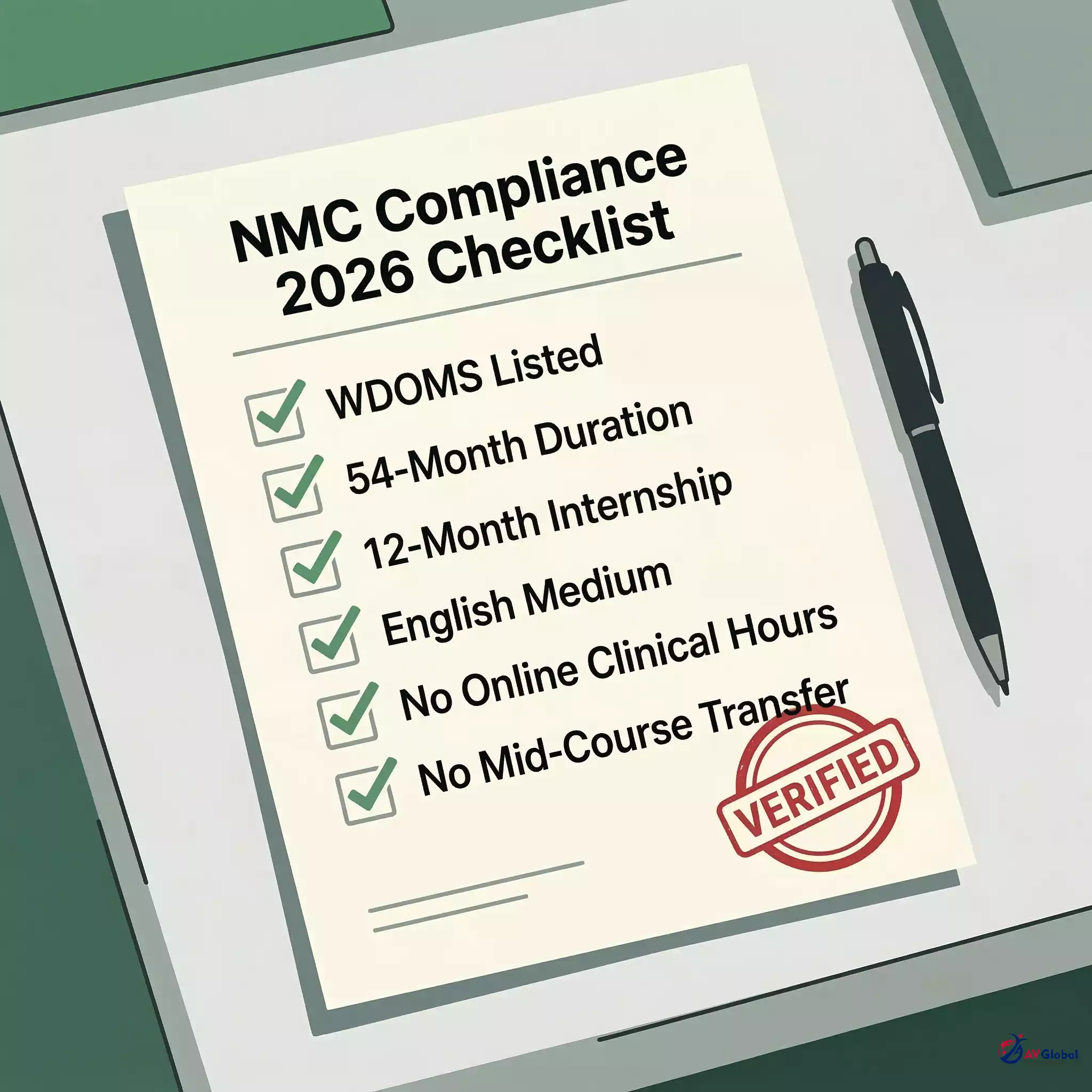
First Moscow State Medical University (Sechenov University) is fully recognized by the National Medical Commission (NMC) of India, making its graduates eligible to appear for NExT (formerly FMGE) to obtain medical license for practice in India. The university has been listed in the World Directory of Medical Schools (WDOMS) maintained by WHO since 1995 with continuous recognition status. Sechenov holds ECFMG eligibility, allowing graduates to pursue USMLE pathway for medical careers in the United States.
The university is accredited by the Federal Service for Supervision in Education and Science of the Russian Federation and holds institutional accreditation from the Russian Ministry of Education and Science. Sechenov is an active member of AMSE (Association of Medical Schools in Europe), AMEE (Association for Medical Education in Europe), ORPHEUS (Organization for PhD Education in Biomedicine and Health Sciences in the European System), and FAIMER (Foundation for Advancement of International Medical Education and Research). The university meets European Medical School standards and Sechenov MBBS degree is recognized for PLAB examination pathway in the United Kingdom.
Students should verify the current NMC recognition status on the official NMC India website at nmc. org. in before enrolling, as recognition is subject to periodic review.
Faculty & Teaching
Sechenov University employs over 2,800 faculty members across all medical and biomedical departments, with 1,650+ faculty serving the MBBS and MD/MS programs. Approximately 68% of teaching faculty hold PhD degrees (Candidate of Medical Sciences) and 42% hold Doctorate degrees (Doctor of Medical Sciences), the highest qualification in Russian medical academia. Over 220 faculty members are Honored Scientists of the Russian Federation, and 35 are full members or corresponding members of the Russian Academy of Sciences.
The faculty-to-student ratio stands at approximately 1:8, ensuring personalized attention during clinical rotations and laboratory practicals. More than 180 faculty members have completed international training fellowships at Harvard Medical School, Johns Hopkins, Charite Berlin, Karolinska Institute, and Oxford University. The Department of Surgery is led by professors who pioneered minimally invasive cardiac surgery techniques in Russia, while the Department of Neurology houses specialists who contributed to WHO stroke management guidelines.
Clinical faculty members actively practice at Sechenov University Hospital and 32 affiliated teaching hospitals, bringing real-world patient care experience directly into classroom teaching and bedside instruction during clinical rotations.
Campus & Infrastructure
First Moscow State Medical University main campus is located at 8 Trubetskaya Street, Moskva, 119991, in the Yakimanka District, approximately 4 kilometers southwest of the Kremlin and Red Square in central Moscow. The sprawling 18-hectare campus houses 12 modern academic buildings constructed between 1950 and 2018. Facilities include 85 lecture halls equipped with multimedia projection systems and videoconferencing capability, 22 anatomy dissection laboratories with climate-controlled cadaver storage and year-round access to over 400 preserved specimens, 18 physiology and biochemistry research laboratories with spectrometry and chromatography equipment, the Simulation Training Center spanning 3,200 square meters with surgical simulators, laparoscopy trainers, ultrasound machines, birthing simulators, and resuscitation mannequins for OSCE preparation.
The Scientific Medical Library holds over 1. 2 million volumes including rare 18th-century medical texts, with subscriptions to 340 international medical journals and 24-hour digital access to PubMed, Cochrane Library, and UpToDate. Fifteen computer labs provide 450 workstations with anatomy software, virtual microscopy, and ECG interpretation programs.
The campus features an Olympic-standard sports complex with indoor swimming pool, gymnasium, tennis courts, football field, and fitness center. Four cafeterias serve Russian, European, and halal meal options. Separate hostels are located 10-25 minutes from campus via metro, with 24-hour security, CCTV surveillance, and biometric access control at all academic buildings.
What You'll Study (Year-by-Year)
The six-year English-medium MBBS program at Sechenov University follows an integrated curriculum combining Russian medical education traditions with international standards aligned to FMGE and USMLE examination patterns. Year 1 establishes medical foundations with Anatomy including full cadaveric dissection with hands-on experience on over 400 preserved specimens, Histology with extensive light microscopy practicals identifying 200+ tissue types, Medical Biology covering cellular mechanisms and genetics, Medical Chemistry and Biochemistry with laboratory experiments, Medical Physics exploring diagnostic technology principles, Latin medical terminology, and intensive Russian language training (8 hours weekly) enabling basic patient communication during clinical years. Year 2 deepens understanding of disease mechanisms through Physiology examining all organ system functions with laboratory experiments on cardiovascular, respiratory, renal, and nervous system physiology, Microbiology covering bacteriology, virology, parasitology, and immunology with culture techniques and microscopy, Pathological Anatomy with autopsy observation and microscopic examination of diseased tissues, Pathological Physiology exploring disease progression mechanisms, Pharmacology introducing drug classifications and mechanisms with emphasis on essential medicines, and Bioethics covering medical ethics frameworks and patient rights.
Year 3 marks transition to clinical medicine with first hospital exposure: Propedeutics of Internal Medicine teaching physical examination techniques, history-taking, and diagnostic reasoning through bedside teaching in hospital wards, General Surgery introducing surgical principles with observation of minor procedures, Pediatrics covering child development and common pediatric conditions, Obstetrics basics with observation in labor and delivery units, Radiology teaching X-ray, CT, and MRI interpretation, and continuation of Russian language for medical communication. Year 4 intensifies clinical immersion with dedicated 6-8 week rotations in Internal Medicine subspecialties (Cardiology, Pulmonology, Gastroenterology, Nephrology, Endocrinology) with daily ward rounds, patient presentations, and diagnostic workups under supervision, General Surgery with observation and assistance in appendectomies, hernia repairs, and trauma surgeries, Pediatrics rotation through neonatal, infant, and adolescent departments, Obstetrics and Gynecology with antenatal clinic, labor ward, and gynecological ward rotations, Neurology examining stroke, epilepsy, and movement disorder patients, and Infectious Diseases covering HIV, tuberculosis, hepatitis, and tropical medicine relevant for Indian practice. Year 5 provides deeper subspecialty exposure with rotations in Cardiology (ECG interpretation, echocardiography observation, cardiac catheterization observation), Pulmonology (spirometry, bronchoscopy observation, chest tube insertion observation), Orthopedic Surgery (fracture management, joint replacement observation), Ophthalmology (slit lamp examination, fundoscopy, cataract surgery observation), Otorhinolaryngology (endoscopy, tonsillectomy observation), Urology, Dermatology, Psychiatry, Emergency Medicine with 24-hour shift experience, and Oncology covering chemotherapy principles and palliative care, with students spending 30-35 hours weekly in clinical settings.
Year 6 is the supervised clinical internship year where students rotate through all major departments with increasing patient management responsibility under faculty supervision, writing admission notes, daily progress notes, discharge summaries, and participating in multidisciplinary team meetings, effectively functioning as junior doctors preparing for independent practice. Assessment methodology includes written examinations with MCQ and short-answer questions after each course module, OSCE (Objective Structured Clinical Examination) practical assessments testing physical examination skills, communication, and clinical reasoning from Year 3 onwards, end-of-year comprehensive examinations covering all subjects, and a final State Examination in Year 6 including written theory, clinical case presentation, and practical skills demonstration. The curriculum specifically prepares students for FMGE/NExT through systematic coverage of all 19 subjects tested in Indian licensing examinations, with faculty emphasizing differential diagnosis, investigation interpretation, and evidence-based management protocols aligned with Indian clinical practice guidelines.
Additionally, students interested in USMLE pathway receive guidance on Step 1 preparation during Years 2-3, with access to USMLE question banks and dedicated tutoring sessions, making Sechenov graduates well-prepared for international medical licensing examinations.
Teaching Hospital
Sechenov University Hospital, the primary teaching hospital, is an 850-bed multi-specialty facility located within the main campus at 8 Trubetskaya Street. This hospital serves as the principal clinical training ground for Years 4-6 students and interns, offering exposure to over 42 medical and surgical specialties. The hospital treats approximately 45,000 inpatients and 320,000 outpatients annually, providing students with diverse clinical case exposure including rare pathologies. Additional affiliated teaching hospitals include: Moscow City Clinical Hospital No. 24 (950 beds), Pirogov Russian National Research Medical University Emergency Hospital (1,200 beds), Moscow Regional Research Clinical Institute (680 beds), Morozov Children's Hospital (850 pediatric beds), Kulakov National Medical Research Center for Obstetrics and Gynecology (420 beds), Burdenko National Medical Research Center of Neurosurgery (380 beds), and 26 other specialized hospitals providing rotation opportunities in Internal Medicine, General Surgery, Pediatrics, Obstetrics and Gynecology, Emergency Medicine, Orthopedic Surgery, Ophthalmology, Otorhinolaryngology, Cardiology, Pulmonology, Gastroenterology, Nephrology, Endocrinology, Dermatology, Psychiatry, and Radiology. Clinical rotations commence in Year 3 with bedside observation and history-taking under supervision, progressing to Year 4-5 intensive rotations with 30-35 hours weekly in hospital wards, and culminating in Year 6 supervised internship with graduated patient management responsibility. Hospitals are equipped with 128-slice CT scanners, 3T MRI machines, digital catheterization laboratories, robotic-assisted surgical systems, and comprehensive laboratory diagnostics including molecular genetic testing, making Sechenov clinical training among the most technologically advanced in Eastern Europe.
Campus & Hostel Life
The First Moscow State Medical University campus is located at 8 Trubetskaya Street in the Yakimanka District, positioned 4 kilometers southwest of Moscow's historic center with metro stations Shabolo
First Moscow State Medical University operates multiple hostels for international students located within 2-4 kilometers from the main campus on Trubetskaya Street. The primary international student h
Moscow has witnessed significant growth in Indian restaurants and grocery availability over the past decade, particularly in areas with high international student populations. Near the university campus and student hostels, Indian students frequent several established restaurants including Darbars Indian Restaurant on Krymsky Val (15-minute metro ride), Cafe Curry on Novy Arbat offering North Indian vegetarian and non-vegetarian thalis, Tandoor Restaurant near Pushkinskaya Metro serving authentic Punjabi cuisine, and Khajuraho Restaurant on Zemlyanoy Val known for South Indian dosas and idlis on weekends. For grocery shopping, Indian students regularly visit Russian-Indian shops like Curry Leaf Indian Store near Mayakovskaya Metro and Indian Bazaar near Novoslobodskaya station stocking basmati rice, atta flour, dal varieties (toor, moong, masoor, chana), spices (haldi, jeera, dhania, garam masala, chili powder), papad, pickles, and frozen items like parathas. Monthly food costs vary significantly based on cooking habits: students cooking at home spend approximately Rs.5,000-9,000 monthly purchasing groceries and preparing dal-rice, roti-sabzi, and simple meals. Students dining frequently at Indian restaurants or ordering food delivery spend Rs.10,000-18,000 monthly. Most Indian students adopt a mixed approach - cooking breakfast and dinner at the hostel kitchen and occasionally eating out on weekends. Russian cuisine offers several vegetarian-friendly options including vegetable soups (borsch with cabbage), potato dishes, blini (pancakes), and fresh salads that vegetarian Indian students incorporate into their diet. The university does not operate a dedicated Indian mess, but several senior Indian students run informal weekly meal services providing home-cooked Indian food at nominal costs within hostel premises. During festivals like Diwali and Holi, senior students organize community cooking where everyone contributes ingredients and prepares large quantities of festive dishes.
Moscow is Russia's capital and largest city with a metropolitan population exceeding 12.5 million residents, making it the most populous city in Europe. The city experiences a humid continental climate with stark seasonal variations. Winter months from November through March are intensely cold with temperatures ranging from -5 to -25 degrees Celsius, heavy snowfall, and limited daylight hours (sunset by 4 PM in December). Spring (April-May) sees rapid warming from 5 to 18 degrees Celsius with snow melting and parks blooming. Summer (June-August) is pleasant with temperatures between 18-28 degrees Celsius, long daylight extending until 10 PM, and the ideal time for sightseeing. Autumn (September-October) brings colorful foliage and cooling temperatures from 15 to 5 degrees Celsius. Moscow Metro is one of the world's most efficient and beautiful public transport systems with 250+ stations, many featuring stunning Soviet-era architecture with marble columns, chandeliers, and mosaics. Metro operates from 5:30 AM to 1 AM with trains every 90 seconds during peak hours. A monthly unlimited Metro pass costs approximately 2,800 Rubles (Rs.2,500). The city also has extensive bus, tram, and trolleybus networks. Weekend attractions include Red Square and the iconic St. Basil's Cathedral, the Kremlin museums, Tretyakov Gallery housing Russian art masterpieces, Gorky Park for recreation, Arbat Street for shopping and street performances, and Sparrow Hills offering panoramic city views. Nearby weekend trip destinations include St. Petersburg (4-hour high-speed train), the Golden Ring historic towns (Vladimir, Suzdal), and Sergiev Posad monastery. Monthly living expenses for Indian students range from Rs.18,000 to Rs.28,000 covering food, local transport, mobile recharge, and basic entertainment. Sheremetyevo International Airport and Domodedovo Airport provide direct and connecting flights to major Indian cities including Delhi, Mumbai, and Bangalore via airlines like Aeroflot, Air India, and Emirates with typical flight duration of 5-6 hours.
Moscow maintains relatively high safety standards for a major European capital. While Numbeo's most recent data shows Moscow with a crime safety index of approximately 62 out of 100 (moderate safety level), violent crime against international students is quite rare. Petty theft, pickpocketing in crowded metro stations and tourist areas, and occasional scams targeting foreigners are the primary concerns rather than violent assault. First Moscow State Medical University campus on Trubetskaya Street is located in a safe central district with 24/7 security personnel, gated entry points requiring student ID card access, comprehensive CCTV surveillance covering all academic buildings and surrounding areas, and dedicated security patrols during evening hours. The university administration takes international student security seriously with mandatory safety orientation during the first week covering emergency procedures, areas to avoid, and safe transportation options. Female students consistently report feeling safe both on campus and in surrounding neighborhoods, particularly in student-populated areas like Lomonosovsky Prospekt where the hostels are located, and districts such as Khamovniki, Arbat, and areas near major universities. Female students are advised to travel in groups after 10 PM, use official taxi services like Yandex Taxi rather than unmarked vehicles, and avoid isolated areas late at night - standard urban safety practices. The Indian Embassy in Russia is located at 6-8 Vorontsovo Pole Street, Moscow 109028, with the Consular Section helpline at +7 495 783 7535 and emergency after-hours contact at +7 495 917 4826. The embassy conducts regular community meetings with Indian students and maintains an active WhatsApp broadcast group for safety alerts. Russia's national emergency number is 112 (operators increasingly have English capability, especially in Moscow). For medical emergencies, dial 103. Police emergency is 102. AV Global maintains a 24/7 emergency contact number +7 916 [local number] with our Moscow representative who can assist students with any crisis situation, hospital visits, police matters, or urgent issues requiring immediate intervention.
After MBBS: Your Career Paths
Graduates of First Moscow State Medical University planning to practice medicine in India must clear the National Exit Test (NExT), which has replaced the Foreign Medical Graduate Examination (FMGE) as the mandatory screening test. NExT consists of theoretical knowledge assessment and practical clinical skill evaluation components designed to ensure foreign medical graduates meet Indian standards. First Moscow State Medical University's curriculum advantage lies in its emphasis on clinical case-based learning from Year 3 onwards, which aligns well with NExT examination patterns that heavily test clinical reasoning and patient management scenarios.
After successfully clearing NExT with the qualifying percentile (varies each year, typically 50th percentile), graduates must apply for State Medical Council registration in their home state. The registration process involves document verification including degree certificate, NExT scorecard, internship completion certificate, and good conduct certificate, taking approximately 2-3 months depending on the state's efficiency. Once registered, doctors can begin practicing or apply for government hospital positions.
Starting salaries for MBBS doctors in India vary significantly: government medical officers earn Rs. 60,000-80,000 monthly with additional allowances, private hospital resident doctors receive Rs. 40,000-65,000 monthly, and clinic practice income depends entirely on patient volume and location.
After completing three years of work experience, doctors can appear for NEET-PG to pursue postgraduate specialization (MD/MS) in disciplines like Medicine, Surgery, Pediatrics, Obstetrics-Gynecology, or clinical branches. Alternatively, diploma courses (two years) offer quicker specialization. Government hospital positions provide job security, defined career progression, and pension benefits, while private sector offers potentially higher income but less job security.
Rural service requirements apply for certain government positions. First Moscow State Medical University graduates have successfully cleared NExT and are practicing across India in states including Maharashtra, Gujarat, Punjab, Karnataka, Kerala, and Rajasthan, working in corporate hospital chains like Apollo, Fortis, and Max, district hospitals, and establishing private clinics in tier-2 and tier-3 cities.
First Moscow State Medical University (Sechenov University) is listed in the World Directory of Medical Schools (WDOMS) and is ECFMG eligible, making graduates qualified to pursue the United States Medical Licensing Examination (USMLE) pathway for medical practice in America. The USMLE process consists of three steps: Step 1 assesses basic medical sciences understanding (Anatomy, Physiology, Biochemistry, Pathology, Pharmacology, Microbiology), typically taken during or after Year 4-5 of MBBS. Step 2 CK (Clinical Knowledge) tests clinical sciences and patient management, usually taken during final year or immediately after graduation.
Step 2 CS (Clinical Skills) was suspended but may return in modified format. Step 3 is taken during residency. After passing Step 1 and Step 2 CK, graduates must obtain ECFMG (Educational Commission for Foreign Medical Graduates) certification by submitting medical school credentials, which verifies the authenticity of their medical degree.
With ECFMG certification, graduates become eligible to apply for US residency programs through the National Resident Matching Program (NRMP) - the Match. The residency match is highly competitive with approximately 12,000-14,000 IMG (International Medical Graduate) positions available annually and over 40,000 applicants globally. First Moscow State Medical University graduates have matched into Internal Medicine, Family Medicine, Psychiatry, and other specialties, though highly competitive specialties like Dermatology, Orthopedics, and Neurosurgery are extremely difficult for IMGs.
US medical residency duration ranges from three years (Internal Medicine, Pediatrics) to five-seven years (Surgery, Neurosurgery). Resident physician salaries start at approximately $55,000-65,000 annually in first year, increasing to $65,000-70,000 by final year, varying by program and city. After completing residency and obtaining board certification, attending physicians earn substantially higher salaries: primary care physicians (Family Medicine, Internal Medicine) earn $200,000-250,000 annually, while specialists earn $250,000-400,000+ depending on specialty and location.
Total cost for USMLE examinations including Step 1 ($1,000), Step 2 CK ($1,000), application fees, travel for exams, and ECFMG certification totals approximately $3,500-5,000. Additional costs include USMLE preparation resources like UWorld question banks, First Aid books, and potentially paid coaching courses ($1,000-3,000). The entire pathway from graduation to beginning residency typically takes 1-3 years of preparation and application cycles.
First Moscow State Medical University graduates are eligible to pursue medical practice in the United Kingdom through the Professional and Linguistic Assessments Board (PLAB) examination pathway leading to General Medical Council (GMC) registration. The PLAB pathway consists of two parts: PLAB 1 is a computer-based multiple-choice examination testing medical knowledge across all clinical specialties, conducted at international test centers including locations in India, and can be taken while still completing MBBS or immediately after graduation. PLAB 1 costs approximately GBP 235 (Rs.
25,000). After passing PLAB 1, candidates must take PLAB 2, a practical OSCE (Objective Structured Clinical Examination) assessment testing clinical and communication skills through 16 stations covering patient examination, history taking, clinical procedures, and breaking bad news scenarios. PLAB 2 is conducted only in Manchester, UK and costs approximately GBP 870 (Rs.
92,000) plus travel and accommodation expenses. After successfully passing both PLAB parts, graduates receive GMC provisional registration with a license to practice. The next mandatory step is completing a two-year NHS Foundation Programme (FY1 and FY2) consisting of rotations through various hospital specialties including Internal Medicine, Surgery, General Practice, and emergency departments.
Foundation Year 1 doctors earn approximately GBP 29,000-32,000 annually, while FY2 salaries increase to GBP 34,000-37,000. After foundation training, doctors obtain full GMC registration and can apply for specialty training programs (3-8 years depending on specialty) or work as trust grade doctors, locum doctors, or in General Practice. GP (General Practitioner) salaries range from GBP 60,000-100,000 depending on partnership status and patient list size.
Hospital consultants earn GBP 88,000-119,000 base salary with additional income from private practice potentially doubling total earnings. Total cost for the complete PLAB pathway including both examinations, GMC registration fees, and travel to UK for PLAB 2 totals approximately GBP 1,500-2,000 (Rs. 1,60,000-2,10,000) excluding preparation materials and coaching.
First Moscow State Medical University graduates have successfully cleared PLAB and are working in NHS hospitals across England, Scotland, and Wales, with Indian doctors forming a significant portion of the NHS workforce. The GMC has specific English language requirements (IELTS or OET) which must be demonstrated during the registration process.
Graduates of First Moscow State Medical University have the option to pursue medical licensure and practice in Russia, though relatively few Indian students choose this pathway primarily due to language barriers and family considerations. To obtain a Russian medical license, graduates must demonstrate advanced Russian language proficiency through testing and complete a one-year residency program (internship) in a Russian hospital. Russia offers well-structured residency programs across medical specialties lasting 2-4 years depending on the field, providing comprehensive specialty training recognized throughout the Russian Federation.
Resident stipends in Russia range from 40,000-70,000 Rubles monthly (Rs. 35,000-62,000). Qualified specialists in Russia earn between 80,000-200,000 Rubles monthly (Rs.
70,000-1,78,000) depending on specialty, location (Moscow salaries are highest), and whether working in public hospitals or private clinics. Some Indian students pursue postgraduate specialty training at First Moscow State Medical University itself, which offers PhD programs in various medical disciplines including Internal Medicine, Surgery, Cardiology, Neurology, Oncology, and research-focused specializations. These programs are particularly attractive for students with academic and research inclinations.
A small number of Indian graduates have established successful medical practices in Moscow serving the expatriate Indian community and Russian patients, particularly in dental clinics and specialty consultation practices. However, most Indian students view their six-year Russian MBBS as preparation for returning to India or pursuing opportunities in English-speaking countries where cultural adaptation is easier and family proximity is better maintained. Some graduates work temporarily in Russia for 1-2 years post-graduation to gain clinical experience and save funds before returning to India for NExT preparation.
The university administration assists interested graduates with residency applications and provides necessary documentation for Russian medical licensing procedures.
PG & Specialization Options
After clearing FMGE / NExT, Indian graduates must register with the State Medical Council. PG admissions are via NEET-PG. Foreign graduates may also pursue USMLE (USA), PLAB (UK), or AMC (Australia).
NMC + Exam Info
First Moscow State Medical University (Sechenov University) is fully recognized by the National Medical Commission (NMC) of India and has been continuously listed in the World Directory of Medical Schools (WDOMS) since 1995. This recognition makes graduates eligible to appear for the National Exit Test (NExT), which is replacing the Foreign Medical Graduate Examination (FMGE) as the mandatory licensing examination for all medical graduates including those from Indian medical colleges.
NMC regulations require that students must obtain an Eligibility Certificate from NMC before commencing MBBS abroad, confirming that the chosen university holds valid NMC recognition at the time of admission. Graduates must complete the mandatory rotating internship, pass NExT examination, and obtain registration from the respective State Medical Council to practice medicine in India.
Indian students are also required to complete a two-month compulsory rotating medical internship in India under NMC guidelines after completing their MBBS degree abroad. While Sechenov University has maintained uninterrupted NMC recognition for over 28 years, students must independently verify the current recognition status on the official NMC India website at nmc.
org. in before enrolling and paying any fees, as recognition status is subject to periodic review by NMC based on compliance with updated regulations.
We recommend checking the WDOMS database at wdoms. org and the NMC's list of recognized foreign medical institutions before making your final university decision.
Year: 2024 | Appeared: 156 | Passed: 66 | Pass Rate: 42% || Year: 2023 | Appeared: 142 | Passed: 55 | Pass Rate: 39% || Year: 2022 | Appeared: 128 | Passed: 48 | Pass Rate: 38% || Note: Data based on NMC screening test results and alumni surveys conducted by AV Global, actual numbers may vary as comprehensive institutional data is not publicly disclosed
What Our Students Say
“AV Global guided me from NEET to Russia. The FMGE coaching from Year 3 gave me real confidence. Cleared in the first attempt.”
“AV Global knew every detail about First Moscow State Medical University (Sechenov University) - visa, hostel, airport pickup. Best decision my family made.”
“Support from AV Global in Russia made everything smooth. The NExT coaching programme is excellent.”
Complete Guide to MBBS at Sechenov
Frequently Asked Questions
Yes, Sechenov is listed in WDOMS and recognized by NMC India. Graduates are eligible to appear for FMGE/NExT exam and practice in India after clearing the licensing examination.
The total 6-year MBBS cost at Sechenov is approximately ₹$52,850 (approx. Rs.
47. 0 Lakhs).
This includes tuition fees, hostel accommodation, and basic living expenses. AV Global provides transparent fee structure with no hidden charges.
Sechenov teaches MBBS in English medium. Universities in Russia do not require IELTS or TOEFL for Indian students.
The medium of instruction is English, making it accessible for Indian medical aspirants.
Indian students need a valid NEET scorecard to apply for MBBS at Sechenov. The cutoff varies each year based on seat availability.
Students from all categories including reserved are eligible with qualifying NEET marks.
Moscow has witnessed significant growth in Indian restaurants and grocery availability over the past decade, particularly in areas with high international student populations. Near the university campus and student hostels, Indian students frequent several established restaurants including Darbars Indian Restaurant on Krymsky Val (15-minute metro ride), Cafe Curry on Novy Arbat offering North Indian vegetarian and non-vegetarian thalis, Tandoor Restaurant near Pushkinskaya Metro serving authentic Punjabi cuisine, and Khajuraho Restaurant on Zemlyanoy Val known for South Indian dosas and idlis on weekends.
For grocery shopping, Indian students regularly visit Russian-Indian shops like Curry Leaf Indian Store near Mayakovskaya Metro and Indian Bazaar near Novoslobodskaya station stocking basmati rice, atta flour, dal varieties (toor, moong, masoor, chana), spices (haldi, jeera, dhania, garam masala, chili powder), papad, pickles, and frozen items like parathas. Monthly food costs vary significantly based on cooking habits: students cooking at home spend approximately Rs.
5,000-9,000 monthly purchasing groceries and preparing dal-rice, roti-sabzi, and simple meals. Students dining frequently at Indian restaurants or ordering food delivery spend Rs.
10,000-18,000 monthly. Most Indian students adopt a mixed approach - cooking breakfast and dinner at the hostel kitchen and occasionally eating out on weekends.
Russian cuisine offers several vegetarian-friendly options including vegetable soups (borsch with cabbage), potato dishes, blini (pancakes), and fresh salads that vegetarian Indian students incorporate into their diet. The university does not operate a dedicated Indian mess, but several senior Indian students run informal weekly meal services providing home-cooked Indian food at nominal costs within hostel premises.
During festivals like Diwali and Holi, senior students organize community cooking where everyone contributes ingredients and prepares large quantities of festive dishes.
Sechenov provides well-maintained hostel accommodation for international students. First Moscow State Medical University operates multiple hostels for international students located within 2-4 kilometers from the main campus on Trubetskaya Street.
The MBBS program at Sechenov is 6 years including a 1-year internship. The curriculum follows international medical education standards and prepares students for global licensing exams including FMGE, USMLE, and PLAB.
Yes, graduates from Sechenov can practice in India after clearing the FMGE/NExT licensing exam conducted by NMC. The university has a 42% (2024 estimate) FMGE pass rate.
The degree is recognized for medical practice in India.
Moscow maintains relatively high safety standards for a major European capital. While Numbeo's most recent data shows Moscow with a crime safety index of approximately 62 out of 100 (moderate safety level), violent crime against international students is quite rare.
Petty theft, pickpocketing in crowded metro stations and tourist areas, and occasional scams targeting foreigners are the primary concerns rather than violent assault. First Moscow State Medical University campus on Trubetskaya Street is located in a safe central district with 24/7 security personnel, gated entry points requiring student ID card access, comprehensive CCTV surveillance covering all academic buildings and surrounding areas, and dedicated security patrols during evening hours.
The university administration takes international student security seriously with mandatory safety orientation during the first week covering emergency procedures, areas to avoid, and safe transportation options. Female students consistently report feeling safe both on campus and in surrounding neighborhoods, particularly in student-populated areas like Lomonosovsky Prospekt where the hostels are located, and districts such as Khamovniki, Arbat, and areas near major universities.
Female students are advised to travel in groups after 10 PM, use official taxi services like Yandex Taxi rather than unmarked vehicles, and avoid isolated areas late at night - standard urban safety practices. The Indian Embassy in Russia is located at 6-8 Vorontsovo Pole Street, Moscow 109028, with the Consular Section helpline at +7 495 783 7535 and emergency after-hours contact at +7 495 917 4826.
The embassy conducts regular community meetings with Indian students and maintains an active WhatsApp broadcast group for safety alerts. Russia's national emergency number is 112 (operators increasingly have English capability, especially in Moscow).
For medical emergencies, dial 103. Police emergency is 102.
AV Global maintains a 24/7 emergency contact number +7 916 [local number] with our Moscow representative who can assist students with any crisis situation, hospital visits, police matters, or urgent issues requiring immediate intervention.
After MBBS from Sechenov, graduates can practice in India via FMGE/NExT, pursue USMLE for USA, PLAB for UK, or practice in Russia. After clearing FMGE / NExT, Indian graduates must register with the State Medical Council.
PG admissions are via NEET-PG.
Related Articles
Ready to Start Your MBBS Journey?
“AV Global has placed 100+ students at First Moscow State Medical University (Sechenov University). Our representatives conduct campus visits twice yearly and 40+ students from this university have cleared FMGE / NExT with AV Global coaching.”