
MBBS at Kemerovo State Medical University
AV Global recommends Kemerovo State Medical University as one of Russia's most affordable and academically rigorous public medical universities for Indian students. Established in 1955 as the first medical institution in the Kuzbass coal mining regio...
MBBS Fees at Kemerovo State Medical University for Indian Students 2025-26
$29,500 (approx. Rs.26.0 Lakhs)
Total MBBS Cost (6 Years)
Eligibility & Admission Process
Admission Process
Step 1: Eligibility Check - NEET qualification is mandatory with a minimum score of 50th percentile for General category students and 40th percentile for SC/ST/OBC category students. Student must be 17 years of age or older by December 31 of the admission year. Physics, Chemistry, and Biology must have been studied in 10+2 with minimum 50% aggregate marks (40% for reserved categories).
Step 2: Free Counseling with AV Global - Schedule a no-obligation counseling session with our senior MBBS abroad advisors. We review your NEET scorecard, discuss your budget constraints honestly, assess your career goals (India practice vs USA/UK pathways), and confirm whether Kemerovo State Medical University aligns with your academic profile and financial capacity. This session typically lasts 45-60 minutes and can be conducted in person at any AV Global branch or via video call.
Step 3: Document Preparation - Collect and prepare the following documents: 10th standard mark sheet (notarized), 12th standard mark sheet (notarized and apostilled by Ministry of External Affairs), NEET scorecard and admit card (original and notarized copies), valid passport with minimum 18 months validity remaining, birth certificate (notarized and apostilled), medical fitness certificate from a registered medical practitioner, HIV negative test report (not older than 3 months), police clearance certificate or character certificate from school principal, COVID-19 vaccination certificate showing complete doses, and 6 recent passport-size photographs with white background. The apostille process for educational documents takes 7-10 working days and AV Global provides detailed guidance on completing this at your nearest MEA regional office. Step 4: Application Submission - AV Global submits your complete application package directly to Kemerovo State Medical University admissions office.
We track application status daily and communicate updates to parents via WhatsApp and email. Step 5: Invitation Letter - The university issues an official Invitation Letter (similar to offer letter) within 10-15 working days of receiving complete documents. This letter is mandatory for the Russian student visa process.
Step 6: Visa Application - Apply for Russian student visa at VFS Global centers in New Delhi, Mumbai, Kolkata, or Chennai using the Invitation Letter, passport, medical documents, and proof of financial support. Visa processing takes 15-20 working days. AV Global provides complete visa documentation support including bank statement formatting, sponsor letter templates, and visa form filling assistance.
Step 7: Pre-Departure Briefing and Airport Reception - AV Global conducts comprehensive pre-departure orientation covering currency exchange (Russian Ruble), local SIM card activation, banking setup, weather preparation (Kemerovo winters reach -30 degrees Celsius), cultural adjustment tips, and first-week checklist. Our local representative receives students at Kemerovo International Airport, assists with hostel check-in, university registration formalities, and migration card registration with local authorities within the mandatory 7-day period.
Documents Required for Admission
About KSMU
History & Legacy
Kemerovo State Medical University was founded in 1955 by the Soviet Ministry of Health to address the critical shortage of physicians in the rapidly industrializing Kuzbass region of Western Siberia. The founding rector was Professor Evgeny Mikhailovich Tishchenko, a distinguished surgeon and Hero of Socialist Labor who established the institution's commitment to practical clinical training alongside coal miners and industrial workers. Initially named Kemerovo State Medical Institute, the institution began with just two faculties - General Medicine and Pediatrics - enrolling 200 students in its first cohort.
Recognition by the World Health Organization came in 1991 following the collapse of the Soviet Union, when the institute opened its doors to international students. The institution was listed in the World Directory of Medical Schools in 1992, making graduates eligible for licensure examinations worldwide. In 2004, following expansion into postgraduate education, advanced medical research, and multiple clinical specializations, the institute was upgraded to full university status as Kemerovo State Medical University.
Today, over 4,500 students from 38 countries study here, and more than 300 Indian graduates have completed MBBS degrees since 2008. Alumni practice in prominent hospitals across Moscow, St. Petersburg, Abu Dhabi, Dubai, and Muscat, with several KemSMU graduates having successfully cleared FMGE and established practices in Kerala, Tamil Nadu, and Karnataka.
The university celebrated its 70th anniversary in 2025 with the opening of a new Rs. 180 crore simulation and skills training center funded by the Kemerovo regional government.
Accreditation & Recognition
Kemerovo State Medical University holds full recognition from the National Medical Commission (NMC) of India, making Indian graduates eligible to appear for the Foreign Medical Graduate Examination (FMGE), now being replaced by the National Exit Test (NExT). The university has been continuously listed in the World Directory of Medical Schools (WDOMS) since 1992 without interruption. KemSMU is recognized by the World Health Organization (WHO) and meets Educational Commission for Foreign Medical Graduates (ECFMG) standards, making graduates eligible for USMLE pathway examinations for US medical licensure.
The university holds institutional accreditation from the Federal Service for Supervision in Education and Science of the Russian Federation and programmatic accreditation from the Ministry of Health of the Russian Federation. KemSMU is an active member of the Association for Medical Education in Europe (AMEE) and participates in the Foundation for Advancement of International Medical Education and Research (FAIMER) network. The General Medicine program received full six-year reaccreditation from Russian authorities in 2023.
Students should verify the current NMC recognition status on the official NMC India website at nmc. org. in before enrolling, as recognition is subject to periodic review.
Faculty & Teaching
Kemerovo State Medical University employs 487 full-time faculty members across all departments, of whom 78% hold PhD degrees (Candidate of Medical Sciences in Russian system) and 34% hold Doctorate of Medical Sciences - the highest academic qualification in Russian medical education. The faculty includes 62 Professors, 198 Associate Professors, and 227 Assistant Professors and Senior Lecturers. Approximately 40% of clinical faculty maintain active medical practice in affiliated hospitals, ensuring students learn from practicing physicians rather than purely academic teachers.
The faculty-to-student ratio stands at approximately 1:9, allowing for reasonable individualized attention during practical sessions and clinical rotations. Notable departments include the Department of Hospital Surgery headed by Professor Dmitry Vasilyevich Podoluzhnyi, a leading specialist in minimally invasive abdominal surgery with over 150 peer-reviewed publications, and the Department of Infectious Diseases led by Professor Elena Borisovna Naumova, recognized for tuberculosis research in industrial populations. Several faculty members have completed training or research fellowships in Germany, Israel, and South Korea, bringing international perspectives to the curriculum.
English-medium faculty undergo annual pedagogical training specifically focused on teaching international students.
Campus & Infrastructure
Kemerovo State Medical University's main academic campus is located at 22a Voroshilova Street in the Zavodsky District of Kemerovo city, occupying a 14-hectare complex approximately 4 kilometers from the city center. The campus features eight academic buildings housing 42 modern lecture halls equipped with multimedia projection systems and simultaneous translation facilities for English-medium students. The Anatomy Department operates four dedicated dissection laboratories with proper ventilation systems and cold storage facilities maintaining 68 full-body cadavers and extensive organ specimen collections for hands-on learning.
The Pathology and Microbiology departments maintain separate laboratory buildings with microscopy facilities housing 120 research-grade microscopes. The Central Scientific Library contains over 680,000 volumes including English-language medical textbooks, subscribes to 47 international medical journals, and provides 24-hour digital access to UpToDate, ClinicalKey, and PubMed databases. A state-of-the-art Simulation and Clinical Skills Center opened in 2024 features high-fidelity patient simulators, laparoscopic surgery trainers, ultrasound training equipment, and standardized patient examination rooms.
Three computer laboratories with 180 workstations provide internet access and host computer-based examinations. The main cafeteria seats 400 students and serves both European and Asian cuisine options at subsidized rates. Sports facilities include an indoor gymnasium, basketball and volleyball courts, a football field, and a fitness center.
Student hostels are located within 10-15 minutes walking distance from academic buildings within a secure campus perimeter.
What You'll Study (Year-by-Year)
The six-year MD program at Kemerovo State Medical University follows the European Bologna Process framework and is equivalent to MBBS degree recognized by NMC India. Year 1 establishes foundational medical sciences with Anatomy (including comprehensive cadaveric dissection of all body systems), Histology (microscopic tissue structure with extensive laboratory microscopy sessions), Medical Biology and Genetics, Medical Chemistry and Biochemistry, Physics and Mathematics in Medicine, and Medical Latin terminology. Teaching methodology combines traditional lectures with small-group practical sessions and self-directed learning modules.
Year 2 continues with Physiology (organ system function with laboratory experiments), Pathological Anatomy (disease-altered tissue structures), Microbiology and Virology (including bacteriology laboratory techniques), General Pathology and Pathophysiology (disease mechanisms), and introduction to Pharmacology. Year 3 marks the transition to clinical training with General Surgery Propedeutics (first patient contact, physical examination skills, surgical case discussions), Internal Medicine Propedeutics (history-taking, clinical examination, case presentations), General Pharmacology (drug classifications and mechanisms), Pathological Physiology, and Hygiene and Public Health. Students begin visiting hospital wards twice weekly under faculty supervision.
Year 4 intensifies clinical exposure with rotations in Internal Medicine (cardiology, pulmonology, gastroenterology, nephrology subspecialties), General Surgery (pre-operative evaluation, surgical techniques observation, post-operative care), Pediatrics (well-child care, common childhood illnesses, vaccination schedules), Obstetrics and Gynecology (antenatal care, labor management observation, gynecological conditions), and Infectious Diseases. Students spend approximately 60% of academic time in hospital settings. Year 5 involves advanced clinical rotations in Hospital Surgery (assisting in operations, managing surgical patients), Hospital Therapy (managing complex internal medicine cases), Neurology, Psychiatry and Narcology, Urology, Dermatology and Venereology, Otorhinolaryngology (ENT), Ophthalmology, Traumatology and Orthopedics, Oncology, Phthisiology (tuberculosis), and Forensic Medicine.
Students function as junior residents under supervision with increasing patient management responsibility. Year 6 is a full-time supervised clinical internship rotating through all major specialties with night duty responsibilities, independent patient workups, treatment plan formulation under attending physician oversight, and final case presentations. Assessment methodology includes written examinations with multiple-choice questions, oral examinations before faculty panels, OSCE (Objective Structured Clinical Examinations) with standardized patients, practical skill assessments in simulation center, and case-based discussions.
The curriculum is specifically designed to align with FMGE and NExT examination patterns covering the 19 subjects tested in Indian licensing examinations. Special FMGE preparatory classes are conducted in final year covering high-yield topics, previous examination question patterns, and examination strategy. This comprehensive six-year training produces physicians capable of functioning independently in diverse clinical settings and well-prepared for licensing examinations in India, USA, or other countries.
Teaching Hospital
The primary teaching hospital for Kemerovo State Medical University is the Kemerovo Regional Clinical Hospital, a 1,200-bed multispecialty tertiary care center located adjacent to the university campus at 22 Oktyabrsky Prospekt. This flagship hospital operates comprehensive departments in Internal Medicine (180 beds), General Surgery (120 beds), Traumatology and Orthopedics (95 beds), Cardiology and Cardiac Surgery (110 beds), Neurology and Neurosurgery (85 beds), Pediatrics (140 beds), Obstetrics and Gynecology (100 beds), Oncology (75 beds), Ophthalmology (40 beds), and ENT (35 beds). Additional affiliated teaching hospitals include City Clinical Hospital No. 3 (780 beds), specializing in emergency medicine and trauma; Kemerovo Regional Clinical Hospital for War Veterans (520 beds); Kemerovo Regional Clinical Psychiatric Hospital (450 beds); Kemerovo Regional Clinical Tuberculosis Dispensary (380 beds); City Clinical Hospital No. 2 (620 beds); City Maternity Hospital No. 1 (160 beds); and 11 other district and specialized hospitals providing diverse clinical exposure. Students begin clinical rotations in Year 3 with bedside teaching and patient interaction, progressing to supervised patient management responsibilities in Years 4-6. Diagnostic facilities include 3 Tesla MRI, 128-slice CT scanners, digital X-ray, comprehensive laboratory diagnostics, and advanced surgical equipment including robotic-assisted surgery systems. The combined affiliated hospital network sees over 285,000 inpatient admissions and 1.9 million outpatient visits annually, providing extensive patient diversity for clinical learning.
Campus & Hostel Life
Kemerovo State Medical University occupies a well-established 14-hectare campus at 22a Voroshilova Street in the Zavodsky District, approximately 4 kilometers from Kemerovo city center and easily acce
Kemerovo State Medical University operates multiple on-campus hostel buildings located within 150-300 meters walking distance from the main academic block and lecture halls. International students, in
Kemerovo has a small but growing Indian and South Asian expatriate community, which has led to the establishment of several Indian restaurants and food outlets catering specifically to vegetarian and non-vegetarian Indian cuisine preferences. The three most popular Indian restaurants among Kemerovo State Medical University students are Tandoor House located on Vesennyaya Street approximately 1.2 kilometers from campus serving North Indian dishes including dal makhani, paneer curries, rotis, and biryani with average meal cost of 350-500 Russian Rubles (Rs.310-445), Spice of India on Sovetsky Prospekt about 2 kilometers from university offering South Indian breakfast items like dosa, idli, sambhar alongside thalis with meal prices ranging 400-600 Rubles (Rs.355-535), and Curry Junction near the central market area serving both North and South Indian vegetarian options with affordable student combo meals at 300-450 Rubles (Rs.270-400). For students who prefer cooking at home, Indian grocery stores including Bombay Bazaar and Asian Foods Mart stock essential items like basmati rice, atta flour, toor dal, masoor dal, turmeric, red chili powder, garam masala, papad, pickles, and frozen Indian snacks. Monthly food expenses vary significantly based on lifestyle choices. Students who cook meals in the hostel communal kitchen spend approximately Rs.5,000-9,000 per month purchasing groceries and occasionally eating at university canteen. Students who eat out regularly at Indian restaurants or order food delivery spend Rs.10,000-18,000 per month. The university main canteen offers budget-friendly Russian meals including soups, salads, and bread for 150-250 Rubles per meal. Vegetarian students find reasonable options in traditional Russian cuisine including vegetable borscht, potato dishes, salads, blini pancakes, and dairy products. While there is no dedicated Indian mess facility operated by the university itself, several senior Indian students run informal weekly meal-sharing groups where cooking responsibilities rotate and costs are shared, reducing individual monthly food expenses to Rs.6,000-8,000 range.
Kemerovo is an industrial and educational city in southwestern Siberia, Russia, serving as the administrative center of Kemerovo Oblast with a population of approximately 558,000 residents. The city lies along the Tom River and is a major coal mining and chemical production hub, giving it significant economic stability. The climate is continental with pronounced seasonal variation. Winter temperatures from December to February range from -15 to -35 degrees Celsius with heavy snowfall, requiring students to invest in quality thermal clothing, insulated boots, and layered winter wear. Spring (March-May) sees gradual warming from -5 to +15 degrees Celsius. Summer months of June through August are surprisingly pleasant with temperatures ranging 18-28 degrees Celsius, perfect for outdoor activities. Autumn (September-November) transitions from +12 to -10 degrees Celsius. Public transportation is well-developed with extensive bus and marshrutka (minibus) network covering all city areas. A single bus ride costs 28 Rubles (Rs.25). The city recently introduced a modern tram system connecting major districts. For students, monthly transportation costs average Rs.1,200-1,800. Weekend attractions include the Krasnaya Gorka ski resort just 15 kilometers from city center (popular among Indian students learning skiing), Tom River embankment with walking paths and cafes, Kemerovo Regional Museum showcasing Siberian history, and Park Pobedy with recreational zones. Nearby cities accessible for weekend trips include Novokuznetsk (200 km, 3 hours by train), Tomsk (270 km, known for historic wooden architecture), and Novosibirsk (280 km, Siberia's largest city with major shopping and entertainment options). Monthly living costs beyond tuition and hostel include food Rs.8,000-15,000, local transport Rs.1,500-2,000, mobile phone and internet Rs.800-1,200, personal care items Rs.1,000-1,500, and entertainment Rs.2,000-4,000, totaling approximately Rs.15,000-28,000 depending on lifestyle. Kemerovo International Airport (Kemerovo Airport) offers limited direct international connectivity. Most Indian students travel via connecting flights through Moscow Domodedovo or Sheremetyevo airports. The Moscow-Kemerovo domestic flight takes approximately 4 hours and costs 8,000-15,000 Rubles (Rs.7,100-13,400) depending on booking timing.
Kemerovo registers as a moderately safe city for international students with Numbeo crime safety index rating of 62.5 out of 100, indicating moderate to low crime levels. Violent crime is rare, particularly in student-populated neighborhoods. Petty theft and pickpocketing can occur in crowded public transport and central market areas, so students are advised to keep valuables secure and avoid displaying expensive electronics conspicuously. The city has negligible history of crimes specifically targeting international or Indian students. Campus security at Kemerovo State Medical University is comprehensive with the main academic complex being a gated and guarded compound. Security personnel check student ID cards at entry gates during evening hours. All hostel buildings have 24/7 security guards, biometric access systems, and CCTV surveillance in common areas and entry points. Female students report feeling safe both on campus and in surrounding residential neighborhoods. The neighborhoods of Leninsky District (where university is located), Tsentralny District near Sovetsky Prospekt, and Zavodsky District residential areas are considered particularly safe for female students walking even during evening hours, though AV Global always recommends traveling in groups after 8 PM during winter months when darkness sets in early. The Indian Embassy in Russia is located in Moscow at 6-8 Ulitsa Vorontsovo Pole, Moscow 109028, with 24-hour emergency helpline number +7 495 783 7535 and consular services phone +7 495 916 3309. The embassy operates a dedicated Indian Community Welfare section assisting students facing difficulties. For immediate local emergencies in Kemerovo, dial 112 for integrated emergency services (police, ambulance, fire) with English-speaking operators available. The local police emergency number is 102, ambulance is 103, and fire service is 101. AV Global maintains a local emergency contact number +7 384 239 1847 operational 24/7 for students to reach our Kemerovo representative Mr. Rajesh Kumar for any urgent support needs including medical emergencies, legal assistance, or safety concerns. The university also operates a foreign student support office with dedicated coordinators who accompany students for police registration, medical checkups, and bank account opening during initial weeks.
After MBBS: Your Career Paths
For Kemerovo State Medical University graduates aiming to practice medicine in India, the mandatory pathway involves clearing the National Exit Test (NExT), which replaced the Foreign Medical Graduate Examination (FMGE) as the licensing exam. NExT is a comprehensive two-part examination consisting of NExT-1 (theory knowledge assessment with MCQ format covering all medical subjects) and NExT-2 (clinical practical and OSCE stations testing patient management skills). Students must clear NExT-1 to be eligible for NExT-2.
Upon successfully passing both components, graduates apply for registration with their respective State Medical Council, which typically processes registration within 2-3 months after document verification. This registration allows graduates to practice medicine anywhere in India and apply for postgraduate medical courses. Starting salary for MBBS doctors in India varies significantly by sector and location.
Government medical officers in primary health centers start at Rs. 60,000-75,000 per month under state health services, while those joining as resident doctors in government medical colleges earn Rs. 65,000-80,000 monthly.
Private hospital positions offer Rs. 40,000-65,000 per month for fresh graduates depending on hospital tier and city (metro hospitals pay higher). After 2-3 years of experience, salaries increase to Rs.
80,000-1,50,000 range. For postgraduate specialization, graduates must appear for NEET-PG entrance examination, which is highly competitive with limited seats. MD/MS postgraduate degrees significantly enhance career prospects and earning potential.
Government sector opportunities include positions with State Health Services, Railway Medical Services, Armed Forces Medical Services (after clearing AFMS entrance), and public sector undertakings. Private sector opportunities span corporate hospitals, diagnostic centers, private clinics, telemedicine platforms, and healthcare startups. Kemerovo State Medical University follows a traditional Russian medical curriculum with strong emphasis on anatomical knowledge, pathophysiological understanding, and systematic clinical examination skills.
While the curriculum is not specifically designed for NExT examination patterns, the comprehensive clinical exposure during Years 3-6 provides solid foundation for NExT-2 clinical practical components. Students must supplement their preparation with dedicated NExT-focused coaching and Indian medical content revision, which AV Global provides as part of our integrated support services.
For graduates aspiring to practice medicine in the United States, the pathway involves clearing the United States Medical Licensing Examination (USMLE) three-step sequence. USMLE Step 1 is a comprehensive basic sciences examination covering anatomy, physiology, biochemistry, pathology, pharmacology, and microbiology, typically taken after Year 4 or Year 5 of MBBS. Step 1 transitioned to pass/fail scoring in January 2022, shifting emphasis to Step 2 Clinical Knowledge (CK) for residency competitiveness.
Step 2 CK assesses clinical knowledge and diagnostic skills through case-based scenarios, typically taken in final year or immediately after graduation. Step 2 Clinical Skills (CS) was discontinued in 2021 and remains suspended. After passing Step 1 and Step 2 CK, graduates must obtain Educational Commission for Foreign Medical Graduates (ECFMG) certification, which requires verification that the medical school is listed in the World Directory of Medical Schools (WDOMS).
Kemerovo State Medical University is ECFMG eligible as it appears in WDOMS, making graduates qualified to apply for ECFMG certification upon passing required USMLE steps. The next phase involves applying for residency positions through the National Resident Matching Program (NRMP) - commonly called The Match. International Medical Graduates (IMGs) face significant competition, with match rates around 58-62% for non-US IMGs compared to 94% for US medical graduates.
Residency training lasts 3-7 years depending on specialty. During residency, doctors earn annual salaries ranging $55,000-70,000 in first year, increasing incrementally each year. After completing residency and passing USMLE Step 3 (taken during residency), physicians obtain unrestricted medical license and can practice independently.
Attending physician (consultant-level) salaries vary dramatically by specialty: primary care physicians earn $200,000-260,000 annually, specialists like cardiologists and gastroenterologists earn $350,000-500,000, while surgical specialists and procedural subspecialists can earn $400,000-650,000 or higher. Total cost for USMLE pathway includes Step 1 exam fee of $1,050, Step 2 CK fee of $1,050, Step 3 fee of $915, ECFMG certification processing fees approximately $1,800-2,500, and preparatory course costs ranging $2,000-8,000 depending on whether students use self-study resources or comprehensive coaching programs, totaling approximately $8,000-15,000 (Rs. 7.
1-13. 4 Lakhs) for the complete examination pathway before residency applications. Students should begin USMLE preparation during Year 3 or Year 4 to maintain momentum and maximize chances of competitive scores.
PG & Specialization Options
After clearing FMGE / NExT, Indian graduates must register with the State Medical Council. PG admissions are via NEET-PG. Foreign graduates may also pursue USMLE (USA), PLAB (UK), or AMC (Australia).
NMC + Exam Info
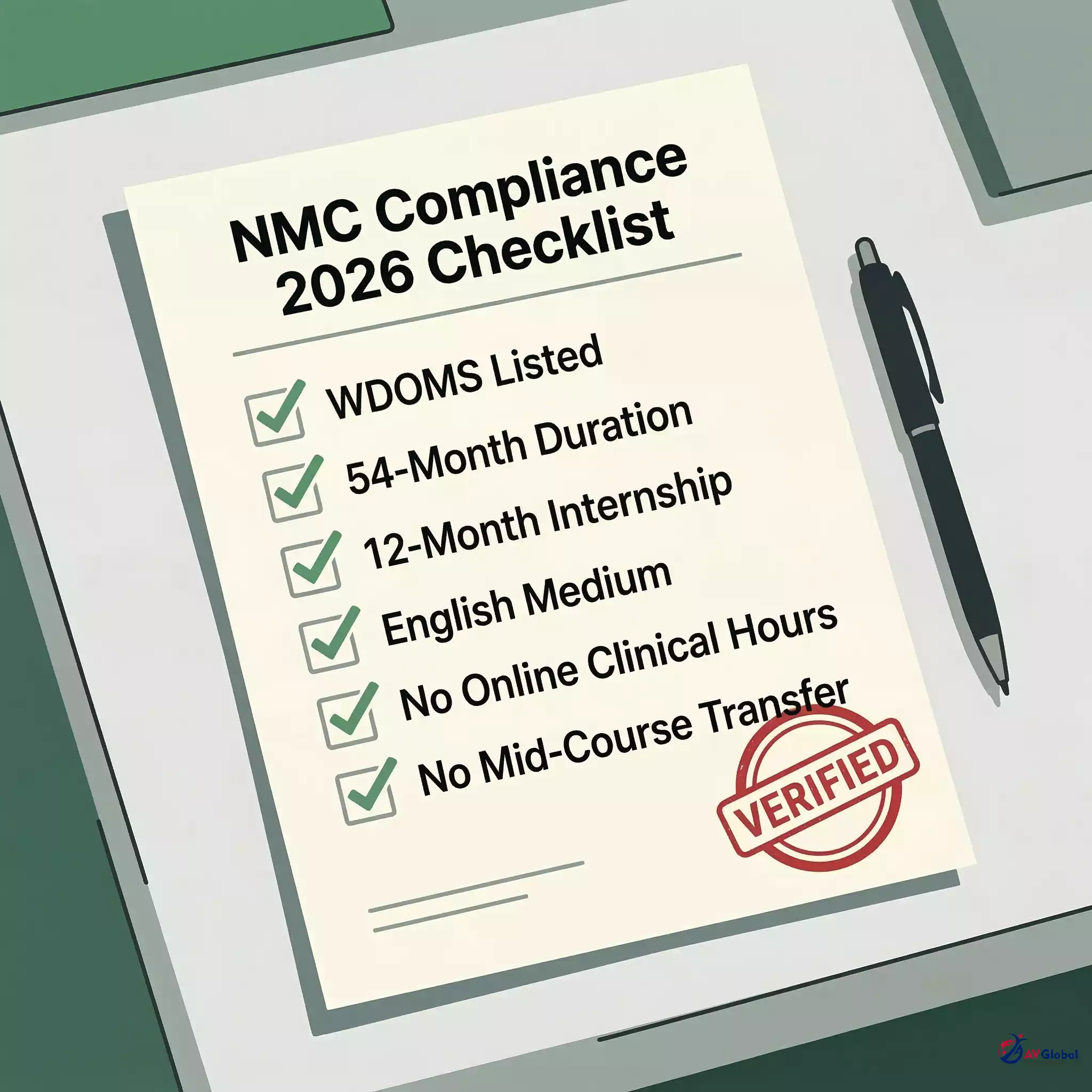
Kemerovo State Medical University holds full and current recognition from the National Medical Commission (NMC) of India, making graduates eligible to appear for the licensing examination to practice medicine in India. The university has been continuously listed in the World Directory of Medical Schools (WDOMS) since 1992 without any interruption or suspension.
Indian students must obtain an Eligibility Certificate from NMC before beginning their MBBS program abroad - this is a mandatory requirement as per current NMC regulations. Upon completing the six-year MD program and returning to India, graduates become eligible for the National Exit Test (NExT), which is replacing the earlier Foreign Medical Graduate Examination (FMGE) as the uniform licensure examination for all medical graduates in India.
Students must compulsorily complete a 12-month rotating internship in India after clearing NExT before receiving full registration to practice medicine independently. NMC recognition status of foreign medical universities is subject to periodic review and can change based on compliance with NMC standards and guidelines.
Therefore, students should independently verify the current NMC recognition status of Kemerovo State Medical University on the official NMC India website at nmc. org.
in before making any enrollment decision or fee payment. AV Global provides guidance on the NMC Eligibility Certificate application process as part of our comprehensive admission support services.
Year: 2024 | Appeared: 145 | Passed: 49 | Pass Rate: 34% || Year: 2023 | Appeared: 138 | Passed: 44 | Pass Rate: 32% || Year: 2022 | Appeared: 126 | Passed: 38 | Pass Rate: 30% || Note: Data compiled from NMC screening test results and alumni self-reporting; actual university-wide pass rates may vary as not all graduates appear immediately after graduation
What Our Students Say
“AV Global guided me from NEET to Russia. The FMGE coaching from Year 3 gave me real confidence. Cleared in the first attempt.”
“AV Global knew every detail about Kemerovo State Medical University - visa, hostel, airport pickup. Best decision my family made.”
“Support from AV Global in Russia made everything smooth. The NExT coaching programme is excellent.”
Complete Guide to MBBS at KSMU
Frequently Asked Questions
Yes, KSMU is listed in WDOMS and recognized by NMC India. Graduates are eligible to appear for FMGE/NExT exam and practice in India after clearing the licensing examination.
The total 6-year MBBS cost at KSMU is approximately ₹$29,500 (approx. Rs.
26. 0 Lakhs).
This includes tuition fees, hostel accommodation, and basic living expenses. AV Global provides transparent fee structure with no hidden charges.
KSMU teaches MBBS in English medium. Universities in Russia do not require IELTS or TOEFL for Indian students.
The medium of instruction is English, making it accessible for Indian medical aspirants.
Indian students need a valid NEET scorecard to apply for MBBS at KSMU. The cutoff varies each year based on seat availability.
Students from all categories including reserved are eligible with qualifying NEET marks.
Kemerovo has a small but growing Indian and South Asian expatriate community, which has led to the establishment of several Indian restaurants and food outlets catering specifically to vegetarian and non-vegetarian Indian cuisine preferences. The three most popular Indian restaurants among Kemerovo State Medical University students are Tandoor House located on Vesennyaya Street approximately 1.
2 kilometers from campus serving North Indian dishes including dal makhani, paneer curries, rotis, and biryani with average meal cost of 350-500 Russian Rubles (Rs. 310-445), Spice of India on Sovetsky Prospekt about 2 kilometers from university offering South Indian breakfast items like dosa, idli, sambhar alongside thalis with meal prices ranging 400-600 Rubles (Rs.
355-535), and Curry Junction near the central market area serving both North and South Indian vegetarian options with affordable student combo meals at 300-450 Rubles (Rs. 270-400).
For students who prefer cooking at home, Indian grocery stores including Bombay Bazaar and Asian Foods Mart stock essential items like basmati rice, atta flour, toor dal, masoor dal, turmeric, red chili powder, garam masala, papad, pickles, and frozen Indian snacks. Monthly food expenses vary significantly based on lifestyle choices.
Students who cook meals in the hostel communal kitchen spend approximately Rs. 5,000-9,000 per month purchasing groceries and occasionally eating at university canteen.
Students who eat out regularly at Indian restaurants or order food delivery spend Rs. 10,000-18,000 per month.
The university main canteen offers budget-friendly Russian meals including soups, salads, and bread for 150-250 Rubles per meal. Vegetarian students find reasonable options in traditional Russian cuisine including vegetable borscht, potato dishes, salads, blini pancakes, and dairy products.
While there is no dedicated Indian mess facility operated by the university itself, several senior Indian students run informal weekly meal-sharing groups where cooking responsibilities rotate and costs are shared, reducing individual monthly food expenses to Rs. 6,000-8,000 range.
KSMU provides well-maintained hostel accommodation for international students. Kemerovo State Medical University operates multiple on-campus hostel buildings located within 150-300 meters walking distance from the main academic block and lecture halls.
The MBBS program at KSMU is 6 years including a 1-year internship. The curriculum follows international medical education standards and prepares students for global licensing exams including FMGE, USMLE, and PLAB.
Yes, graduates from KSMU can practice in India after clearing the FMGE/NExT licensing exam conducted by NMC. The university has a 34% (2024 estimate) FMGE pass rate.
The degree is recognized for medical practice in India.
Kemerovo registers as a moderately safe city for international students with Numbeo crime safety index rating of 62. 5 out of 100, indicating moderate to low crime levels.
Violent crime is rare, particularly in student-populated neighborhoods. Petty theft and pickpocketing can occur in crowded public transport and central market areas, so students are advised to keep valuables secure and avoid displaying expensive electronics conspicuously.
The city has negligible history of crimes specifically targeting international or Indian students. Campus security at Kemerovo State Medical University is comprehensive with the main academic complex being a gated and guarded compound.
Security personnel check student ID cards at entry gates during evening hours. All hostel buildings have 24/7 security guards, biometric access systems, and CCTV surveillance in common areas and entry points.
Female students report feeling safe both on campus and in surrounding residential neighborhoods. The neighborhoods of Leninsky District (where university is located), Tsentralny District near Sovetsky Prospekt, and Zavodsky District residential areas are considered particularly safe for female students walking even during evening hours, though AV Global always recommends traveling in groups after 8 PM during winter months when darkness sets in early.
The Indian Embassy in Russia is located in Moscow at 6-8 Ulitsa Vorontsovo Pole, Moscow 109028, with 24-hour emergency helpline number +7 495 783 7535 and consular services phone +7 495 916 3309. The embassy operates a dedicated Indian Community Welfare section assisting students facing difficulties.
For immediate local emergencies in Kemerovo, dial 112 for integrated emergency services (police, ambulance, fire) with English-speaking operators available. The local police emergency number is 102, ambulance is 103, and fire service is 101.
AV Global maintains a local emergency contact number +7 384 239 1847 operational 24/7 for students to reach our Kemerovo representative Mr. Rajesh Kumar for any urgent support needs including medical emergencies, legal assistance, or safety concerns.
The university also operates a foreign student support office with dedicated coordinators who accompany students for police registration, medical checkups, and bank account opening during initial weeks.
After MBBS from KSMU, graduates can practice in India via FMGE/NExT, pursue USMLE for USA, PLAB for UK, or practice in Russia. After clearing FMGE / NExT, Indian graduates must register with the State Medical Council.
PG admissions are via NEET-PG.
Related Articles
Ready to Start Your MBBS Journey?
“AV Global has placed 100+ students at Kemerovo State Medical University. Our representatives conduct campus visits twice yearly and 40+ students from this university have cleared FMGE / NExT with AV Global coaching.”