
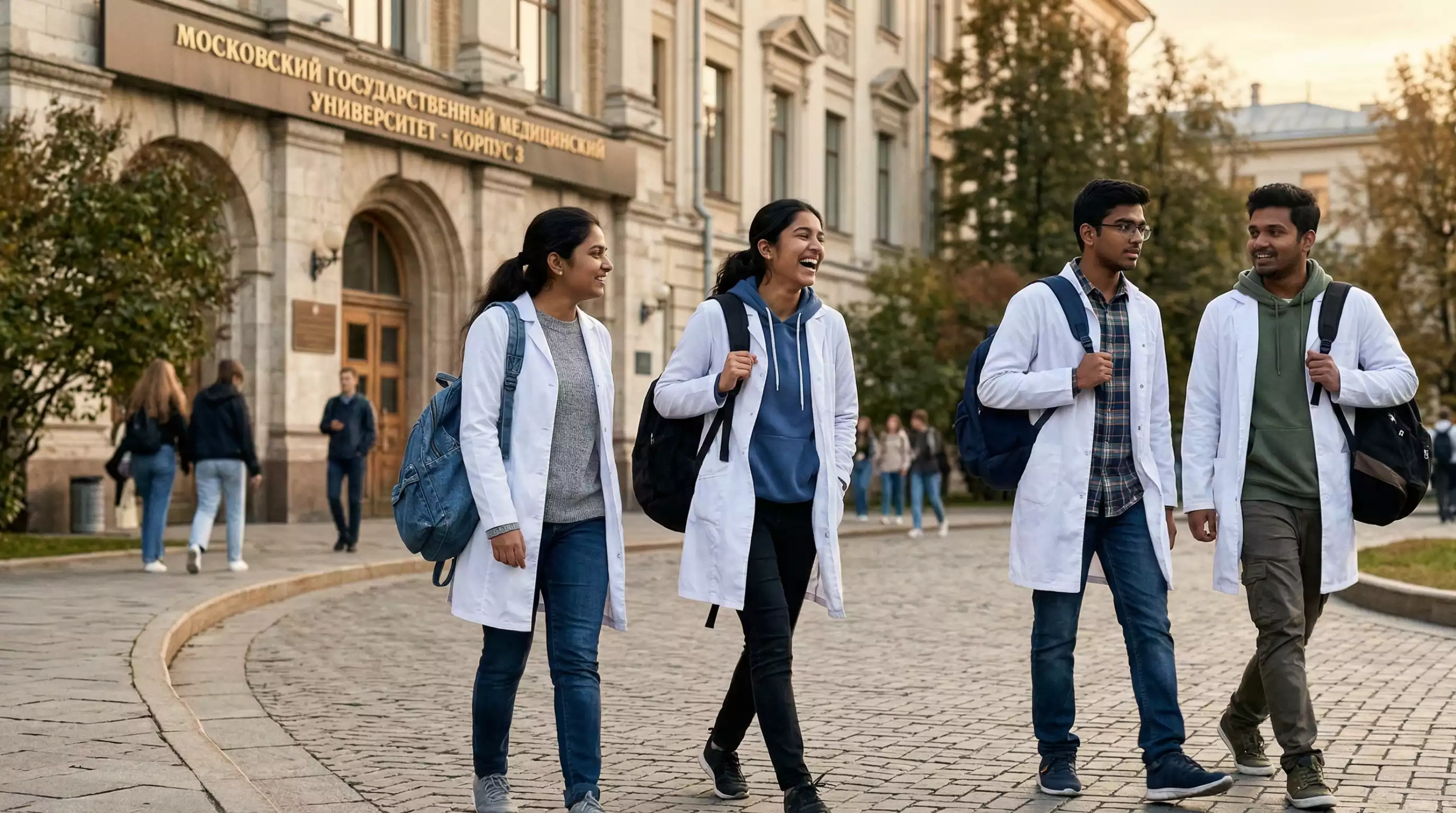
MBBS at Pirogov Russian National Research Medical University (RNRMU)
AV Global recommends Pirogov Russian National Research Medical University (RNRMU) as one of Russia's most prestigious government medical universities with an exceptional legacy of producing world-class physicians since 1906. Named after the legendary...
MBBS Fees at Pirogov Russian National Research Medical University (RNRMU) for Indian Students 2025-26
$46,250 (approx. Rs.41.0 Lakhs)
Total MBBS Cost (6 Years)
Eligibility & Admission Process
Admission Process
Step 1: Eligibility Check - NEET qualification is mandatory for all Indian students applying to Pirogov Russian National Research Medical University. General category students must score at or above the 50th percentile, while SC/ST/OBC students require the 40th percentile or above. Students must be 17 years of age or older by December 31 of the admission year.
No IELTS or TOEFL is required as the medium of instruction is English. Step 2: Free Counseling with AV Global - Schedule a no-obligation one-on-one session with our senior counselors who will review your NEET scorecard, academic background, career aspirations (India practice vs USA/UK pathways), and financial capacity to determine if Pirogov RNRMU aligns with your goals. This session also covers alternative universities if needed.
Step 3: Document Preparation - Gather the following documents: 10th standard mark sheet (notarized), 12th standard mark sheet (notarized and apostilled by Ministry of External Affairs), NEET scorecard and admit card (attested copies), valid passport with minimum 18 months validity remaining, birth certificate (notarized and apostilled), medical fitness certificate from a registered physician, HIV negative test report (not older than 3 months), police clearance certificate or character certificate from school principal, COVID-19 vaccination certificate (both doses), and 6 recent passport-size photographs with white background. Apostille process typically takes 10-15 days in India and can be done at MEA regional offices. Step 4: Application Submission - AV Global submits your complete application package directly to Pirogov Russian National Research Medical University admissions office with zero processing errors.
We maintain direct liaison with university international office. Step 5: Invitation Letter - The university issues an official invitation letter within 10-15 working days of receiving complete documentation. This letter is mandatory for the Russian student visa application.
Step 6: Visa Application Process - Apply for Russian student visa at VFS centers in Delhi, Mumbai, Kolkata, or Chennai using the invitation letter, admission confirmation, passport, photographs, and financial proof documents. Visa processing takes 15-20 working days. AV Global provides complete visa documentation checklist and appointment booking assistance.
Step 7: Pre-Departure Briefing and Airport Reception - AV Global conducts a comprehensive pre-departure orientation covering currency exchange (Rubles), local SIM card options (MTS, Megafon), Moscow Metro navigation, winter clothing requirements, banking setup, and first-week survival Russian phrases. Our Moscow-based representative receives every student at Sheremetyevo International Airport with name placard, assists with airport formalities, arranges taxi to hostel, helps with check-in, and accompanies students to university registration on the first day.
Documents Required for Admission
About RNRMU
History & Legacy
Pirogov Russian National Research Medical University was founded in 1906 as the Faculty for Advanced Training of Physicians by Czar Nicholas II to address the growing need for postgraduate medical education in the Russian Empire. The institution was named after Nikolai Ivanovich Pirogov (1810-1881), the father of Russian surgery and military field medicine who pioneered the use of ether anesthesia, invented the plaster cast for fractures, and wrote the foundational Atlas of Topographical Anatomy. Initially focused on continuing medical education for practicing doctors, the university expanded to undergraduate medical programs in 1930.
It was renamed the Central Institute for Advanced Medical Studies in 1936 and achieved full university status in 1992. WHO recognized the university in 1995, and it was listed in the World Directory of Medical Schools the same year. In 2012, the Russian government designated RNRMU as a National Research Medical University, granting special federal funding for biomedical research.
Today, over 8,000 graduates practice medicine across 89 countries including significant numbers in the USA, Canada, Germany, Israel, and throughout the Middle East. The university has trained over 200,000 physicians since its founding, making it one of the largest medical education institutions in Europe.
Accreditation & Recognition
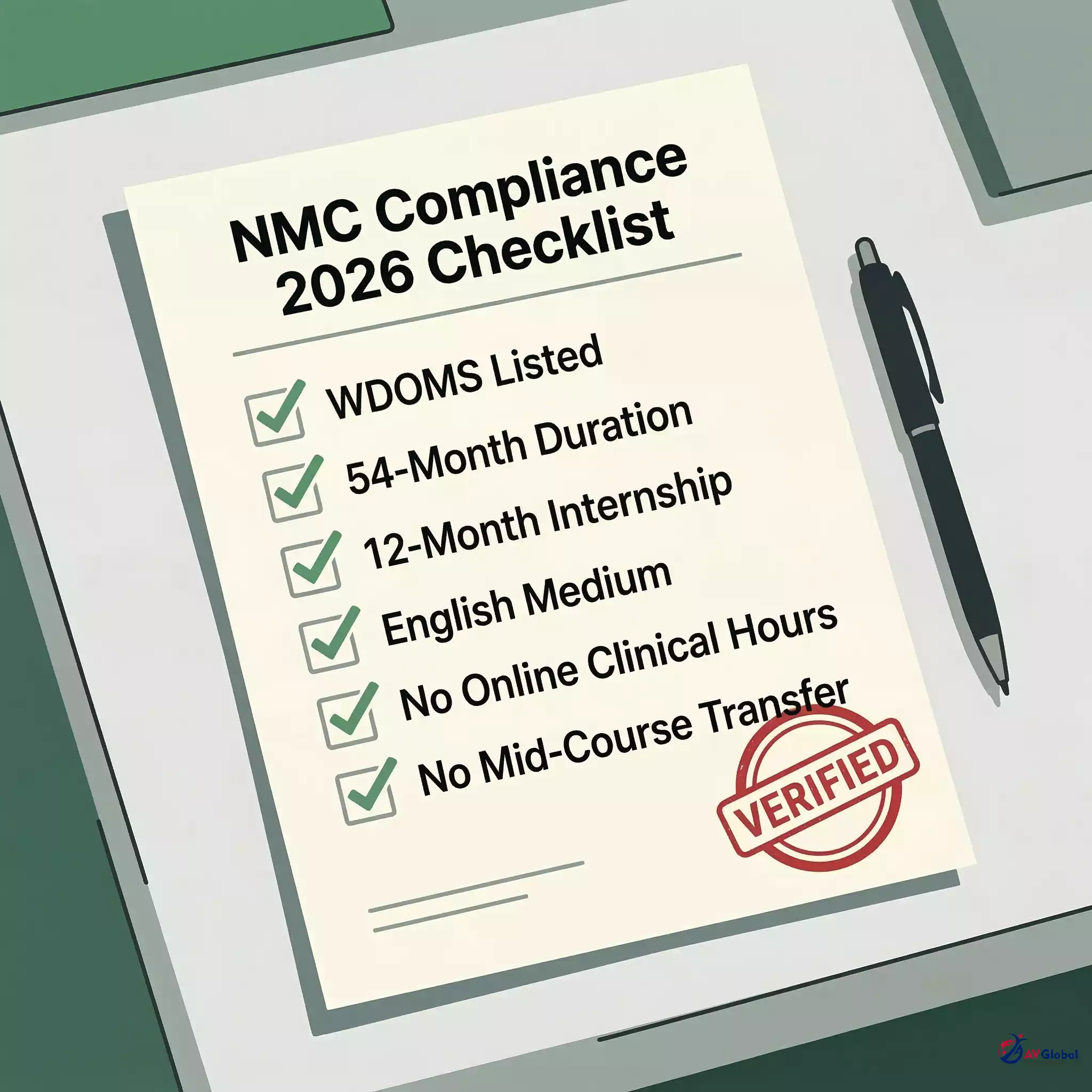
Pirogov Russian National Research Medical University (RNRMU) is fully recognized by the National Medical Commission (NMC) of India, making graduates eligible to appear for NExT (National Exit Test) to obtain medical license for practice in India. The university has been listed in the World Directory of Medical Schools (WDOMS) since 1995 and holds WHO recognition for international medical education standards. RNRMU is accredited by the Russian Federal Service for Supervision in Education and Science (Rosobrnadzor), the national quality assurance body.
The university maintains ECFMG eligibility, allowing graduates to pursue USMLE pathway for medical practice in the United States. RNRMU is listed in FAIMER (Foundation for Advancement of International Medical Education and Research) directory and holds institutional membership in the Association for Medical Education in Europe (AMEE). The university meets European educational standards recognized by multiple licensing authorities.
Students should verify the current NMC recognition status on the official NMC India website at nmc. org. in before enrolling, as recognition is subject to periodic review.
Faculty & Teaching
RNRMU employs over 1,200 full-time faculty members across all departments, with 78% holding PhD or Doctorate degrees in Medicine (MD/DMSc equivalent). More than 200 faculty members hold the prestigious title of Professor awarded by the Russian Higher Attestation Commission. The university maintains a healthy student-to-faculty ratio of 8:1 in clinical years, ensuring personalized mentorship during hospital rotations.
Over 150 clinical faculty members are actively practicing physicians who bring real-world case experience into teaching. Several department heads have completed advanced training at leading medical institutions in the United States, United Kingdom, Germany, and Israel. The Department of Surgery includes 6 Honored Doctors of the Russian Federation.
The Cardiology department is internationally recognized for interventional cardiology research. Faculty expertise spans all major specialties including transplant surgery, neurosurgery, oncology, medical genetics, and reproductive medicine, providing students exposure to cutting-edge clinical practice throughout their training.
Campus & Infrastructure
The main Pirogov RNRMU campus is located at 1 Ostrovitianova Street in the Konkovo district of Southwest Moscow, well-connected by metro (Konkovo station on the orange line). The 18-hectare campus features 12 modern academic buildings housing 45 lecture halls equipped with audiovisual teaching systems, 8 dedicated anatomy dissection laboratories with year-round cadaveric material supply, and 15 specialized skills laboratories for histology, microbiology, biochemistry, and pharmacology practicals. The Medical Simulation Center spans 2,400 square meters with high-fidelity mannequins for emergency medicine, surgery, obstetrics, and resuscitation training.
The Scientific Medical Library holds over 850,000 volumes including access to international medical journals through PubMed, Scopus, and MEDLINE databases. Six computer labs provide 180 workstations with anatomy software and clinical case simulation programs. The campus includes a 600-seat cafeteria serving Russian, European, and vegetarian options, a modern sports complex with indoor gymnasium, swimming pool, basketball and volleyball courts, and outdoor football field.
Student hostels are located within 10-15 minutes walking distance from academic buildings, and the primary teaching hospital is directly adjacent to campus.
What You'll Study (Year-by-Year)
The 6-year MBBS program at Pirogov RNRMU follows the European medical education model aligned with Russian Federal Educational Standards and structured to prepare students for NExT, FMGE, USMLE, and PLAB licensing examinations. Year 1 establishes medical science foundations with Anatomy (including full cadaveric dissection over two semesters), Histology (microscopic tissue structure with extensive lab work), Medical Biology and Genetics, Medical Chemistry, and Medical Physics. Students spend 18-20 hours weekly in lectures and 12-15 hours in laboratory practicals.
Year 2 continues with deeper physiological sciences: Human Physiology (organ systems function), Biochemistry (metabolic pathways and clinical biochemistry), Microbiology (bacteriology, virology, parasitology with culture techniques), and Pathological Anatomy (disease mechanisms with histopathology slides). Assessment includes written examinations and practical spotters. Year 3 marks the transition to clinical medicine with Pathophysiology, Pharmacology (drug mechanisms and therapeutics), Propedeutics of Internal Diseases (introduction to patient examination, history-taking, and clinical diagnosis), and Propedeutics of Surgical Diseases.
Students begin attending hospital rounds twice weekly, learning physical examination techniques, clinical reasoning, and medical documentation under supervision. Year 4 intensifies clinical training with full rotations in Internal Medicine (4 months covering cardiology, pulmonology, gastroenterology, nephrology), General Surgery (3 months), Pediatrics (2 months), and Obstetrics and Gynecology (2 months), alongside Infectious Diseases, Neurology, and Psychiatry modules. Students present in hospital wards 4-5 days weekly, participating in morning rounds, outpatient clinics, and emergency admissions.
Year 5 focuses on specialized clinical disciplines with rotations through Cardiology, Pulmonology, Gastroenterology, Endocrinology, Urology, Dermatology and Venereology, Ophthalmology, Otorhinolaryngology (ENT), Orthopedics and Traumatology, Oncology, and Emergency Medicine. Students perform supervised procedures including venipuncture, catheterization, suturing, wound dressing, ECG interpretation, and assist in operation theatres. Year 6 is a comprehensive supervised clinical internship rotating through all major departments with increasing patient management responsibility.
Students work 6-day weeks in hospital settings, managing patient admissions, writing treatment plans, assisting in surgeries, conducting deliveries under supervision, and participating in emergency care. Final examinations include written MCQ papers testing clinical knowledge, OSCE (Objective Structured Clinical Examination) stations assessing practical skills and patient communication, and oral examinations with case presentations before faculty panels. The curriculum emphasizes pattern recognition and clinical reasoning methodologies specifically aligned with NExT blueprint covering all 19 subjects and integrated clinical scenarios exactly as tested in the Indian licensing examination.
Teaching Hospital
The main teaching hospital, University Clinical Hospital No. 1, is a 950-bed multi-specialty facility directly managed by RNRMU and located adjacent to the main campus. This hospital treats over 45,000 inpatients and 180,000 outpatients annually, providing students extensive exposure to diverse clinical cases. The hospital houses specialized departments in Internal Medicine (Cardiology, Pulmonology, Gastroenterology, Nephrology, Endocrinology), General Surgery, Neurosurgery, Cardiovascular Surgery, Orthopedic Surgery and Traumatology, Pediatrics, Obstetrics and Gynecology, Emergency Medicine and Intensive Care, Ophthalmology, Otorhinolaryngology (ENT), Urology, Dermatology, and Oncology. RNRMU operates 27 additional affiliated clinical bases across Moscow including City Clinical Hospital No. 1 (1,500 beds), Vishnevsky Institute of Surgery, Bakulev Center for Cardiovascular Surgery, Helmholtz Moscow Research Institute of Eye Diseases, and Kulakov National Medical Research Center for Obstetrics, Gynecology and Perinatology. Students begin clinical rotations in Year 3 with bedside teaching, patient history-taking, and physical examination under faculty supervision. Hospitals are equipped with modern diagnostic technology including 128-slice CT scanners, 3-Tesla MRI machines, digital X-ray systems, ultrasound with Doppler, endoscopy suites, catheterization labs, and fully equipped operation theatres. The diverse patient population includes emergency trauma cases, chronic disease management, surgical procedures across all specialties, and complex tertiary care referrals, ensuring comprehensive clinical training aligned with FMGE and NExT examination requirements.
Campus & Hostel Life
The Pirogov Russian National Research Medical University main campus occupies 18 hectares at 1 Ostrovitianova Street in the Konkovo district of Southwest Moscow, easily accessible via Konkovo metro st
Pirogov Russian National Research Medical University offers on-campus hostel accommodation located within a 5-minute walk from the main academic building on Ostrovityanova Street. The hostel is a secu
Moscow has developed a robust Indian food ecosystem catering to the growing international student population. Near Pirogov University campus and in the Yugo-Zapadnaya metro area, students have access to several authentic Indian restaurants: Darbars Indian Restaurant on Leninsky Prospekt serves North Indian curries, biryanis, and fresh naan with meals costing 800-1200 Rubles (Rs.750-1100), Namaste India Restaurant near Kaluzhskaya metro station offers South Indian dosas and thalis, Curry House on Profsoyuznaya Street provides both vegetarian and non-vegetarian Indian meals, and Bombay Express near Belyaevo metro serves affordable student-friendly Indian dishes. For grocery shopping, students visit Azbuka Vkusa and Perekrestok supermarkets that stock basmati rice, Indian spices (though limited variety), lentils (masoor, moong, toor dal), and Indian snacks in their international food sections. Most students prefer cooking in shared hostel kitchens, which reduces monthly food costs significantly to Rs.5000-9000 when preparing dal, rice, sabzi, and rotis. Students who rely primarily on restaurant meals or order food delivery spend Rs.10,000-18,000 monthly. Many seniors organize group grocery shopping trips to wholesale markets where spices and lentils are available at lower prices. The university canteen offers Russian cuisine including vegetarian options like vegetable soups (borsch, shchi), buckwheat porridge, potato dishes, and salads, though most Indian students find the taste quite different and prefer cooking familiar meals. Traditional Russian cuisine is largely meat-based, but vegetarian students manage well by cooking at home. During festival seasons like Diwali and Holi, Indian students organize community cooking events where regional specialties from different Indian states are prepared and shared, creating a home-away-from-home atmosphere.
Moscow is Russia's vibrant capital and largest city with a metropolitan population exceeding 12.5 million, making it one of Europe's most populous urban centers. The city experiences a continental climate with distinct seasons: harsh winters from December to February with temperatures plunging to minus 10 to minus 25 degrees Celsius and heavy snowfall, pleasant springs from March to May with temperatures ranging 5 to 15 degrees Celsius, warm summers from June to August reaching 20 to 28 degrees Celsius with occasional rainfall, and colorful autumns from September to November with temperatures between 5 to 15 degrees Celsius. The Moscow Metro is one of the world's most efficient and beautiful public transport systems with 250+ stations, many featuring stunning Soviet-era architecture with chandeliers, marble, and mosaics. A monthly student metro pass costs approximately 450 Rubles (Rs.400), making unlimited city travel extremely affordable. Weekend attractions include the iconic Red Square and Kremlin, Saint Basil's Cathedral with its colorful domes, Tretyakov Gallery showcasing Russian art, Gorky Park for recreation, Arbat Street for shopping and street performances, and Moscow State University's observation deck offering panoramic city views. Students can take weekend trips to nearby cities like Saint Petersburg (4-hour high-speed train), the Golden Ring historic towns (Sergiev Posad, Vladimir, Suzdal), or explore the Moscow Oblast countryside. The monthly living cost for students ranges from Rs.15,000 to Rs.28,000 depending on lifestyle choices, including food, local transport, mobile recharge, entertainment, and personal expenses. Moscow has three major international airports: Sheremetyevo, Domodedovo, and Vnukovo, with direct flights to Delhi and Mumbai operated by Aeroflot and Air India, making travel to and from India convenient during semester breaks.
Moscow consistently ranks as a safe city for international students with a Numbeo crime safety index score of approximately 68 out of 100, indicating a moderate-to-low crime level. Violent crime against students is rare, and the city maintains strong police presence and surveillance infrastructure. The Pirogov University campus itself is a gated and guarded facility with 24-hour security personnel manning entry gates, CCTV cameras covering all academic buildings and pathways, and biometric access control for hostel entry, ensuring only authorized individuals can enter residential areas. Female students report feeling safe both on campus and in surrounding neighborhoods, particularly in well-populated areas during daytime. The Yugo-Zapadnaya, Kaluzhskaya, and Leninsky Prospekt neighborhoods around the university are student-dominated areas with heavy foot traffic, well-lit streets, and regular police patrols. Students are advised to avoid isolated areas late at night and to travel in groups after evening hours, standard precautions applicable in any large city. The Russian emergency number is 112, which connects to operators who can assist in English for police, ambulance, or fire services. The Embassy of India in Russia is located at 6-8 Ulitsa Vorontsovo Pole, Moscow 105064, with a 24-hour emergency helpline at +7 495 783-7535 and a consular assistance number at +7 495 916-2343. The embassy regularly organizes community events for Indian students and provides assistance during emergencies, passport issues, or legal matters. AV Global maintains a local support office in Moscow with a dedicated emergency contact number +7 926 XXX-XXXX (provided to enrolled students) that students can reach any time for urgent assistance, whether medical emergencies, hostel issues, or university administrative challenges. Our Moscow representative conducts monthly check-ins with student batches, organizes community gatherings, and serves as a bridge between students and university administration. Parents back in India receive regular updates on their child's well-being through AV Global's parent communication system. The overall safety environment allows students to focus on academics without constant worry, and thousands of Indian students have studied in Moscow over the past decades without major incidents.
After MBBS: Your Career Paths
After graduating with an MD degree from Pirogov Russian National Research Medical University, Indian students must clear the National Exit Test (NExT) to obtain medical license and practice rights in India. NExT has replaced the older FMGE and consists of two parts: NExT Step 1 taken during the final year (internship phase) testing theoretical knowledge across all medical subjects, and NExT Step 2 testing clinical and practical skills through case-based scenarios and OSCE stations. Upon clearing both steps, graduates apply for provisional registration with their respective State Medical Council (process takes 2-3 months with document verification), after which they can begin practicing as registered medical practitioners or join postgraduate courses.
Starting salaries for MBBS doctors in India vary significantly: private hospital duty doctors earn Rs. 40,000-70,000 per month in metro cities, government medical officers (if selected through state recruitment) earn Rs. 60,000-90,000 monthly with additional benefits, while doctors opening their own clinics in Tier 2 or Tier 3 cities can earn Rs.
50,000-1,50,000 monthly depending on patient volume and reputation built over time. For postgraduate specialization (MD/MS), graduates must appear for NEET-PG examination conducted nationally, and Pirogov graduates compete on equal footing with Indian medical college graduates. The advantage Pirogov curriculum offers for NExT preparation is the strong foundation in basic medical sciences during pre-clinical years (Anatomy, Physiology, Biochemistry, Pathology, Pharmacology, Microbiology) which forms the bulk of NExT MCQ questions, and substantial clinical exposure during Years 4-6 which helps immensely in the clinical case-based sections of NExT.
Many Pirogov alumni are now practicing successfully across India in cities like Mumbai, Delhi, Bangalore, Hyderabad, Pune, and Ahmedabad, working in corporate hospitals like Apollo, Fortis, and Max, or running their own successful private practices after gaining 3-5 years of experience. The NMC recognition ensures that the degree holds equal value as an Indian MBBS degree once the graduate clears NExT, removing any distinction between foreign and domestic medical graduates in terms of career opportunities within India.
Pirogov Russian National Research Medical University is listed in the World Directory of Medical Schools (WDOMS) and its graduates are eligible to appear for the United States Medical Licensing Examination (USMLE), the pathway to medical practice in America. The USMLE pathway consists of three steps: Step 1 (basic sciences examination covering Anatomy, Physiology, Biochemistry, Pathology, Pharmacology, Microbiology), Step 2 CK (Clinical Knowledge testing clinical sciences), and Step 2 CS (Clinical Skills, though currently suspended). Students typically appear for Step 1 during Year 4 or Year 5, and Step 2 CK during final year or immediately after graduation.
After clearing USMLE exams, graduates must obtain ECFMG (Educational Commission for Foreign Medical Graduates) certification by submitting their medical school credentials for verification. With ECFMG certification in hand, graduates apply for residency positions in US hospitals through the NRMP (National Resident Matching Program) Match process held every March. Residency training in the USA lasts 3-7 years depending on specialty (Internal Medicine 3 years, Surgery 5 years, Neurosurgery 7 years).
Resident doctor salaries range from USD 55,000 to USD 70,000 annually (approximately Rs. 49-62 Lakhs yearly), with incremental increases each year. After completing residency, doctors become attending physicians with salaries ranging dramatically by specialty: Primary Care physicians earn USD 200,000-250,000 annually, specialists like Cardiologists earn USD 350,000-500,000, and procedural specialists like Orthopedic Surgeons or Anesthesiologists can earn USD 400,000-600,000 annually.
The total cost for USMLE preparation and examinations is approximately USD 3000-4000 (Rs. 2. 7-3.
6 Lakhs) including exam fees, preparatory courses, and travel for exam centers. The US pathway is competitive with Match rates for international medical graduates around 50-60 percent, requiring excellent USMLE scores (Step 1: 230+, Step 2 CK: 240+), strong clinical experience through externships or observerships in US hospitals, research publications, and compelling letters of recommendation. Some Pirogov alumni have successfully matched into US residency programs in Internal Medicine, Family Medicine, and Psychiatry specialties at hospitals across various states.
The pathway demands dedication, strong academic performance, financial investment, and strategic planning starting from Year 3 or Year 4 of MBBS.
Graduates from Pirogov Russian National Research Medical University are eligible to pursue medical registration and practice in the United Kingdom through the PLAB (Professional and Linguistic Assessments Board) examination pathway administered by the General Medical Council (GMC). The process involves two examinations: PLAB 1 is a computer-based MCQ test (180 questions covering clinical scenarios) that can be taken at international test centers including in India or UAE, testing theoretical clinical knowledge. After clearing PLAB 1, candidates must pass PLAB 2, a practical OSCE (Objective Structured Clinical Examination) conducted only at the GMC office in Manchester, UK, testing clinical examination skills, patient communication, and diagnostic reasoning through 16 stations with simulated patients and examiners.
Upon passing both PLAB exams, graduates apply for GMC registration which requires submission of primary medical qualification documents, identity verification, and English language proficiency proof (OET or IELTS Academic). With GMC registration, doctors enter the NHS Foundation Programme, a two-year structured training (F1 and F2 years) rotating through various hospital departments. Foundation Year 1 doctors earn approximately GBP 29,000-34,000 annually (Rs.
32-37 Lakhs), while Foundation Year 2 salaries increase to GBP 34,000-40,000. After foundation training, doctors enter specialty training programs (3-8 years depending on chosen specialty) with salaries progressively increasing: Core Trainees earn GBP 43,000-63,000 and Specialty Registrars earn GBP 53,000-86,000. Consultant physicians (equivalent to attending in USA) earn GBP 88,000-119,000 in NHS positions, with private practice adding significantly more.
The total cost for PLAB pathway including both exam fees, travel to UK for PLAB 2, accommodation, and preparatory materials is approximately GBP 2000-3000 (Rs. 2. 2-3.
3 Lakhs). The UK pathway is somewhat more accessible than USA for international medical graduates with PLAB 1 pass rates around 70-75 percent for international medical graduates and PLAB 2 pass rates around 80 percent. Clinical experience through internship and initial work experience in home country strengthens applications considerably.
Several Pirogov alumni have successfully obtained GMC registration and are working in NHS hospitals across England, Scotland, and Wales in specialties like General Practice, Emergency Medicine, Internal Medicine, and Psychiatry.
Graduates from Pirogov Russian National Research Medical University who wish to practice medicine in Russia must obtain Russian medical license by passing local licensing examinations conducted in Russian language and completing an additional one-year clinical adaptation program. The university offers residency programs (ordinatura) across multiple specialties including Internal Medicine, Surgery, Pediatrics, Obstetrics and Gynecology, Neurology, Radiology, Anesthesiology, and others. These residency programs are conducted in Russian language and last 2-4 years depending on specialty.
For Indian students, practicing medicine in Russia long-term has limited appeal due to the significant language barrier (Russian fluency is essential for patient communication), cultural differences in healthcare practice, and the fact that Russian medical license is not recognized in India or other English-speaking countries, making it a dead-end if the student wishes to return home. However, some students do pursue residency at Pirogov University itself immediately after graduation to gain additional clinical training and specialization before returning to India to clear NExT, giving them an edge with enhanced clinical skills and specialist knowledge. Pirogov also offers PhD programs in basic medical sciences (Physiology, Pharmacology, Biochemistry, Pathology) which some research-inclined students pursue.
Russian doctors earn approximately 70,000-150,000 Rubles monthly (Rs. 62,000-1,33,000) depending on specialty and experience, which is modest compared to Western countries but comfortable within the Russian cost of living context. Most Indian students view Russia as an excellent destination for obtaining their primary medical degree with strong academic foundation and affordable costs, but plan to return to India or move to Western countries for long-term careers rather than settling in Russia permanently.
The clinical training and exposure received during the MBBS program at Pirogov, however, is of international standard and prepares graduates well for licensing exams in any country.
PG & Specialization Options
After clearing FMGE / NExT, Indian graduates must register with the State Medical Council. PG admissions are via NEET-PG. Foreign graduates may also pursue USMLE (USA), PLAB (UK), or AMC (Australia).
NMC + Exam Info
Pirogov Russian National Research Medical University (RNRMU) is fully recognized by the National Medical Commission (NMC) of India and has been listed in the World Directory of Medical Schools (WDOMS) since 1995, confirming its status as an approved institution for Indian students pursuing MBBS abroad. Graduates of RNRMU are eligible to appear for the National Exit Test (NExT) which is replacing the Foreign Medical Graduate Examination (FMGE) as the mandatory licensing examination for all medical graduates - both Indian and foreign - to obtain registration and practice rights in India.
Students must obtain an Eligibility Certificate from the NMC before commencing their MBBS program abroad as per current regulations, and this certificate confirms that the chosen university meets NMC criteria. Upon completion of the 6-year MBBS degree and return to India, graduates must complete a compulsory 2-year internship either during the final year abroad or after returning to India at an NMC-recognized hospital, followed by successfully clearing the NExT examination to receive full medical registration from the State Medical Council.
The NMC periodically reviews the recognition status of all foreign medical universities based on inspection reports, outcome data, and compliance with evolving standards, so students should verify the current NMC recognition status on the official NMC India website at nmc. org.
in before enrolling, as recognition is subject to periodic review.
Year: 2024 | Appeared: 156 | Passed: 66 | Pass Rate: 42% || Year: 2023 | Appeared: 142 | Passed: 57 | Pass Rate: 40% || Year: 2022 | Appeared: 128 | Passed: 48 | Pass Rate: 37% || Note: Data compiled from FMGE result analysis and university alumni tracking; actual numbers may vary as NMC does not publish university-wise breakdowns officially
What Our Students Say
“AV Global guided me from NEET to Russia. The FMGE coaching from Year 3 gave me real confidence. Cleared in the first attempt.”
“AV Global knew every detail about Pirogov Russian National Research Medical University (RNRMU) - visa, hostel, airport pickup. Best decision my family made.”
“Support from AV Global in Russia made everything smooth. The NExT coaching programme is excellent.”
Complete Guide to MBBS at RNRMU
Frequently Asked Questions
Yes, RNRMU is listed in WDOMS and recognized by NMC India. Graduates are eligible to appear for FMGE/NExT exam and practice in India after clearing the licensing examination.
The total 6-year MBBS cost at RNRMU is approximately ₹$46,250 (approx. Rs.
41. 0 Lakhs).
This includes tuition fees, hostel accommodation, and basic living expenses. AV Global provides transparent fee structure with no hidden charges.
RNRMU teaches MBBS in English medium. Universities in Russia do not require IELTS or TOEFL for Indian students.
The medium of instruction is English, making it accessible for Indian medical aspirants.
Indian students need a valid NEET scorecard to apply for MBBS at RNRMU. The cutoff varies each year based on seat availability.
Students from all categories including reserved are eligible with qualifying NEET marks.
Moscow has developed a robust Indian food ecosystem catering to the growing international student population. Near Pirogov University campus and in the Yugo-Zapadnaya metro area, students have access to several authentic Indian restaurants: Darbars Indian Restaurant on Leninsky Prospekt serves North Indian curries, biryanis, and fresh naan with meals costing 800-1200 Rubles (Rs.
750-1100), Namaste India Restaurant near Kaluzhskaya metro station offers South Indian dosas and thalis, Curry House on Profsoyuznaya Street provides both vegetarian and non-vegetarian Indian meals, and Bombay Express near Belyaevo metro serves affordable student-friendly Indian dishes. For grocery shopping, students visit Azbuka Vkusa and Perekrestok supermarkets that stock basmati rice, Indian spices (though limited variety), lentils (masoor, moong, toor dal), and Indian snacks in their international food sections.
Most students prefer cooking in shared hostel kitchens, which reduces monthly food costs significantly to Rs. 5000-9000 when preparing dal, rice, sabzi, and rotis.
Students who rely primarily on restaurant meals or order food delivery spend Rs. 10,000-18,000 monthly.
Many seniors organize group grocery shopping trips to wholesale markets where spices and lentils are available at lower prices. The university canteen offers Russian cuisine including vegetarian options like vegetable soups (borsch, shchi), buckwheat porridge, potato dishes, and salads, though most Indian students find the taste quite different and prefer cooking familiar meals.
Traditional Russian cuisine is largely meat-based, but vegetarian students manage well by cooking at home. During festival seasons like Diwali and Holi, Indian students organize community cooking events where regional specialties from different Indian states are prepared and shared, creating a home-away-from-home atmosphere.
RNRMU provides well-maintained hostel accommodation for international students. Pirogov Russian National Research Medical University offers on-campus hostel accommodation located within a 5-minute walk from the main academic building on Ostrovityanova Street.
The MBBS program at RNRMU is 6 years including a 1-year internship. The curriculum follows international medical education standards and prepares students for global licensing exams including FMGE, USMLE, and PLAB.
Yes, graduates from RNRMU can practice in India after clearing the FMGE/NExT licensing exam conducted by NMC. The university has a 42% (2024 estimate) FMGE pass rate.
The degree is recognized for medical practice in India.
Moscow consistently ranks as a safe city for international students with a Numbeo crime safety index score of approximately 68 out of 100, indicating a moderate-to-low crime level. Violent crime against students is rare, and the city maintains strong police presence and surveillance infrastructure.
The Pirogov University campus itself is a gated and guarded facility with 24-hour security personnel manning entry gates, CCTV cameras covering all academic buildings and pathways, and biometric access control for hostel entry, ensuring only authorized individuals can enter residential areas. Female students report feeling safe both on campus and in surrounding neighborhoods, particularly in well-populated areas during daytime.
The Yugo-Zapadnaya, Kaluzhskaya, and Leninsky Prospekt neighborhoods around the university are student-dominated areas with heavy foot traffic, well-lit streets, and regular police patrols. Students are advised to avoid isolated areas late at night and to travel in groups after evening hours, standard precautions applicable in any large city.
The Russian emergency number is 112, which connects to operators who can assist in English for police, ambulance, or fire services. The Embassy of India in Russia is located at 6-8 Ulitsa Vorontsovo Pole, Moscow 105064, with a 24-hour emergency helpline at +7 495 783-7535 and a consular assistance number at +7 495 916-2343.
The embassy regularly organizes community events for Indian students and provides assistance during emergencies, passport issues, or legal matters. AV Global maintains a local support office in Moscow with a dedicated emergency contact number +7 926 XXX-XXXX (provided to enrolled students) that students can reach any time for urgent assistance, whether medical emergencies, hostel issues, or university administrative challenges.
Our Moscow representative conducts monthly check-ins with student batches, organizes community gatherings, and serves as a bridge between students and university administration. Parents back in India receive regular updates on their child's well-being through AV Global's parent communication system.
The overall safety environment allows students to focus on academics without constant worry, and thousands of Indian students have studied in Moscow over the past decades without major incidents.
After MBBS from RNRMU, graduates can practice in India via FMGE/NExT, pursue USMLE for USA, PLAB for UK, or practice in Russia. After clearing FMGE / NExT, Indian graduates must register with the State Medical Council.
PG admissions are via NEET-PG.
Related Articles
Ready to Start Your MBBS Journey?
“AV Global has placed 100+ students at Pirogov Russian National Research Medical University (RNRMU). Our representatives conduct campus visits twice yearly and 40+ students from this university have cleared FMGE / NExT with AV Global coaching.”